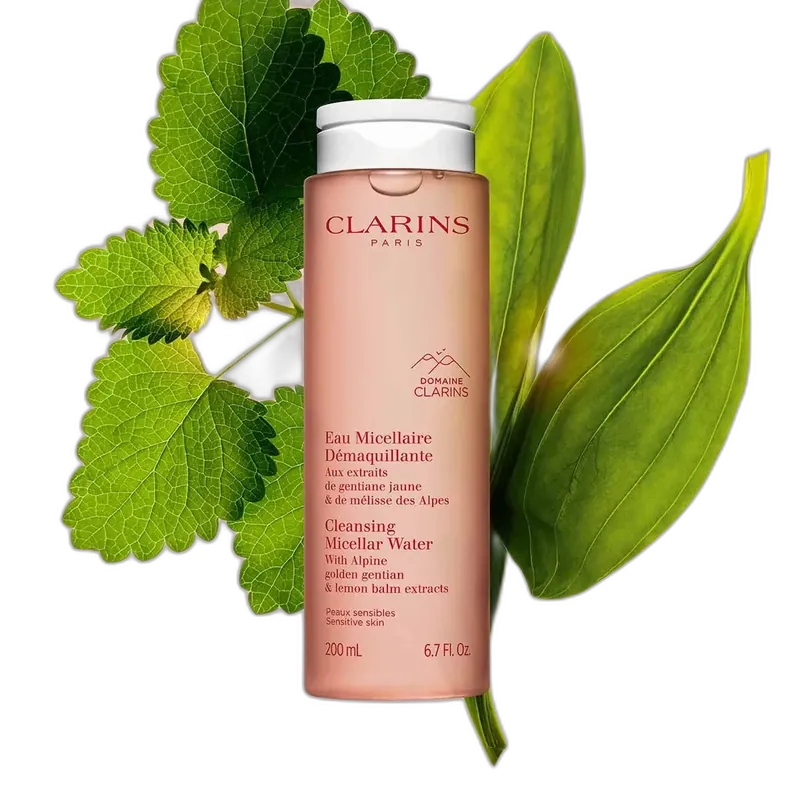
Cleansing Micellar Water
French Pharmacy Elegance
 Verified reviewer
Pros & cons.
- +Gentle cleansing with mild surfactants that won't strip or irritate skin
- +Organic Alpine botanicals from Clarins' own garden add genuine soothing benefits
- +Prebiotic saccharide isomerate supports skin microbiome in a no-rinse formula
- +Moringa seed extract provides anti-pollution cleansing for urban environments
- +Safe for eyes, face, and lips — ophthalmologist and dermatologist tested
- +No-rinse convenience for quick morning cleansing or light makeup removal
- −Very expensive at $34 for 200ml compared to French pharmacy alternatives
- −Contains fragrance (parfum) despite marketing to sensitive skin
- −Insufficient for removing heavy makeup or waterproof formulas alone
- −Requires multiple cotton pads per use which generates waste
- −Botanical actives are at low concentrations with limited clinical evidence
The full review.
Micellar water began as a solution to Parisian plumbing. French tap water is hard and high in limestone, so Parisian women used gentle cleansing waters to remove makeup without stripping skin. This practical workaround became a global category. When Clarins — the brand that defined French luxury skincare — entered the micellar water space, it brought seventy years of botanical expertise to a format most brands treat as utilitarian.
The formula is clean and well-constructed. Poloxamer 184, a mild nonionic surfactant, forms micellar structures that trap oil and impurities. Sodium methyl cocoyl taurate, derived from coconut, adds a second layer of gentle cleansing without the harshness of traditional sulfate surfactants. Glycerin, positioned third in the ingredient list, ensures the cleansing process leaves skin hydrated rather than stripped — a detail many budget micellar waters get wrong by leaving skin tight and uncomfortable.
Clarins’ botanical signature distinguishes this from the dozens of micellar waters on pharmacy shelves. The organic lemon balm and golden gentian come from Le Domaine Clarins, the brand’s own botanical garden in the French Alps. This isn’t just marketing — Clarins has formulated with plant extracts since 1954, before “clean beauty” existed. The gentian is a recurring star in Clarins’ formulations, acting as a gentle purifier across their cleansing range. Lemon balm provides anti-inflammatory properties that soothe skin during cleansing.
The moringa oleifera seed extract is a modern addition. Research shows moringa seed proteins bind to particulate pollutants and heavy metals — a botanical magnet for urban grime. For city-dwelling consumers, this anti-pollution angle addresses a real skincare concern.
Saccharide isomerate is a forward-thinking prebiotic complex that supports the skin’s microbiome. Because this is a no-rinse product, surfactants and cleansing agents stay on your skin. Including a prebiotic to help maintain bacterial balance shows formulation thoughtfulness many micellar waters lack.
In daily use, the product delivers. Soak a cotton pad, sweep it across your face, and the pad picks up sunscreen, light makeup, and environmental film. It doesn’t sting the eyes — the ophthalmologist-tested claim is accurate — and it doesn’t leave skin tight or tacky. The light botanical fragrance is pleasant and fades almost immediately.
The limitations are predictable. Heavy makeup — full-coverage foundation, waterproof mascara, mineral sunscreen — requires multiple pads and more effort than an oil or balm cleanser. Use this as a first step followed by a traditional cleanser for evening cleansing after a full makeup day. For morning cleansing on bare skin, or light makeup removal, it is a complete solution.
The fragrance is a questionable choice. For a product marketed to all skin types including sensitive, and designed to stay on the skin without rinsing, parfum is unnecessary. The botanical extracts provide a subtle natural scent — the added fragrance compounds layer cosmetic perfume over botanical aroma, which feels at odds with the product’s gentle positioning.
At $34 for 200ml, Clarins’ micellar water costs roughly three times what Bioderma Sensibio runs for 500ml — the gold standard French pharmacy micellar water. You get superior botanical sourcing, the microbiome complex, moringa anti-pollution technology, and the Clarins pedigree. Whether these justify a triple price premium depends on how much you value ingredient sourcing and brand heritage versus functional performance.
Clarins didn’t need to make a micellar water. With Double Serum selling a bottle every three seconds worldwide, the brand could coast on its treatment products. But entering the category with this level of formulation care — organic botanicals from their own garden, microbiome support, anti-pollution technology — shows a house that takes even its basic products seriously. It is a micellar water that knows where it came from.
Ingredient analysis.
Full INCI list
Aqua/Water/Eau, Propanediol, Poloxamer 184, Glycerin, Sodium Methyl Cocoyl Taurate, Methylpropanediol, PPG-26-Buteth-26, Ethylhexylglycerin, Maris Aqua/Sea Water, PEG-40 Hydrogenated Castor Oil, Parfum/Fragrance, Caprylyl Glycol, Disodium EDTA, Phenylpropanol, Phenethyl Alcohol, Melissa Officinalis Leaf Extract, Laminaria Digitata Extract, Sodium Citrate, Gentiana Lutea Extract, Chlorella Vulgaris Extract, Saccharide Isomerate, Citric Acid, Crocus Sativus Flower Extract, Maltodextrin, Moringa Oleifera Seed Extract
Skin match.
The science.
The Science
Micellar water works through self-assembling surfactant structures called micelles — spherical clusters of surfactant molecules with hydrophilic (water-attracting) outer shells and lipophilic (oil-attracting) cores. When applied to skin, these micelles trap oil-soluble impurities (sebum, makeup, sunscreen) in their cores, suspending them in the water phase for removal by cotton pad.
Poloxamer 184, the primary surfactant here, is a nonionic block copolymer with an exceptionally low critical micelle concentration, meaning it forms effective cleansing micelles at very low concentrations — gentler on skin than higher-concentration surfactant systems. Sodium methyl cocoyl taurate, the secondary surfactant, is derived from taurine and coconut oil and is classified as one of the mildest surfactants in cosmetic chemistry.
Moringa oleifera seed extract contains positively charged proteins that bind to negatively charged particulate matter, heavy metals, and microplastics — a mechanism originally studied for water purification. A 2018 study in the International Journal of Cosmetic Science demonstrated that moringa-containing formulations showed enhanced removal of PM2.5 particulate matter from skin surfaces compared to formulations without it.
Saccharide isomerate, marketed as Pentavitin, binds to lysine residues in the stratum corneum through Maillard-type reactions, providing long-lasting moisture binding. Importantly for a no-rinse formula, it has been shown to selectively support commensal skin bacteria while not feeding pathogenic strains, supporting microbiome balance when left on the skin's surface.
Dermatologist Perspective
Dermatologists generally view micellar water as a gentle cleansing option, particularly suitable for sensitive, dry, or rosacea-prone skin that doesn't tolerate traditional foaming cleansers. The mild surfactant profile of this Clarins formula aligns well with dermatological recommendations for gentle cleansing. Board-certified dermatologists note that while no-rinse formulations are convenient, leaving even mild surfactants on the skin can cause low-grade irritation in some sensitive individuals — a follow-up rinse with water is recommended for those who experience any tightness. The prebiotic approach to microbiome support is considered scientifically sound, though the clinical significance in a cleansing product is still being established.
Where it fits in your routine.
Soak a cotton pad with the micellar water. Sweep it across the face, moving from the center outward. For eye makeup, hold the saturated pad against closed eyes for 10 seconds, then wipe gently without rubbing. Use fresh pads until they come away clean. No rinsing is required. Use as a standalone AM cleanser or as a first cleansing step in the evening. Use it midday to freshen skin without disturbing your routine.
At $34 for 200ml ($5.07/oz), this is a luxury micellar water. For comparison, Bioderma Sensibio H2O — the benchmark micellar water — costs about $15 for 500ml ($0.89/oz), and Garnier SkinActive is roughly $9 for 400ml ($0.67/oz). The Clarins version uses organic botanical sourcing, a microbiome complex, and anti-pollution moringa extract, which cheaper options do not have. However, the core cleansing function is similar across these prices. Clarins also has a 10% subscription discount ($30.60) for regular users. The value comes from premium ingredients and brand heritage, not better cleaning power.
French skincare fans who want premium botanical sourcing and more than just functional micellar water. People with normal to sensitive skin who need a gentle, no-rinse morning cleanser. Urban dwellers seeking anti-pollution cleansing benefits. Anyone who uses microbiome-conscious formulations in their daily routine.
Budget-conscious shoppers get the same core cleansing function for less. Daily heavy makeup wearers won't find this replaces an oil or balm cleanser for thorough evening removal. People who prefer strictly fragrance-free formulations will like this.
Product details.
Light, fresh botanical fragrance. The lemon balm and gentian extracts create a subtle herbal scent that most users find pleasant, not intrusive.
Clear plastic bottle with a standard flip-top cap. The clean design uses Clarins' signature white and red branding. It works well for daily bathroom use. Finish naturallightweightfast-absorbing What to Expect on First Use A soaked cotton pad sweeps across the face to clean skin—the pad removes visible makeup and grime. It does not sting the eyes or leave skin tight. Glycerin leaves skin feeling refreshed and slightly hydrated. This is a complete cleansing step for light makeup or bare skin. Use a second cleanse for heavy makeup.
2-3 months with daily AM use; less with full AM/PM use
12 months
All Year
The backstory.
Micellar water was invented in France as a gentle alternative to the harsh Parisian tap water that stripped skin. Clarins, as France's leading luxury skincare house, entered the micellar water category with its own interpretation — infusing the format with the same Alpine botanicals and plant science philosophy that built the brand from a single Parisian spa in 1954 into a global luxury empire.
About Clarins
Legacy Brand (20+ years)Jacques Courtin-Clarins, a former medical student, founded Clarins in Paris in 1954. Clarins was the first luxury brand to use plant extracts in skincare. It has been Europe's number one luxury skincare brand since the 1990s. The brand manufactures all products exclusively in France and owns its own organic botanical garden, Le Domaine Clarins, in the French Alps.
Common myths.
Micellar water is a complete replacement for all cleansing.
This micellar water cleanses light makeup or bare skin well, but it does not remove heavy makeup, mineral sunscreen, or oil-based products. For thorough PM cleansing, use it as a first step before a gel or cream cleanser.
No-rinse micellar water leaves surfactants on your skin, which causes irritation.
The surfactants in this formula (poloxamer 184, sodium methyl cocoyl taurate) are some of the gentlest available. Glycerin and the prebiotic complex buffer irritation. If you have very sensitive skin, rinse with water after use for extra peace of mind.
FAQ.
Is Clarins Micellar Water good for sensitive skin?
Yes — dermatologists and ophthalmologists tested the formula. It is color-free and uses gentle surfactants (poloxamer 184, sodium methyl cocoyl taurate) that are among the mildest available. Glycerin and prebiotic saccharide isomerate help skin comfort. However, it contains fragrance (parfum), which matters for the most reactive skin types.
Do I need to rinse after using Clarins Micellar Water?
Leave the formula on the skin; no rinsing is needed. The gentle surfactants and hydrating glycerin base work for no-rinse use. If you have very sensitive skin or want a clean slate, you can rinse with water.
Can Clarins Micellar Water remove waterproof mascara?
It removes light to moderate makeup effectively, but heavy-duty waterproof mascara and long-wear formulas are harder to clear. For stubborn eye makeup, hold a saturated cotton pad against the eye area for 10-15 seconds before wiping gently. A dedicated oil-based remover or cleansing balm works better for very heavy makeup.
Is Clarins Micellar Water worth the price compared to drugstore options?
At $34 for 200ml, it costs much more than drugstore micellar waters like Bioderma Sensibio ($15/500ml) or Garnier SkinActive ($9/400ml). The Clarins version uses organic Alpine botanicals, a microbiome-supporting prebiotic complex, and the brand's plant-science heritage — but the core cleansing function is the same at every price point. The higher price pays for ingredient sourcing quality and the luxury experience.
What are the organic ingredients in Clarins Micellar Water?
The formula uses organic lemon balm (Melissa officinalis) and organic golden gentian (Gentiana lutea). Clarins farms both sustainably at Le Domaine Clarins, the brand's botanical garden in the French Alps. These ingredients make up Clarins' signature 'Gentle Complex' found in their cleansing range.
Community
What the community says.
"Gently removes makeup without irritation"
"No-rinse convenience for busy mornings"
"Doesn't sting or irritate eyes"
"Leaves skin feeling fresh and hydrated, not stripped"
"Pleasant, light scent"
"Expensive for a micellar water at $34"
"Struggles with very heavy or waterproof makeup"
"Contains fragrance which some users prefer to avoid"
"Requires multiple cotton pads for full face cleansing"
"Not as effective as an oil or balm cleanser for thorough evening cleanse"
People also looked at.