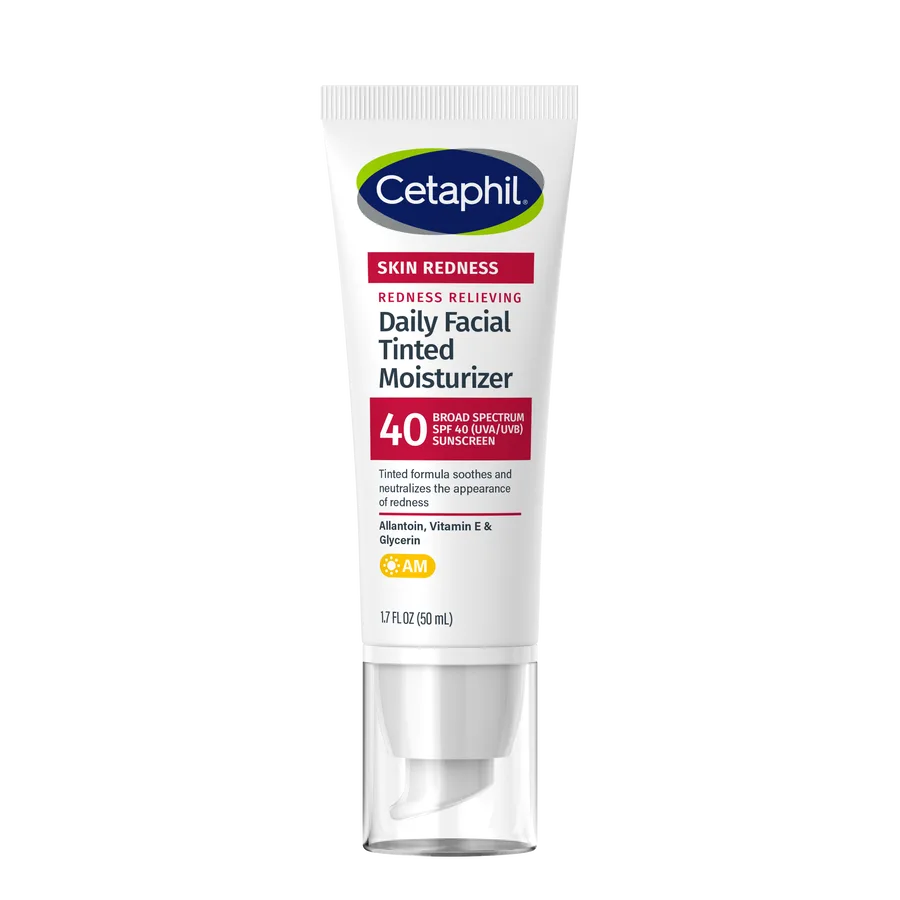
Redness Relieving Daily Facial Moisturizer SPF 20
Rosacea-Friendly Day Cream
 Verified reviewer
Pros & cons.
- +100% mineral SPF eliminates the flushing risk that chemical sunscreens pose for rosacea skin
- +Triple anti-redness approach: licorice extract, caffeine, and allantoin target inflammation and vasodilation
- +Neutral tint with green-toned mineral pigments provides immediate cosmetic redness camouflage
- +Zinc oxide serves dual duty as both UV filter and anti-inflammatory treatment ingredient
- +Fragrance-free, oil-free, and gentle enough for the most reactive rosacea-prone skin
- +Developed by Galderma — the same company that makes prescription rosacea treatments
- +Compatible with prescription rosacea medications as part of a comprehensive regimen
- −SPF 20 is lower than the SPF 30+ recommended by dermatologists for extended sun exposure
- −Tint works best on light-to-medium skin tones — may appear ashy on deeper complexions
- −Small 1.7 oz tube makes this expensive on a per-ounce basis
- −Mineral filters can leave a slight white cast that requires careful blending
- −Not moisturizing enough for those with dry rosacea-prone skin in winter
The full review.
Sun exposure and rosacea create a frustrating dermatology catch-22. UV radiation is the most common trigger for rosacea flares, so sunscreen is essential. However, many sunscreens—especially those with chemical UV filters—trigger the flushing and irritation rosacea patients want to avoid. It is the skincare equivalent of the medicine making you sicker.
Cetaphil’s Redness Relieving Daily Facial Moisturizer SPF 20 breaks this cycle. The formulation shows a deep understanding of redness-prone skin needs. This makes sense, as Galderma, Cetaphil’s parent company, also manufactures prescription rosacea treatments like Soolantra and Mirvaso.
Formula
The sunscreen architecture is entirely mineral: 10.1% titanium dioxide and 7.8% zinc oxide. This choice is deliberate and critical. Mineral filters sit on the skin surface to physically scatter UV radiation. Chemical filters absorb UV energy and convert it to heat through a chemical reaction. For rosacea patients, that heat from chemical sunscreens can trigger the vascular dilation that causes a flush. Zinc oxide also acts as an anti-inflammatory—it is a treatment ingredient wearing a sunscreen disguise.
The anti-redness strategy uses three layers. Dipotassium glycyrrhizate, derived from licorice root, is a well-documented topical anti-inflammatory for vascular redness. It inhibits inflammatory pathways that drive the chronic dilation of facial blood vessels in rosacea. Caffeine provides complementary vasoconstrictive action, temporarily narrowing the dilated capillaries that create visible redness. Allantoin adds a soothing, barrier-protective layer to calm irritation. Together, these three ingredients address redness at the inflammatory, vascular, and barrier levels.
The tint provides cosmetic cleverness. A blend of iron oxides and chromium oxide greens creates the neutral shade. These mineral pigments provide color-correcting properties. The green undertone neutralizes red and pink tones in rosacea-affected skin, providing immediate visual relief beyond what the anti-inflammatory ingredients achieve. It is cosmetic camouflage that looks like skin on a calm day rather than makeup.
Texture
On the face, this moisturizer has a smooth, medium-weight cream texture that spreads with moderate ease. The mineral pigments require blending; rushing application can cause a slightly uneven tint. Spend 30-60 seconds working it in for natural, barely-there coverage that evens redness without looking made-up. The finish is satin, not matte or dewy, and sits comfortably under foundation or alone.
Common Praise
The immediate effect is cosmetically satisfying; the tint noticeably reduces redness upon application. Within 15-20 minutes, the caffeine’s vasoconstrictive action further reduces visible flushing. With consistent use over weeks, the licorice extract’s anti-inflammatory benefits build, and many users report a gradual decrease in baseline redness. This slow-burn benefit keeps patients using the product after the initial cosmetic novelty ends.
Common Complaints
Limitations center on two things: SPF level and tint range. SPF 20 provides adequate daily protection for incidental sun exposure but is lower than the SPF 30 or higher dermatologists recommend for extended outdoor time. Rosacea patients with high photosensitivity may want to layer a higher-SPF mineral sunscreen on top for sunny days. The tint neutralizes redness well but suits light-to-medium skin tones best. On deeper complexions, the green-tinged mineral pigments may leave a grayish cast that requires foundation to correct.
Packaging
The 1.7 oz tube is practical for a facial product, but the approximately $17 price point feels steep per ounce. This is the cost of specialized formulation for a specific skin condition. Galderma’s pharmaceutical heritage justifies the premium, but budget-conscious consumers will notice the price difference compared to larger Cetaphil products.
Best for
This moisturizer addresses facial redness from multiple angles, whether for diagnosed rosacea, reactive sensitivity, or persistent flushing. It protects against the primary trigger (UV), treats underlying inflammation, constricts visible blood vessels, and camouflages remaining redness. This comprehensive approach from a company that understands redness at the prescription level makes this a thoughtfully formulated drugstore option for redness-prone skin.
Ingredient analysis.
Full INCI list
Active Ingredients: Titanium Dioxide 10.1%, Zinc Oxide 7.8%. Inactive Ingredients: Allantoin, Benzyl Alcohol, C12-15 Alkyl Benzoate, Caffeine, Caprylyl Methicone, Cetyl Diglyceryl Tris(Trimethylsiloxy)Silylethyl Dimethicone, Chromium Oxide Greens, Dicaprylyl Carbonate, Dimethicone, Dipotassium Glycyrrhizate, Ethylhexylglycerin, Glycerin, Hydrogenated Lecithin, Iron Oxides, Isohexadecane, Magnesium Sulfate, Methylpropanediol, Silica, Tocopherol, Triethoxycaprylylsilane, Trisiloxane, Water
Skin match.
The science.
The Science
Dermatological literature supports using mineral-only sunscreen to manage rosacea. A 2019 review in the Journal of Clinical and Aesthetic Dermatology notes that physical UV filters (zinc oxide and titanium dioxide) work better for rosacea patients. They avoid the exothermic chemical reactions organic UV absorbers cause, which can trigger the neurovascular flushing response seen in rosacea.
Studies show how Dipotassium glycyrrhizate works as an anti-inflammatory. The compound inhibits 11-beta-hydroxysteroid dehydrogenase to regulate skin cortisol metabolism and blocks phospholipase A2 to reduce pro-inflammatory prostaglandins and leukotrienes. A 2003 study in the Journal of Dermatological Science confirmed that topical glycyrrhizin-derived compounds significantly reduce erythema and inflammatory markers in sensitive skin.
Caffeine works as a vasoconstrictor through phosphodiesterase inhibition, which reduces cAMP breakdown and constricts blood vessels. For rosacea's persistent vasodilation, topical caffeine temporarily reduces the diameter of dilated facial capillaries and lowers redness intensity.
Zinc oxide does more than filter UV rays. A 2014 review in the Journal of Dermatological Treatment documented how zinc inhibits NF-kB activation and reduces inflammatory cytokines like IL-1, IL-6, and TNF-alpha—all of which are elevated in rosacea-affected skin.
Iron oxides in tinted sunscreens protect against visible light and high-energy blue light, both known triggers for melasma and rosacea flares. A 2019 study in the Journal of Cosmetic Dermatology showed that iron oxide-containing tinted sunscreens provide superior protection against visible light-induced pigmentation than non-tinted formulations.
References
- Effects of vitamin C on dark circles of the lower eyelids: quantitative evaluation using image analysis and echogram — Skin Research and Technology (2009)
Dermatologist Perspective
Board-certified dermatologists consistently recommend mineral sunscreens for rosacea patients, and this product follows current clinical guidelines. Dermatologists say the combination of zinc oxide's anti-inflammatory properties, licorice extract, and caffeine creates a multi-pathway approach to redness management that complements prescription therapy. Clinicians advise using this as the final morning step after prescription treatments absorb. For patients needing higher SPF, dermatologists suggest layering a dedicated mineral SPF 50 over this product on high-exposure days.
Where it fits in your routine.
Cleanse your skin and apply any prescription rosacea treatments first, then squeeze a small amount onto your fingertips. Dot the product onto your forehead, cheeks, nose, and chin. Blend with gentle upward strokes to distribute the tint evenly. Wait 1-2 minutes for absorption before applying foundation or powder. Use this every morning as your final skincare step. Reapply sunscreen if you stay outdoors for extended periods.
At about $17 for 1.7 oz, this costs more per ounce than most Cetaphil products. But the specialized formulation — dual mineral SPF, three anti-redness actives, and mineral tint — justifies the price for its target audience. Specialty brand rosacea-focused tinted moisturizers cost $30-55 for similar or smaller sizes. For rosacea patients using this as a daily morning cream, the tube lasts 6-8 weeks, making the monthly cost around $9-12. Galderma's pharmaceutical expertise in rosacea provides value generic tinted moisturizers lack.
People with rosacea or chronic facial redness who need daily sun protection without chemical sunscreen-induced flushing. Users seeking a tinted moisturizer that treats redness instead of just covering it. Light-to-medium skin toned individuals wanting subtle redness camouflage with mineral SPF in one product.
People with deeper skin tones may find the tint too ashy. Users needing SPF 30 or higher for daily use. People with very dry skin needing a thicker moisturizer. Those preferring completely untinted products should use Cetaphil's other mineral sunscreen options.
Product details.
This medium-weight cream is smooth and slightly tinted. Mineral pigments create a beige-green undertone that blends into most light-to-medium skin tones. It spreads easily but needs thorough blending to prevent patchiness.
Fragrance-free with no detectable scent
A small squeeze tube has a narrow opening for controlled dispensing. The opaque tube protects mineral pigments and active ingredients from light degradation.
The tint neutralizes redness for an immediate color-correcting effect. The cream feels soothing on application and does not sting or warm. It absorbs within 1-2 minutes and leaves a natural, slightly dewy finish. Redness shows visible reduction within 15-20 minutes as the caffeine works.
6-8 weeks with daily facial application
12 months
All Year
The backstory.
Galderma, Cetaphil's parent company, is a major manufacturer of prescription rosacea treatments including Soolantra and Mirvaso. The Redness Relieving line applies that pharmaceutical understanding of vascular and inflammatory redness to an OTC daily moisturizer, bridging the gap between prescription therapy and everyday skin care for rosacea and redness-prone patients.
About Cetaphil
Legacy Brand (20+ years)Cetaphil launched in 1947 and has been a dermatologist-recommended staple for over 75 years. Galderma develops the Redness Relieving line. Galderma also makes prescription rosacea treatments, so the brand has direct pharmaceutical insight into redness-prone skin.
Common myths.
Tinted moisturizers offer no real skin benefits — they are only cosmetics
The tint in this formula is functional, not just cosmetic. Mineral pigments (iron oxides and chromium oxide greens) correct color. The formula also uses active anti-redness ingredients that work on skin physiology: licorice extract reduces inflammation, caffeine constricts dilated vessels, and zinc oxide provides anti-inflammatory sun protection.
SPF 20 isn't enough protection for daily use
SPF 20 with broad-spectrum mineral protection covers UVA and UVB during daily incidental sun exposure (commuting, short walks). Dermatologists recommend SPF 30 or higher for extended outdoor exposure. This product works best for daily indoor-to-outdoor routines, not beach days.
FAQ.
Is Cetaphil Redness Relieving Moisturizer good for rosacea?
Yes — this formula targets rosacea and redness-prone skin. The 100% mineral SPF does not trigger flushing, while licorice extract and caffeine reduce redness. The neutral tint provides immediate cosmetic camouflage. Galderma developed it, the same company that makes prescription rosacea treatments.
Does the tint match all skin tones?
The neutral tint acts as a color-correcting base, not a foundation replacement. It works best on light to medium skin tones because green-tinted mineral pigments neutralize redness. On deeper skin tones, the tint may look ashy or grayish. You can wear it under foundation of any shade.
Why is the SPF only 20?
The SPF 20 rating uses a high mineral filter concentration (17.9% combined titanium dioxide and zinc oxide) to balance cosmetic elegance. Higher mineral concentrations increase white cast and heaviness. SPF 20 provides adequate protection for daily incidental exposure. Layer a higher-SPF sunscreen over this product for extended outdoor time.
Can I use this with prescription rosacea treatments?
Yes — this mineral-based moisturizer works with prescription rosacea treatments like azelaic acid, metronidazole, and ivermectin. Apply your prescription treatment first, let it absorb, then apply this moisturizer last. The mineral SPF and anti-redness ingredients complement prescription therapy.
Is Cetaphil Redness Relieving Moisturizer pregnancy-safe?
Yes — both active ingredients (titanium dioxide and zinc oxide) are mineral/physical UV filters that stay on the skin surface instead of being absorbed systemically. All ingredients in this formula are safe during pregnancy and breastfeeding.
What the community says.
"Noticeable redness reduction with consistent use"
"Mineral SPF doesn't trigger flushing"
"Neutral tint helps camouflage redness without looking like makeup"
"Gentle enough for rosacea-prone skin"
"Tint may not match all skin tones"
"SPF 20 is lower than many prefer"
"Small 1.7 oz tube is expensive per ounce"
"Can feel slightly thick in humid weather"
Featured in.
People also looked at.