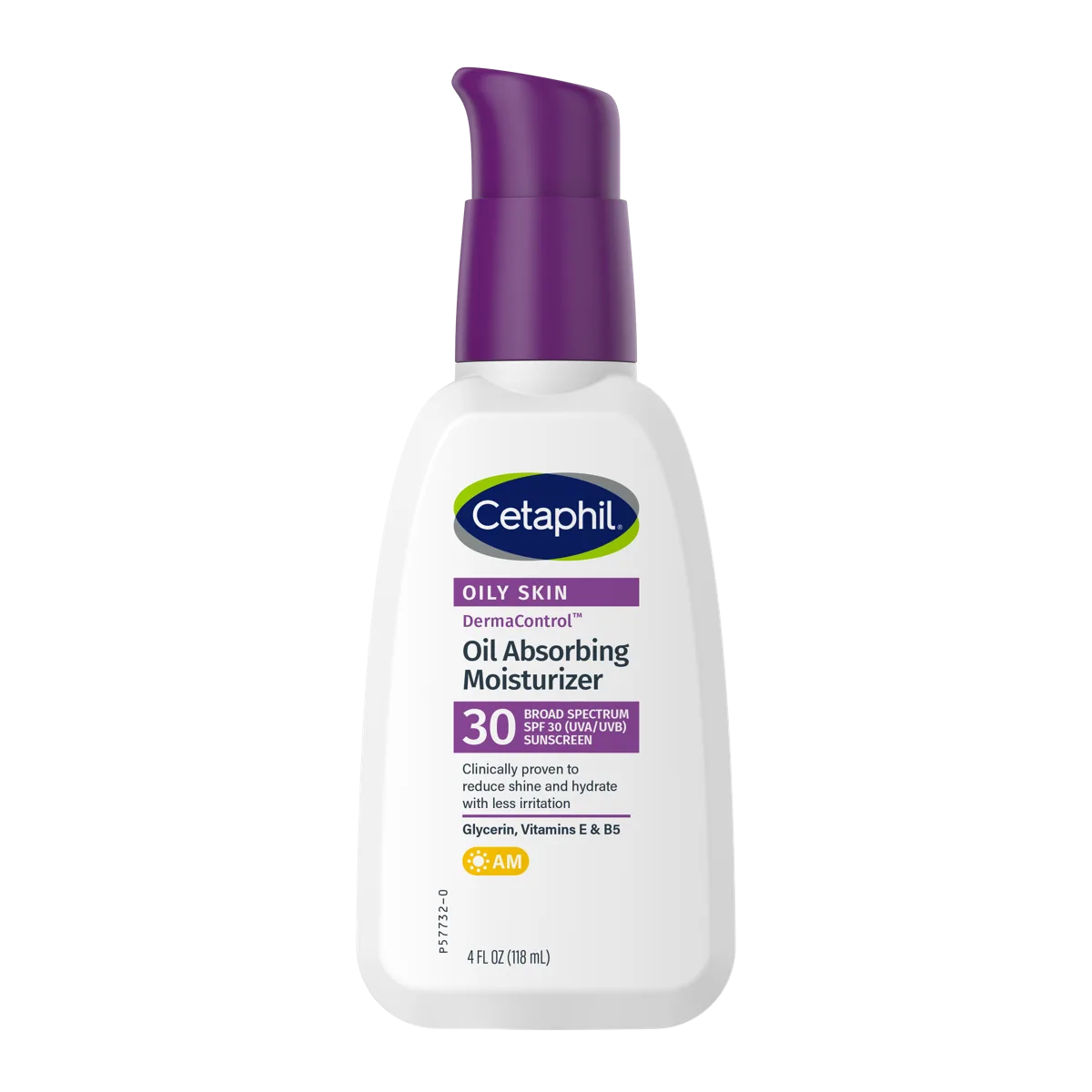
PRO Oil Absorbing Moisturizer SPF 30
Acne-Friendly SPF Pick
 Verified reviewer
Pros & cons.
- +Oleosome technology delivers UV filters at lower irritation-inducing concentrations while maintaining SPF 30
- +MicroPearl mattifying technology provides 4-6 hours of visible oil control
- +Ceramide NP directly replenishes barrier lipids depleted by prescription acne treatments
- +Clinically tested for compatibility with prescription retinoids and benzoyl peroxide
- +Skin Cancer Foundation Seal of Recommendation validates broad-spectrum protection
- +Oil-free, fragrance-free, non-comedogenic formulation designed for breakout-prone skin
- +Lightweight texture absorbs quickly and works seamlessly under makeup
- −Chemical UV filters may irritate those with very sensitive or rosacea-prone skin
- −Too drying for those with dry or combination-leaning-dry skin types
- −SPF 30 may be insufficient for extended outdoor sun exposure
- −Oil control may not be aggressive enough for extremely oily skin
- −Only available in one 4 oz size — no travel or larger economy options
The full review.
There is a unique credibility that comes from being the company on both sides of the treatment plan. Galderma makes prescription acne medications. Galderma also makes this moisturizer. That is not a coincidence — it is a formulation strategy.
When the DermaControl line launched in March 2012, it was explicitly designed to solve a problem Galderma’s own dermatologists saw every day: patients on prescription retinoids or benzoyl peroxide whose skin was simultaneously oily, sensitized, and unprotected from the sun. Most SPF moisturizers either aggravated the acne, irritated the treatment-sensitized barrier, or added a layer of grease that oily-skinned patients couldn’t tolerate. Galderma built this product to be the moisturizer their own prescriptions needed as a partner.
The sunscreen architecture is where the pharmaceutical thinking shows most clearly. Avobenzone, octisalate, and octocrylene provide broad-spectrum SPF 30 protection, but they’re delivered via Oleosome technology — lipid microspheres that encapsulate the UV filters. This encapsulation allows lower concentrations of the active filters while maintaining protection, which directly reduces the irritation potential on skin that’s already inflamed from acne and sensitized from treatment. It is the kind of delivery innovation you get from a pharmaceutical company rather than a cosmetics company.
The MicroPearl technology addresses the cosmetic reality of oily skin. Polymethyl methacrylate and silica microspheres physically absorb surface sebum, creating a matte finish that lasts four to six hours. For anyone who has ever applied sunscreen in the morning and looked like a glazed doughnut by lunch, this mattifying effect is not trivial — it’s the difference between using the product consistently and abandoning it in the cabinet.
Ceramide NP earns particular attention in this formula’s context. Prescription retinoids and benzoyl peroxide systematically disrupt the skin’s lipid barrier as a side effect of their therapeutic action. The ceramide in this moisturizer directly replenishes what the prescription depletes, maintaining barrier integrity so the treatment can continue working without the dryness, flaking, and irritation that cause patients to quit their regimen. This is barrier diplomacy — keeping the peace between a harsh but necessary treatment and the skin that has to live with it.
Zinc gluconate provides a secondary anti-acne pathway through its documented ability to modulate sebum production and reduce inflammatory mediators. Glycyrrhetinic acid (from licorice root) contributes anti-inflammatory and soothing benefits. Panthenol supports barrier repair. Allantoin calms irritation. The supporting cast is assembled with the same deliberate logic as the leads.
On the skin, this moisturizer feels lightweight and almost watery compared to traditional SPF creams. It absorbs in under a minute and leaves a smooth, matte canvas that works well under makeup or on its own. The fragrance-free formula produces no detectable scent beyond a faint sunscreen note that dissipates quickly. There’s no stinging even on freshly treated acne skin, which speaks to the Oleosome delivery system’s gentleness.
The limitations are honest. This is an oil-free, mattifying formula — dry skin types will find it insufficient for hydration, especially in winter. The chemical UV filters, while delivered at reduced irritation potential via Oleosome, still won’t suit everyone who’s reactive to avobenzone or octocrylene. And the SPF 30 rating, while adequate for daily protection, may not satisfy those who prefer SPF 50 for extended outdoor exposure.
At approximately $15 for 4 oz, this is competitively priced for a specialized SPF moisturizer with patented delivery technology. The Skin Cancer Foundation seal validates the sun protection. The clinical testing with prescription acne medications validates the compatibility claim. And Galderma’s pharmaceutical heritage means every formulation choice was made with a dermatologist’s understanding of what treated skin actually needs.
For the oily, acne-prone, prescription-treated patient who needs sunscreen they’ll actually wear every day — this is the product that was built specifically for you, by the people who best understand your skin’s situation.
Formula
Ingredient analysis.
Full INCI list
Active Ingredients: Avobenzone 3.0%, Octisalate 5.0%, Octocrylene 7.0%. Inactive Ingredients: Allantoin, Aluminum Starch Octenylsuccinate, Caprylyl Glycol, Carbomer, Ceramide NP, Diisopropyl Sebacate, Dimethicone, Dimethiconol, Disodium EDTA, Glycerin, Glycyrrhetinic Acid, Isopropyl Lauroyl Sarcosinate, Panthenol, Pentylene Glycol, Phenoxyethanol, Polymethyl Methacrylate, Polysorbate 61, Potassium Sorbate, Silica, Sodium Stearoyl Glutamate, Sucrose Tristearate, Tocopheryl Acetate, Triethanolamine, Water, Xanthan Gum, Zinc Gluconate
Skin match.
The science.
The Science
The Oleosome delivery system advances sunscreen formulation for sensitive skin. Oleosomes are natural lipid bodies in plant seeds that encapsulate active ingredients. Using oleosomes to deliver UV filters creates a more even distribution of sunscreen molecules across the skin surface. This improves protection efficiency and uses lower concentrations of active chemical filters. This lower concentration addresses the dose-dependent irritation chemical sunscreens cause on sensitized skin.
Extensive research on prescription acne treatment side effects supports the ceramide rationale in this formula. A 2023 study in the Journal of Cosmetic Dermatology shows that ceramide-containing moisturizers reduce the barrier disruption caused by retinoid therapy, decreasing transepidermal water loss, erythema, and scaling. For patients on prescription acne regimens, this ceramide supplementation improves treatment adherence by reducing the side effects that cause patients to discontinue therapy.
Clinical trials document zinc's anti-acne properties. A 2020 review in the Journal of Drugs in Dermatology notes that zinc (in various forms including gluconate) has anti-inflammatory properties by inhibiting inflammatory mediator release, and has antibacterial activity against Cutibacterium acnes. While topical zinc concentrations in cosmetic formulations are lower than those in clinical trials, zinc gluconate in this formula adds a complementary anti-acne pathway alongside prescription treatments.
The mattifying components — polymethyl methacrylate and silica — work through physical oil absorption. These microspheres trap sebum on the skin surface without occluding pores. This mechanism differs from powder-based mattifiers that can settle into pores and contribute to comedone formation. The particle size and shape maximize surface area for oil absorption while maintaining cosmetic elegance.
References
- Ceramide-Containing Adjunctive Skin Care for Skin Barrier Restoration During Acne Vulgaris Treatment — Journal of Cosmetic Dermatology (2023)
Dermatologist Perspective
Dermatologists recommend this moisturizer for patients on prescription acne regimens who struggle to find a compatible daily SPF. Board-certified dermatologists note that sun protection is critical during retinoid and benzoyl peroxide therapy, as both treatments increase photosensitivity. The Oleosome delivery system's lower irritation potential makes this one of the few chemical-filter sunscreens clinicians feel comfortable recommending for sensitized, treatment-active skin. The Skin Cancer Foundation seal provides clinical validation that dermatologists cite when reassuring patients about daily SPF compliance.
Where it fits in your routine.
Apply a thick layer to the face as the last step in your morning skincare routine. If you use prescription acne treatments in the morning (like benzoyl peroxide), apply the treatment first and let it absorb before applying this moisturizer. Wait 2-3 minutes before applying makeup. Reapply every 2 hours during extended outdoor sun exposure. Use daily even on cloudy days; UV radiation penetrates clouds.
At about $15 for 4 oz, this SPF moisturizer uses patented Oleosome delivery technology, ceramide barrier support, MicroPearl mattifying action, and Skin Cancer Foundation-endorsed SPF 30. Prestige brand mattifying SPF moisturizers cost $30-50 for similar volumes but lack clinical testing for acne-treatment compatibility. Daily facial application of the 4 oz size lasts 6-8 weeks, making the monthly cost roughly $8-10. This offers strong value for acne patients who need SPF, backed by pharmaceutical-grade formulation science.
People with oily or combination skin on prescription acne treatments who need compatible daily sun protection. Users wanting a mattifying morning moisturizer that works as SPF. Acne-prone individuals who stopped using sunscreen because previous products caused breakouts or felt greasy.
Dry or sensitive skin types needing thicker hydration. People reactive to chemical UV filters (avobenzone, octocrylene) should use a mineral sunscreen instead. Those needing SPF 50 or higher for long outdoor activities.
Product details.
This lightweight, fluid lotion feels slightly silky due to the mattifying microspheres. It is thinner than a cream moisturizer, spreads easily, and absorbs quickly without a greasy or heavy feeling.
Fragrance-free with minimal chemical-sunscreen scent
Squeeze bottle with flip-top cap. The 4 oz size is compact for travel. Controlled dispensing stops waste.
It mattifies skin immediately, leaving it smooth and shine-free within seconds. It does not sting acne-treated skin. The lightweight texture differs from heavier SPF moisturizers. Makeup applies smoothly over it. Oil control lasts 4-6 hours before a light blot is needed.
6-8 weeks with daily facial application
12 months
spring summer
The backstory.
Galderma launched the DermaControl line in March 2012 specifically to address a clinical gap: acne patients on prescription treatments who needed sun protection and moisturizing but found most SPF products either broke them out, irritated their sensitized skin, or added unwanted shine. As the same company that makes prescription acne treatments, Galderma had unique insight into what their patients' skin needed from an OTC moisturizer.
About Cetaphil
Legacy Brand (20+ years)Cetaphil launched in 1947 and has been a dermatologist staple for over 75 years. Galderma's pharmaceutical dermatology team developed the DermaControl line as the first skincare range designed to work with prescription acne medications.
Common myths.
People with oily, acne-prone skin don't need moisturizer
Acne-prone skin often has a compromised moisture barrier, especially when using prescription retinoids or benzoyl peroxide. Skipping moisturizer increases transepidermal water loss, which triggers compensatory sebum production and worsens both dryness and oiliness. A lightweight, oil-free moisturizer with ceramides breaks this cycle.
Sunscreen makes acne worse
Heavy, occlusive sunscreens clog pores, but non-comedogenic formulas like this one pass clinical tests for acne-prone skin. Many acne treatments increase photosensitivity, so acne patients must use sunscreen.
FAQ.
How long does the mattifying effect last?
Most users get 4-6 hours of oil control before needing a light blot. MicroPearl technology absorbs surface oil all day. People with very oily skin can reapply a translucent powder at midday to extend the matte look.
Is Cetaphil PRO Oil Absorbing Moisturizer SPF 30 non-comedogenic?
Yes — the formula is non-comedogenic, oil-free, and fragrance-free. It avoids clogging pores on acne-prone skin and has clinical tolerability tests on skin undergoing acne treatment.
Does this product leave a white cast?
This formula uses chemical UV filters (avobenzone, octisalate, octocrylene) instead of mineral filters, so it leaves less white cast than zinc oxide-based sunscreens. Some users with deeper skin tones report a slight cast. The MicroPearl technology adds a subtle mattifying sheen.
Can I use this as my only morning moisturizer?
Yes — this all-in-one morning product combines moisturizer, SPF protection, and oil control. The ceramide NP and glycerin hydrate oily and combination skin. People with very dry skin may need an additional hydrating serum underneath.
What the community says.
"Excellent mattifying effect controls shine all day"
"Works well under makeup without pilling"
"Lightweight and non-greasy"
"Compatible with prescription acne treatments"
"Good SPF protection for daily wear"
"Oil control could be stronger for very oily skin"
"Chemical sunscreen filters may irritate very sensitive skin"
"Can feel slightly drying in winter months"
"White cast possible on deeper skin tones"
People also looked at.