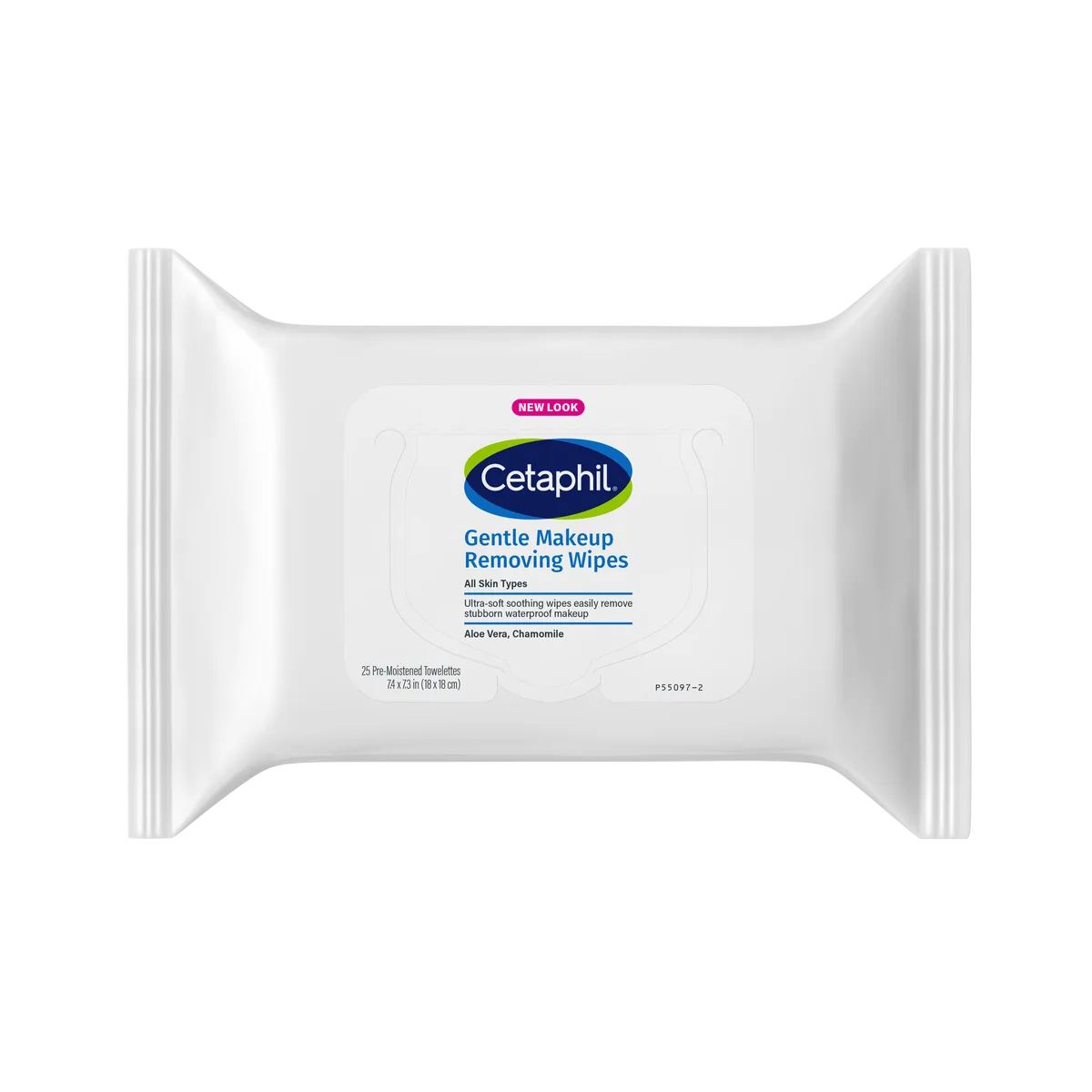
Gentle Makeup Removing Wipes
Travel Essentials Pick
 Verified reviewer
Pros & cons.
- +Emollient dissolution system removes makeup without harsh surfactant stripping
- +Five-botanical soothing blend actively calms skin during the removal process
- +Ophthalmologist tested and safe for sensitive eye area and contact lens wearers
- +Soft cloth texture provides effective removal without abrasion or excessive friction
- +Skin feels comfortable and hydrated after use rather than tight and dry
- +Convenient travel-friendly packaging for on-the-go and gym use
- −Leaves an emollient residue requiring a follow-up rinse for thorough cleansing
- −Contains Iodopropynyl Butylcarbamate, a preservative with increasing sensitization rates
- −Marketed as fragrance-free but contains ethylene brassylate masking agent
- −Heavy or multi-layer makeup requires two to three wipes for complete removal
- −Disposable format generates non-biodegradable waste with each use
The full review.
Modern skincare views the makeup wipe with skepticism. Dermatologists advise against using them as a sole cleansing step, and environmentalists highlight the waste. Skincare enthusiasts often see them as a necessary evil. Yet, they remain top-selling drugstore products because convenience beats double-cleansing trends.
Cetaphil’s Gentle Makeup Removing Wipes do not claim to replace a proper face wash. Instead, they aim to make the wipe step skin-friendly with a more thoughtful formula than most in this category.
The formulation choice is notable for what it excludes. Most makeup wipes use micellar technology—surfactant molecules that trap oil and pigment in spheres. Micelles work, but they are detergents; wiping surfactants across the face without rinsing can leave irritating residue. Cetaphil uses emollient solvents instead. Isohexadecane and dicaprylyl ether—the second and third ingredients—dissolve makeup via oil-based chemistry. Cosmetic pigments melt into the emollient base rather than being scrubbed off by surfactants. This reduces friction, pulling, and the raw sensation caused by aggressive wipes.
A botanical blend adds soothing properties. Five plant extracts—aloe, chamomile, green tea, cucumber, and cornflower—act as an anti-irritation system to calm skin during removal. Aloe and chamomile soothe immediately, green tea provides antioxidant protection, and cornflower extract—a traditional European eye-care ingredient—supports the periorbital area. This is a considered botanical lineup for a product many brands treat as an afterthought.
The cloth is soft but sturdy. It has enough structural integrity to clean effectively, but the weave is gentle enough to avoid scratching or abrasion. The moisture level is well-calibrated—saturated enough to work, but not so wet that the wipe drips or slides. For waterproof mascara, hold the wipe against the lash line briefly to let the emollients dissolve the formula. For everyday makeup, one pass usually works.
These wipes leave a residue: a light, emollient film on the skin. This is a feature of the dissolution-based approach rather than a defect; it shows the formula uses oil chemistry instead of stripping. However, this means the wipes work best as a first cleansing step. Sleeping with a thin layer of emollient solvent and dissolved makeup is not ideal.
Some ingredients require scrutiny. Iodopropynyl butylcarbamate, the preservative, is a known contact allergen with increasing sensitization rates in dermatological literature. It is used within the 0.1% cosmetic limit, but gentler options exist for sensitive skin products. Ethylene brassylate—a synthetic musk used as a masking fragrance—is present despite the fragrance-free marketing. Most people will not detect or react to these trace concentrations, but the gap between the marketing claim and the ingredient list is a common Cetaphil contradiction.
Users with heavy makeup should adjust expectations. Removing a full face of long-wear foundation, concealer, setting powder, and waterproof eye makeup likely requires two or three wipes. This is a limitation of the format, not a product failure. Wipes are less efficient at thorough removal than oil cleansers or cleansing balms.
Disposable wipes generate waste and most are not readily biodegradable. Cetaphil does not market these as eco-friendly, and they should not be. For sustainability, reusable microfiber cloths with a cleansing oil provide the same gentle removal with zero waste. These wipes provide convenience for travel, gym bags, or late nights, not environmental virtue.
At roughly eight dollars for twenty-five wipes, the value is reasonable. Each wipe costs about thirty-two cents—less than most premium brands and comparable to other pharmacy options. The resealable lid maintains moisture adequately, though it requires diligence to press shut every time.
As a gentle, botanically enriched convenience product, these wipes are among the best in the drugstore. They are not a replacement for face wash. But when double cleansing is inconvenient, a wipe that dissolves rather than scrubs and soothes rather than strips is worth the thirty-two cents.
Formula
PM routine
Ingredient analysis.
Full INCI list
Water, Isohexadecane, Dicaprylyl Ether, Octyldodecyl Stearoyl Stearate, Hexylene Glycol, Aloe Barbadensis Leaf Juice, Cucumis Sativus Fruit Extract, Chamomilla Recutita Matricaria Flower Extract, Camellia Sinensis Leaf Extract, Tocopheryl Acetate, Centaurea Cyanus Flower Extract, Glycerin, Ethylhexyl Hydroxystearate, Lauryl Glucoside, Polyglyceryl-2 Dipolyhydroxystearate, Aminomethyl Propanol, Phenoxyethanol, Sorbitan Laurate, Acrylates/C10-30 Alkyl Acrylate Crosspolymer, Iodopropynyl Butylcarbamate, Disodium EDTA, Ethylene Brassylate, Citric Acid, Propylene Glycol
Skin match.
The science.
The Science
The formula removes makeup using emollient solvent chemistry instead of the micellar surfactant technology common in wipes. This difference affects skin barrier integrity.
Isohexadecane, the second ingredient, is a branched-chain hydrocarbon that works as a lightweight emollient solvent. It dissolves cosmetic pigments and waxes via the "like-dissolves-like" principle; oil-based solvents break down oil-based makeup. This mechanism avoids the surfactant-barrier interaction seen in micellar wipes, where detergent molecules disrupt the stratum corneum's lipid matrix if not rinsed off.
The botanical soothing system uses ingredients with documented anti-inflammatory properties. Chamomile (Matricaria) extract contains bisabolol and chamazulene, compounds with anti-inflammatory activity in dermatological research. Green tea extract's primary active, epigallocatechin gallate (EGCG), has extensive studies showing its antioxidant and anti-inflammatory properties in skin applications; multiple reviews confirm it neutralizes reactive oxygen species from UV exposure and environmental pollutants.
Research supports glycerin's role as a humectant in leave-on contexts. Studies show glycerin attracts water to the stratum corneum and modulates aquaporin-3 channels in keratinocytes to move water through the epidermis. Because some residue remains on the skin with a wipe, glycerin provides lasting hydration instead of the drying effect caused by surfactant-based wipes.
The preservation system requires transparency. Iodopropynyl butylcarbamate (IPBC) works at low concentrations (limited to 0.1% in cosmetics), but patch testing studies show increasing rates of allergic contact dermatitis over the last decade. A Cosmetic Ingredient Review safety assessment says it is safe in rinse-off products and at restricted levels in leave-on products, but rising sensitization leads some formulators to use alternatives.
Dermatologist Perspective
Dermatologists usually see makeup wipes as convenience products rather than recommended cleansing methods; this product makes that convenience step gentler without changing that view. Board-certified dermatologists prefer emollient-based removal over surfactant-based alternatives because it reduces barrier disruption risk in no-rinse use. Ophthalmologist testing provides clinical confidence for use around the periorbital area. However, dermatologists advise that these wipes should precede, not replace, a proper rinse-off cleanser, especially for patients on active treatment regimens requiring thorough cleansing.
Where it fits in your routine.
Take one wipe from the resealable pouch and press the lid shut. Wipe across the face, starting with the eyes. Hold the wipe on closed eyelids for 3-5 seconds to dissolve waterproof formulas. Use gentle, sweeping motions instead of scrubbing. Follow with a rinse-off cleanser to clean thoroughly. Throw the wipe in the trash; do not flush. For best results, use within 12 months of opening and store the pouch face-down to keep the wipes moist.
At about $7.99 for 25 wipes, each wipe costs roughly $0.32. This price is reasonable for the category and competes with other pharmacy-brand options. Neutrogena or Garnier premium brand wipes cost similar amounts, while luxury brand alternatives cost much more. The value is highest when used as a first-step makeup remover before a proper cleanse; using them as a sole cleansing method uses the pack too fast. The Cetaphil brand heritage and Galderma's pharmaceutical formulation standards ensure ingredient quality that matches or exceeds competitors at this price point.
This works for anyone needing gentle, on-the-go makeup removal—travelers, gym-goers, and busy people. It suits sensitive and dry skin types that find most wipes irritating. It is a good option for the nightstand when a full double-cleanse routine isn't happening.
People with confirmed sensitivity to Iodopropynyl Butylcarbamate or propylene glycol. Sustainability-conscious consumers who prefer reusable alternatives. Anyone seeking a single-step nighttime cleansing solution — these require a proper face wash for thorough results.
Product details.
Ultra-soft, pre-moistened cloths use a gentle, non-abrasive weave. They are saturated but not dripping wet. The cloth has enough structure to wipe effectively without being rough on skin.
The brand markets this as fragrance-free, but the formula uses trace amounts of ethylene brassylate as a masking agent. Users detect no scent in practice — the wipes smell neutral.
A resealable soft plastic pouch uses a flexible flip-top closure lid to keep wipes moist. It is compact and travel-friendly. White and teal Cetaphil branding shows clear product claims on the front.
The first use feels gentle. The cloth is soft on the skin and dissolves makeup with light pressure instead of aggressive rubbing. A slight residue remains after use. This is normal for emollient-based wipes and shows the formula dissolves makeup instead of stripping the skin.
25 uses (one wipe per use); approximately 2-4 weeks depending on frequency
12 months
All Year
The backstory.
Cetaphil developed these wipes to extend their sensitive-skin philosophy to the convenience category, recognizing that many consumers skip proper cleansing when wipes feel harsh or drying. The ophthalmologist testing reflects Galderma's pharmaceutical approach — ensuring the formula meets clinical safety standards for the most sensitive area of the face.
About Cetaphil
Legacy Brand (20+ years)Pharmacist Erwin S. Whiting created Cetaphil in 1947. Galderma, a Swiss dermatological pharmaceutical company, owns the brand now. Dermatologists worldwide frequently recommend Cetaphil, which has nearly eight decades of clinical trust.
Common myths.
Makeup wipes replace face wash in a nighttime routine.
Wipes remove surface makeup and some grime, but they do not clean pores like a proper face wash. These wipes work best as a first step in double cleansing — removing most makeup before a rinse-off cleanser handles the rest.
All makeup wipes are equally harsh and bad for sensitive skin.
This formula uses emollient-based dissolution instead of harsh surfactants and includes five botanical soothing agents. The gentle removal mechanism and conditioning ingredients distinguish it from surfactant-heavy wipes that strip the skin barrier.
FAQ.
Can Cetaphil Gentle Makeup Removing Wipes remove waterproof mascara?
Yes — the isohexadecane-based emollient formula dissolves waterproof formulas effectively. Hold the wipe gently against the eye area for a few seconds so the solvents break down the mascara before wiping, instead of rubbing aggressively.
Do I still need to wash my face after using these wipes?
Yes, ideally. These wipes remove surface makeup and grime but leave a light emollient residue and do not deeply cleanse pores. For the best nighttime routine, use the wipe first, then follow with a gentle rinse-off cleanser.
Are Cetaphil makeup wipes safe for contact lens wearers?
Yes — the formula is ophthalmologist tested and safe for the eye area, including for contact lens wearers. The emollient-based removal system causes less eye irritation than surfactant-heavy alternatives.
Are these wipes truly fragrance-free?
The formula contains ethylene brassylate, a synthetic musk used at trace levels to mask raw ingredient odors. While not 100% fragrance-free, the concentration is low enough that users report no detectable scent. People with severe fragrance sensitivities should note its presence.
How do I keep the wipes from drying out?
Press the flip-top closure shut firmly after every use. Store the package face-down (lid side down) to keep the remaining wipes touching the moisture at the bottom. Keep away from direct heat or sunlight to prevent evaporation.
What the community says.
"Gentle and non-irritating even around the sensitive eye area"
"Effectively removes most makeup including waterproof mascara"
"Soft cloth texture that does not scratch or abrade the skin"
"No chemical smell or noticeable fragrance"
"Skin feels comfortable and hydrated after use rather than dry and tight"
"Convenient for travel, gym bags, and on-the-go touch-ups"
"Heavy or full-coverage makeup requires multiple wipes for complete removal"
"Leaves a slight oily residue that necessitates a follow-up rinse"
"Wipes can dry out if the package seal is not pressed shut firmly after each use"
"Not sufficient as the sole cleansing step for a thorough nighttime routine"
"Disposable wipes generate unnecessary waste compared to reusable alternatives"
People also looked at.