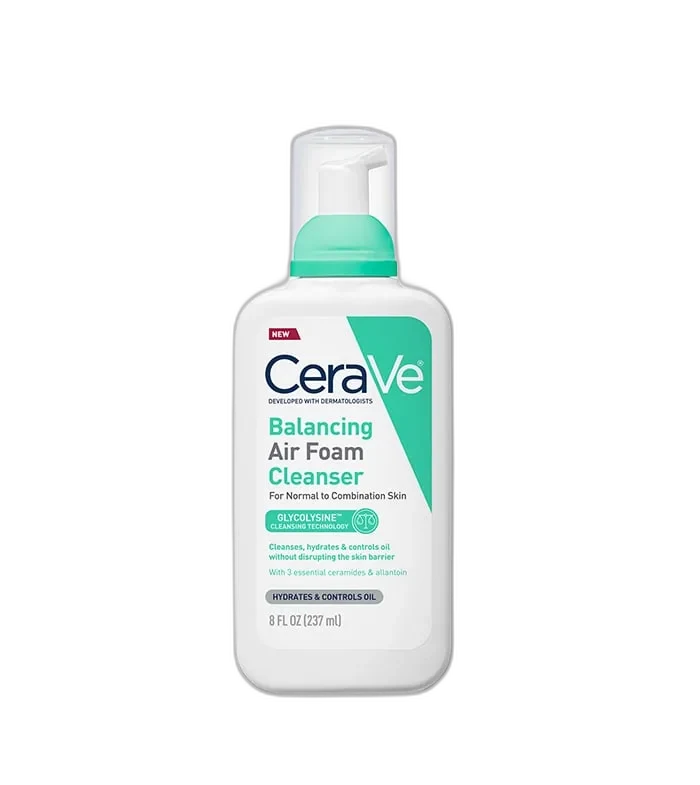
Balancing Air Foam Cleanser
Next-Gen CeraVe Cleanser
 Verified reviewer
Pros & cons.
- +Innovative Glycolysine surfactant cleanses effectively without stripping barrier lipids
- +Air-foam delivery eliminates friction and mechanical irritation during cleansing
- +Three essential ceramides plus cholesterol and phytosphingosine actively support barrier during washing
- +Niacinamide stimulates the skin's own ceramide production for cumulative barrier benefits
- +Sulfate-free amino acid surfactant base backed by published evidence for gentleness
- +Sub-therapeutic salicylic acid supports pore clarity without causing exfoliation-related sensitivity
- +Fragrance-free and non-comedogenic with minimal potential irritants
- +Clinically shown to provide 8-hour oil control with 24-hour hydration retention
- −Roughly 2.5 times more expensive per ounce than CeraVe's classic Foaming Facial Cleanser
- −Foam dissipates quickly, often requiring multiple pumps for full-face coverage
- −Very dry skin types may still experience some post-cleansing tightness
- −Pump mechanism requires upright storage — not ideal for all shower setups
- −Glycolysine is proprietary with limited independent research beyond CeraVe's own testing
Ingredient analysis.
Full INCI list
Aqua/Water/Eau, Glycerin, Sodium Chloride, Glycolipids, Disodium Cocoyl Glutamate, Sodium Methyl Cocoyl Taurate, Niacinamide, Allantoin, Ceramide NP, Ceramide AP, Ceramide EOP, Carbomer, Triethyl Citrate, Sodium Cocoyl Glutamate, Salicylic Acid, Sodium Benzoate, Sodium Lauroyl Lactylate, Cholesterol, Coco-Betaine, Coconut Acid, Caprylyl Glycol, Citric Acid, Phytosphingosine, Xanthan Gum, Polyepsilon-Lysine, Benzoic Acid
Skin match.
The science.
The Science
The Balancing Air Foam Cleanser uses two established scientific pillars and one new, proprietary technology.
The ceramide component uses research by Man et al. (Journal of Investigative Dermatology, 1996) showing that an equimolar mixture of ceramides, cholesterol, and free fatty acids repairs the epidermal barrier faster than any single lipid class alone. This formula contains all three ceramide subtypes (NP, AP, EOP) plus cholesterol and phytosphingosine—a lipid profile that mirrors the skin's natural stratum corneum composition. In a cleanser, this matters: traditional surfactants deplete these barrier lipids during washing, so replenishing them during cleansing offsets that damage.
Niacinamide uses research by Tanno et al. (British Journal of Dermatology, 2000) showing that topical niacinamide stimulates the biosynthesis of ceramides and other stratum corneum lipids, improving epidermal permeability barrier function. In this formula, niacinamide works with the topically applied ceramides—the exogenous ceramides provide immediate barrier support during cleansing, while niacinamide signals the skin to produce more of its own. For combination skin, niacinamide also helps regulate sebum, as reviewed in the Journal of Cosmetic Dermatology (2004).
The surfactant system uses amino acid-derived cleansers (disodium cocoyl glutamate, sodium methyl cocoyl taurate) instead of sulfates. A review in the Journal of Drugs in Dermatology (2019) showed that newer mild surfactant technologies cause less barrier disruption than traditional anionic surfactants, with lower transepidermal water loss post-cleansing.
Glycolysine, the proprietary glycolipid-based surfactant, is the newest element. While studies exist for glycolipid biosurfactants in industrial and pharmaceutical contexts, Glycolysine's specific use in skincare is CeraVe's proprietary development. The mechanism—selective trapping of impurities while preserving barrier lipids—is supported by CeraVe's clinical testing but lacks independent peer-reviewed validation.
References
- Optimization of physiological lipid mixtures for barrier repair — Journal of Investigative Dermatology (1996)
- Nicotinamide increases biosynthesis of ceramides as well as other stratum corneum lipids to improve the epidermal permeability barrier — British Journal of Dermatology (2000)
- Recent Advances in Mild and Moisturizing Cleansers — Journal of Drugs in Dermatology (2019)
- Nicotinic acid/niacinamide and the skin — Journal of Cosmetic Dermatology (2004)
Dermatologist Perspective
Dermatologists often struggle to recommend cleansers for combination skin—products gentle enough for dry areas often under-cleanse oily zones, and vice versa. Board-certified dermatologist Dr. Lian Mack, who helped develop this product, says the Glycolysine technology fills a gap in the cleanser market. From a dermatological standpoint, the amino acid-based surfactant system improves on sulfate-based alternatives by producing less transepidermal water loss and less disruption to the skin's acid mantle. Including ceramides, cholesterol, and phytosphingosine in a rinse-off product is important—even with brief contact time, clinical evidence shows barrier lipid deposition occurs during short-contact cleansing. Dermatologists often recommend this for combination skin patients whose current cleanser either dries out patches or fails to control midday oiliness.
Where it fits in your routine.
Wet your face with lukewarm water. Hold the bottle upright and press the pump to dispense foam; two to three pumps covers the full face. Massage the foam into your skin in circular motions for 30-60 seconds, focusing on oilier areas like the T-zone. Rinse well with lukewarm water and pat dry. Use as your daily cleanser every morning and evening. If you wear heavy makeup or sunscreen, use an oil-based first cleanse before this product.
At $18.99 for 8 ounces, the Balancing Air Foam Cleanser costs more than any other cleanser in CeraVe's core lineup — about 2.5 times the per-ounce price of the Foaming Facial Cleanser. This price includes proprietary Glycolysine technology, an air-foam delivery system, and niacinamide, which the original lacks. For combination skin types who found cheaper options unsatisfactory, the cost makes sense. A 5 oz size exists internationally and sometimes through U.S. retailers as a lower-commitment entry point. CeraVe's brand heritage and dermatologist-developed pedigree suggest the price reflects formulation investment rather than marketing markup.
Combination skin types caught between stripping and gentle cleansers will find their answer here. It also works for anyone using retinoids or active treatments who needs a cleanser that supports barrier health instead of undermining it.
Very dry skin types should use CeraVe's Hydrating Facial Cleanser — this formula's oil-control properties leave parched skin wanting more. Those on a tight budget should decide if the premium over the classic Foaming Cleanser fits their specific skin concerns.
Product details.
Fragrance-free, though base ingredients leave a faint, clean scent. It is not scentless but remains unobtrusive.
White pump bottle with CeraVe's signature blue accent stripe. The aerosol-free air-foam pump dispenses pre-lathered foam, so you do not lather it manually. Store upright.
The first pump produces an airy, cloud-like foam that feels different from traditional foaming cleansers. Skin feels clean and balanced after rinsing; most users notice the lack of tightness immediately. There is no adjustment period; results show from the first use.
3-4 months with twice-daily use
12 months
All Year
The backstory.
CeraVe launched the Balancing Air Foam Cleanser in mid-2025 as part of its 20th anniversary product line, positioning it as the culmination of a decade of surfactant research. The product was designed to solve the combination-skin dilemma that neither the Hydrating Cleanser (too rich for oily zones) nor the Foaming Cleanser (too stripping for dry patches) fully addressed.
About CeraVe
Established Brand (5–20 years)Dermatologists helped develop CeraVe in 2005. It is the #1 dermatologist-recommended skincare brand in the U.S. Peer-reviewed research backs its formulations, and multiple products carry the National Eczema Association Seal of Acceptance.
Common myths.
Foaming cleansers strip the skin barrier and cause dryness.
This depends on the surfactant system. The amino acid-based surfactants and glycolipids in this formula cleanse without disrupting the lipid barrier. Consumer studies show 24-hour hydration retention after use.
The salicylic acid in this cleanser exfoliates and thins your skin.
Salicylic acid is at a sub-therapeutic, skin-conditioning concentration—not enough to act as a chemical exfoliant. It helps pore clarity and oil control without the dryness or sensitivity of BHA treatment products.
FAQ.
How is this different from the CeraVe Foaming Facial Cleanser?
The Balancing Air Foam Cleanser uses CeraVe's proprietary Glycolysine surfactant technology instead of traditional surfactants. It includes niacinamide and conditioning-level salicylic acid, which the original lacks, and dispenses as a pre-lathered air-foam rather than a gel. It targets combination skin, while the Foaming Cleanser works for normal-to-oily types.
Can I use this cleanser with retinol?
The ceramide-niacinamide base works well with retinol or retinoid treatments. The gentle surfactant system prevents extra dryness from retinoids, and the barrier-supportive ingredients help skin resilience during retinoid use.
Does this cleanser contain enough salicylic acid to treat acne?
No — the salicylic acid is at a conditioning concentration, not a therapeutic one. It helps manage oil and general pore clarity but does not treat active acne. For acne treatment, use this cleanser with a dedicated salicylic acid or benzoyl peroxide treatment product.
Is the CeraVe Balancing Air Foam Cleanser fragrance-free?
It contains no added fragrance. Some users note a faint, clean scent from the base ingredients, but fragrance compounds are not present and sensitive skin types generally tolerate this well.
Will this cleanser remove waterproof makeup and sunscreen?
It removes most everyday makeup and sunscreen. For heavy or waterproof formulations, use it as a second cleanse after an oil-based cleanser or micellar water for the most thorough removal.
Is this cleanser safe during pregnancy?
This formula uses a low, conditioning concentration of salicylic acid in a rinse-off product with minimal skin contact time. Most dermatologists consider rinse-off products with low-concentration salicylic acid safe during pregnancy; consult your OB-GYN if you have concerns.
What the community says.
"Lightweight, airy foam texture feels luxurious and pleasant to use"
"Effectively removes makeup and SPF without stripping skin"
"Leaves skin feeling clean yet hydrated — no tightness"
"Balances oily and dry areas on combination skin"
"Auto-foam pump is convenient and dispenses perfectly"
"Gentle enough for sensitive and reactive skin"
"Foam dissipates quickly and may require multiple pumps for full coverage"
"Pricier than classic CeraVe Foaming Facial Cleanser"
"Some very dry skin types still feel slightly tight after use"
"Pump mechanism requires keeping bottle upright"