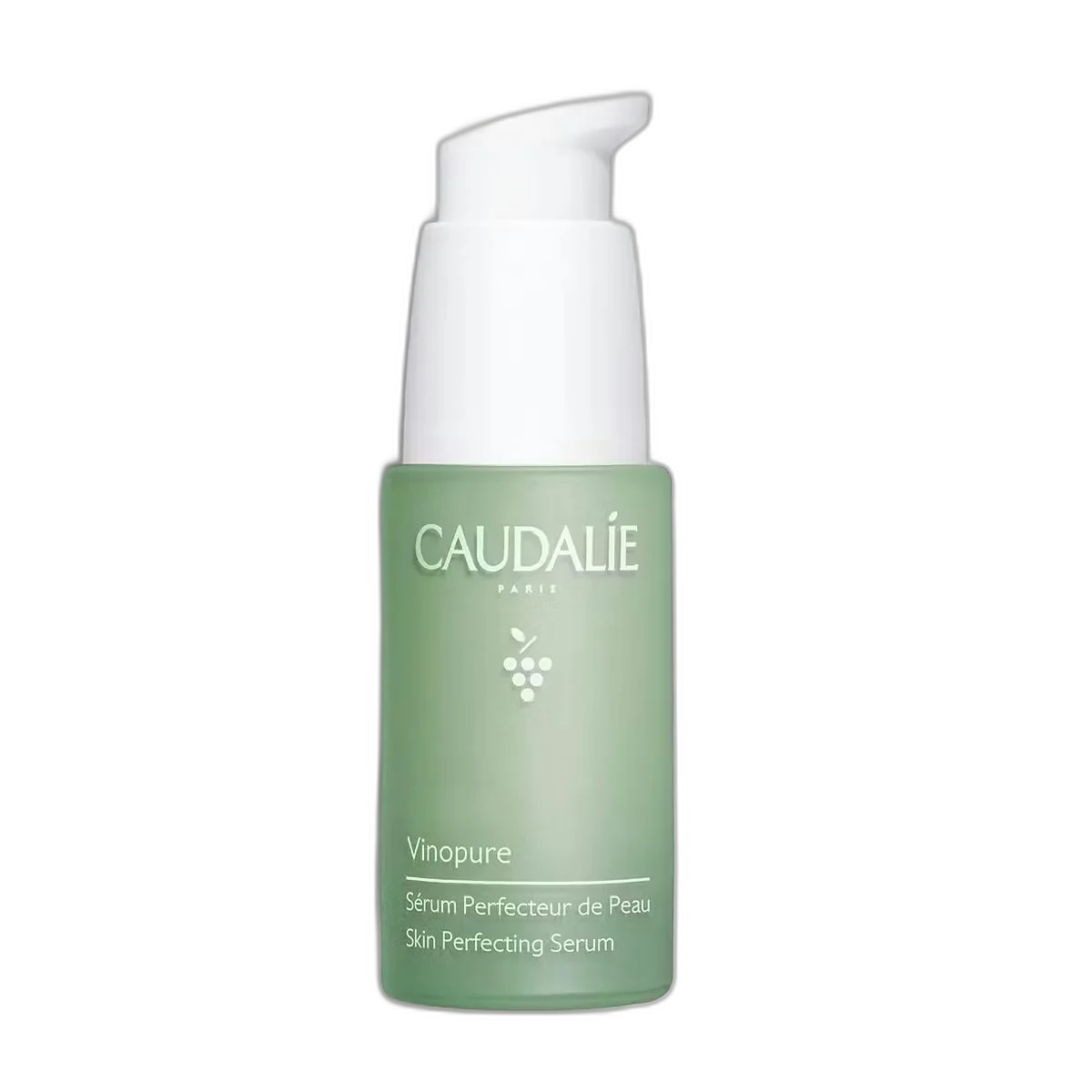
Vinopure Natural Salicylic Acid Pore Minimizing Serum
Botanical BHA for Oily Skin
 Verified reviewer
Pros & cons.
- +Smart combination of willow bark BHA and meaningful niacinamide dose
- +Lightweight milky texture layers cleanly under moisturizer and SPF
- +Visible reduction in pore appearance and midday shine within weeks
- +Grape polyphenol antioxidants add anti-aging benefit rare in pore-care products
- +Gentler than 2% synthetic salicylic acid for sensitive oily skin types
- +Cruelty-free, vegan, and Clean+ certified for clean-beauty shoppers
- −Strong essential oil fragrance is a dealbreaker for reactive or rosacea-prone skin
- −Caudalie does not disclose the effective salicylic acid concentration
- −Expensive at $49 for 30ml relative to proven alternatives
- −Slower results on stubborn blackheads than traditional 2% BHA serums
The full review.
About Caudalie
Historically, if you had oily skin and entered a French pharmacy, the Vinoperfect clerk would point you toward La Roche-Posay. Caudalie focused on polyphenols and radiance—using beautiful packaging and Bordeaux-provenance to target the dry-to-mature market. Vinopure launched in 2018 as the brand’s first real move into the oily and acne-prone segment, and this serum is the line’s flagship. It shows how a brand with a specific identity tries to solve problems outside its core DNA.
Myth
The formula is clever. Instead of using a standard 2% synthetic salicylic acid, Caudalie uses willow bark extract—a natural salicin source that converts to salicylic acid in the skin—and adds a high niacinamide dose. This pairing is the product’s best feature. Willow bark acts as a mild exfoliant; niacinamide regulates sebum and tightens pore appearance; together they do more than either alone. Add the brand’s grape polyphenol antioxidant complex, and this single serum performs three functions.
Texture
The texture is thin, slightly milky, and absorbs within a minute. It layers well under SPF in the morning and under moisturizer at night.
Common Praise
Users report that Vinopure works as named—pores look smaller within weeks, midday shine decreases, and surface texture evens out. Blackheads respond slower than they would to a 2% BHA, but that is the tradeoff for gentler delivery.
Scent
The fragrance is the issue. Vinopure uses a bright herbal essential oil complex of grapefruit, rosemary, peppermint, lemon balm, and lavender. The brand markets this as part of the experience, and many users agree. The cooling tingle, the Provencal herb garden scent, and the sensation of efficacy all come from the essential oils. For sensitive or rosacea-prone skin, this complex is a minefield. Limonene, linalool, citral, and geraniol are on the allergen list, and users often report stinging and inflammation.
Not ideal for
Vinopure targets oily skin that is not reactive, which is a narrow segment of the oily-skin market.
Common Complaints
Pricing transparency is another weakness. At $49 for 30ml, this serum sits in the Clean Beauty luxury tier, and Caudalie does not disclose the effective salicylic acid concentration. The Ordinary’s Salicylic Acid 2% Solution costs about a tenth as much and lists the exact concentration. This does not mean Vinopure lacks value—the niacinamide dose, polyphenol framework, and texture are excellent—but the missing BHA percentage makes it hard to judge the serum objectively.
Best for
This product works best for combination-skin users wanting a low-maintenance all-in-one: one bottle for oil control, pore refinement, and antioxidant protection without a three-serum routine.
Works for
If your skin is not reactive to essential oils, Vinopure is a polished option in this category.
Not ideal for
If you have stubborn acne or sensitive-oily skin, look elsewhere—Paula’s Choice 2% BHA works harder for less money, and CeraVe’s Resurfacing Retinol Serum offers a gentler, fragrance-free alternative.
Ingredient analysis.
Full INCI list · pH 4.5
Aqua/Water/Eau, Propanediol, Glycerin, Niacinamide, Pentylene Glycol, Polyglyceryl-6 Stearate, Polyglycerol-6 Behenate, Salix Alba (Willow) Bark Extract, Rosmarinus Officinalis (Rosemary) Leaf Extract, Melissa Officinalis Leaf Extract, Citrus Grandis (Grapefruit) Peel Oil, Lavandula Hybrida Oil, Citrus Limon (Lemon) Peel Oil, Mentha Piperita (Peppermint) Oil, Cinnamomum Camphora Bark Oil, Vitis Vinifera (Grape) Leaf Extract, Salicylic Acid, Tocopherol, Xanthan Gum, Caprylyl Glycol, Citric Acid, Sodium Hydroxide, Limonene, Linalool, Citral, Geraniol, Phenoxyethanol
Skin match.
The science.
The Science
The serum works via a dual mechanism backed by more research than marketing implies. Willow bark extract contains salicin, a natural glycoside that converts to salicylic acid on the skin. Peer-reviewed studies on willow bark in cosmetic formulations show the delivered salicylic acid concentration is lower than a labeled 2% BHA product, but the slower-release profile reduces irritation while still exfoliating pores over time. The second mechanism is niacinamide, which has strong evidence in cosmetic dermatology for reducing sebum production, tightening pore appearance, and modulating inflammation. Studies on topical niacinamide show measurable decreases in sebum excretion at 2-5% concentrations with consistent use over eight to twelve weeks. The formulation uses synergy: the BHA component exfoliates surface cells and opens clogged follicles while niacinamide regulates the sebaceous gland output that refills those follicles. Caudalie's patented grape polyphenol complex adds an antioxidant layer that improves texture by neutralizing oxidative damage from UV and environmental stress. The essential oil complex has less science behind it — rosemary and peppermint have published antimicrobial and astringent activity, but the concentrations in cosmetic serums are usually too low for clinical effect, and these compounds drive most of the formula's irritation potential.
Dermatologist Perspective
Dermatologists generally approve of salicylic acid and niacinamide for mild to moderate oily and blemish-prone skin; board-certified dermatologists note this combination works better than either active alone. Willow bark extract is an acceptable salicylic acid source, but doctors view it as a gentler alternative rather than a replacement for pharmaceutical BHA in patients with stubborn acne or significant comedones. The formulation's essential oil content is a common concern for dermatologists — patients with rosacea, eczema, or contact sensitivities should patch test products containing limonene, linalool, and geraniol before full-face use. For oily-skin patients who tolerate fragrance and want a multi-tasking maintenance serum, this product is a reasonable over-the-counter option, though dermatologists often recommend prescription retinoids or higher-concentration BHA formulations for active acne.
Where it fits in your routine.
Apply four to five drops to clean, dry skin after cleansing and toning, gently pressing into face and neck while avoiding the immediate eye area. Start once daily in the evening for the first week to assess tolerance, then add morning use if no irritation develops. Always follow with moisturizer, and in the morning, layer an SPF 30+ broad-spectrum sunscreen — BHA products increase UV sensitivity. Avoid layering with strong retinoids, benzoyl peroxide, or other acids in the same routine. Discontinue temporarily if you experience persistent redness, burning, or peeling.
At $49 for 30ml, this serum is a high-end non-prescription pore-care product. The price covers the niacinamide-plus-BHA-plus-polyphenol combination, Caudalie's clean formulation standards, and the French pharmacy aesthetic. This premium works for users wanting a single-serum solution, but cheaper alternatives offer these functions separately. Paula's Choice 2% BHA provides more aggressive exfoliation for roughly half the price, and The Ordinary's Niacinamide 10% + Zinc 1% costs about a tenth of this for the niacinamide component alone. Caudalie does not offer a larger size. The verdict: worth it if you value all-in-one convenience and tolerate fragrance; overpriced if you build a two-product routine.
Oily and combination skin types with enlarged pores, midday shine, and mild blackhead congestion can use this single serum for multiple concerns. It suits users who like botanical scents and sensory skincare. It also fits clean-beauty shoppers who prefer natural-origin actives over synthetic equivalents.
Avoid this serum if you have sensitive, reactive, or rosacea-prone skin; the essential oil profile is too risky. Skip this if you have active moderate-to-severe acne, as a stronger salicylic acid or retinoid works better. Also skip if you want transparent concentration disclosure or prefer fragrance-free formulations.
Product details.
Thin, slightly milky serum that spreads easily and absorbs within a minute
Pronounced fresh herbal — rosemary, grapefruit, and peppermint
Frosted glass dropper bottle, standard Vinopure range styling
Peppermint provides a cooling sensation and a strong herbal scent that some users like and others find overwhelming. Slight tingling is normal during the first few days of skin adjustment. Skin feels slightly drier because the oil control works fast.
About 2 months with twice-daily use on face only
12 months
All Year
The backstory.
Caudalie launched the Vinopure line in 2018 after years of the brand primarily catering to normal and mature skin through Vinoperfect and Premier Cru. Oily and acne-prone consumers were the most underserved segment of the Caudalie customer base, and Vinopure was a direct response — built around willow bark instead of synthetic salicylic to maintain the brand's natural-origin positioning.
About Caudalie
Established Brand (5–20 years)Caudalie launched in 1995 in Bordeaux. It built its reputation on grape-derived polyphenol research from a collaboration with the University of Bordeaux pharmacy school. The Vinopure line treats oily and blemish-prone skin with a patented grape polyphenol complex instead of traditional pharmaceutical actives.
Common myths.
Natural salicylic acid from willow bark has the same strength as synthetic salicylic acid.
Willow bark has salicin, which converts to salicylic acid in the skin. This concentration is usually lower than the percentages in pharmaceutical BHA products. This serum is a gentle BHA. It works for maintenance but does not replace a 2% salicylic acid treatment for stubborn acne.
'Natural' does not make essential oils better.
Essential oils cause much of the allergic contact dermatitis in skincare. Natural origin does not predict skin reactions — this formula contains limonene, linalool, citral, and geraniol, so sensitive skin needs careful patch testing.
FAQ.
How does this compare to The Ordinary Niacinamide 10% + Zinc 1%?
This serum uses natural BHA exfoliation and Caudalie's grape polyphenol antioxidants, while The Ordinary focuses on niacinamide. Vinopure solves pore size and surface texture concerns more completely for about six times the price per milliliter.
Can I use this with retinol?
Yes, but not simultaneously. Alternate nights: use retinol one night and this serum the next. Skip this serum on retinol nights to prevent essential oils from adding to retinoid irritation.
Is this safe during pregnancy?
The salicylic acid in this serum stays within general pregnancy limits. However, the essential oil content — specifically the peppermint, grapefruit, and rosemary — warrants a check with your OB or dermatologist before use during pregnancy.
Will this cause purging?
Some users experience mild purging during the first two weeks as BHA speeds cell turnover and surfaces clogged pores. If breakouts worsen or last more than three weeks, it is irritation, not purging — use three times weekly or stop.
Can I use this both morning and evening?
Yes, once your skin acclimates. Use it once daily for the first week (ideally at night), then add morning use. On days you use it twice, your morning SPF is non-negotiable.
Why does it smell so strongly of herbs?
The scent comes from the essential oil blend — grapefruit, rosemary, peppermint, lemon balm. Caudalie considers this part of the sensory experience, but if you dislike strong botanical scents, this serum isn't for you and you should look at fragrance-free alternatives like Paula's Choice BHA.
Is 30ml enough to last?
One bottle lasts roughly two months with twice-daily use on the full face. Use it once daily for three and a half to four months.
Community
What the community says.
"Visibly smaller pores after a few weeks"
"Refreshing herbal scent"
"Lightweight texture that layers well"
"Notable reduction in midday shine"
"Strong essential oil fragrance"
"Too irritating for sensitive skin"
"Expensive for 30ml"
"Doesn't disclose salicylic acid percentage"
People also looked at.