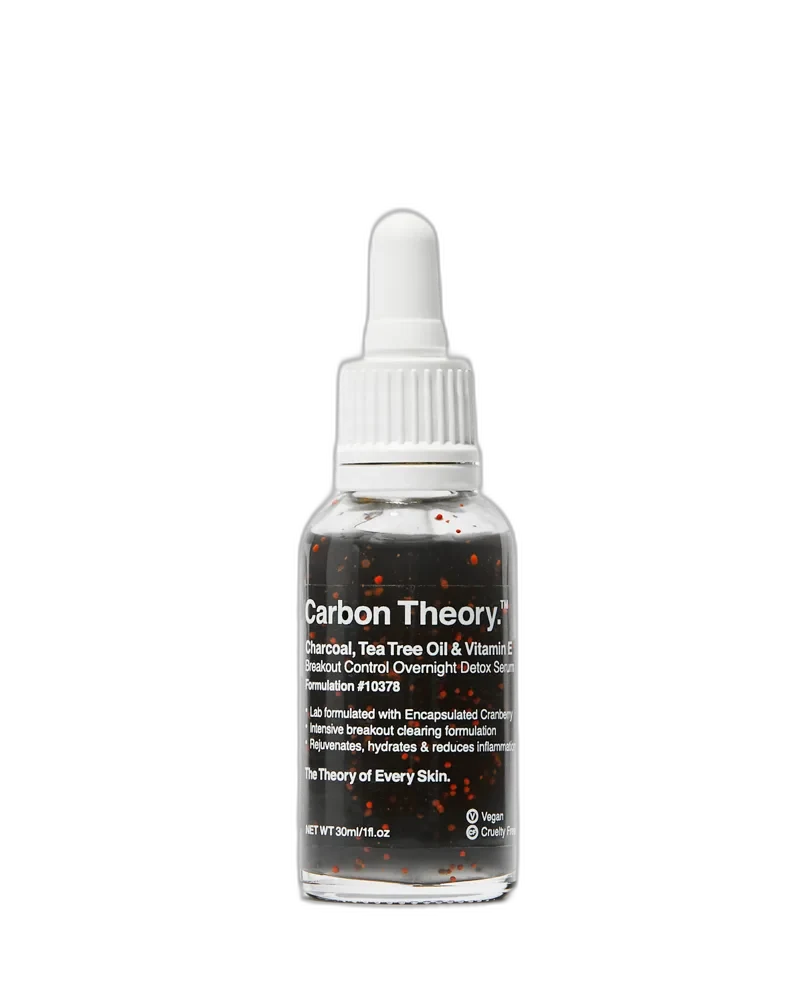
Overnight Detox Serum
Budget 2% BHA
 Verified reviewer
Pros & cons.
- +Full clinical-strength 2% salicylic acid at budget pricing
- +5% niacinamide and zinc PCA buffer irritation and reinforce oil control
- +Water-thin texture absorbs in seconds with no residue
- +Meaningful blackhead reduction within 3-4 weeks
- +Thoughtful base without drying alcohols
- +Cruelty-free and vegan certified
- −Persistent tea tree scent from a real essential oil dose
- −Contains linalool and limonene — not fragrance-sensitive-friendly
- −Small 30ml bottle runs through fast with nightly use
- −Too active to stack with retinoids or additional BHA
- −Not appropriate in pregnancy
The full review.
This serum targets a specific skincare niche. Paula’s Choice’s 2% BHA Liquid costs roughly $35 for 118ml of clinical-strength leave-on salicylic acid. The Ordinary’s 2% Salicylic Acid Anhydrous Solution is cheaper at around $8, but lacks the buffering and supporting ingredients for long-term daily use. Carbon Theory’s Overnight Detox Serum fills the gap: indie-brand pricing with thoughtful formulation support for users wanting the Paula’s Choice concept without the Paula’s Choice price.
The 2% salicylic acid is a genuine clinical dose—the concentration required for leave-on BHA to work when used consistently. Unlike bargain-bin acid serums, this includes 5% niacinamide. This meaningful dose allows the formulation to deliver full salicylic acid strength without leaving skin raw the next morning. The niacinamide lowers sebum output and calms BHA-triggered inflammation, raising the irritation ceiling above what the acid dose alone would allow. Zinc PCA adds 5-alpha-reductase inhibition, while panthenol and allantoin protect the barrier.
The base matters too. Propanediol and glycerin replace the alcohol used as a solvent in older BHA toners; this serum avoids the desiccating aftermath seen in Neutrogena’s old salicylic acid toners. The texture is water-thin—a true serum, not a silicone-thickened gel—and absorbs in about ten seconds. The tea tree scent is the expected Carbon Theory signature; it is noticeable immediately and fades within minutes. It is a real essential oil dose, not a cosmetic fragrance.
Nightly use over weeks yields results predicted by 2% BHA evidence. Smoother texture appears in the first week as the top layer of dead keratinocytes turns over faster, making foreheads and cheeks feel softer. Blackheads on the nose and chin visibly loosen and shrink within 2-3 weeks. Small whiteheads and comedones diminish over 4-6 weeks as the acid decongests the pore lining. Inflammatory acne responds more slowly and incompletely. Over-the-counter BHA cannot treat cystic or deep nodular acne, which requires a prescription retinoid or oral treatment; use this serum as adjunct therapy, not a standalone solution for severe cases.
The irritation budget defines its limits. A 2% leave-on BHA plus tea tree plus linalool and limonene is a reactive ingredient stack. This is fine for resilient oily skin without barrier issues. For dry, sensitive, rosacea-prone skin, or skin treated with a retinoid, this causes over-exfoliation. Pregnant users should skip it due to the salicylic acid dose and tea tree content. Fungal acne sufferers must be cautious; while the serum is oil-free, the Malassezia reaction to tea tree is unpredictable, so patch test.
Value drives the purchase. Twenty dollars for 30ml of 2% BHA with 5% niacinamide and zinc PCA is cheap for these ingredients. You save money per effective treatment compared to Paula’s Choice and gain the zinc PCA benefit. Compared to The Ordinary, you get a properly buffered formulation for daily use. The 30ml size is the only frustration; a 60ml option would be a budget staple for oily acne-prone users, but you will use 30ml quickly with consistent use. For the right user, this is a strong indie budget acne treatment; for others, unscented alternatives work better.
Ingredient analysis.
Full INCI list · pH 4
Aqua (Water), Propanediol, Niacinamide, Glycerin, Salicylic Acid, Panthenol, Allantoin, Sodium Hyaluronate, Zinc PCA, Melaleuca Alternifolia (Tea Tree) Leaf Oil, Citric Acid, Sodium Citrate, Xanthan Gum, Hydroxyethylcellulose, Phenoxyethanol, Ethylhexylglycerin, Linalool, Limonene
Skin match.
The science.
The Science
Extensive evidence supports 2% leave-on salicylic acid for acne. Multiple randomised and dermatology review articles show it works for comedonal and mild-to-moderate inflammatory acne. Its lipid solubility lets the acid penetrate the follicular unit and dissolve sebum plugs. Combining it with 5% niacinamide has specific data — a 2012 trial in the Journal of Clinical and Aesthetic Dermatology showed topical 5% niacinamide reduced inflammatory lesions similarly to 1% clindamycin over 8 weeks of use. Other research shows niacinamide reduces sebum in acne-prone populations. Zinc PCA has less clinical data, but in vitro and small trial evidence shows a modest sebostatic effect and anti-inflammatory action. Tea tree oil has modest published evidence for mild acne at typical use doses. This formulation layers three complementary mechanisms into one serum at doses that work together without hitting an irritation ceiling for any single ingredient. No studies exist for this exact combination at these doses; judge efficacy by the individual evidence base.
Dermatologist Perspective
Dermatologists generally find 2% leave-on BHA serums like this appropriate for mild-to-moderate comedonal acne in oily or combination skin. Board-certified dermatologists often recommend pairing salicylic acid with niacinamide because B3 improves tolerability of the acid dose. Derms suggest gentler alternatives like azelaic acid or alternating-night scheduling for pregnant, sensitive, or retinoid-using patients. This serum is a reasonable self-directed treatment for appropriate users but inappropriate for severe or reactive cases.
Where it fits in your routine.
Apply 3-4 drops to clean dry skin at night, avoiding the immediate eye area. If new to leave-on BHAs, use twice weekly for 2 weeks, then move to alternate nights and finally nightly as tolerated. Always follow with a plain ceramide moisturiser and wear sunscreen the next morning. Do not use with retinoids, additional BHAs, or benzoyl peroxide on the same night.
At about $20 for 30ml, this BHA serum competes with prestige and indie brands. The per-ml price is lower than Paula's Choice 2% BHA Liquid, despite having similar formulation sophistication and added zinc PCA. Compared to cheaper options like The Ordinary, the higher price buys proper buffering and more comfortable daily use. The lack of a larger size is the main value issue; a 60ml option would improve the per-use economics.
Oily and combination skin with mild-to-moderate comedonal acne, blackheads, enlarged pores, and rough texture. Budget-conscious users wanting clinical-strength BHA without prestige brand markups.
Dry, sensitive, rosacea-prone, or eczema-prone skin. Pregnant users, nightly retinoid users, and people with fragrance allergies. Fungal acne sufferers who reacted to tea tree before.
Product details.
Clear, water-thin liquid
Tea tree and herbal
Frosted glass bottle with dropper
Active breakouts often tingle briefly upon application. Expect a 1-2 week purge as clogged pores surface and clear, then skin texture becomes smoother.
About 2 months with nightly use
12 months
All Year
The backstory.
Built as the leave-on counterpart to Carbon Theory's famous cleansing bar, the serum was added as the brand's retail footprint grew and allowed more sophisticated formulation development. It remains one of the brand's most recommended products for users who want a proper overnight acne treatment within the Carbon Theory range.
About Carbon Theory
Emerging Brand (2–5 years)Carbon Theory is a UK indie brand that launched in 2018 via Boots. It is best known for its viral charcoal and tea tree cleansing bar. This serum joined the range as it expanded. Independent clinical validation is limited compared to legacy derm-developed brands.
Common myths.
All 2% BHA serums are equally drying.
The base is as important as the acid. This formulation uses propanediol and glycerin instead of alcohol and pairs the BHA with niacinamide and panthenol. The net effect is gentler than older BHA toners at the same acid dose.
FAQ.
Is this the same as the Breakout Control Overnight Detox Serum?
Yes — some retailers use the names interchangeably for the same formulation. We list both entries for completeness, but they are the same core product.
Is it beginner-friendly?
Use with care as a beginner. The 2% salicylic acid is a clinical dose, not a gentle introduction — start twice weekly and build up instead of nightly use.
Can I use it with retinol?
Do not use them on the same night. Alternate nights: use the retinoid one night and this serum the next. Combining them causes flaking and over-exfoliation.
Does it work on blackheads?
Yes. 2% salicylic acid is oil-soluble and dissolves the sebum and dead cells that form blackheads — one of its best documented uses. Expect visible reduction within 3-4 weeks.
Is it safe in pregnancy?
No. 2% leave-on salicylic acid exceeds common pregnancy doses, and tea tree oil is often on the avoid list. Use azelaic acid instead.
Will the tea tree scent fade?
Yes, it works within minutes of application. Users with fragrance sensitivities should still avoid it—the scent is a real essential oil dose, not a masking fragrance.
What the community says.
"visible blackhead reduction"
"fair price for a 2% BHA"
"doesn't feel drying"
"strong tea tree smell"
"aggressive for first-time acid users"
"small bottle"
People also looked at.