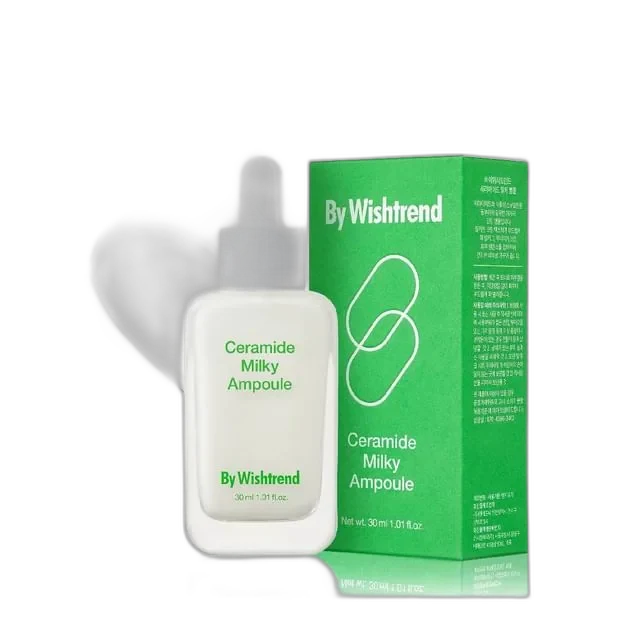
Cera-Barrier Soothing Ampoule
Barrier Repair Pick
 Verified reviewer
Pros & cons.
- +Five-ceramide complex is rare in mainstream K-beauty
- +Complete barrier lipid matrix with cholesterol and phytosphingosine
- +Niacinamide concentration drives endogenous ceramide production
- +Fragrance-free, alcohol-free, vegan formulation
- +Milky-serum texture layers under moisturizer without pilling
- +Excellent for retinol or acid recovery routines
- −Higher price point for 30ml than basic ceramide serums
- −Not fungal-acne safe due to lipid content
- −Incremental benefit over three-ceramide products may be modest
- −Small bottle runs out in 6-8 weeks with full-face twice-daily use
- −Limited availability outside K-beauty retailers
The full review.
Let’s talk about ceramide arithmetic, because it’s the thing nobody buying a barrier cream ever actually looks at. When a product’s marketing says ‘ceramides,’ it almost always means one specific type — usually ceramide NP, which is the most commonly used in cosmetics because it’s inexpensive and stable. The problem is that the stratum corneum — the top layer of your skin — contains at least twelve different ceramide subtypes in a specific ratio with cholesterol and free fatty acids, and the barrier lipid lamellae can only reassemble properly when you supply a blend that mimics that natural distribution. One ceramide helps. Several ceramides plus cholesterol helps more. What By Wishtrend did with this ampoule is one of the more serious attempts in mainstream K-beauty to actually respect that arithmetic.
Look at the INCI and you’ll find five ceramide subtypes listed: NP, NS, AP, EOP, and AS. That’s a genuinely uncommon range — most ceramide ampoules include one or two, and many include just ‘ceramides’ as an umbrella term that turns out to be a single subtype. The inclusion of ceramide NS and ceramide AS alongside the more common NP, AP, and EOP is the core differentiator here. Cholesterol and phytosphingosine round out the barrier lipid support, which means the formula is attempting to reconstruct the lamellar structure rather than just deposit a single ceramide on the skin’s surface. Niacinamide is placed high enough in the INCI to suggest a concentration capable of driving the skin’s own ceramide biosynthesis, which amplifies the effect of the supplied lipids by pushing the skin to produce more on its own.
Texture
Texture-wise, this sits in the milky-serum category — a touch thicker than a watery ampoule but lighter than a cream. It deposits a cushioning layer on the skin that spreads easily and sinks in over a couple of minutes without the tacky residue some lipid-rich serums leave behind. The dropper delivery gives you precise control over how much you use, and most people find three or four drops is enough for the full face. There’s no fragrance, no essential oils, no alcohol — all appropriate choices for the compromised-skin audience this product targets.
Common Praise
On performance, this ampoule earns its reputation on very damaged skin. Users recovering from over-exfoliation, post-procedure irritation, eczema flares, or aggressive retinoid regimens tend to report the most dramatic results — visible improvement within the first week, substantial barrier restoration within a month of consistent use. The centella extract and madecassoside add a calming layer on top of the lipid work, which matters because compromised barriers are usually inflamed and that inflammation perpetuates the dysfunction. For healthy skin looking for preventative support, the effect is subtler but still present.
Common Complaints
The honest limitations: the formulation isn’t fungal-acne safe, which is a real consideration for malassezia-prone users. The thirty-milliliter bottle is small for the price — at twice-daily full-face use, you’re going through it in six to eight weeks, which adds up if you stay on it long-term. And while the five-ceramide complex is the headline differentiator, the incremental benefit over a good three-ceramide product is probably smaller than the marketing would suggest for most users. If you already have a barrier serum that works, switching to this for the sake of two additional ceramide subtypes isn’t necessarily going to change your life.
Value
Value is where this product becomes a personal-circumstances question. At twenty-eight dollars for 30ml, it’s priced above basic ceramide serums but below premium Western barrier products from brands like SkinCeuticals or EltaMD. If you’re dealing with a compromised barrier and want the most complete ceramide profile in a K-beauty ampoule, this is worth the premium. If you’re looking for entry-level barrier support or working within a tight budget, a simpler centella or ceramide product from Benton or Purito delivers most of the benefit at a lower cost per milliliter. The brand is established enough (over a decade in business with published ingredient education) that the price isn’t just brand markup — you’re paying for the formulation choices.
Who Should Buy
The ideal buyer is someone with a genuinely compromised skin barrier who wants to invest in the most complete K-beauty ceramide ampoule available. It’s also a strong pick for people who already trust By Wishtrend from their other products, and for retinoid users who need serious barrier support to tolerate their actives. People with fungal acne, those on a tight budget, or users who already have a working barrier routine can probably find equivalent results in a simpler product.
Ingredient analysis.
Full INCI list · pH 5.5
Water, Glycerin, Butylene Glycol, Caprylic/Capric Triglyceride, Niacinamide, Ceramide NP, Ceramide NS, Ceramide AP, Ceramide EOP, Ceramide AS, Cholesterol, Phytosphingosine, Panthenol, Beta-Glucan, Centella Asiatica Extract, Madecassoside, Hydrogenated Lecithin, Sodium Hyaluronate, Tocopherol, Carbomer, Arginine, 1,2-Hexanediol, Ethylhexylglycerin
Skin match.
The science.
The Science
Extensive dermatological evidence supports ceramide replacement therapy for barrier repair. Research in the Journal of Investigative Dermatology shows the stratum corneum contains specific ratios of multiple ceramide subtypes, cholesterol, and free fatty acids. Compromised barriers from atopic dermatitis, over-exfoliation, or age lose ceramides in subtype-specific patterns. Single-ceramide formulations underperform multi-ceramide blends because the lamellar lipid structure needs the full profile to reassemble. This ampoule uses five ceramide subtypes (NP, NS, AP, EOP, AS) plus cholesterol and phytosphingosine, matching recommended approaches better than typical one-or-two ceramide products. Studies show topical niacinamide at 2-5% increases endogenous ceramide biosynthesis, complementing externally supplied lipids. Combining supplied ceramides with biosynthesis-boosting niacinamide is a logical strategy, and the ingredient placement suggests an effective niacinamide concentration. This 2022-launched ampoule lacks product-specific peer-reviewed clinical data, a common gap compared to legacy barrier products with more independent testing.
References
- Nicotinic acid/niacinamide and the skin — Journal of Cosmetic Dermatology (2005)
Dermatologist Perspective
Dermatologists recommend ceramide-rich barrier products for patients with atopic dermatitis, eczema, rosacea, or skin compromised by over-exfoliation or retinoid use. Board-certified dermatologists note that multi-ceramide formulations with cholesterol and phytosphingosine replicate the stratum corneum lipid profile more accurately than single-ceramide products; this ampoule's five-subtype approach fits that profile. Clinicians often tell patients with fungal acne or malassezia-sensitive skin to check the full ingredient list on lipid-rich products, including this ampoule. For patients using strong actives like tretinoin, clinicians often pair a barrier serum like this with a thicker ceramide cream to manage dryness and irritation.
Where it fits in your routine.
Apply 3-4 drops to damp skin after cleansing and toning. Press it into the face and neck, but avoid the immediate eye area. Use a ceramide cream or other moisturizer next to seal in the barrier support. Apply sunscreen in the morning. Use twice daily for very compromised skin. Once daily works for maintenance or preventative use. It works well as the hydrating step in a retinoid or acid routine.
At twenty-eight dollars for 30ml, this sits mid-range for barrier ampoules — more expensive than basic Benton or Purito options but cheaper than premium Western derm brands. The five-ceramide complex and complete lipid matrix justify the higher price over cheaper alternatives, especially for users with seriously compromised skin where the formulation difference yields faster results. For healthy skin seeking preventative barrier support, the value is less compelling because simpler ceramide products deliver most benefits at a lower cost. The per-milliliter price is high, but the ingredient density and brand track record justify the investment for the right use case.
This is for anyone with a compromised skin barrier from eczema, over-exfoliation, or aggressive retinoid use who wants the most complete K-beauty ceramide formulation. It also works for established By Wishtrend fans and those building a serious barrier repair routine that justifies the price premium.
Users with fungal-acne sensitive skin, tight skincare budgets, or healthy skin seeking basic hydration get most benefits from simpler centella or single-ceramide products at a lower cost.
Product details.
Milky-serum texture that spreads easily and sinks in without leaving residue
Faintly neutral, fragrance-free
Opaque glass bottle with dropper, 30ml
The first few uses feel comforting and reduce tightness immediately. Most users see visible barrier improvement within the first week. There is no purging or adjustment period.
1. 5-2 months with twice-daily face use
12 months
All Year
The backstory.
By Wishtrend is the in-house line of Wishtrend, a K-beauty retailer that built a Western audience through educational YouTube content explaining ingredient science. This ampoule was part of a 2022 push to translate the brand's ingredient-education ethos into a barrier repair product that went beyond the one-ceramide norm.
About By Wishtrend
Established Brand (5–20 years)By Wishtrend is the in-house skincare line of Wishtrend. This K-beauty retailer launched in 2012 and gained Western market recognition through its educational YouTube content. The brand focuses on ingredient-led formulas and publishes clinical testing for individual products.
Common myths.
More ceramides means better results
Ratio matters more than quantity — the ceramide to cholesterol and free fatty acids ratio beats total ceramide count. This ampoule has more subtypes, but the benefit comes from the balanced ratio with cholesterol and phytosphingosine, not just the ceramide count.
Barrier repair ampoules are only for damaged skin
Healthy barriers lose ceramides due to age and environmental stress. Using a barrier-support ampoule preventively works for anyone over 30 or in harsh climates.
FAQ.
Is By Wishtrend Cera-Barrier worth the price?
Yes for compromised skin — the five-ceramide complex is a complete barrier lipid blend for a K-beauty ampoule, and the niacinamide increases endogenous ceramide production alongside the supplied lipids. For healthy skin, a cheaper centella ampoule has better cost-to-benefit.
How does this compare to Dr. Jart Ceramidin?
Dr. Jart Ceramidin uses ceramide NP as its main ingredient. By Wishtrend uses five ceramide subtypes, cholesterol, and phytosphingosine. Dr. Jart has a longer track record, but By Wishtrend has a more complete lipid profile. Both products work as barrier treatments within their specific formulation philosophies.
Can I use this with retinol?
Yes — this works well with retinol because ceramide-cholesterol barrier support fixes retinol-irritated skin. Apply retinol first, wait a few minutes, then apply this ampoule.
Is it pregnancy safe?
Yes — no retinoids, salicylic acid, or hormonally active ingredients. Ceramides, niacinamide, centella, and panthenol are all pregnancy-safe.
Will it clog pores or cause fungal acne?
The formula contains fatty acid esters that can feed malassezia in sensitive users. It's not ideal for fungal-acne-prone skin. For pore clogging, the formulation is relatively low-comedogenic but not guaranteed for every acne-prone user.
How long does the bottle last?
Apply to the full face twice daily for 6-8 weeks. Use once daily or on targeted zones to last up to three months.
What the community says.
"Dramatic improvement on compromised skin"
"Non-greasy despite lipid content"
"Feels more substantial than most ampoules"
"Price is on the higher side for 30ml"
"Short bottle life with twice-daily use"
"Not fungal-acne safe"
People also looked at.