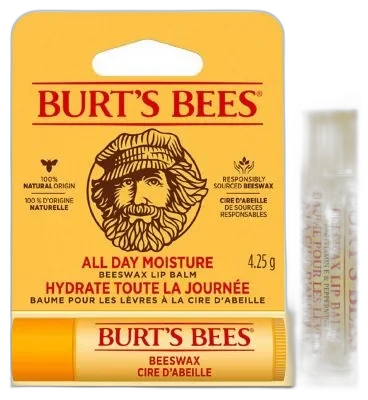
Beeswax Lip Balm
American Beauty Icon
 Verified reviewer
Pros & cons.
- +Beeswax-first formula provides genuine semi-occlusive protection for dry lips
- +Iconic peppermint tingle offers a refreshing sensory experience with mild plumping effect
- +Exceptional value under $4 per tube with 2-3 months of regular use
- +Only 12 natural-origin ingredients — one of the simplest formulas on the market
- +Available at virtually every retailer in the United States
- +Vitamin E provides antioxidant protection for UV-vulnerable lip skin
- +35+ year track record as one of America's bestselling lip balms
- −Peppermint oil irritates severely chapped, cracked, or eczema-prone lips
- −Contains lanolin, a common allergen affecting 1-3% of the population
- −Not vegan due to beeswax and lanolin content
- −Requires reapplication every 2-4 hours — less durable than petroleum-based options
- −Waxy texture may feel too thick for users who prefer lightweight lip products
The full review.
About Burt’s Bees
Burt Shavitz was a beekeeper. Roxanne Quimby was hitchhiking. It was 1984, somewhere in rural Maine, and neither of them had any particular ambition to reshape the American beauty industry. But Shavitz had more beeswax than he could use, and Quimby had a knack for turning natural materials into products people wanted. They started with candles. Then, in 1991, Quimby developed a lip balm recipe in the one-room schoolhouse they’d rented for $150 a year. That recipe — beeswax, coconut oil, sunflower oil, peppermint — is essentially the same product you can buy today at every checkout counter in America. The schoolhouse became a brand. The brand became a $925 million acquisition. And the lip balm? It became the thing people reach for without thinking, the tube rolling around in every purse, coat pocket, and desk drawer in the country.
Formula
The formula is almost absurdly simple. Twelve ingredients. Beeswax leads — not as an additive or a supporting player, but as the structural foundation of the entire product. This matters because many ‘beeswax’ lip balms list beeswax fourth or fifth, using it more for label appeal than for function. Here, beeswax is doing the actual work: forming a semi-occlusive barrier over the lip surface that prevents moisture loss while allowing enough breathability that lips don’t feel suffocated.
Beneath the beeswax, a trio of plant oils — coconut, sunflower, and soybean — delivers the emollient payload. Coconut oil provides immediate softening and that characteristic smooth glide. Sunflower seed oil contributes linoleic acid, which supports the lip skin’s barrier function. Soybean and canola oils round out the fatty acid profile. It’s a formulation approach that predates the modern obsession with exotic seed oils and proprietary complexes, and it works precisely because it doesn’t try to be clever. Lips need moisture and a barrier. These oils provide moisture. The beeswax provides the barrier. Done.
Peppermint oil is the ingredient that makes this balm memorable rather than merely functional. The menthol content activates TRPM8 cold receptors on the lip surface, producing that signature tingle that millions of users have come to associate with the act of moisturizing their lips. It’s a sensory fingerprint — you could blindfold someone and they’d identify this as Burt’s Bees from the tingle alone. There’s also a mild vasodilatory effect: menthol slightly increases blood flow to the lips, which can produce a subtle, temporary fullness. It’s not lip plumping in the cosmetic sense, but it’s enough to make lips look slightly more alive after application.
The tingle, however, is also the formula’s most polarizing element. Peppermint oil is an irritant. For healthy, intact lips, the tingle is pleasant and fleeting. For severely chapped, cracked, or eczema-prone lips, it’s a small fire. The formula also contains limonene, linalool, and eugenol — natural fragrance components present in the peppermint oil — plus lanolin, a common allergen derived from sheep’s wool. If your lips consistently feel worse after using this balm, you’re not imagining things, and it’s not lip balm ‘addiction.’ It’s likely an ingredient sensitivity, and you should switch to a fragrance-free alternative.
Lanolin deserves a specific mention because it’s one of those ingredients that divides the skincare world. Proponents love its intensive moisturizing properties — lanolin closely mimics human skin lipids and provides exceptional occlusion. Critics point to its allergenicity: lanolin contact allergy affects an estimated 1-3% of the general population, and the rate is higher among people with pre-existing eczema or dermatitis. In this formula, lanolin works synergistically with the beeswax to create a more effective barrier than either could alone. But if you’re in that 1-3%, this lip balm will make your problems worse, not better.
Vitamin E (tocopherol) and rosemary leaf extract handle antioxidant duties — protecting both the natural oils from going rancid and providing mild environmental protection for the lip skin. Lips are uniquely vulnerable to UV and oxidative damage because they have minimal melanin and a thinner stratum corneum than the rest of the face. The tocopherol content here is modest but meaningful in this context.
Texture
Texture is distinctly waxy — firmer and more structured than petroleum-based balms. There’s a slight drag on initial application that smooths out as body heat melts the beeswax and releases the oils. Some users love this substantial feel. Others find it too thick and prefer the slippery glide of petroleum jelly or silicone-based alternatives. The matte-to-satin finish is appropriate for all genders and settings — it doesn’t look glossy or styled, just healthy.
Durability
Durability is good but not exceptional. Expect 2-4 hours of effective barrier protection per application, less if you’re eating or drinking frequently. The beeswax film does wear off, and reapplication is part of the ritual. At the price point — typically under four dollars for a tube that lasts two to three months — the cost of reapplication rounds to essentially nothing.
Packaging
The packaging is as iconic as the formula. The yellow tube with Burt Shavitz’s bearded, bemused face has become one of the most recognized personal care packages in America. It’s a tube that says something about the person carrying it — not fashionable, not trying hard, just practical and a little earthy. The twist-up mechanism is functional if occasionally fragile; heavy-handed users may break the mechanism over time.
Value
Value is where this lip balm becomes genuinely hard to argue with. Under four dollars. Natural ingredients. Works. Available at every pharmacy, grocery store, and gas station in the country. The four-pack pricing brings the per-tube cost even lower. There are more sophisticated lip treatments available — lip masks with ceramides and peptides, medicated balms for severe conditions — but for daily lip maintenance, the price-to-performance ratio here is nearly unbeatable.
Conclusion
After thirty-five years, the Burt’s Bees Beeswax Lip Balm occupies a rare space in the beauty world: a product that is neither overhyped nor underrated, neither cutting-edge nor outdated. It’s a simple, effective lip balm made from honest ingredients by a brand whose origin story is more interesting than most companies’ entire marketing departments could invent. The peppermint tingle isn’t for everyone — and that’s fine. For everyone else, there’s a reason this tube has been in continuous production since a woman in a schoolhouse decided that beeswax could be more than candles.
Ingredient analysis.
Full INCI list
Beeswax, Cocos Nucifera (Coconut) Oil, Helianthus Annuus (Sunflower) Seed Oil, Mentha Piperita (Peppermint) Oil, Lanolin, Tocopherol, Rosmarinus Officinalis (Rosemary) Leaf Extract, Glycine Soja (Soybean) Oil, Canola Oil, Limonene, Linalool, Eugenol
Skin match.
The science.
The Science
The Burt's Bees Beeswax Lip Balm uses a simple principle: occlusion and emolliency. Beeswax acts as a semi-occlusive agent, creating a breathable lipid film on the lip surface to reduce transepidermal water loss (TEWL). A 1984 study in the Journal of the Society of Cosmetic Chemists showed that natural waxes like beeswax reduce TEWL while allowing some moisture exchange with the environment—unlike petroleum-based occlusives that create a total seal.
Coconut oil and sunflower seed oil offer complementary fatty acid profiles. Coconut oil contains about 50% lauric acid, which has antimicrobial properties. A 2014 study in the Journal of Medicinal Food confirmed lauric acid's broad-spectrum antimicrobial activity, which matters for lips exposed to oral bacteria. Sunflower seed oil has high linoleic acid content (typically 60-70%) to support barrier function; a 2013 randomized controlled trial in Pediatric Dermatology showed topical sunflower seed oil improved skin barrier integrity more than olive oil.
Menthol in peppermint oil activates the TRPM8 cold receptor. This causes the cooling sensation and triggers mild local vasodilation. While this vasodilation occurs, menthol's "lip plumping" effects are modest—the effect lasts 10-15 minutes and produces minimal volumetric change.
Lanolin works well as a lip emollient. A 2001 systematic review in the British Journal of Dermatology noted that purified lanolin retains moisture better than many synthetic alternatives because its structure resembles human stratum corneum lipids. The trade-off is allergenicity; that same review found contact allergy rates of about 1.7% in dermatitis patients.
Dermatologist Perspective
Dermatologists view Burt's Bees Beeswax Lip Balm as a decent over-the-counter option for general lip maintenance, with specific caveats. Board-certified dermatologists note that peppermint oil is contraindicated for patients with lip dermatitis, angular cheilitis, or chronic lip inflammation, as menthol-containing products exacerbate these symptoms. Similarly, dermatologists testing for contact allergens routinely check for lanolin sensitivity and would advise lanolin-allergic patients to avoid this product. For patients without these sensitivities, the beeswax-and-oil formula provides effective barrier protection. Dermatologists also note this lip balm lacks SPF and recommend a dedicated SPF lip product for daytime outdoor use.
Where it fits in your routine.
Apply directly to lips as needed throughout the day. The beeswax barrier works best on slightly damp lips — after drinking water or using a hydrating lip treatment. For severely chapped lips, apply a thick layer before bed to work overnight. Reapply every 1-2 hours in cold or windy conditions. Layer it over medicated lip treatments to seal in active ingredients. Avoid cracked or bleeding lips if the peppermint tingle stings.
At about $3.99 for one 0.15 oz tube, the Burt's Bees Beeswax Lip Balm is one of the most affordable quality lip products. Multi-packs lower the per-tube cost; the popular 4-pack costs $8-10. One tube lasts 2-3 months with regular use, making the daily cost roughly four cents. This price is unassailable for the ingredient quality: real beeswax, real plant oils, and real vitamin E. The value drops only if you have a sensitivity to peppermint or lanolin, where no savings justify use.
People seeking reliable, affordable, natural lip balm for daily maintenance. Peppermint lovers who enjoy the signature tingle. Users who value simple, recognizable ingredient lists. Budget-conscious shoppers who want quality without premium pricing.
People with lanolin allergy or peppermint oil sensitivity. People with chronic lip dermatitis, angular cheilitis, or severely cracked lips that react to menthol. Vegans seeking a plant-only formula. Users who prefer lightweight, invisible lip products over thick textures.
Product details.
Distinct peppermint aroma — refreshing and clean. This scent defines Burt's Bees. The menthol component provides a clear cooling sensation.
Iconic yellow twist-up tube featuring the Burt Shavitz portrait illustration. This is one of America's most recognizable personal care packages. It comes in single tubes, 2-packs, 4-packs, and tin format.
Peppermint gives an immediate tingle and cooling sensation upon application. Lips feel coated and protected within seconds. The menthol effect lasts 5-10 minutes before settling into sustained moisture. Peppermint oil may cause momentary stinging for those with very chapped or cracked lips.
2-3 months with multiple daily applications
18 months
All Year
The backstory.
In 1991, Roxanne Quimby was looking for new products to make from the excess beeswax that beekeeper Burt Shavitz's hives produced. The lip balm she formulated in their one-room Maine schoolhouse-turned-workshop became the product that transformed a candle-making side project into a $925 million brand. Burt's bearded face on the yellow tube became one of the most recognized images in American personal care, and the lip balm remains the company's bestselling product over three decades later.
About Burt's Bees
Legacy Brand (20+ years)Burt's Bees was founded in 1984 in Maine by Burt Shavitz and Roxanne Quimby, starting with beeswax candles before expanding into personal care. The brand pioneered the natural beauty movement in America and has been a household name for over 40 years. Acquired by Clorox in 2007 for $925 million, Burt's Bees maintains Leaping Bunny cruelty-free certification and formulates with natural-origin ingredients.
Common myths.
Lip balm is addictive — frequent use increases demand.
Lip balm does not cause physical dependency. Users feel the contrast between protected and unprotected lips. The peppermint oil in this formula can cause mild irritation. This irritation makes lips feel temporarily drier when it wears off, creating a perceived 'need' to reapply. Switch to peppermint-free varieties if this cycle bothers you.
Beeswax lip balms seal less effectively than petroleum jelly.
Beeswax is a semi-occlusive that lets some moisture exchange while preventing significant water loss. Petroleum jelly is a more complete occlusive. Neither is better for everyone — beeswax feels more natural and some lips respond better to its breathable barrier, while petroleum jelly works better for severely cracked lips that need total sealing.
FAQ.
Is Burt's Bees Beeswax Lip Balm vegan?
No. The formula uses beeswax and lanolin (a wax derived from sheep's wool), so it is not vegan. Burt's Bees has some vegan lip products, but the original Beeswax Lip Balm is not one of them.
Why does Burt's Bees Lip Balm tingle?
Mentha piperita (peppermint) oil contains menthol, which causes the tingle. Menthol activates cold-sensitive receptors in the skin to create the cooling sensation. It also causes mild vasodilation and slightly increases blood flow to the lips, which creates a subtle temporary plumping effect for some users.
Can Burt's Bees Lip Balm irritate sensitive lips?
Yes. The formula contains several potential irritants: peppermint oil, lanolin (a common allergen), limonene, linalool, and eugenol. If stinging lasts longer than the initial peppermint tingle, or if your lips become redder or more chapped, you have a sensitivity to one of these ingredients.
Does Burt's Bees Lip Balm have SPF?
The original Beeswax Lip Balm lacks SPF. Burt's Bees sells a separate lip balm with SPF 15. For sun protection, use an SPF lip product over or instead of this balm when outdoors.
How often should you reapply Burt's Bees Lip Balm?
The beeswax barrier lasts 2-4 hours per application. Reapply after eating, drinking, or when lips feel dry. Reapply every 1-2 hours in harsh winter conditions or dry environments. Frequent reapplication is safe; lip balm is not addictive.
What the community says.
"Signature peppermint tingle is refreshing and iconic"
"Genuinely moisturizes and heals chapped lips"
"Incredible value — lasts for months per tube"
"Natural ingredients you can feel good about"
"Available absolutely everywhere"
"Peppermint oil causes stinging on severely chapped or cracked lips"
"Requires frequent reapplication compared to petroleum-based balms"
"Not suitable for people with lanolin allergies"
"The twist-up tube mechanism can break with heavy use"
"Some users find the waxy texture too thick"