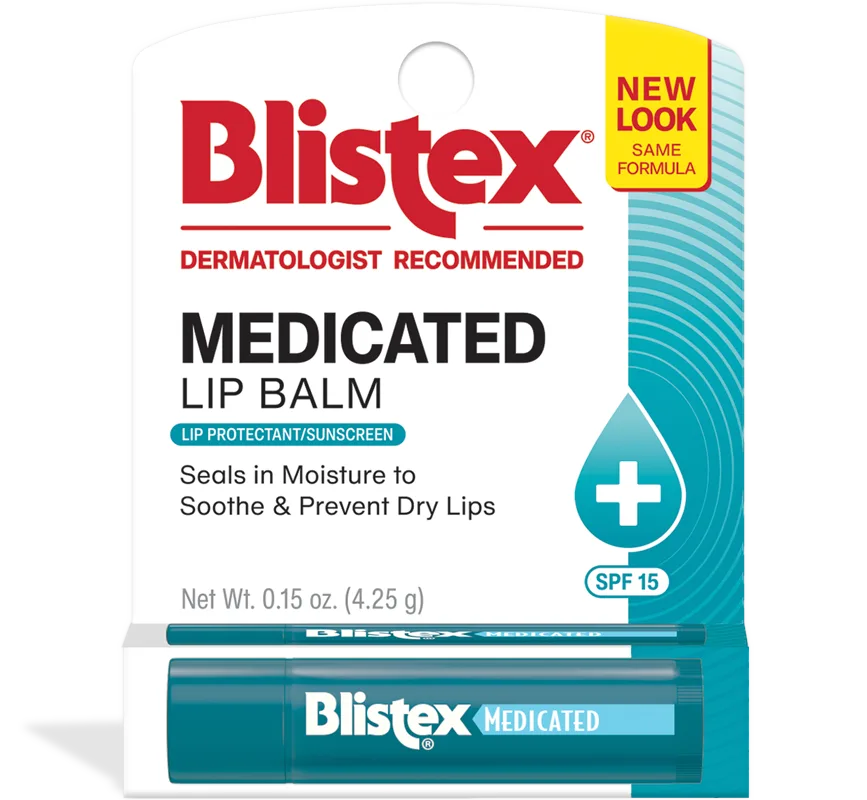
Medicated Lip Balm SPF 15
Drugstore Lip Care Icon
 Verified reviewer
Pros & cons.
- +Exceptionally affordable at under $2 per stick with even lower multi-pack pricing
- +Effective petrolatum and wax occlusive base that genuinely seals in lip moisture
- +SPF 15 provides basic UVB protection for daily lip sun care
- +Available in virtually every retail location in the United States
- +Smooth glide-on application from the well-engineered stick format
- +Dimethicone as an FDA-recognized lip protectant active ingredient
- +Decades of market presence demonstrates reliable formula stability
- −Menthol and camphor counterirritants can worsen severely chapped or cracked lips
- −No UVA filter means incomplete broad-spectrum sun protection for lip tissue
- −Contains lanolin, a contact allergen affecting approximately 1-3% of the population
- −Added flavor and Red 6 Lake dye serve no functional purpose and increase sensitization risk
- −Medicated ingredients may create an irritation-reapplication cycle for sensitive users
The full review.
There is a specific sense memory shared by millions of Americans: reaching into a coat pocket in January, finding a slightly battered blue-and-white tube, and twisting up a stick of Blistex Medicated Lip Balm. The cooling tingle hits immediately. Your cracked lips feel attended to. Something is working. Or at least, something feels like it’s working — and in the lip care business, that distinction matters more than you might think.
Blistex has been in the lip game since 1947, which makes this one of the longest-running product lines in American personal care. Charles Arch started the company in Chicago with a single lip ointment, and the Medicated Lip Balm became its defining product — the one that built a brand around the idea that lip care should feel active. That philosophy is baked into the formula: menthol, camphor, and methyl salicylate deliver a cooling, slightly medicinal sensation that registers as treatment in the brain of anyone who grew up associating tingle with healing.
The actual engineering of the product is a classic wax-and-petrolatum occlusive system. Petrolatum provides the heavy-duty moisture barrier, reducing transepidermal water loss from the delicate lip vermilion border more effectively than almost any other single ingredient. Beeswax, candelilla wax, ozokerite, and paraffin create the firm stick structure and contribute additional occlusion. Lanolin and lanolin oil add emollient richness. Cocoa seed butter rounds out the lipid phase. When you strip away the medicated bells and whistles, this is a well-constructed occlusive balm that does exactly what lip balms should do — it creates a physical barrier that prevents moisture from escaping.
Dimethicone at 2% is listed as the active lip protectant — an FDA OTC monograph designation that allows the product to claim it protects and helps relieve chapped, cracked, or windburned lips. It’s a sensible inclusion that adds a smooth silicone layer to the wax base.
The SPF 15 sun protection comes from octinoxate at 6.6% and octisalate at 4.4%, both UVB filters. This is where the formula shows its age. Modern lip SPF products typically include a UVA filter like avobenzone for true broad-spectrum coverage. Lip skin is uniquely vulnerable to UV damage — it’s thinner, has minimal melanin, and the lower lip is a known site for actinic cheilitis, a precancerous condition. SPF 15 with UVB-only protection is better than nothing, but it’s not what dermatologists would recommend for anyone with genuine sun-damage concerns.
Now, about that tingle. Menthol and camphor are classified as counterirritants — they work by creating a mild, controlled irritation that distracts nerve endings from sensing the discomfort of chapped lips. Methyl salicylate adds a wintergreen note and mild analgesic properties. The combined effect is the signature Blistex sensation that millions of people interpret as healing.
Here’s the honest truth: dermatologists have spent the last two decades trying to wean patients off medicated lip balms for exactly this reason. The counterirritants that feel therapeutic can actually perpetuate a cycle of irritation and dryness. Menthol is a known lip sensitizer. Camphor can cause mild contact dermatitis on compromised tissue. When your lips are already cracked and raw, applying ingredients designed to create controlled irritation is — to put it diplomatically — counterintuitive.
This doesn’t mean Blistex is a bad product. For everyday maintenance on healthy lips that just need a moisture seal and basic SPF, the occlusive base performs admirably. The stick format is convenient, the price is unbeatable, and the formula glides on smoothly without feeling heavy. For mild dryness, it works perfectly well. The problem arises when people reach for it specifically because their lips are severely chapped — the situation where the medicated ingredients are least appropriate.
The ingredient list also includes lanolin, which is an excellent emollient but a contact allergen for roughly 1-3% of the population. The added flavor and Red 6 Lake dye serve no functional purpose and add mild sensitization risk. These are legacy inclusions from an era when consumer expectations for ‘clean’ formulations were different.
For the price — typically under $2 for a single stick, with multi-packs driving the per-unit cost even lower — Blistex Medicated Lip Balm delivers remarkable value as a daily lip protectant. It’s also one of the most accessible SPF lip products in existence, available in virtually every pharmacy, grocery store, gas station, and convenience store in the country. That ubiquity has real public health value.
The product earns its place as a solid everyday lip balm for people who enjoy the medicated sensation and have no sensitivity to its counterirritants. But if you’re buying it because your lips are in genuine distress, consider whether the tingle is helping or whether plain petrolatum might let your lips heal without the drama.
Ingredient analysis.
Full INCI list
Active Ingredients: Dimethicone 2.0% (Lip Protectant), Octinoxate 6.6% (Sunscreen), Octisalate 4.4% (Sunscreen). Inactive Ingredients: Beeswax, Camphor, Cetyl Alcohol, Cetyl Palmitate, Euphorbia Cerifera (Candelilla) Wax, Flavor, Isopropyl Myristate, Lanolin, Lanolin Oil, Menthol, Methyl Salicylate, Mineral Oil, Ozokerite, Paraffin, Petrolatum, Phenoxyethanol, Polybutene, Red 6 Lake, Theobroma Cacao (Cocoa) Seed Butter, Titanium Dioxide
Skin match.
The science.
The Science
Blistex Medicated Lip Balm repairs lips through its occlusive matrix rather than its medicated actives. Petrolatum acts as a skin and lip protectant; research shows it reduces transepidermal water loss by up to 98%, making it one of the most effective single-ingredient occlusives (Ghadially et al., Journal of Investigative Dermatology, 1992). Beeswax and candelilla wax add barrier function and give the stick its structure.
The counterirritant trio of menthol, camphor, and methyl salicylate works by stimulating transient receptor potential (TRP) channels, specifically TRPM8 for menthol's cooling effect. A study on the dermal absorption of these three compounds (Cross et al., Journal of Pharmacology and Experimental Therapeutics, 2004) confirmed measurable systemic absorption after topical application, though at levels generally considered safe for OTC use.
The SPF system uses only octinoxate and octisalate for UVB absorption. It lacks any UVA filter, a limitation because the lip vermilion border is a known site for UV-induced actinic damage. A systematic review on lip cancer risk factors (de Souza Lucena et al., Journal of the American Academy of Dermatology, 2012) identified chronic UV exposure as a primary risk factor for lip squamous cell carcinoma, highlighting the need for broad-spectrum lip protection that this formula only partially provides.
References
- Dermal absorption of camphor, menthol, and methyl salicylate in humans — Journal of Pharmacology and Experimental Therapeutics (2004)
Dermatologist Perspective
Dermatologists see Blistex Medicated Lip Balm as an adequate everyday lip protectant, but not an ideal treatment for severely compromised lips. Board-certified dermatologists often tell patients with chronic cheilitis to avoid lip products containing menthol, camphor, and salicylates, as these counterirritants can increase inflammation on damaged tissue. The occlusive petrolatum base is dermatologically sound, but practitioners usually recommend plain petroleum jelly or fragrance-free healing balms for active lip repair. The SPF 15 UVB-only protection is suboptimal by current dermatological standards — lip-specific SPF 30+ with UVA coverage is the preferred recommendation for sun-exposed lip care.
Guidance
Where it fits in your routine.
Apply directly to lips as needed throughout the day. For SPF protection, apply 15 minutes before sun exposure and reapply every two hours. The stick format allows precise application without using fingers. For overnight lip repair, apply a thick layer before bed. If you feel stinging or more dryness, the counterirritant ingredients may not suit your lip sensitivity — switch to a plain petrolatum-based balm.
At $1.99 per single stick (with 3-packs and bulk options lowering costs further), Blistex Medicated Lip Balm offers excellent value. Each application costs pennies. The SPF 15 provides sun protection that most lip balms at this price lack. The formula provides reliable occlusion and applies well. However, the value drops if you must use a separate lip treatment to fix irritation caused by the medicated ingredients.
This lip balm works for anyone wanting affordable, widely available daily SPF protection and a cooling medicated sensation. It is ideal for everyday lip maintenance on healthy lips that need moisture sealing and sun protection.
Menthol, camphor, and methyl salicylate can worsen irritation for people with severely chapped, cracked, or bleeding lips. Avoid this formula if you have a lanolin allergy or sensitivity to counterirritants. People seeking comprehensive lip sun protection need UVA coverage.
Product details.
This firm waxy stick softens with lip warmth. It glides on as a smooth, slightly glossy film. The petrolatum and wax base creates a visible occlusive layer.
It smells medicinal with a strong menthol-camphor cooling aroma. Methyl salicylate adds a wintergreen note. An added flavor provides a mild taste.
Classic slim twist-up stick in a blue-and-white branded tube. Buy it individually or in 3-packs. The compact size fits in a pocket or bag.
The first application causes an immediate cooling tingle from the menthol and camphor — this is the 'medicated' sensation most users associate with the product. Lips feel coated and sealed within seconds. Some users with very chapped or cracked lips may feel mild stinging from the counterirritants.
1-2 months with multiple daily applications
24 months
All Year
The backstory.
Blistex began in 1947 as a single lip ointment product created by Charles Arch in Chicago. The Medicated Lip Balm became the company's flagship, building a category around the idea that lip care should feel active — that tingle meant something was working. Decades later, the formula remains essentially unchanged, a testament to the product's market staying power even as dermatological thinking has evolved on the role of counterirritants in lip care.
About Blistex
Legacy Brand (20+ years)Blistex started in 1947 in Chicago as a family-owned lip care company and is now a top name in the category. The company built R&D facilities in 1967 and manufactures from its Oak Brook, Illinois headquarters. Blistex is not dermatologist-developed, but nearly eight decades of market presence and pharmaceutical-grade manufacturing standards make it a pharmacy staple worldwide.
Common myths.
The tingling means the balm is healing your chapped lips.
Menthol and camphor activate cold receptors to create a cooling sensation; this is a sensory signal, not a healing mechanism. The petrolatum and wax base repairs by sealing in moisture. Dermatologists note counterirritants can worsen severely cracked lips by causing mild inflammation.
Lip balm is addictive—reapplication is necessary because it dries your lips out.
Lip balm isn't pharmacologically addictive. However, products with menthol, camphor, and salicylates create a cycle: these counterirritants mildly irritate lip tissue, causing dryness that prompts reapplication. The formula perpetuates the problem it aims to solve rather than causing addiction.
FAQ.
Is Blistex Medicated Lip Balm good for severely chapped lips?
Petrolatum, waxes, and dimethicone provide effective occlusion to seal in moisture. However, the menthol, camphor, and methyl salicylate counterirritants sting and irritate severely cracked lips. Plain petroleum jelly or a fragrance-free healing balm works better for extreme dryness.
Does Blistex Medicated Lip Balm really have SPF protection?
Yes — it uses octinoxate 6.6% and octisalate 4.4% as FDA-regulated sunscreen actives for SPF 15 UVB protection. It lacks a dedicated UVA filter like avobenzone, so broad-spectrum protection is limited. For comprehensive lip sun protection, dermatologists recommend SPF 30+ lip balms with UVA coverage.
Can Blistex make your lips more chapped?
Yes. The menthol, camphor, and methyl salicylate are counterirritants. These cause mild inflammation on sensitive lip tissue, which leads to a cycle of dryness and reapplication. If your lips feel worse after extended use, switch to a plain occlusive balm without these medicated ingredients.
Is Blistex safe to use every day?
Daily use is safe for most people. The SPF 15 provides basic sun protection for everyday lip care. But menthol and camphor may cause cumulative irritation in people with sensitive skin or eczema. Lanolin is a known contact allergen for about 1-3% of the population.
Is Blistex Medicated Lip Balm good for cold sores?
Despite the 'medicated' label, this balm lacks antiviral ingredients to treat cold sores (herpes simplex). The camphor and menthol provide temporary cooling relief from cold sore discomfort, but docosanol (Abreva) is the evidence-based OTC antiviral choice for active outbreaks.
Community
What the community says.
"Extremely affordable and easy to find everywhere"
"Cooling tingle provides immediate relief sensation"
"SPF 15 protection for lip sun care"
"Smooth glide application from the stick format"
"Effective at sealing in moisture for everyday dryness"
"Menthol and camphor can irritate already-cracked lips"
"May create a dependency cycle where lips feel dry without reapplication"
"Contains lanolin which is a common contact allergen"
"Flavor and Red 6 dye are unnecessary additives"
"SPF 15 with no UVA coverage is considered inadequate by modern standards"