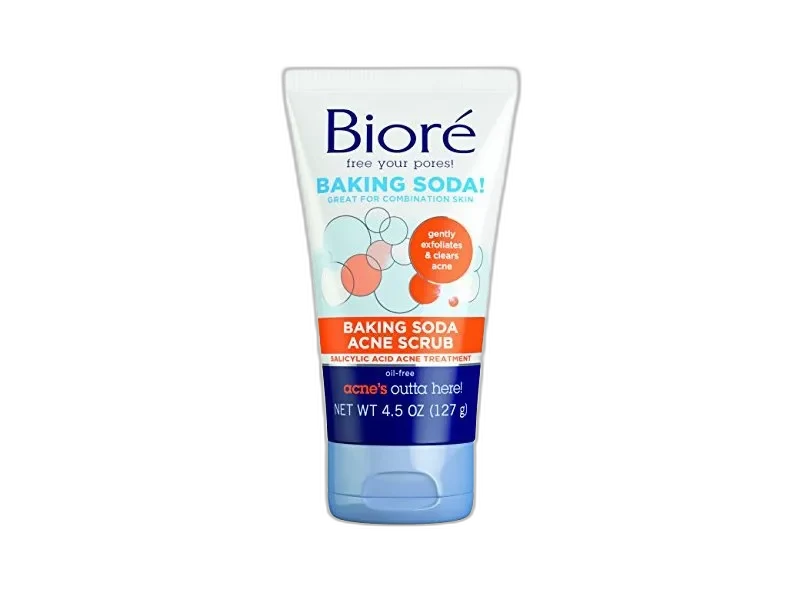
Baking Soda Acne Scrub
Discontinued Drugstore Staple
 Verified reviewer
Pros & cons.
- +2% salicylic acid provides legitimate, FDA-approved chemical exfoliation for acne-prone skin
- +Sulfate-free surfactant base (sodium cocoyl isethionate) is gentler than typical drugstore cleansers
- +Fine scrub particles dissolve during use rather than causing micro-tears
- +Very affordable at approximately $7-8 for a 4.5 oz tube
- +Glycerin provides some hydration offset against the drying BHA
- −Discontinued — no longer manufactured or reliably available
- −Contains fragrance, menthol, and artificial colorants that increase irritation risk
- −Baking soda adds no proven acne benefit and may disrupt the skin's acid mantle
- −Dual physical and chemical exfoliation increases barrier damage risk with overuse
- −Not suitable for sensitive, dry, or reactive skin types
- −Not cruelty-free — Biore/Kao does not hold cruelty-free certification
The full review.
In 2016, baking soda trended heavily. Pinterest boards featured DIY face mask recipes using the pantry staple, and the natural beauty community convinced much of the internet that sodium bicarbonate transforms skin. Biore followed this trend by launching a baking soda line that included this acne scrub — for a few years, it sat on drugstore shelves next to the brand’s iconic pore strips.
The product is now discontinued, and the timing is telling. The baking soda trend died as dermatological consensus settled on one fact: pure baking soda has a pH of approximately 9, which disrupts the skin’s natural acid mantle of about 5.5. Using highly alkaline products chronically compromises the barrier, increases TEWL, and can worsen acne. Biore used a low concentration of baking soda — it is 19th of 23 ingredients — but the marketing focused on the ingredient name, and the formula had enough baggage to justify its discontinuation.
To be fair: the 2% salicylic acid is the real engine here, and it works well. Salicylic acid is a beta-hydroxy acid with decades of clinical evidence; it is FDA-approved as an over-the-counter acne active and is oil-soluble. This allows it to penetrate sebum in a clogged pore to exfoliate from the inside out. At 2%, this is the maximum concentration allowed in OTC products. In a wash-off format, it provides a meaningful dose of chemical exfoliation without the prolonged skin contact that causes excessive dryness. If salicylic acid were the only notable ingredient, the review would change.
The ingredient list is less impressive elsewhere. Fragrance — listed broadly without specifics — introduces a known sensitizer to acne-prone skin that is often already inflamed. Menthol adds a cooling tingle that consumers mistake for efficacy, but dermatologists recognize it as a counterirritant with no acne-treating mechanism. Yellow 5 Lake and Red 30 are artificial colorants used only for aesthetics; they make the product look interesting in the tube but add nothing to function and are recognized allergens for some. Benzophenone-4, a UV absorber likely used to stabilize the color, is a known photoallergen.
The base formula shows some thoughtfulness. Sodium cocoyl isethionate is a gentle surfactant, milder than the sulfates that dominated drugstore cleansers in 2016. Glycerin provides humectant support to partially offset the drying BHA. The physical scrub particles are fine enough to dissolve during use rather than causing micro-tears, making it better than the harsh walnut shell and apricot kernel scrubs common at the time.
On the skin, this scrub worked well for its target audience. Oily and combination skin types not sensitive to fragrance or menthol generally found it effective: skin felt smoother immediately, and consistent use two to three times weekly improved blackheads and minor breakouts within two to three weeks. Menthol provides a brief cooling sensation that feels refreshing during a summer evening cleanse for those who tolerate it. The citrusy scent was widely considered pleasant.
Complaints were predictable. Sensitive skin users reported stinging, dryness, and redness — expected from a mix of fragrance, menthol, BHA, and baking soda. Those with active, inflamed breakouts found the scrub stung on application, and some saw increased irritation. The physical exfoliation, while gentler than most, was unnecessary alongside the chemical exfoliation from salicylic acid — using both increased barrier damage risk without extra benefit.
At roughly seven to eight dollars for 4.5 ounces, the value for a 2% salicylic acid cleanser was good, and it met the needs of many users with resilient oily skin. But the market has changed since 2016. Drugstore acne cleansers with 2% salicylic acid now exist without the fragrance, menthol, artificial colorants, and baking soda found in this formula. The discontinuation of both the original and its Blue Agave reformulation suggests Biore recognized this shift.
As a mid-2010s skincare snapshot, this product is instructive. It shows a major brand chasing a consumer trend (baking soda) by wrapping a legitimate active (salicylic acid) in a formula that prioritized sensory experience over minimalist efficacy. The skincare landscape has moved toward the latter, and this discontinued scrub shows how far the industry has come.
Formula
Ingredient analysis.
Full INCI list
Active Ingredient: Salicylic Acid 2%. Inactive Ingredients: Water, Sodium Cocoyl Isethionate, Glycerin, Glycol Distearate, Synthetic Wax, Ethoxydiglycol, PEG-6 Caprylic/Capric Glycerides, Microcrystalline Wax, Cetyl Alcohol, PEG-12 Dimethicone, Sodium Lauroyl Lactylate, Sodium Hydroxide, Acrylates/C10-30 Alkyl Acrylate Crosspolymer, Xanthan Gum, Sodium Benzoate, Fragrance, Menthol, Sodium Bicarbonate, Benzophenone-4, Yellow 5 Lake, Talc, Red 30
Skin match.
The science.
The Science
The primary active in this formula, 2% salicylic acid, has a robust evidence base for acne treatment. As a beta-hydroxy acid (BHA), salicylic acid is oil-soluble, which allows it to penetrate through the lipid-rich environment inside clogged pores. A systematic review published in Clinical, Cosmetic and Investigational Dermatology (2015) confirmed that salicylic acid at concentrations of 0.5-2% significantly reduces both inflammatory and non-inflammatory acne lesions, with particular efficacy against comedones (blackheads and whiteheads).
The baking soda (sodium bicarbonate) in this formula is more problematic from an evidence perspective. A study published in the British Journal of Dermatology demonstrated that the skin's acid mantle — maintained at approximately pH 5.5 — serves a critical role in barrier function, antimicrobial defense, and enzyme activity. Products that significantly raise cutaneous pH can impair barrier recovery and increase susceptibility to pathogenic bacteria. While the low concentration of baking soda in this formula (19th of 23 ingredients) likely does not dramatically shift the overall product pH, the ingredient has no published evidence supporting its efficacy as a topical acne treatment.
Menthol, included as a sensory ingredient, activates TRPM8 cold receptors in the skin, producing a cooling sensation that has no correlation with acne treatment efficacy. Research published in Contact Dermatitis has identified menthol as a potential sensitizer, particularly for individuals with compromised barriers — exactly the population most likely to be using an acne scrub.
References
- Salicylic acid as a peeling agent: a comprehensive review — Clinical, Cosmetic and Investigational Dermatology (2015)
Dermatologist Perspective
Dermatologists generally support the use of 2% salicylic acid for mild to moderate acne, particularly in wash-off formats that limit prolonged skin contact. However, board-certified dermatologists consistently advise against products that combine physical and chemical exfoliation, as the dual mechanism increases the risk of barrier damage without evidence of improved outcomes. The inclusion of fragrance, menthol, and artificial colorants in a product designed for already-compromised acne-prone skin is viewed unfavorably by most dermatologists. Baking soda specifically has drawn criticism from the dermatological community for its alkaline pH, though its low concentration in this formula mitigates the concern. Dermatologists typically recommend fragrance-free, single-mechanism BHA cleansers as a safer alternative for acne-prone skin.
Guidance
Where it fits in your routine.
Wet your face with lukewarm water. Squeeze a small amount (about a quarter-sized dollop) and massage into skin using circular motions for 30-60 seconds. Avoid the eye area. Rinse well with water and pat dry. Apply a hydrating moisturizer immediately after. Use 2-3 times per week maximum; do not use daily. Do not use on the same day as retinoids, AHA exfoliants, or other BHA products to prevent over-exfoliation. Apply sunscreen the next morning, as salicylic acid increases photosensitivity.
At roughly $7-8 for 4.5 ounces, this was a top drugstore 2% salicylic acid cleanser for affordability. The price-to-active ratio was good; the BHA concentration matched products twice the price. But unnecessary irritants (fragrance, menthol, colorants) limit comfortable use and lower the value. Affordable BHA cleansers without these additives exist today. The product is discontinued, so only residual stock remains at unpredictable prices.
People with oily skin, blackheads, minor breakouts, and texture issues who can tolerate fragrance or menthol. It works best on resilient skin that handles physical and chemical exfoliation without irritation. Note: this product is discontinued and may be difficult to find.
This is for sensitive, dry, or reactive skin. People with rosacea, eczema, or a compromised skin barrier must avoid this entirely. Users seeking fragrance-free or clean-beauty products will find the fragrance, menthol, and artificial colorants unacceptable. Pregnant individuals should ask their physician about the 2% salicylic acid. This product is discontinued and no longer manufactured.
Product details.
Light citrus fragrance with a menthol cooling undertone. It is not overpowering but is clearly present — this is a fragranced product.
Blue and white squeeze tube with a flip-top cap. Standard drugstore cleanser packaging — functional and straightforward. ***
First use brings a menthol cooling-tingling sensation. Some users like this 'working' feeling, while others find it uncomfortably intense. The fine scrub particles are not abrasive, but the physical and chemical exfoliation leaves skin feeling smoothed. The face may feel slightly tight after rinsing — apply moisturizer immediately. ***
6-8 weeks with use 2-3 times per week. ***
12 months ***
spring summer ***
The backstory.
Biore launched its baking soda line in 2016, riding the broader 'baking soda for skin' trend that was gaining traction in natural beauty communities. The scrub was later reformulated as the 'Blue Agave + Baking Soda' version, and both have since been discontinued as the brand shifted its focus to other product lines. The baking soda trend itself has largely fallen out of favor as dermatological consensus solidified around the importance of maintaining the skin's natural acid mantle.
About Biore
Legacy Brand (20+ years)Kao Corporation (Japan, founded 1887) launched Biore in 1980. Biore entered the North American market in 1997. The brand is famous for its pore strips and cleansing products. Note: This product is discontinued and is not in Biore's current lineup.
Common myths.
Baking soda exfoliates acne-prone skin naturally.
Pure baking soda has a pH of about 9. This disrupts the skin's acid mantle (pH ~5.5). This formula uses a low concentration of baking soda with pH-adjusting ingredients to minimize disruption. The 2% salicylic acid, not the baking soda, does the acne-fighting work.
The tingling from menthol means the product is working.
Menthol triggers cold-sensitive skin receptors. This cooling sensation does not improve acne treatment efficacy. It does not make the salicylic acid work better. In some users, menthol causes irritation that worsens inflammatory acne.
FAQ.
Is the Biore Baking Soda Acne Scrub discontinued?
Yes. This product has been discontinued by Biore and is no longer part of their current product lineup. The reformulated 'Blue Agave + Baking Soda' version has also been discontinued. Remaining stock may appear at some retailers or resale sites, but it is no longer being manufactured.
Myth
Reality
The evidence for baking soda as an acne treatment is limited. Pure baking soda has a highly alkaline pH (~9) that can disrupt the skin's natural acid mantle and worsen breakouts. In this scrub, the baking soda is present at a low concentration primarily for mild physical exfoliation. The actual acne-fighting active is the 2% salicylic acid, which has robust clinical evidence for treating acne.
How to Use
The product was designed for use 2-3 times per week, not daily. It combines physical exfoliation (scrub particles) with chemical exfoliation (2% salicylic acid), and using it more frequently risks damaging the skin barrier, causing dryness, and potentially worsening acne through irritation-induced breakouts.
Conflicts With
Avoid using this scrub on the same night as retinol or retinoids. The combination of physical exfoliation, 2% salicylic acid, and retinol can overwhelm the skin barrier, causing excessive dryness, peeling, and irritation. Use the scrub and retinol on alternating nights to allow the skin adequate recovery time.
Not ideal for
No. This scrub contains multiple potential irritants — fragrance, menthol, artificial colorants, salicylic acid, and baking soda — that make it unsuitable for sensitive skin. People with sensitive or reactive skin should opt for a gentle chemical exfoliant without physical scrub particles, fragrance, or menthol.
What the community says.
"Leaves skin feeling smooth after use"
"Helps clear minor breakouts over 2-3 weeks"
"Pleasant light citrusy scent"
"Fine exfoliating particles are not overly harsh"
"Very affordable for an acne scrub"
"Can be drying with frequent use"
"Stings on active breakouts and open blemishes"
"Menthol tingling too intense for sensitive skin"
"Contains fragrance and artificial colorants"
"Now discontinued and hard to find"
"Some users saw no improvement in acne"
People also looked at.