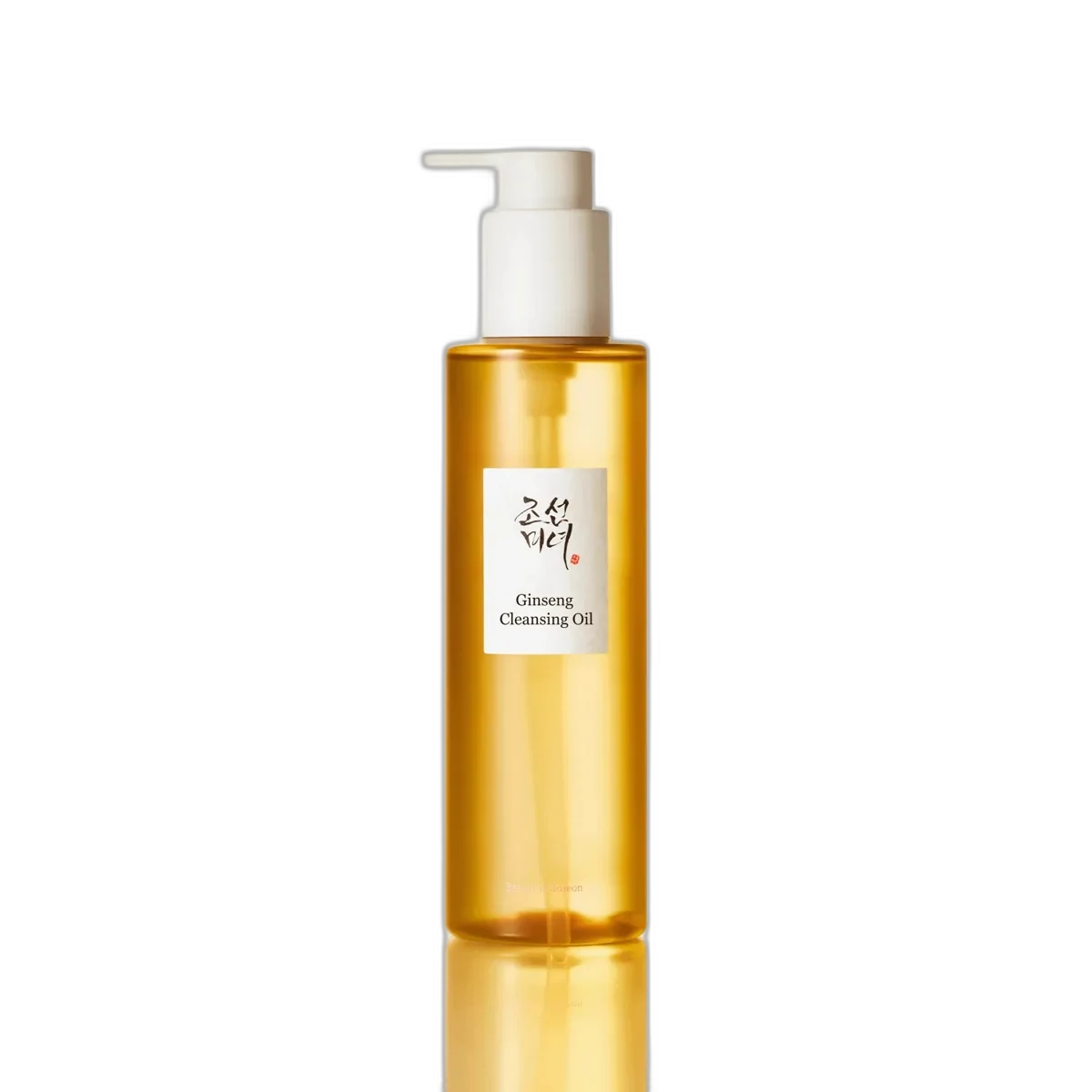
Ginseng Cleansing Oil
K-Beauty Ginseng Cleanse Ritual
 Verified reviewer
Pros & cons.
- +Five forms of panax ginseng create the most comprehensive ginseng skincare experience available
- +Soybean oil base dissolves makeup, sunscreen, and sebum thoroughly without stripping
- +Generous 210ml size lasts 3-4 months — exceptional value at $20
- +Emulsifies cleanly with water and rinses without leaving heavy residue
- +Camellia japonica seed oil adds a luxurious conditioning quality during massage
- +Herbal spa-like scent creates an enjoyable ritual from the cleansing step
- −Three essential oils (sage, mugwort, basil) can irritate sensitive and reactive skin
- −Strong herbal scent won't appeal to those who prefer fragrance-free skincare
- −Contains olive oil and coconut derivatives that are potentially comedogenic
- −Not suitable for fungal acne due to multiple oils and esters
- −Brief skin contact time limits the skincare benefits of the ginseng extracts
The full review.
Ginseng has led Korean herbal medicine for centuries. During the Joseon dynasty, it functioned as currency and served royalty. Beauty of Joseon takes its name from this era, and the Ginseng Cleansing Oil best represents the brand’s focus on this root.
The formula uses five forms of panax ginseng: seed oil, berry extract, root extract, whole plant extract, and leaf/stem extract. This goes beyond typical K-beauty labeling. Each form extracts different ginsenosides—the saponin compounds that provide ginseng’s anti-inflammatory, antioxidant, and circulation-promoting effects. The seed oil provides fatty acids, the root extract concentrates traditional ginsenosides, the berry extract offers a unique compound profile (ginseng berries contain compounds not found in the root), and the leaf/stem extract completes the phytochemical spectrum.
Does this matter in a product you wash off after ninety seconds? The ginseng provides marginal benefits during the short contact time, but the Ginseng Cleansing Oil focuses on the cleansing experience rather than transformative skincare. The multi-ginseng formula creates an aromatic, distinctly Korean beauty experience that makes nightly double-cleansing feel purposeful.
Soybean oil makes up approximately 50% of the base, making it an excellent choice. Soybean oil’s linoleic acid-rich profile matches human sebum, so it dissolves sebum plugs and oil-based impurities efficiently without disrupting the skin’s lipid barrier. Olive fruit oil and camellia japonica seed oil add conditioning; camellia oil is a traditional East Asian beauty staple with high oleic acid content and clean absorption.
The emulsification system uses sorbeth-30 tetraoleate, which turns the oil into a milky emulsion when water is added to rinse it clean. This emulsifier works well, removing the oil without the harsh surfactant feel of some PEG-based emulsifiers. If used correctly (massage on dry skin first, add water to emulsify, then rinse), the oil leaves minimal residue for a follow-up water-based cleanser to handle.
This product contains three essential oils: sage, mugwort (artemisia vulgaris), and basil. For Beauty of Joseon, these reflect the hanbang tradition of using aromatic herbs. For sensitive or reactive skin, these are three potential irritants. The herbal scent is noticeable and persistent—earthy, green, and vaguely medicinal, unlike the floral or citrus scents in Western cleansing oils. Herbal aromas enhance the spa-like experience, but the scent is a dealbreaker for those who are fragrance-averse or skin-sensitive.
The texture is a free-flowing golden oil—lighter than the brand’s Cleansing Balm but thicker than watery cleansing oils from brands like DHC or Kose. Two to three pumps cover the entire face. The massage feels pleasant: there is enough slip to prevent skin tugging, and the oil dissolves makeup effectively. Waterproof mascara, cushion foundation, and heavy sunscreen all dissolve within one minute of gentle massage.
The 210ml bottle is large. Most K-beauty cleansing oils use 150ml bottles at similar or higher prices. At $20 for 210ml, nightly use lasts three to four months, costing roughly 17 cents per use. This is high value for a cleansing oil with this ingredient complexity.
The 2024 reformulation refined the formula but kept its character. The multi-ginseng approach and the essential oil trio remain unchanged. Original users will see subtle texture improvements but the same overall experience.
The product’s limitations stem from its design. It prioritizes sensory experience and hanbang tradition over clinical minimalism. The essential oils mean it is not for everyone. Olive oil and coconut oil derivatives make it unsuitable for fungal acne. As a rinse-off product, the ginseng extracts have less skin contact time than in a leave-on serum or cream. But for those who view evening cleansing as a ritual rather than a chore, this product delivers an experience basic cleansing oils cannot match.
Formula
Texture
The texture is a free-flowing golden oil—lighter than the brand’s Cleansing Balm but thicker than watery cleansing oils from brands like DHC or Kose. Two to three pumps cover the entire face. The massage feels pleasant: there is enough slip to prevent skin tugging, and the oil dissolves makeup effectively. Waterproof mascara, cushion foundation, and heavy sunscreen all dissolve within one minute of gentle massage.
Scent
The herbal scent is noticeable and persistent—earthy, green, and vaguely medicinal, unlike the floral or citrus scents in Western cleansing oils. Herbal aromas enhance the spa-like experience, but the scent is a dealbreaker for those who are fragrance-averse or skin-sensitive.
Packaging
The 210ml bottle is large. Most K-beauty cleansing oils use 150ml bottles at similar or higher prices. At $20 for 210ml, nightly use lasts three to four months, costing roughly 17 cents per use. This is high value for a cleansing oil with this ingredient complexity.
Best for
For those who view evening cleansing as a ritual rather than a chore, this product delivers an experience basic cleansing oils cannot match.
Works for
- Waterproof mascara
- Cushion foundation
- Heavy sunscreen
Not ideal for
- Sensitive or reactive skin
- Fungal acne
Ingredient analysis.
Full INCI list
Glycine Soja (Soybean) Oil, Cetyl Ethylhexanoate, Sorbeth-30 Tetraoleate, Isododecane, Olea Europaea (Olive) Fruit Oil, Camellia Japonica Seed Oil, Hydrogenated Coconut Oil, Octyldodecanol, Polybutene, Caprylic/Capric Triglyceride, Water, Tocopherol, Salvia Officinalis (Sage) Oil, Panax Ginseng Seed Oil, Artemisia Vulgaris Oil, Ocimum Basilicum (Basil) Oil, Corylus Avellana (Hazelnut) Seed Oil, Nigella Sativa Seed Oil, Butylene Glycol, Panax Ginseng Berry Extract, Glycerin, 1,2-Hexanediol, Methylpropanediol, Panax Ginseng Root Extract, Ethyl Hexanediol, Panax Ginseng Extract, Panax Ginseng Leaf/Stem Extract, Ethylhexylglycerin
Skin match.
The science.
The Science
Ginsenosides—a class of saponin compounds with anti-inflammatory and antioxidant properties—drive Panax ginseng's dermatological benefits. A 2020 review in the Journal of Ginseng Research shows that ginsenosides Rb1, Rg1, and Rg3 stimulate collagen synthesis, inhibit matrix metalloproteinases (enzymes that break down collagen), and reduce UV-induced oxidative damage. Ginseng plant parts produce different ginsenoside profiles: the root has the most Rb1 and Rg1, while ginseng berries have high levels of Re, which has distinct anti-inflammatory properties.
This multi-form approach (seed oil, berry extract, root extract, whole plant extract, leaf/stem extract) captures a broader ginsenoside spectrum than a single extraction. While contact time in a cleansing oil is brief—typically 60-90 seconds—the lipid-rich vehicle (the plant oils) allows some absorption of these compounds into the stratum corneum.
Soybean oil's high linoleic acid content (approximately 50-55% of its fatty acid profile) makes it a good cleansing oil base. Linoleic acid is a major component of the skin's natural ceramide 1 linoleate. A 1998 study in the Journal of Investigative Dermatology by Elias and colleagues shows topical linoleic acid helps restore barrier function in linoleic acid-deficient skin. The oil dissolves sebum because its structure is similar to sebum's lipid composition.
Camellia japonica seed oil has 80%+ oleic acid content, providing emolliency. In vitro studies show it has mild antioxidant and anti-inflammatory properties, though clinical data for rinse-off products is limited.
Dermatologist Perspective
Dermatologists who recommend double cleansing note that oil-based first cleansers remove oil-soluble impurities like sunscreen, sebum, and makeup most effectively. Board-certified dermatologists recognize the ginseng extracts as beneficial anti-inflammatory and antioxidant ingredients, but note that contact time in a rinse-off product limits their therapeutic impact. Dermatologists may flag the three essential oils (sage, mugwort, basil) for patients with sensitive or eczema-prone skin and recommend the brand's fragrance-free Cleansing Balm instead. The olive oil and coconut oil derivatives may also affect acne-prone patients.
Where it fits in your routine.
Apply 2-3 pumps of oil to dry palms and a dry face — water stops the oil from dissolving makeup. Massage in circular motions for 60-90 seconds, targeting heavy makeup, sunscreen, or congestion. Add a little warm water and massage to emulsify until the oil turns milky white. Rinse with lukewarm water. Follow immediately with a water-based gel, foam, or cream cleanser for your second cleanse.
At $20 for 210ml, this cleansing oil has one of the best per-unit values in K-beauty cleansing. Comparable ginseng-infused cleansing products — Sulwhasoo Gentle Cleansing Oil ($36/200ml) and Missha Ginseng Cleansing Oil ($25/150ml) — cost more for equal or less product. Nightly use lasts 3-4 months, making the cost about 17 cents per cleanse — less than a single makeup wipe. The 2024 reformulation kept the price while refining the formula, showing strong value retention.
People who want a sensory, ritualistic cleansing experience and like hanbang (Korean herbal medicine) ingredients. Normal, dry, and combination skin types who wear daily makeup or sunscreen and want a nourishing first cleanser. K-beauty enthusiasts looking for the most ginseng-forward product in the Beauty of Joseon lineup.
Sensitive skin types reacting to essential oils may find the sage, mugwort, and basil oils irritating. The multiple plant oils can feed Malassezia in anyone with fungal acne. This formula is not for those who prefer fragrance-free skincare or dislike strong herbal scents. Acne-prone skin that reacts to olive oil or coconut derivatives should also avoid it.
Product details.
Thick, golden-tinted oil flows freely from the pump. It is thinner than the brand's Cleansing Balm but thicker than water-like cleansing oils. It turns into a milky emulsion when water is added.
Sage, mugwort, and basil essential oils create a noticeable herbal scent—earthy, green, and vaguely medicinal. This scent is stronger than the brand's other products.
A tall, clear plastic pump bottle shows the golden oil color. The pump dispenses about 1-2 ml per press. The simple, elegant design matches the Beauty of Joseon aesthetic.
Apply 2-3 pumps to dry palms and massage onto a dry face in circular motions. The oil has good slip and spreads easily. It dissolves makeup in seconds, including heavy foundation and waterproof mascara. The herbal scent is immediate and grows stronger during massage. Add water to emulsify the oil into a milky suspension that rinses cleanly. Skin feels soft and lightly conditioned after rinsing, not stripped or tight.
3-4 months with nightly use
12 months
All Year
The backstory.
Ginseng is the ingredient most central to Beauty of Joseon's identity — the brand's bestselling Dynasty Cream is built around it. This cleansing oil extends the ginseng story to the cleansing step, drawing from the hanbang tradition where ginseng was used in preparation rituals before skincare application. The 2024 reformulation refined the formula while maintaining the five-form ginseng approach that has become the product's signature.
About Beauty of Joseon
Established Brand (5–20 years)Sumin Lee founded Beauty of Joseon in 2016 in South Korea. The brand uses hanbang ingredients and Joseon dynasty beauty traditions for inspiration. Ginseng defines the brand, and this cleansing oil uses five forms of panax ginseng to follow traditional Korean herbal medicine.
Common myths.
Oil cleansers cause breakouts by adding oil to the skin
Properly formulated cleansing oils like this one use emulsifiers (sorbeth-30 tetraoleate) to mix with water and rinse away. The oil dissolves sebum and oil-based impurities during massage, then emulsifies and rinses off — leaving no more oil on the skin than a foam cleanser. Using a second cleanser leaves negligible residue.
Ginseng in skincare is just traditional medicine marketing with no real science
Dermatological research extensively studies Panax ginseng ginsenosides. Multiple studies show anti-inflammatory, antioxidant, and collagen-stimulating properties. Even with brief contact time in a cleansing oil, the multiple ginseng forms in this formula maximize exposure to different ginsenoside compounds during the massage step.
FAQ.
Is the Beauty of Joseon Ginseng Cleansing Oil good for sensitive skin?
Use with caution on sensitive skin. The soybean and camellia oil base is gentle, but sage, mugwort, and basil essential oils can irritate reactive skin. For sensitive skin users seeking a Beauty of Joseon first cleanser, the Radiance Cleansing Balm (fragrance-free, essential oil-free) is a safer choice.
What's the difference between the Ginseng Cleansing Oil and the Radiance Cleansing Balm?
The Cleansing Oil is a liquid oil with a richer, more nourishing feel and a strong herbal scent from essential oils — best for dry skin and those who enjoy a sensory experience. The Radiance Cleansing Balm is a sherbet-textured solid that's fragrance-free and essential oil-free — better for sensitive skin and those who prefer a lighter feel. Both emulsify and rinse clean when water is added.
Does this cleansing oil contain real ginseng?
Yes — five panax ginseng forms: seed oil (pressed from ginseng seeds), berry extract (from ginseng berries), root extract (traditional ginseng root), whole plant extract, and leaf/stem extract. Each form has a different profile of ginsenosides and beneficial compounds. This multi-form approach uses hanbang (Korean herbal medicine) principles.
Can I use this as my only cleanser?
The emulsifying system lets it rinse relatively clean, but dermatologists and K-beauty experts recommend a water-based second cleanser to remove all residue — from the oil itself, dissolved makeup, and sunscreen. Using it as a standalone cleanser leaves residue that can clog pores over time.
Is this product safe for fungal acne?
No. The formula uses multiple oils and esters (soybean oil, olive oil, coconut oil, cetyl ethylhexanoate) that feed Malassezia yeast. If you have fungal acne, pick a cleansing oil without these ingredients, or use a micellar water as your first cleansing step instead.
What the community says.
"Dissolves even waterproof makeup and stubborn sunscreen effortlessly"
"Generous 210ml bottle lasts months — outstanding value"
"Skin feels nourished and soft, not stripped, after rinsing"
"Herbal ginseng scent is pleasant and spa-like"
"Emulsifies well and rinses clean without excessive residue"
"Essential oils (sage, mugwort, basil) can irritate sensitive or reactive skin"
"Herbal scent is too strong for those who prefer fragrance-free cleansers"
"Contains olive oil and coconut oil which may be comedogenic for acne-prone skin"
"Pump mechanism can be finicky and dispenses inconsistent amounts"
"Not suitable for fungal acne due to multiple oils and esters"
People also looked at.