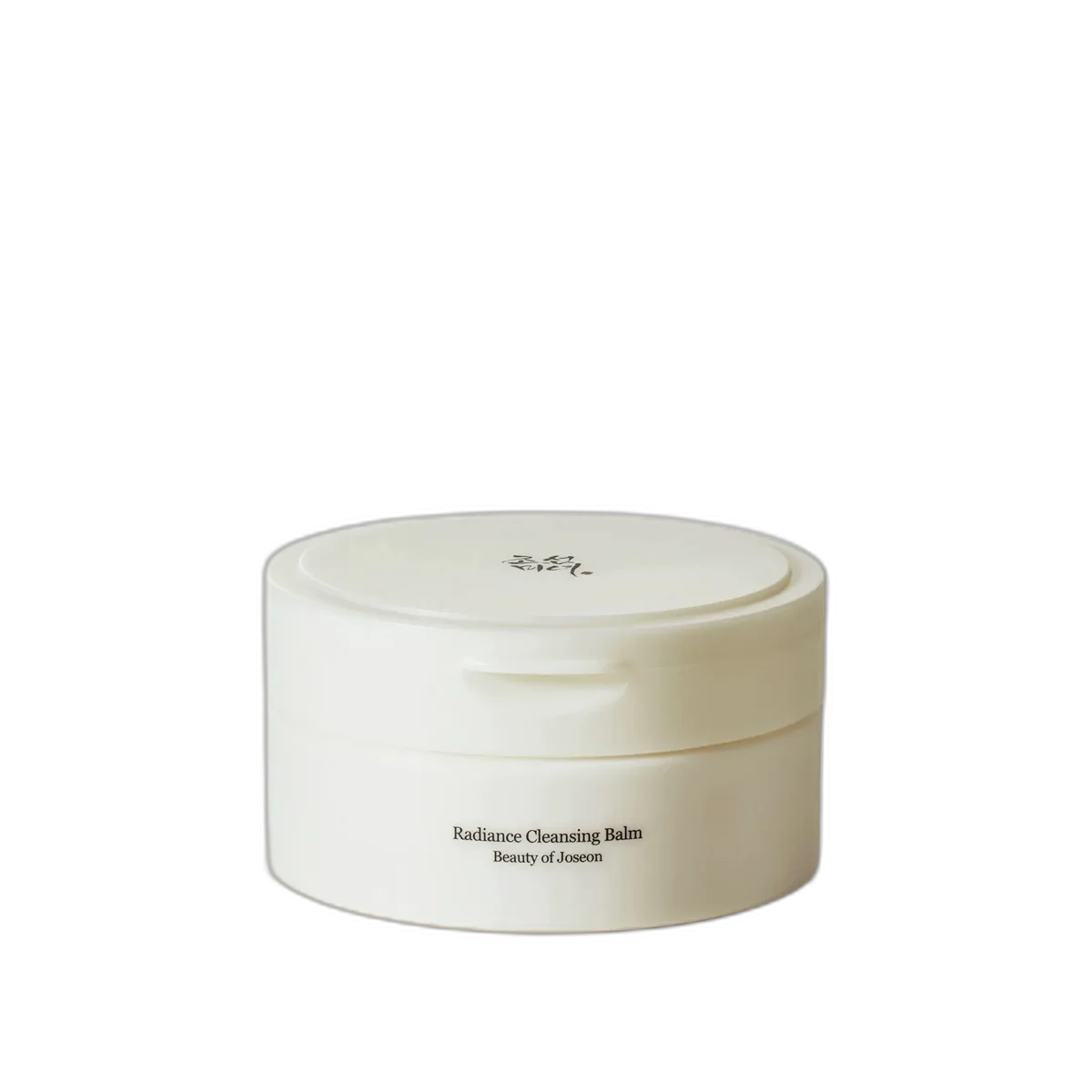
Cleansing Balm: Radiance
K-Beauty Double Cleanse Essential
 Verified reviewer
Pros & cons.
- +Triple-rice formula (bran oil, seed water, extract) provides cleansing with genuine skin-conditioning benefits
- +Reformulated to remove fragrance, essential oils, and beeswax — now vegan and sensitivity-friendly
- +Sea buckthorn oil adds omega-7 fatty acids and antioxidants rarely found in cleansing balms
- +Sherbet-to-oil-to-milk texture transformation makes the cleansing experience genuinely satisfying
- +Dissolves waterproof makeup and stubborn sunscreen thoroughly with gentle massage
- +Skin feels hydrated and soft after rinsing — no tightness or stripping
- +Competitive pricing undercuts comparable K-beauty cleansing balms
- −Jar packaging is less hygienic than tubes or pumps despite included spatula
- −Balm texture softens significantly in warm environments above room temperature
- −PEG emulsifiers may not satisfy strict clean beauty criteria
- −Requires a second cleanser to fully remove residue — not a standalone cleanser
- −Brief skin contact time limits the benefit of treatment ingredients like fermented soybean
The full review.
Women in the Joseon dynasty reportedly used rice water as a cleanser and brightener. While historical accuracy is debatable, the science of rice in skincare is certain. Beauty of Joseon’s Radiance Cleansing Balm uses this traditional ingredient in a modern double-cleanse formula. After its launch, the brand improved the product by removing unnecessary ingredients.
The reformulated version improves on the original. The brand replaced beeswax with synthetic wax for a vegan formula and removed the artificial fragrance and essential oils that do not belong in products for sensitive skin. The streamlined formula uses three forms of rice: bran oil for emollient cleansing, seed water for hydration, and extract for brightening. This reformulation shows the brand listens to its community.
Texture
The texture attracts K-beauty fans. It is a firm sherbet that melts into a silky oil with good slip under warm fingertips. It dissolves waterproof mascara and stubborn sunscreen through gentle circular motions without tingling. Adding water transforms the oil into a milky emulsion that rinses clean without the greasy residue found in cheaper cleansing balms.
Sea buckthorn oil defines this balm. Most cleansing balms use neutral oils like sunflower, mineral, or jojoba to dissolve makeup. Sea buckthorn oil contains omega-7 fatty acids (palmitoleic acid) to support skin barrier function and carotenoids that provide a warm golden tint. The antioxidant profile offers mild protection during cleansing.
The lactobacillus/soybean ferment extract is an unusual addition to a rinse-off product. Fermented soybean has isoflavones and amino acids in smaller, more bioavailable forms than unfermented soy. Whether these compounds provide meaningful benefits during ninety seconds to two minutes of contact is debatable. However, the inclusion shows thoughtful formulation, and the soybean ferment helps the skin-conditioning feel.
Oat meal extract provides soothing properties. For skin that reacts to cleansing with redness, tightness, or irritation, the anti-inflammatory beta-glucans in oat extract buffer that response. Compared to cleansing balms using only emollients, this leaves skin softer and calmer.
The limitations are few. The jar packaging requires using fingers or a spatula, which is less hygienic than a tube or pump, though the included spatula helps. The formula softens in warm environments, changing the sherbet texture. If you skip the second cleanser, a slight film may remain that could affect acne-prone skin.
PEG-20 glyceryl triisostearate and PEG-10 isostearate act as emulsifying agents so the balm rinses with water. PEGs are controversial in clean beauty, but cosmetic chemists consider them safe at these concentrations. If you avoid PEGs, this product is not for you; however, they allow the balm to emulsify cleanly without oily residue.
At $19 for 100ml, this is priced well for K-beauty cleansing balms. It costs less than the Banila Co Clean It Zero ($25-28 for 100ml) and the Heimish All Clean Balm ($18-22 for 120ml) while providing a more interesting ingredient profile. The price recently dropped from the original MSRP at several retailers, lowering the per-ounce cost.
This product encourages double cleansing. The pleasant experience makes the extra step feel like a ritual. The results—clean, hydrated skin—show why two gentle cleansing steps work better than one aggressive one.
Ingredient analysis.
Full INCI list
Cetyl Ethylhexanoate, Caprylic/Capric Triglyceride, PEG-20 Glyceryl Triisostearate, Synthetic Wax, PEG-10 Isostearate, Lactobacillus/Soybean Ferment Extract, Hippophae Rhamnoides Oil, Oryza Sativa (Rice) Bran Oil, Oryza Sativa (Rice) Seed Water, Avena Sativa (Oat) Meal Extract, Coix Lacryma-Jobi Ma-Yuen Seed Extract, Oryza Sativa (Rice) Extract, Water, Sorbitan Sesquioleate, Glycerin, Propanediol, Butylene Glycol, 1,2-Hexanediol, Caprylyl Glycol, Ethylhexylglycerin
Skin match.
The science.
The Science
The cleansing efficacy of oil-based balms relies on the principle that 'like dissolves like' — lipophilic ingredients in the balm dissolve the lipophilic substances on skin (sebum, oil-based sunscreen, makeup pigments). The cetyl ethylhexanoate and caprylic/capric triglyceride that form the base of this formula are esters chosen for their excellent solvent properties and low comedogenic potential.
Rice bran oil (Oryza sativa) has been studied for its unique composition of gamma-oryzanol, tocotrienols, and phytosterols. A 2014 study published in the International Journal of Molecular Sciences demonstrated that gamma-oryzanol exhibits significant antioxidant activity and UV-protective properties. While these benefits are limited in a rinse-off product, the brief contact time during cleansing may provide some conditioning effect, particularly for the skin's lipid barrier.
Sea buckthorn oil (Hippophae rhamnoides) is notably rich in palmitoleic acid (omega-7), which constitutes 30-40% of its fatty acid profile. A 2017 review in the Journal of Ethnopharmacology noted that sea buckthorn oil promotes wound healing and reduces inflammation through its combined effects of omega fatty acids, carotenoids, and tocopherols. In the context of a cleansing balm, these properties help ensure the cleansing step doesn't compromise the skin barrier.
The Lactobacillus/soybean ferment extract undergoes bioconversion that produces genistein and daidzein — isoflavones that have demonstrated antioxidant and mild tyrosinase-inhibiting (brightening) activity in dermatological research. Whether the contact time in a rinse-off product is sufficient for meaningful penetration of these actives remains debated among cosmetic chemists, but the conditioning feel during use is noticeable.
Dermatologist Perspective
Dermatologists who recommend double cleansing typically advise starting with an oil-based first cleanser like this to remove oil-soluble impurities before following with a water-based cleanser. Board-certified dermatologists note that this approach is gentler than using a single strong cleanser, as it avoids the surfactant overload that can strip the skin barrier. The fragrance-free, essential oil-free reformulation of this product makes it more suitable for dermatologist-recommended sensitive skin routines. Dermatologists generally consider PEG emulsifiers safe in rinse-off products at these concentrations, though patients with severely compromised skin barriers are sometimes advised to avoid them as a precaution.
Where it fits in your routine.
Scoop a grape-sized amount of balm with the included spatula and apply to dry skin. Use dry skin because water stops the balm from dissolving makeup. Massage the balm in circular motions across the face for 60-90 seconds, focusing on areas with heavy makeup or sunscreen. Add a small amount of lukewarm water and massage until the balm turns milky white. Rinse thoroughly with lukewarm water. Immediately follow with a water-based gel or foam cleanser for your second cleanse.
At $19 for 100ml, this cleansing balm offers solid value in the K-beauty first-cleanser category. With nightly use, one jar lasts approximately 2-3 months, putting the monthly cost at $6-10 — less than a single-use makeup wipe habit would cost. The rice and sea buckthorn oil ingredients add genuine value beyond basic cleansing, and the recent reformulation improved the formula without increasing the price. An 80ml size is also available for those wanting to try before committing to the full jar.
This first cleanser removes makeup and sunscreen daily without stripping the skin. It suits K-beauty double-cleansing enthusiasts, sensitive skin types frustrated by drying makeup removers, and anyone wanting a more interesting ingredient profile than a generic cleansing balm.
This balm needs a second cleanser to work if you want a standalone, single-step cleanser. It is not for anyone who strictly avoids PEG-based ingredients. Minimalists who find double-cleansing unnecessary may skip it; if you do not wear makeup or sunscreen regularly, a single gentle cleanser is probably sufficient.
Product details.
Solid sherbet-like balm melts on contact with warm skin. It turns into a smooth, silky oil during massage, then emulsifies into a milky liquid when water is added.
Fragrance-free — very faint neutral scent from the rice and sea buckthorn oils
A frosted plastic jar uses a screw-top lid in the brand's signature Joseon-inspired design. It includes a spatula for hygienic dispensing, but many users skip it for convenience.
Scoop a small amount with the included spatula and apply to dry skin on first use. The solid balm melts instantly into a smooth oil. Massaging the oil dissolves makeup and sunscreen, including heavy SPF. Add water to emulsify the balm into a milky texture, then rinse. Skin feels soft and clean without tightness or dryness. The sea buckthorn oil gives the balm a subtle golden tint that does not transfer to skin.
2-3 months with nightly use for a single cleanse
12 months
All Year
The backstory.
Beauty of Joseon's cleansing balm draws directly from the Korean tradition of using rice water for cleansing — a practice dating back to the Joseon dynasty, where court women would collect the starchy water from rice preparation and use it as both a cleanser and a skin brightener. The brand reformulated this product from its original version, removing beeswax, artificial fragrance, and essential oils to create a cleaner formula that better serves sensitive skin without losing the rice-centric identity.
About Beauty of Joseon
Established Brand (5–20 years)Sumin Lee founded Beauty of Joseon in 2016 in South Korea. The brand uses Joseon dynasty beauty traditions and hanbang (Korean herbal medicine) ingredients. Beauty of Joseon has a loyal global following via K-beauty communities, but specific product formulations lack independent clinical validation beyond ingredient-level research.
Common myths.
Cleansing balms clog pores because they're oil-based
Oil-based cleansers dissolve sebum and oil-based impurities (like sunscreen and makeup) better than water-based cleansers. Cleansing balms leave minimal residue if you emulsify and rinse them properly — or use a second cleanser. Complete removal is the key: massage thoroughly, add water to emulsify, rinse, then use a water-based cleanser.
Rice water for skincare is just a K-beauty marketing trend
East Asian beauty has used rice water for centuries, and science supports it. Rice bran contains the antioxidant gamma-oryzanol, plus ferulic acid and phytic acid. Dermatological studies show both ferulic acid and phytic acid brighten skin. This tradition is more than folklore; these ingredients deliver measurable benefits.
FAQ.
Do I need to double cleanse after using the Radiance Cleansing Balm?
Yes, use a water-based cleanser for a second cleanse. The balm emulsifies well with water, but a follow-up gel or foam cleanser removes all residue from the balm, dissolved makeup, and sunscreen. Skipping the second cleanse leaves a slight film that can clog pores over time, especially for acne-prone skin.
Is the Beauty of Joseon Cleansing Balm vegan?
Yes. The reformulated version replaces the original beeswax with synthetic wax. This makes the formula entirely vegan and cruelty-free. The soybean ferment extract is plant-derived, and the current formulation uses no animal-derived ingredients.
Can I use this cleansing balm in the morning?
You can, but it works primarily as an evening first cleanser to remove makeup, sunscreen, and impurities. In the morning, a water rinse or gentle gel cleanser is enough unless you applied heavy products the night before. Using a cleansing balm morning and night can over-cleanse and strip the skin barrier.
Will the sea buckthorn oil stain my skin or towels?
Sea buckthorn oil gives the balm its golden color. The concentration is low enough that it won't stain skin or towels if you rinse properly. If your white washcloth shows a yellow tint, use warm water to emulsify the balm more thoroughly before rinsing.
Is this cleansing balm safe for eyelash extensions?
Use with caution near eyelash extensions. Oil-based cleansers weaken eyelash extensions adhesive bonds over time. If you have extensions, apply this balm to the rest of your face and use a dedicated lash-safe micellar water for the eye area instead.
What the community says.
"Melts away waterproof makeup and sunscreen effortlessly"
"Leaves skin soft and hydrated rather than stripped or tight"
"No fragrance — gentle enough for the most reactive skin"
"Sherbet-like texture is satisfying and luxurious to use"
"Excellent value compared to premium cleansing balms"
"Can leave a slight film if not followed by a second cleanser"
"Some users experience mild breakouts during adjustment period"
"PEG emulsifiers may concern those following strict clean beauty standards"
"Jar packaging requires dipping fingers in, which is less hygienic than tubes"
"Texture can become soft or melty in warm environments"
People also looked at.