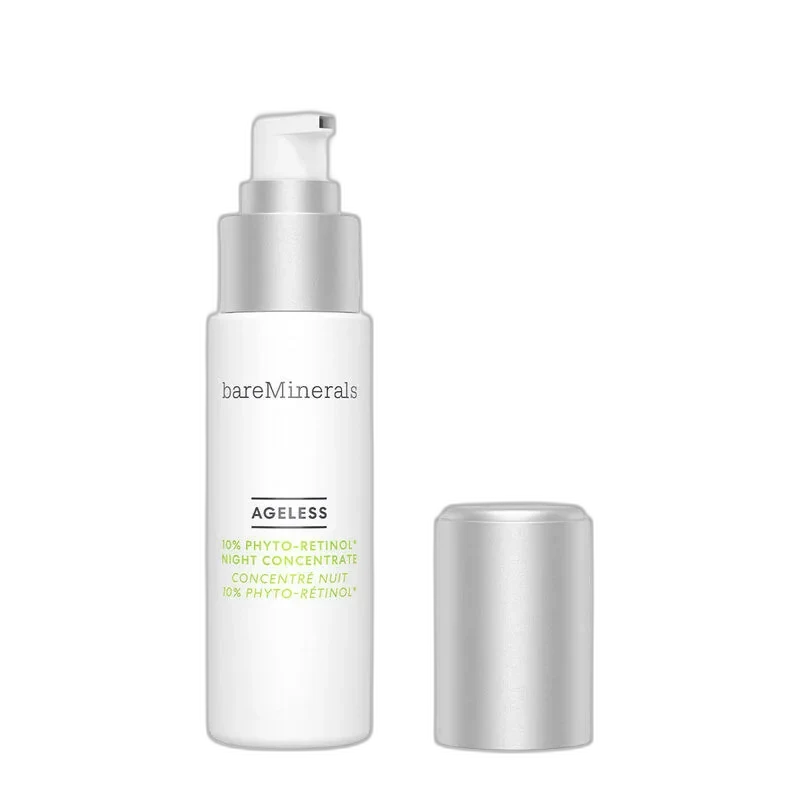
Ageless 10% Phyto-Retinol Night Concentrate
Gentle Retinoid-Alternative
 Verified reviewer
Pros & cons.
- +Bakuchiol and bidens pilosa stack is a thoughtful retinoid-alternative approach
- +Oil-rich base limits dryness and barrier stress
- +Pregnancy-compatible option for anti-aging routines
- +No retinization, peeling, or photosensitivity concerns
- +Silky serum texture absorbs cleanly under moisturizer
- +Vegan and cruelty-free certification for ethics-driven shoppers
- −Expensive for a bakuchiol-based serum at this size
- −Fragrance, limonene, linalool and geraniol limit fragrance-sensitive users
- −Results are modest compared to real retinol
- −Naming strongly implies retinol content that isn't there
- −Not fungal-acne safe due to plant oils
The full review.
Let’s get the naming issue out of the way first, because it’s the single most important thing a shopper should understand about this product: there is no retinol in it. ‘Phyto-Retinol’ is marketing shorthand for ‘plant-derived molecules that behave a little like retinoids,’ and bareMinerals uses the ‘10%’ figure to refer to the botanical complex, not to any retinol strength. That’s not a scam — plenty of bakuchiol products use similar language — but it tells you something useful about the category. Retinoid-alternative serums exist because a real chunk of people want anti-aging results without the tradeoffs of vitamin A. Pregnancy and breastfeeding rule out prescription retinoids. Some sensitive skin simply can’t sustain the retinization phase. Others have tried retinol three times and given up after the third round of flaking. bareMinerals built this product squarely for those customers, and the formulation decisions reflect that priority with more care than the marketing copy would suggest. The active story stacks two botanicals with retinoid-mimetic pathways: bakuchiol, which is the one most shoppers have heard of, and bidens pilosa extract, which is less famous but has been studied as a retinoid-receptor modulator. Combining them is a reasonable hedge — bakuchiol’s data is stronger, bidens is earlier-stage, and neither alone produces the kind of dramatic turnover you get from a real retinoid. More importantly, the base is where this serum earns its ‘gentle’ positioning. You get squalane, rosehip, moringa, argan, sunflower and murumuru, plus sunflower unsaponifiables, linoleic and linolenic acids, niacinamide, panthenol, allantoin, centella and coenzyme Q10. It is, to be blunt, a very well-thought-out barrier-support background for a retinoid-alternative, and it’s the main reason first-time users report zero peeling or redness. Texture-wise, this is a serum that acts like a lightweight oil. It goes on silky, sinks in fast, and leaves a slightly satin finish that feels nourishing but not heavy. The scent is softly floral — rosehip and gardenia sit at the top — and if you’re fragrance-sensitive, you’ll absolutely register the limonene, linalool and geraniol. The ‘clean beauty’ label on this one is the increasingly wobbly kind that allows fragrance, which is worth mentioning because it contradicts a certain customer expectation that ‘clean’ equals ‘unscented.’ Over the first week most users notice immediate softness and hydration, which is the plant-oil base doing its job. The retinoid-alternative benefits — modest tone evening, subtle fine-line softening, a very slight glow lift — take six to eight weeks to show up, consistent with both the bakuchiol literature and user reviews at Sephora. If you’re coming off prescription tretinoin, you will find this underwhelming. If you’ve never tolerated retinol and you want something that pushes your skin in the right direction without asking your barrier to pay a toll, this is exactly what the category is supposed to be. Where the product strains is value. At $68 for 30ml, it sits in the luxury tier for its category, and simpler bakuchiol serums from brands like The Inkey List, Biossance and The Ordinary offer meaningful versions of the same core story for $15 to $40. What you’re paying the premium for is the oil-rich base, the bidens pilosa addition, and the broader bareMinerals clean-beauty positioning. Whether that’s worth 70% more than a good drugstore bakuchiol serum depends heavily on how much you value the cushioning feel and the convenience of a single bottle over layering a separate facial oil with a budget bakuchiol. For sensitive and dry skin, the answer is ‘probably yes’ — the base does real work. For everyone else, the honest answer is that this is a good product priced like a very good one. Use it for what it is, not what the name hints at, and it earns its place on the nightstand of the specific user it was built for.
Ingredient analysis.
Full INCI list
Water, Glycerin, Bakuchiol, Propanediol, Caprylic/Capric Triglyceride, Butyrospermum Parkii (Shea) Butter, Squalane, Cetearyl Olivate, Sorbitan Olivate, Glyceryl Stearate, Bidens Pilosa Extract, Elaeis Guineensis (Palm) Oil, Gardenia Florida Fruit Extract, Helianthus Annuus (Sunflower) Seed Oil Unsaponifiables, Linoleic Acid, Linolenic Acid, Tocopherol, Ubiquinone, Rosa Canina Fruit Oil, Moringa Oleifera Seed Oil, Argania Spinosa Kernel Oil, Astrocaryum Murumuru Seed Butter, Glycine Soja (Soybean) Oil, Niacinamide, Sodium Hyaluronate, Adenosine, Panthenol, Allantoin, Centella Asiatica Extract, Cetearyl Alcohol, Stearic Acid, Xanthan Gum, Phenoxyethanol, Ethylhexylglycerin, Citric Acid, Fragrance, Limonene, Linalool, Geraniol
Skin match.
The science.
The Science
A 2018 study in the British Journal of Dermatology forms the main evidence for bakuchiol as a retinoid alternative. This study compared 0.5% bakuchiol twice daily to 0.5% retinol once daily for 12 weeks. The bakuchiol group showed comparable reductions in wrinkle surface area and hyperpigmentation but had significantly less scaling and stinging. While this is the most-cited evidence for this ingredient class and is legitimate, the study is small and lacks wide replication in larger independent trials. Saying "bakuchiol is as good as retinol" overstates the data. Earlier-stage formulation research shows Bidens pilosa extract has retinoid-receptor-pathway activity, but the published literature is thinner and more preliminary than bakuchiol's. Using both in one formula is a reasonable hedge, not a clinically demonstrated synergy. Other ingredients have their own evidence: niacinamide has strong backing for barrier function and tone, coenzyme Q10 has moderate antioxidant literature, and the linoleic-acid-rich plant oils — specifically rosehip and sunflower — have consistent data for barrier repair and transepidermal water loss reduction. This formula adds a lipid matrix beyond a simple bakuchiol serum, which lowers the practical irritation ceiling and helps sensitive users tolerate the retinoid-alternative actives.
References
- Prospective, randomized, double-blind assessment of topical bakuchiol and retinol for facial photoageing — British Journal of Dermatology (2019)
Dermatologist Perspective
Dermatologists view bakuchiol as a legitimate but gentler alternative to retinoids rather than an equivalent, and this product fits that description. Board-certified dermatologists often recommend bakuchiol-based formulas for patients who are pregnant, breastfeeding, retinol-intolerant, or starting an anti-aging routine. The barrier-supportive base is a plus, as users with sensitive skin often choose retinoid-alternative products. Dermatologists also caution that patients should not expect the same magnitude of results as prescription retinoids; this class of product works best for maintenance or gentle support rather than corrective treatment.
Where it fits in your routine.
Apply in the evening to clean, slightly damp skin after toner or essence. Dispense three to four drops into your palm, warm it between fingertips, and press it into the face and neck. Do not rub, as this wastes the oil-rich texture. Follow with a ceramide or peptide moisturizer to lock in benefits. Do not use with prescription retinoids or high-strength acids the same night; alternate nights when combining with other actives. Use daily SPF every morning. Bakuchiol does not cause photosensitivity, but any anti-aging routine requires sun protection to work. If other actives have sensitized your skin, introduce it slowly during the first week.
At $68 for 30ml, this lasts roughly 2.5-3 months with nightly use and sits near the top of its category. The Inkey List, Biossance and The Ordinary offer comparable retinoid-alternative serums with a bakuchiol core for $15-$40, but lack the fuller oil-and-antioxidant base. The higher price buys the bidens pilosa addition, the cushioning lipid matrix and clean-beauty positioning; these are meaningful upgrades, but not 70%-more meaningful. The math works for sensitive or dry skin that benefits from the oil-rich background. For normal skin that pairs a cheaper bakuchiol serum with a separate facial oil, the math is harder to justify.
Sensitive, dry, or pregnant users want a retinoid-alternative that supports the skin barrier. It works for retinol-averse customers who prefer one gentle nighttime serum over layering a bakuchiol product with a separate facial oil. The formula also suits mature skin seeking anti-aging support without the side-effect profile of prescription retinoids.
Users who already tolerate retinol or tretinoin get stronger results for less money. Fragrance-averse users will notice the limonene, linalool and geraniol. Fungal-acne-prone skin should avoid the plant-oil-rich base. Shoppers prioritizing per-dollar value find nearly the same core benefits at a lower cost.
Product details.
Silky, slightly creamy serum-oil hybrid that sinks in without tackiness.
Soft botanical floral — rosehip and gardenia notes, clearly fragranced.
Frosted glass bottle with dropper. Dropper format controls dosing better than the brand's earlier jar formats but exposes the plant oils to some light.
The first week shows softer, plumper skin without peeling, redness, or purging. Since there is no actual retinol, users expecting a retinization timeline may think it isn't working — results are slower and gentler than a traditional retinol.
2. 5-3 months with nightly full-face use.
12 months
fall winter
The backstory.
bareMinerals launched its Ageless skincare line as part of a broader pivot from pure color cosmetics into clean-leaning skincare, and this Night Concentrate became the anchor product. It was specifically positioned for customers who wanted anti-aging benefits but had been scared off prescription retinoids, were pregnant, or had sensitive skin that didn't tolerate classic retinization.
About bareMinerals
Established Brand (5–20 years)bareMinerals launched in 1995 as a mineral makeup brand and later added skincare using a clean-beauty positioning. Shiseido Americas owns the brand. The skincare line uses the parent company's formulation infrastructure, but bareMinerals is not dermatologist-developed.
FAQ.
Is this actually a retinol?
No. The 'Phyto-Retinol' name is misleading; this formula contains zero retinol. It uses bakuchiol and bidens pilosa extract, two botanicals with retinoid-mimetic activity, instead of the vitamin A family.
Is this safe during pregnancy?
Bakuchiol and bidens pilosa are not contraindicated during pregnancy like retinoids. This makes the formula a reasonable choice for expectant users seeking anti-aging support. Always confirm with your OB-GYN before adding new skincare during pregnancy.
Will I get retinol-level results?
No. Bakuchiol shows fine-line and tone benefits in studies, but the effect is smaller than prescription retinoids. If you tolerate retinol, retinol gives stronger results. This product is for those who can't or don't want to use retinol.
Can I layer this with my vitamin C serum?
Yes, but most users see better results using vitamin C in the AM routine and this concentrate at night. Using everything together often dilutes the lipid-rich feel of this serum and makes finish control harder.
Why does the 'clean beauty' version contain fragrance?
U.S. clean beauty labels lack regulation and vary by brand — bareMinerals includes fragrance ingredients in its internal clean standard. If you avoid fragrance, the limonene, linalool and geraniol in this formula are noticeable.
How does this compare to pure bakuchiol serums?
It adds bidens pilosa as a second retinoid-mimetic and uses a thicker, oil-rich base. Some users like the cushion; others feel they pay a premium for what a simpler bakuchiol serum does for half the price.
Does this cause purging?
Since there is no true retinol, classic retinization purging does not occur. A small subset of users sees temporary congestion as plant oils adjust to their skin; this usually resolves within two weeks.
What the community says.
"gentle enough for first-time retinoid-alternative users"
"pregnancy-safe option"
"no peeling or redness"
"luxurious texture"
"expensive for bakuchiol"
"results slower than retinol"
"fragrance not truly clean"
"jar format"
Featured in.
People also looked at.