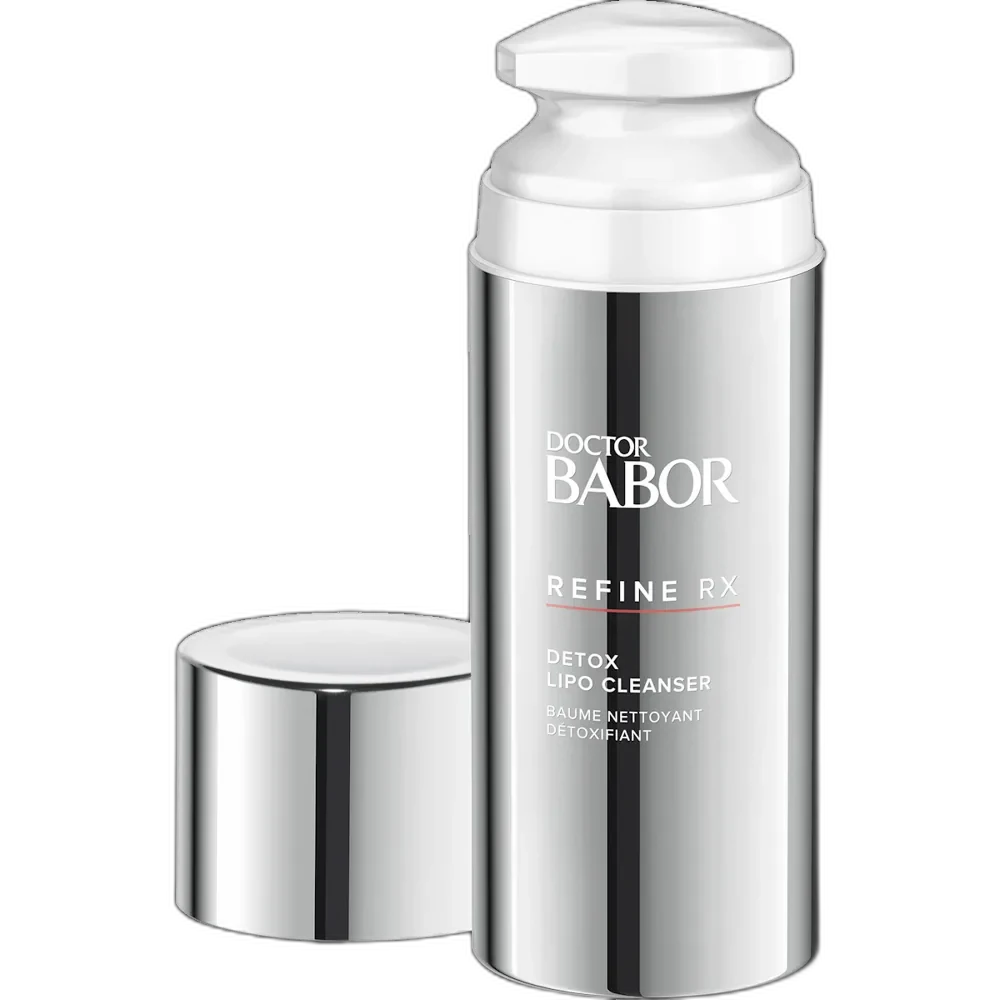
Doctor Babor Refine Cellular Detox Lipo Cleanser
European Spa Back-Bar Staple
 Verified reviewer
Pros & cons.
- +Branched ester base dissolves modern sunscreen and long-wear makeup cleanly
- +Single self-emulsifier rinses without the strip-feel of PEG-heavy cleansers
- +Unusually high glycerin position leaves skin hydrated rather than squeaky
- +Aloe leaf extract softens the formula for borderline-reactive skin
- +Lightweight, non-greasy after-feel sets up actives well
- +Decade-long track record on European spa back bars
- −Light parfum with disclosed linalool and hexyl cinnamal allergens
- −Pricey at around fifty dollars per 100 ml
- −Glass bottle pump can leak in luggage
- −Broccoli extract is mostly cosmetic in a rinse-off context
The full review.
Most European spa oil-to-milk cleansers use the same structure: an oil or branched ester solvent, a PEG self-emulsifier for rinsing, and plant extracts for marketing. Babor’s Doctor Babor Refine Cellular Detox Lipo Cleanser is different because glycerin sits third on the list. Glycerin is a cheap, well-studied humectant that rarely does much in rinse-off products. However, placing it this high in an oil-phase formula deposits a thin protective film while the cleanser emulsifies, so the skin stays hydrated instead of stripped. This distinguishes it from PEG-loaded oil cleansers. The formula uses isostearyl isostearate, a branched-chain ester used in dermatologist-recommended cleansers for decades. Branched esters dissolve silicone-based sunscreens and long-wear pigments without the heavy feel of mineral oil. PEG-8 caprylic/capric glycerides provides the rinse. Babor uses a single self-emulsifier instead of loading three or four PEGs, which often makes cheaper lipo cleansers stripping. Polyglyceryl-3 diisostearate supports emulsification, glyceryl behenate forms a film, and aloe barbadensis leaf extract provides soothing. The Refine Cellular pillar’s broccoli extract is at the end of the list; it serves marketing identity rather than active delivery, as no one expects antioxidant magic from a cleanser washed off in thirty seconds. The texture is a thin, slightly amber oil that warms with body heat, slides without dragging, and transforms into a soft milky lotion when you add water. It does not sting, tingle, or leave a harsh squeak. Skin feels soft and cushioned. The fragrance is notable. Babor includes parfum, with linalool and hexyl cinnamal listed as fragrance allergens. This is fine for most normal and combination skin, and the spa-clean scent feels like an evening ritual. For rosacea-prone, eczema-prone, or seriously reactive skin, these components make this the wrong cleanser; use the brand’s fragrance-free options or a pharmacy-brand oil cleanser instead. Makeup and sunscreen removal is reliable. Two pumps dissolve a full face of mineral or chemical sunscreen, foundation, and most long-wear lipsticks. You may need a second water-based cleanser for heavy waterproof mascara or long-wear matte liquid lipsticks, which is good practice in a city or after sweating. The glass bottle with a pump dispenser looks elegant but leaks in luggage because the pump depresses during transit. At roughly fifty dollars for 100 ml, it costs more than excellent fragrance-free oil cleansers from clinical pharmacy brands, but less than the boutique J-beauty and luxury spa cleansers it resembles. It sits in a mid-luxury slot: better engineered than cheap options, lighter than mineral-oil classics, and slightly fragranced for sensory pleasure. If the fragrance is fine and you want a cleanser that handles modern sunscreen without needing immediate re-moisturizing, this is an elegant choice in its price band. If your skin is reactive or you want maximum active milligrams per dollar, look elsewhere. The Babor name and Doctor Babor cabinet aesthetic drive the price, which is fine if you value them.
Texture
The texture is a thin, slightly amber oil that warms with body heat, slides without dragging, and transforms into a soft milky lotion when you add water. It does not sting, tingle, or leave a harsh squeak. Skin feels soft and cushioned.
Scent
The fragrance is notable. Babor includes parfum, with linalool and hexyl cinnamal listed as fragrance allergens. This is fine for most normal and combination skin, and the spa-clean scent feels like an evening ritual. For rosacea-prone, eczema-prone, or seriously reactive skin, these components make this the wrong cleanser; use the brand’s fragrance-free options or a pharmacy-brand oil cleanser instead.
Works for
Makeup and sunscreen removal is reliable. Two pumps dissolve a full face of mineral or chemical sunscreen, foundation, and most long-wear lipsticks. You may need a second water-based cleanser for heavy waterproof mascara or long-wear matte liquid lipsticks, which is good practice in a city or after sweating.
Packaging
The glass bottle with a pump dispenser looks elegant but leaks in luggage because the pump depresses during transit.
Best for
If the fragrance is fine and you want a cleanser that handles modern sunscreen without needing immediate re-moisturizing, this is an elegant choice in its price band.
Not ideal for
If your skin is reactive or you want maximum active milligrams per dollar, look elsewhere.
Ingredient analysis.
Full INCI list
Isostearyl Isostearate, PEG-8 Caprylic/Capric Glycerides, Glycerin, Polyglyceryl-3 Diisostearate, Silica Dimethyl Silylate, Glyceryl Behenate, Propanediol, Parfum, Aloe Barbadensis Leaf Extract, Aqua, Linalool, Hexyl Cinnamal, Bioflavonoids, Brassica Oleracea Italica Extract.
Skin match.
The science.
The Science
Oil-to-milk cleansers belong to a category of self-emulsifying surfactant systems that dermatologists have long considered the gentlest effective approach to removing sunscreen and long-wear makeup. The mechanism is straightforward: a hydrophobic ester base dissolves the lipophilic film of pigments, polymers, and silicones on the skin surface, and an emulsifier with a moderate hydrophile-lipophile balance allows the whole oily layer to lift and rinse with water. Isostearyl isostearate is the bulk ester here, and it sits in a class of branched-chain esters that the cosmetic literature consistently rates as non-comedogenic and well-tolerated, in contrast to some straight-chain plant oils that can occlusively trap follicular debris. The PEG-8 caprylic/capric glycerides emulsifier is the workhorse that defines the lipo cleanser category — a polyethylene glycol ester with an HLB value tuned for rinse-off applications. The choice to use a single primary emulsifier rather than a stack of three or four is what keeps this formula on the gentle side: each additional surfactant in a cleanser tends to push the trans-epidermal water loss number upward after washing, and pharmacy-brand cleansers built around minimal surfactant systems have repeatedly outperformed multi-surfactant competitors in published barrier-function studies. The high position of glycerin in the ingredient list is the most interesting choice here from a formulation-science perspective. Glycerin's humectant action does not vanish in rinse-off products — a thin layer remains on the stratum corneum, and that residual film measurably reduces immediate post-cleansing tightness. The aloe barbadensis polysaccharide film and the bioflavonoid antioxidants sit near the end of the list and contribute mostly to marketing identity rather than measurable performance in a forty-second contact time, which is a fair and honest trade-off in any oil cleanser.
Dermatologist Perspective
Dermatologists generally recommend oil-based or oil-to-milk cleansers as the gentlest effective option for removing sunscreen, long-wear makeup, and end-of-day environmental film. Branched-chain esters like the isostearyl isostearate at the top of this formula are widely considered non-comedogenic, and the single-emulsifier architecture is closer to dermatologist-preferred minimalism than the multi-PEG systems that dominate budget oil cleansers. The reservation board-certified dermatologists tend to express about products in this category is fragrance — and that reservation applies here. For patients with rosacea, atopic skin, or perioral dermatitis, the parfum and disclosed fragrance allergens make this a less appropriate choice than fragrance-free pharmacy alternatives. For everyone else, the formula is clinically uncontroversial and reliable.
Where it fits in your routine.
Apply two pumps to dry skin at night. Massage in slow circles for thirty to sixty seconds, focusing on the nose, hairline, and around the eyes. Wet your fingertips with warm water and keep massaging until the oil turns into a soft milky lotion. Rinse with lukewarm water. Use a gentle water-based cleanser after if you have heavy makeup or city pollution. This product is unnecessary in the morning; a simple gel cleanser works better for daytime. Avoid getting the cleanser directly in the eyes.
At roughly forty-nine dollars for 100 ml, this cleanser occupies a confusing market middle. It costs more than pharmacy-brand fragrance-free oil cleansers that perform similarly on basics, but less than boutique J-beauty and luxury European cleansers with the same self-emulsifying architecture. You pay for the Babor brand identity, German spa heritage, and the sensory experience of the light fragrance and elegant glass packaging. No larger size exists to lower the per-milliliter cost. The price is defensible if those intangibles matter. If they don't, clinical pharmacy brands use the same engineering principles for half the cost.
This oil-to-milk cleanser works for normal, combination, or dry skin. It removes sunscreen and makeup without leaving skin tight or stripped. It fits people who want a small sensory ritual and do not react to light cosmetic fragrance.
Skip this if you have rosacea, atopic dermatitis, perioral dermatitis, or a history of fragrance allergy — the parfum and disclosed allergens make this cleanser unsuitable. Skip this if you want maximum value: fragrance-free oil cleansers work just as well at half the price.
Product details.
This thin amber oil emulsifies into a soft milky lotion when it meets water.
Light, slightly floral spa fragrance from the parfum and linalool.
100 ml glass bottle with a pump dispenser — looks nice but breaks easily; the pump leaks during travel.
The first use feels like a lightweight massage oil, then turns into a milky cleanser when you add water. It does not sting or tingle. Skin feels soft and slightly cushioned afterward, not squeaky.
Around 3 months with nightly use of two pumps.
12 months
All Year
The backstory.
This cleanser has been part of the Doctor Babor Refine Cellular line since the mid-2010s and was built as the front-end of a clinically positioned routine for European spa clients. The Refine Cellular pillar exists for skin showing early signs of pollution stress and pore congestion, and the Detox Lipo Cleanser was designed as a daily ritual rather than an occasional double-cleanse step.
About Babor
Legacy Brand (20+ years)Babor started in Aachen, Germany in 1956, supplying professional spa and aesthetician channels across Europe. The Doctor Babor Refine Cellular line is one of the brand's longest-running clinical pillars and remains on medical spa back bars internationally.
Common myths.
Oil cleansers cause breakouts.
Branched-chain esters like isostearyl isostearate are non-comedogenic and appear in dermatologist-recommended cleansers for decades. The fragrance and natural allergens in this specific formula pose a larger risk to reactive skin than the oil base.
A lipo cleanser counts as a single-step face wash.
Use it for light makeup or sunscreen-only days. For heavy makeup or city pollution, dermatologists recommend a second water-based cleanser to remove all emulsified residue.
FAQ.
Does this cleanser remove waterproof sunscreen and makeup?
Yes — the isostearyl isostearate base dissolves silicones and long-wear pigments, while the PEG-8 self-emulsifier rinses it all away. This is a reliable lipo cleanser for removing modern mineral and chemical sunscreens.
Is it gentle enough for daily use?
For most normal-to-dry and combination skin, yes. For very reactive, rosacea-prone, or fragrance-sensitive skin the parfum and linalool make this a poor daily choice — pick a fragrance-free oil cleanser instead.
Do I need a second cleanser after this?
Use a gentle water-based second cleanse if you wear heavy makeup, live in a polluted city, or sweat in workout-grade sunscreen. This single step works for sunscreen-only days.
Will it clog pores?
Unlikely. The ester base is non-comedogenic and the ingredient list lacks high-occlusive plant oils. Inadequate rinsing causes pore congestion more often than the cleanser itself.
Is it safe during pregnancy?
Yes — the formula lacks retinoids, hydroquinone, or salicylic acid. The fragrance components stay within standard cosmetic safety limits.
Does it sting the eyes?
Rub it lightly if it touches closed eyes. The PEG emulsifier makes it gentler than most oil cleansers, but avoid getting it directly into the eye area.
How does it compare to the Babor HY-OL cleanser?
HY-OL is the traditional Babor oil cleanser. You mix it with the Phytoactive Hydro-Base before use. The Detox Lipo Cleanser is a modern self-emulsifying alternative that works without a second product.
What the community says.
"Effortless makeup removal"
"Rinses cleanly with no greasy residue"
"Leaves skin soft, not stripped"
"Light fragrance is a deal breaker for sensitive skin"
"Pricey for a fragranced oil cleanser"
"Pump can drip on the bottle"
People also looked at.