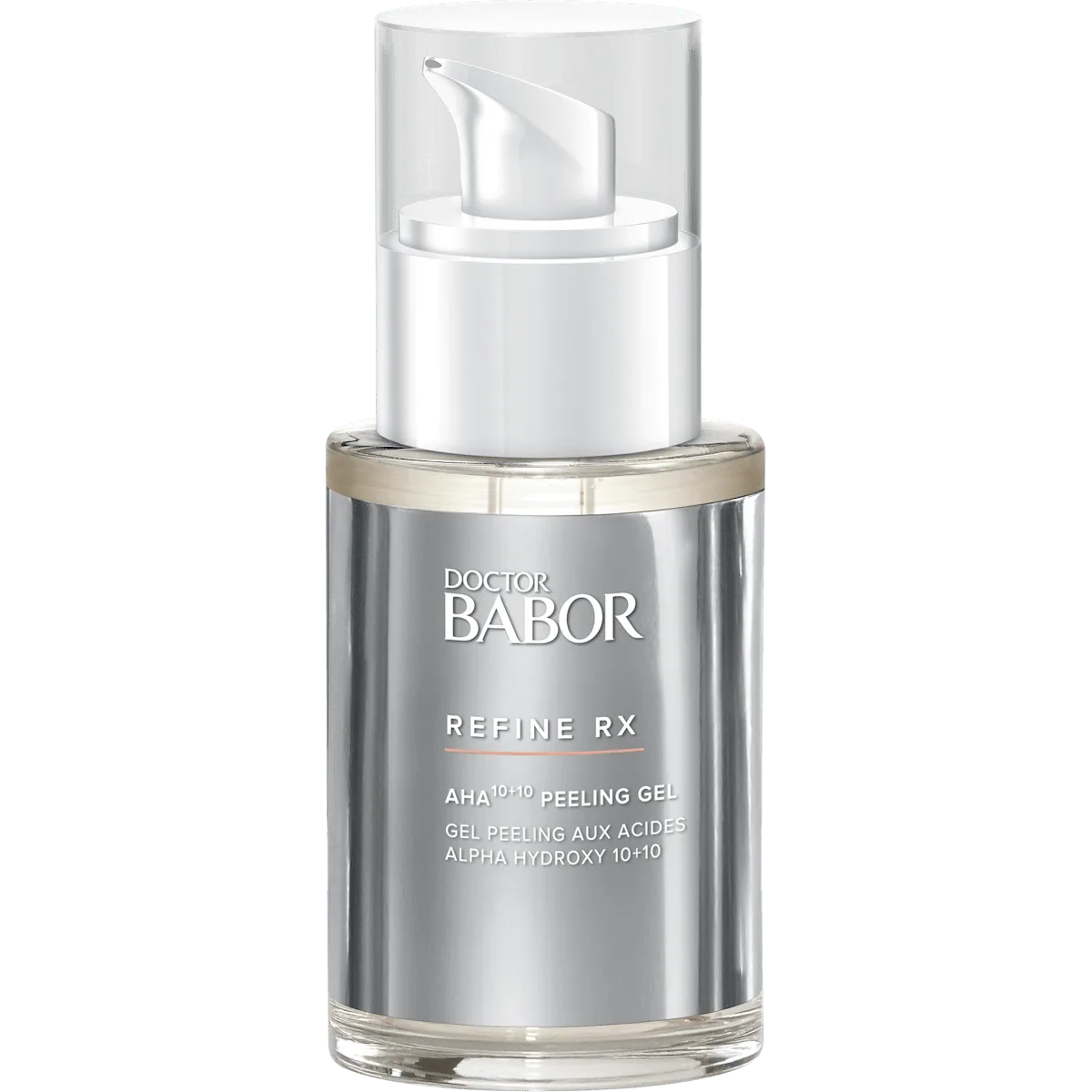
Doctor Babor Refine Cellular AHA 10+10 Peeling Gel
Professional-Tier Wash-Off Peel
 Verified reviewer
Pros & cons.
- +Triple-acid complex is more comprehensive than single-acid alternatives
- +10% antioxidant pairing is unusual and well-considered for the category
- +Wash-off format limits over-exfoliation risk
- +Visible glow immediately after the first use
- +Sophisticated formulation from a legacy German clinical brand
- +Pore and pigmentation improvements compound with weekly use
- −Premium price is hard to justify against budget alternatives
- −Fragrance is unnecessary in a clinical-tier peel
- −Not pregnancy-safe due to the salicylic acid
- −Too aggressive for sensitive or rosacea-prone skin
- −Easy to overuse and damage the skin barrier
The full review.
Most at-home AHA peels dilute professional spa treatments. Formulators take a 30% or 40% glycolic acid solution used by licensed estheticians under controlled conditions, lower the concentration for unsupervised home use, and add buffering ingredients to prevent injury. These results are usually safe, modestly effective, and similar to other at-home AHA products. Babor’s AHA 10+10 Peeling Gel works differently. Babor is an established clinical European skincare brand—founded in Aachen in 1956 by a chemist who created the first hyaluronic acid skincare ampoules—and the Doctor Babor line is the brand’s professional clinical tier, sold through European spas and developed with dermatological practitioners. The 10+10 Peeling Gel launched in 2019 as the flagship at-home version of its professional peel protocol, using a different formulation philosophy than watered-down products. The INCI makes the design intent clear. Below water and arginine (a buffering amino acid), the first three actives are lactic acid, ethyl ascorbic acid, and glycolic acid. Pyruvic acid follows, then salicylic acid, then ergothioneine. Babor markets this acid stack as the 10% complex—three structurally distinct acids working in parallel instead of relying on one dominant glycolic dose. Lactic acid handles surface exfoliation and provides hydration. Glycolic acid penetrates deeper into the stratum corneum and stimulates collagen-related effects with long-term use. Pyruvic acid bridges the AHA and BHA categories with keratolytic and sebum-regulating activity. Salicylic acid adds lipophilic follicular penetration. The total acid load is around 10%, but the structural variety makes the exfoliation more comprehensive than a 10% glycolic-only formula. The 10% antioxidant complex is a more interesting choice. Aggressive exfoliation causes oxidative stress—surface damage from acid exfoliation produces reactive oxygen species at the cellular level—yet most peel formulas ignore this. Babor pairs the acid stack with a 10% antioxidant complex using 3-O-ethyl ascorbic acid (a stable vitamin C derivative) and ergothioneine, an antioxidant with a half-life that exceeds vitamins C and E. The logic is that a meaningful exfoliating dose requires enough antioxidant capacity to offset oxidative collateral damage. This paired acid-and-antioxidant approach is uncommon in wash-off peels and shows more sophisticated thinking than most competitors. The wash-off format fits this acid load. A 10% triple-acid blend is too aggressive as a leave-on, and the 10-minute dwell time allows the acids to work without the cumulative exposure that causes over-exfoliation in daily products. Apply a thin layer to clean, dry skin, wait for the mild tingling within the first minute, sit for 10 minutes, and rinse with cool water. The skin looks immediately smoother and brighter, showing the post-peel glow that indicates a working acid treatment. The texture is competent. The gel is clear and viscous, spreads evenly, does not drip, and has enough tackiness during the dwell time to stay in contact with the skin without discomfort. The fragrance is mild but present. This is the main complaint—a clinical-tier peel should not have fragrance, making this addition feel like a marketing concession rather than a necessity. Users with reactive skin or fragrance sensitivity should use caution. The primary argument against this product is the price. At a hundred and forty-five dollars for fifty milliliters, it is one of the most expensive at-home peels available, and the value is difficult to justify against alternatives. Drunk Elephant’s T.L.C. Sukari Babyfacial offers a similar 25% AHA + 2% BHA load for around eighty dollars. Paula’s Choice 25% AHA + 2% BHA Peel costs forty dollars. The Ordinary’s AHA 30% + BHA 2% is under ten dollars. None include the antioxidant pairing found in Babor, and the Babor formulation is more sophisticated than these budget options, but the price gap is hard to defend on formulation alone. You pay for the German clinical heritage, the spa-channel positioning, and the brand’s reputation. For users committed to the Babor brand and routine, the price is part of the package. For others, the question is whether the antioxidant pairing and formulation polish justify the premium over Drunk Elephant or Paula’s Choice. For most, the answer is no—cheaper options deliver enough benefit to make the extra cost unnecessary. For users wanting the most thoughtfully built wash-off peel and who do not mind the cost, this is a reasonable choice. Babor has the brand credibility to support the price, and the formulation philosophy is evident to its target audience.
Ingredient analysis.
Full INCI list · pH 3.5
Aqua, Arginine, Lactic Acid, 3-O-Ethyl Ascorbic Acid, Glycolic Acid, Polyglyceryl-5 Laurate, Pentylene Glycol, Betaine, Pyruvic Acid, Xanthan Gum, Parfum, Salicylic Acid, Disodium Rutinyl Disulfate, Sodium Benzoate, Hordeum Distichon Extract, Melissa Officinalis Leaf Extract, Phenoxyethanol, Citric Acid, Ergothioneine
Skin match.
The science.
The Science
Multi-acid peels use established exfoliating logic. Acids penetrate skin at different rates based on molecular size and lipid solubility. Glycolic acid is the smallest AHA at 76 daltons; it penetrates deepest and creates the most aggressive surface effects. Lactic acid at 90 daltons penetrates more superficially, causes less irritation, and adds humectant activity. Salicylic acid at 138 daltons is lipid-soluble enough to reach sebaceous follicles that water-soluble AHAs cannot. Pyruvic acid at 88 daltons penetrates deeper than lactic acid but shallower than glycolic acid; it is unique among cosmetic acids because it converts to lactic acid in the skin, which softens its profile. Dermatology literature on professional in-office treatments provides the clinical evidence for combination peels. A 2014 review in the Journal of Clinical and Aesthetic Dermatology summarized evidence for combination acid peels and concluded that blended formulations deliver more comprehensive surface improvements than single-acid peels at equivalent total concentrations, while offering a slightly better tolerance profile because each component has a lower individual concentration. Pairing acids with the 10% antioxidant complex is the research-forward choice. Literature shows that acid exfoliation generates measurable oxidative stress in the skin, with elevated reactive oxygen species levels detectable for hours after a peel. A 2017 paper in the International Journal of Molecular Sciences studied how ergothioneine protects against oxidative damage in the skin and found the molecule works effectively as a topical antioxidant due to its unique stability profile. Combining ergothioneine with a vitamin C derivative provides complementary antioxidant pathways and works more comprehensively than either ingredient alone. The 10% antioxidant load in this formula is at the high end of what's commercially typical; it prioritizes the recovery side of the peel equation rather than just maximum exfoliating intensity.
Dermatologist Perspective
Dermatologists view at-home AHA peels as a reasonable adjunct for surface texture, dullness, and mild hyperpigmentation, though they note even professional-strength at-home formulations are significantly weaker than in-office treatments. Board-certified dermatologists note that combination peels using multiple acids produce more comprehensive surface improvements than single-acid formulations at equivalent total concentrations. The Babor formula's pairing with high-concentration antioxidants matches the recommendation many dermatologists make to combine acid treatments with topical antioxidants for the days following an exfoliating treatment. As with all chemical peels, dermatologists emphasize daily broad-spectrum SPF use, because freshly exfoliated skin is meaningfully more photosensitive than untreated skin.
Where it fits in your routine.
Use 1-2 times per week. Apply to clean, dry skin in the evening. Avoid the eye area, lips, and any broken or irritated patches. Leave on for 10 minutes; use a timer instead of eyeballing it. Rinse thoroughly with cool water until no slip remains. Follow with a hydrating toner and a barrier-supporting moisturizer. Do not use retinoids, vitamin C, or other exfoliants on the same evening. Always use broad-spectrum SPF the next morning and every day during regular peel application. Skip use if your barrier feels compromised, if you have active flares, or near any cosmetic procedures.
At $145 for 50ml, this peel is one of the most expensive at-home AHA treatments available. The formulation is more sophisticated than budget options; the triple-acid complex and 10% antioxidant pairing both exceed category averages. However, the value math fails against Drunk Elephant T.L.C. Sukari Babyfacial ($80), Paula's Choice 25% AHA + 2% BHA ($40), or The Ordinary's AHA 30% + BHA 2% Peeling Solution (under $10). None match the Babor formulation, but all provide meaningful exfoliation for much less. The price reflects Babor's nearly seven-decade clinical heritage and professional spa positioning, but that is a hard sell for users buying on formulation merit alone.
Babor brand loyalists seeking the most sophisticated formulation in the brand's at-home lineup. Users with normal-to-resilient skin facing persistent dullness or texture after gentler exfoliants fail. People who value the antioxidant-paired peel philosophy and will pay for it.
Sensitive or rosacea-prone skin types find the acid load too aggressive. Pregnant or breastfeeding users should avoid it due to the salicylic acid. Budget shoppers can get most benefits for less with Paula's Choice, The Ordinary, or Drunk Elephant. Avoid if your barrier is compromised or post-procedure.
Product details.
A clear, viscous gel that spreads easily and feels slightly tacky while it sits on the skin.
Light fresh fragrance
50ml white tube with screw cap, using Babor's clinical white-and-grey palette
Apply a thin layer to clean, dry skin. Avoid the eye area. Mild tingling starts within 30-60 seconds; this is normal and shows the acids are working. Some users feel light warmth or mild stinging on the cheeks during the 10-minute dwell time. Rinse thoroughly with cool water. The skin looks smoother and brighter immediately, with a noticeable glow that lasts 1-2 days after the first treatment.
About 4-6 months with weekly use
12 months
fall winter
The backstory.
Babor was founded in Aachen, Germany in 1956 by chemist Dr. Michael Babor, who developed the first hyaluronic acid skincare ampoules. The Doctor Babor line was launched as the brand's clinical tier, and the AHA 10+10 Peeling Gel debuted in 2019 as a professional-strength at-home peel intended to bring the brand's spa peel protocols into a daily-use format. The 10+10 naming refers to the dual acid and antioxidant concentrations.
About Babor
Legacy Brand (20+ years)Babor is a German luxury skincare brand. It launched in 1956 in Aachen and has nearly seven decades of formulation history. The brand has a strong professional spa channel presence in Europe. The Doctor Babor line is the brand's clinical tier and uses dermatological input.
Common myths.
Higher acid percentages always deliver better results.
Acid concentrations above 10-15% mostly increase irritation without proportional benefit. Babor caps the acid load at 10% and adds antioxidants, a more sophisticated approach than simply maxing out the acid percentage.
Wash-off peels don't work as well as leave-on acids.
A 10-minute dwell time at low pH delivers an exfoliating dose more aggressive than leave-on acids at the same concentration. The wash-off format works better for high-percentage acids because it limits exposure time and reduces over-exfoliation risk.
FAQ.
How does this compare to The Ordinary AHA 30% + BHA 2%?
The Ordinary's peel uses one bolus of high-concentration glycolic acid for 10 minutes. Babor's uses a 10% blend of three acids and a 10% antioxidant complex. The Babor approach is more comprehensive and gentler for its exfoliating power, but costs much more. The Ordinary delivers comparable results for users on a budget.
How often should I use this?
Most users use this once a week; resilient skin used to acids uses it twice a week maximum. Daily use damages the skin barrier quickly. Do not use with retinoids, vitamin C, or other exfoliants on the same day.
Is this safe during pregnancy?
No. The formula has salicylic acid and an AHA blend. Most dermatologists advise pregnant patients to avoid leave-on or wash-off peels containing BHA. Use a gentle enzyme exfoliant during pregnancy instead.
***
What if my skin stings during application?
Mild tingling is normal for the first few minutes. Sharp stinging or burning means rinse off immediately — the formula is too aggressive for your skin tolerance. Patch test on the jawline first or skip every other week to acclimate.
***
Will this help with hyperpigmentation?
Yes, modestly. The AHAs and the ethyl ascorbic acid in the antioxidant complex target pigmentation via two mechanisms: surface cell turnover and tyrosinase inhibition. Consistent weekly use for 8-12 weeks, plus daily SPF, shows visible improvement.
***
Is the price actually justified?
Your choice depends on your alternatives. Babor's formulation is genuine and the antioxidant pairing is thoughtful for this category. But if you compare this to a Drunk Elephant T.L.C. Sukari Babyfacial or a Paula's Choice 25% AHA + 2% BHA peel, the cheaper alternatives provide 80-90% of the benefit for half the cost or less.
***
Community
What the community says.
"Visible glow immediately after first use"
"Less stinging than expected for the acid load"
"Pore appearance improves within weeks"
"Antioxidant pairing reduces redness compared to plain glycolic peels"
"Eye-watering price for 50ml"
"Fragrance is noticeable"
"Not suitable for sensitive skin"
"Easy to overuse and damage barrier"
People also looked at.