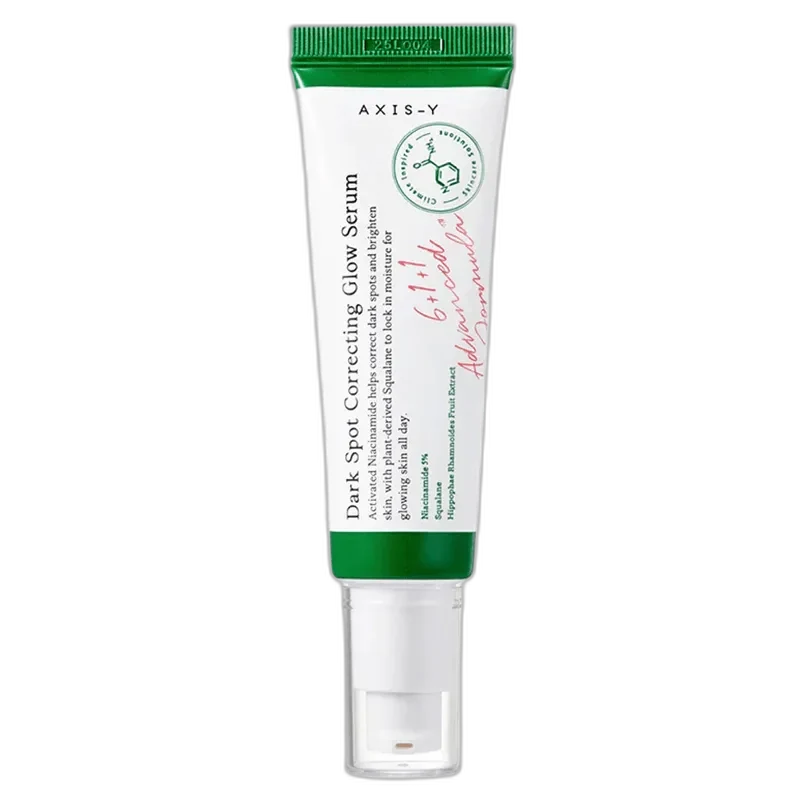
Dark Spot Correcting Glow Serum
Transparent K-Beauty Brightener
 Verified reviewer
Pros & cons.
- +Published 5% niacinamide and 2% tranexamic acid percentages on the packaging
- +Dual-mechanism pigment targeting via two well-studied actives
- +Papaya enzyme adds visible early glow and texture smoothing
- +Squalane buffers the niacinamide for drier skin tolerance
- +Lightweight satin finish layers under most sunscreens cleanly
- +Strongly validated by thousands of real-world reviews since 2019
- +Unusually fair price for the active load and transparency
- −Bergamot essential oil is a real irritation and photosensitivity risk
- −Pump dispenser can struggle to deliver the last bit of product
- −Some users report pilling under specific mineral sunscreens
- −Not an overnight fix — deeper pigment takes 8-12 weeks
The full review.
Texture
The texture is where a lot of the daily pleasure lives. It’s a thin, very slightly milky fluid that absorbs in under a minute with a soft satin finish — not sticky, not greasy, and genuinely compatible with everything most people layer on top. You can wear it under a mineral sunscreen or a heavier occlusive cream without pilling in most cases, though a few specific sunscreens do fight with it; if yours is one of them, the fix is usually to wait an extra minute before the next step.
Scent
The light bergamot scent is the one thing that divides users. It’s present, it’s citrusy, and it fades within a few minutes of application, but bergamot contains furocoumarins that can cause irritation and photosensitivity in skin that reacts to citrus essential oils. If that’s you, skip this serum entirely — no amount of good formulation work around it changes the fact that the oil is in there.
Ingredient analysis.
Full INCI list · pH 5.5
Water, Niacinamide, Glycerin, Dipropylene Glycol, 1,2-Hexanediol, Betaine, Squalane, Hydrogenated Poly(C6-14 Olefin), Butylene Glycol, Cetearyl Olivate, Sorbitan Olivate, Butyrospermum Parkii (Shea) Butter, Phytosteryl/Octyldodecyl Lauroyl Glutamate, Tranexamic Acid, Cetearyl Alcohol, Panthenol, Carica Papaya (Papaya) Fruit Extract, Ulmus Davidiana Root Extract, Glyceryl Stearate, Tromethamine, Sodium Hyaluronate, Carbomer, Hydrogenated Lecithin, Allantoin, Disodium EDTA, Xanthan Gum, Ethylhexylglycerin, Adenosine, Centella Asiatica Extract, Nelumbo Nucifera Flower Extract, Citrus Aurantium Bergamia (Bergamot) Fruit Oil, Tocopherol
Skin match.
The science.
The Science
Niacinamide at topical concentrations between 2% and 5% has well-established effects on pigmentation via inhibition of melanosome transfer from melanocytes to keratinocytes, with benchmark work by Hakozaki and colleagues published in the British Journal of Dermatology in 2002 establishing the mechanism and the effective concentration range. At 5%, this serum sits at the upper end of that evidence-supported range, which is meaningful because lower concentrations typical of cheaper products often underperform on visible pigment. Tranexamic acid, originally a systemic antifibrinolytic drug, has a smaller but growing topical literature — Kim and colleagues published work in 2017 in the Journal of Clinical and Aesthetic Dermatology showing that topical tranexamic acid at 2-5% produced measurable improvement in melasma over 12 weeks without the systemic concerns of oral dosing. The value of combining these two actives in a single formulation is that they operate on different steps of the melanogenesis pathway — niacinamide downstream at the transfer step, tranexamic acid upstream at the UV-plasmin signaling step — rather than competing on the same mechanism. The papain contribution from papaya fruit extract is based on older traditional-use evidence and some enzyme-cosmetic literature showing mild surface exfoliation at cosmetic concentrations, which explains the immediate glow effect users describe in the first week. The squalane and panthenol supporting cast is backed by substantial barrier-function literature, including multiple reviews in Dermatologic Therapy, confirming that lipid replacement agents reduce the tolerability issues that otherwise limit high-niacinamide formulations in reactive skin.
References
- The effect of niacinamide on reducing cutaneous pigmentation and suppression of melanosome transfer — British Journal of Dermatology (2002)
- Oral tranexamic acid for the treatment of melasma: A review — Journal of Clinical and Aesthetic Dermatology (2017)
Dermatologist Perspective
Dermatologists frequently recommend the combination of topical niacinamide and tranexamic acid for patients dealing with post-inflammatory hyperpigmentation and mild melasma, particularly in patients who cannot tolerate stronger prescription lightening agents or are looking to maintain results after a course of hydroquinone. Board-certified dermatologists note that the 2-5% topical range for both actives aligns with the literature supporting their efficacy, and that the mechanism of action — interrupting pigment production and transfer via two distinct pathways — is better supported than single-active approaches. Clinicians often emphasize that these ingredients require consistent use and rigorous daily photoprotection; without SPF discipline, any gains from this serum will be undone by ongoing UV exposure. For patients with sensitivity to fragrance components, dermatologists would typically flag the included bergamot oil as a potential irritant.
Guidance
Where it fits in your routine.
Apply three to four drops to clean, dry skin after a hydrating toner or essence and before heavier moisturizers. Pat the skin gently instead of rubbing to reduce friction on reactive skin. Use morning and night, but sensitive users should start with once nightly for the first week and increase use after. In the morning, always follow with a broad-spectrum sunscreen of SPF 30 or higher — the tranexamic acid and niacinamide only target pigment fully if you control UV exposure. Do not layer this directly with high-concentration L-ascorbic acid; use them at different times of day.
At around twenty-four dollars for 50ml, this serum costs less than the category average for similar ingredient loads, including two disclosed percentages of clinically supported pigment-targeting actives. Comparable niacinamide-plus-tranexamic-acid serums from brands with less transparent formulations usually cost thirty-five to seventy-five dollars for equivalent or smaller sizes. Axis-Y offers one size only, so no larger format exists, but the 50ml bottle lasts roughly two to three months with twice-daily application. This makes the cost per month around eight to twelve dollars. For an emerging brand with limited clinical validation of its finished product, the price is fair rather than aspirational — you pay for transparent ingredients, not brand mythology.
This serum suits combination, oily, and normal skin types with post-acne marks, mild melasma, or general dullness. It is transparent, reasonably priced, and has a track record. Readers who prefer brands that publish percentages and rationale instead of proprietary-blend marketing will like this one.
Avoid this if you have a known sensitivity to bergamot or citrus essential oils. This product is underpowered for moderate-to-severe melasma compared to prescription options; consult a dermatologist if you have this condition. Users who prefer completely fragrance-free formulations have better options elsewhere.
Product details.
This thin, slightly milky serum absorbs fast and leaves a soft satin finish. It feels more like a fluid lotion than a watery essence.
The included essential oil's light bergamot-citrus scent fades within minutes of application.
Opaque white 50ml bottle with a standard lotion pump. The pump protects actives from light and air, but it fails to dispense the last 10% of product.
The niacinamide and papain combination causes a soft, mildly warm tingle on first application. This is normal and subsides within a week. Surface enzyme action creates a light glow in the first few days; actual pigment work takes longer.
Approximately 2-3 months with twice-daily application to face and neck.
12 months
All Year
The backstory.
Axis-Y was founded in 2018 as a collaboration between Korean and Singaporean skincare enthusiasts who were frustrated by the opacity of traditional K-beauty marketing. This serum was one of the brand's earliest launches and became the breakout product that put the brand on the r/AsianBeauty map, largely because the founders openly published the active percentages at a time when most competitors refused.
About Axis-Y
Emerging Brand (2–5 years)Axis-Y is a Korean-Singaporean indie brand launched in 2018. It built a following by publishing full INCI rationales and percentages openly. Ingredient transparency gives the brand credibility, though independent clinical validation of its specific formulas is limited.
Common myths.
Niacinamide at 5% is too strong for sensitive skin.
Squalane, panthenol, and centella buffer the niacinamide in this formula. The papaya enzyme is mild; most sensitive users tolerate once-daily use immediately and move to twice-daily within a week.
You can use this instead of sunscreen to reverse sun damage.
Tranexamic acid and niacinamide work only if you control UV exposure. Using this serum without sunscreen neutralizes the results.
FAQ.
How much niacinamide and tranexamic acid does this serum actually contain?
Axis-Y lists 5% niacinamide and 2% tranexamic acid on the packaging. These concentrations match published topical efficacy data, and the INCI placement confirms the disclosed levels.
Can I use this with vitamin C?
Don't use them in the same step. Use vitamin C in the morning and this niacinamide-tranexamic blend at night, or on alternate days. Using high-concentration L-ascorbic acid with this niacinamide-tranexamic blend causes more flushing than benefit.
Is the bergamot oil a problem?
Bergamot is present at a small fragrance-level amount, but its furocoumarins cause photosensitivity and irritation in reactive skin. Skip this serum if you react to citrus essential oils.
Does this serum work for melasma?
Tranexamic acid has the strongest evidence for melasma here. Clinical studies support a 2% topical level. Expect partial lightening over 8-12 weeks with daily sunscreen, not full clearance.
Why is it called a 'glow' serum if it's for dark spots?
The papaya enzyme and squalane create a visible surface glow within days, while the pigment-targeting actives work underneath over weeks. The name reflects both the immediate and long-term effects of the formula.
Can I use this during pregnancy?
The actives — niacinamide, tranexamic acid (topical), and papain — are low-risk during pregnancy, but bergamot essential oil causes concern for some. Check with your OB or dermatologist before adding it to a pregnancy routine.
What the community says.
"Visible fading of post-acne marks"
"Lightweight enough to layer"
"Transparent percentages on the packaging"
"Affordable for the active load"
"Bergamot fragrance not loved by everyone"
"Can pill under certain sunscreens"
"Pump can be inconsistent toward the end of the bottle"
People also looked at.