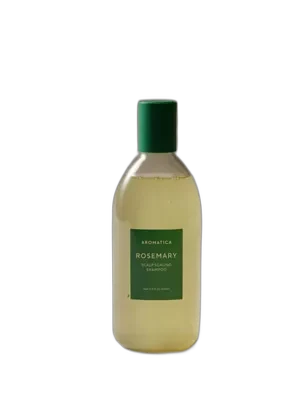
Rosemary Scalp Scaling Shampoo
K-Beauty Scalp Reset
 Verified reviewer
Pros & cons.
- +Rosemary leaf extract at 32.7% replaces water as the formula base
- +Gentle taurate and isethionate cleansers instead of stripping sulfates
- +Sensible salicylic acid dose loosens buildup without over-exfoliating
- +Postbiotic ferments rebalance the scalp microbiome after cleansing
- +EWG Verified, COSMOS Natural and certified vegan
- +Strong long-term track record across iHerb, Olive Young and Amazon
- +Color-safe surfactant base suitable for dyed hair
- +Cool peppermint sensation feels genuinely refreshing on the scalp
- −Essential-oil scent is too strong for some users
- −Lengths can feel dry without a follow-up conditioner
- −Rosemary, peppermint and cedarwood oils not ideal for sensitive scalps
- −Not reliably safe for fungal-acne or seborrheic-dermatitis scalps
- −Price per ml runs above the K-beauty drugstore average
The full review.
About Aromatica
Rosemary became a top-searched hair ingredient in 2022 after a viral video of rosemary water application gained millions of views. This trend ignored that Korean brands built this category nearly a decade before it went viral. Aromatica launched its Rosemary Scalp Scaling Shampoo in 2014, long before ‘scalp care’ existed in Western drugstores, and the formula remains a staple in the rosemary-hair canon.
Formula
The ingredient percentages define the formula. After preservation, the first ingredient is 32.7% rosemary leaf extract rather than water. This means the brand uses the entire base for a botanical that delivers rosmarinic and carnosic acid to the scalp. Combined with rosemary essential oil and caffeine, this is the K-beauty version of viral ‘rosemary water’ tutorials—but as a functional cleansing system.
Texture
The texture is a translucent, lightly herbal gel that lathers moderately instead of being pillowy.
Scent
Rosemary, peppermint, cedarwood, anise and coriander oils create the scent and provide actives, but they may irritate very sensitive or eczema-prone scalps.
Best for
This is a clean, gentle, and effective shampoo for its intended use: resetting an oily, congested, or buildup-prone scalp without the side effects of harsh clarifying formulas.
Works for
The cleansing base provides the shampoo’s credibility. Aromatica avoids the sulfates common in Western ‘clarifying shampoo’ products, using sodium methyl cocoyl taurate, sodium cocoyl isethionate and lauryl betaine instead. This trio of mild surfactants lifts oil and residue without stripping the scalp’s lipid layer. Sulfates strip; the taurate-isethionate combo loosens. This allows for a deep clean without the parched, itchy feeling typical of old-school clarifying shampoos. The ‘scaling’ name refers to a low, controlled dose of salicylic acid. In a rinse-off scalp product, BHA loosens flakes, enters sebum-clogged follicles, and softens keratin plugs from styling products and slow desquamation. Most scalps do best with two to three uses a week; daily use works for very oily scalps but is overkill for others. The formula includes bifida and lactobacillus ferments, which most Western detox shampoos omit. After exfoliation and oil removal, these postbiotics help balance the scalp microbiome—a K-beauty detail that makes this shampoo feel gentler than the ‘scalp scaling’ label suggests.
Not ideal for
People with seborrheic dermatitis should use a dedicated antifungal; the postbiotic ferments and trace fatty alcohols mean this is not reliably Malassezia-safe.
Common Complaints
This shampoo cleans the scalp rather than conditioning the midshaft, leaving hair lengths bare. You will need a conditioner or a leave-in to prevent fine hair from feeling rough. This is a design choice, but it means the shampoo works best as part of a routine rather than a solo product. The essential-oil content is the main limitation.
Myth
Regarding the rosemary-for-hair-loss claim: a 2015 trial compared daily, leave-on rosemary essential oil application for six months against 2% minoxidil and found similar regrowth for androgenetic alopecia. That study is real and the findings are valid, but the delivery method matters. A shampoo that rinses off after ninety seconds is not the same as a leave-on tonic, and Aromatica does not claim to promote regrowth.
Pairs Well With
Use this as a healthy-scalp routine foundation—and pair it with a leave-on rosemary or peptide tonic if you want to increase hair density.
Ingredient analysis.
Full INCI list · pH 5.5
Rosmarinus Officinalis (Rosemary) Leaf Extract (32.7%), Water, Pinus Densiflora Leaf Extract, Sodium Methyl Cocoyl Taurate, Sodium Cocoyl Isethionate, Sodium Methyl Oleoyl Taurate, Lauryl Betaine, Propanediol, Sodium Chloride, Erythritol, Lauryl Glucoside, Salicylic Acid, Rosmarinus Officinalis (Rosemary) Leaf Oil, Ocimum Basilicum (Basil) Leaf Extract, Ocimum Sanctum Leaf Extract, Origanum Vulgare Leaf Extract, Zingiber Officinale (Ginger) Root Extract, Bifida Ferment Lysate, Lactobacillus Ferment Lysate, Arginine, Biotin, Panthenol, Caffeine, Polyquaternium-10, Caprylyl Glycol, Cedrus Atlantica Bark Oil, Butylene Glycol, Illicium Verum (Anise) Fruit Extract, Coriandrum Sativum (Coriander) Fruit Oil, Mentha Piperita (Peppermint) Oil, Citric Acid, Sodium Benzoate, Potassium Sorbate, Tocopherol, Limonene, Linalool
Skin match.
The science.
The Science
Rosemary's role in hair and scalp care stems from a 2015 Skinmed trial. Researchers compared 100% rosemary essential oil to 2% minoxidil in 100 patients with androgenetic alopecia. After six months of daily leave-on use, both groups had similar hair-count improvements, and rosemary users had less scalp itching. The mechanism involves improved microcirculation and mild inhibition of dihydrotestosterone activity at the follicle. Caffeine research, including a 2007 in-vitro study by Fischer and colleagues, shows topical caffeine counteracts testosterone-induced suppression of hair shaft elongation in cultured follicles. Because rinse-off shampoo has short dwell time for both ingredients, they likely support a healthy scalp environment rather than driving regrowth alone. The salicylic acid in this formula works differently. As a lipophilic beta-hydroxy acid, it penetrates sebum to loosen corneocytes that bind flakes and follicular debris. At the low concentrations used in rinse-off scalp products, this is well-tolerated and backed by decades of dermatological use for dandruff and seborrheic dermatitis. Emerging evidence links the postbiotic bifida and lactobacillus ferment lysates to skin barrier and microbiome health, though scalp-specific trials are limited. This shampoo uses a layered system: surfactants lift, BHA exfoliates, rosemary and caffeine support the follicular environment, and ferments help the scalp recover microbial balance.
References
- Rosemary Oil vs Minoxidil 2% for the Treatment of Androgenetic Alopecia: A Randomized Comparative Trial — Skinmed (2015)
- Effect of caffeine and testosterone on the proliferation of human hair follicles in vitro — International Journal of Dermatology (2007)
Dermatologist Perspective
Dermatologists see scalp scaling shampoos as useful periodic tools for oiliness, buildup, or mild flaking, and Aromatica's formulation is a clean K-beauty example. Board-certified dermatologists note that the gentle non-sulfate surfactant base and low-concentration salicylic acid suit scalps needing exfoliation without the lipid-stripping effects of harsher clarifiers. They caution that essential oils — specifically peppermint, rosemary, and cedarwood — can sensitize atopic or rosacea-prone patients. Patients with active seborrheic dermatitis usually require dedicated antifungal shampoos like ketoconazole or zinc pyrithione. For androgenetic hair loss, dermatologists emphasize that rinse-off rosemary products are adjuncts, not treatments; minoxidil, finasteride, or in-office options remain the evidence-backed first line.
Where it fits in your routine.
Wet hair thoroughly. Dispense one to two pumps into your palm and emulsify lightly with water. Massage the product into the scalp using fingertips, not nails, focusing on the crown and oily or itchy areas. Let the lather sit on the scalp for 60-90 seconds so the salicylic acid and rosemary actives work. Rinse fully. Apply conditioner only to the mid-lengths and ends, never the scalp. Use two to three times a week for most scalps; oilier scalps can use it more often. Pair with a leave-on rosemary or peptide tonic for density support.
At roughly $25 for the 400ml pump, this sits in the upper-middle K-beauty shampoo bracket — more than Mise-en-Scène or Ryo, but less than a luxury salon brand. The 250ml version exists in some markets but costs more per ml, so buy the 400ml pump if you like the formula. Whether the price is worth it depends on your need for a scaling shampoo: for an oily scalp, styling product buildup, or a periodic reset, the active load and clean surfactant base make this an easy yes. For a calm, balanced scalp, you pay for unnecessary ingredients; a simpler gentle shampoo works for less.
This works for oily, congested, or buildup-prone scalps wanting a deep clean without the squeaky feeling of sulfate clarifiers. It also fits K-beauty fans, vegan and cruelty-free shoppers, and people seeking the rosemary trend in a properly formulated rinse-off product.
Sensitive scalps reacting to essential oils, eczema or seborrheic dermatitis sufferers needing a targeted antifungal, and anyone wanting a rinse-off shampoo to replace minoxidil or other clinical hair-loss treatments. People preferring fragrance-free formulas should also look elsewhere.
Product details.
All Year
The backstory.
Aromatica launched the rosemary shampoo in 2014, well before rosemary became a viral hair-growth ingredient on TikTok. It was one of the first Korean shampoos to combine EWG-Verified clean-beauty positioning with a genuine 'scalp care' angle — a category K-beauty largely invented and the rest of the industry has been catching up to since.
About Aromatica
Aromatica launched in 2003 in South Korea. It is one of the country's first EWG-Verified, COSMOS-certified natural beauty brands. The brand is not dermatologist-developed, but it has a long K-beauty track record and follows third-party clean-beauty certification standards.
Common myths.
Rosemary shampoo will regrow hair on bald spots.
A 2015 trial used rosemary oil daily for six months on androgenetic alopecia and found it comparable to 2% minoxidil. This shampoo contains rosemary extract and oil, but rinses off quickly. It supports a healthy scalp environment but does not substitute for clinical hair-loss treatment.
'Scalp scaling' is harsh exfoliation that thins out hair.
The salicylic acid in this formula uses a low, rinse-off-appropriate level to loosen flakes and sebum plugs. Using it 2-3 times per week as directed does not damage the hair shaft or disrupt healthy scalp barrier function.
FAQ.
Does this shampoo actually help with hair thinning?
It supports a healthier scalp environment, a prerequisite for healthy growth. The rosemary-and-caffeine combination has clinical backing in leave-on form. As a rinse-off shampoo, use it alongside a leave-on tonic or treatment rather than a stand-alone solution.
How often should I use it?
Most users see best results using this two to three times a week. This frequency lets the salicylic acid control buildup without over-exfoliating the scalp. On non-shampoo days, use a gentler cleanser or just a water rinse.
Is it safe for color-treated hair?
Yes — the sulfate-free surfactant base is gentle, so the brand markets it as color-safe. The salicylic acid concentration targets the scalp instead of the hair shaft, so it does not significantly accelerate dye fade.
Why does my hair feel a bit dry after using this?
This shampoo cleans the scalp instead of conditioning the lengths. Most users must follow with a conditioner or mask on the hair shafts. If hair feels straw-like, you are likely applying it to the lengths instead of the scalp.
Does it have a strong scent?
Yes, but rosemary, peppermint, anise and cedarwood essential oils provide the scent instead of synthetic fragrance. The scent smells herbal-medicinal rather than perfumed and fades as hair dries.
Can I use this every day?
You can, but most scalps do not need daily exfoliation. Daily use works for very oily scalps or scalps prone to thick buildup; for everyone else, alternating with a gentler shampoo improves long-term tolerance.
Is this fungal-acne (Malassezia) safe?
Not fully — it has fatty alcohol and ferment ingredients that react with some Malassezia-prone scalps. If you have seborrheic dermatitis, use a dedicated antifungal shampoo instead.
What the community says.
"leaves scalp feeling deeply clean without stripping"
"noticeable reduction in oil between washes"
"natural rosemary scent feels invigorating"
"effective for buildup and mild flaking"
"essential-oil scent is too strong for some"
"can leave fine hair feeling dry without conditioner"
"price per ml is on the higher side for K-beauty shampoos"