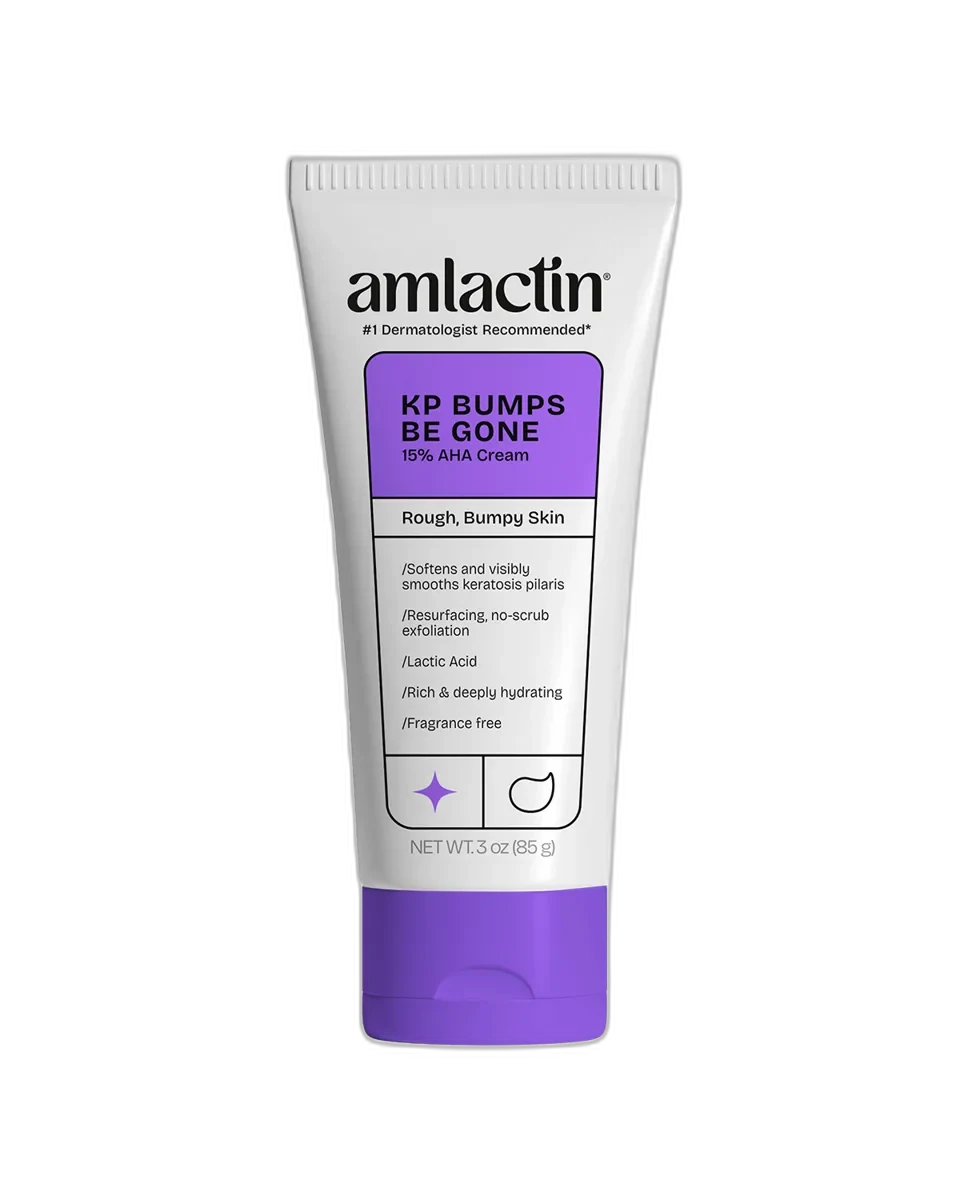
KP Bumps Be Gone Lotion
KP Treatment Specialist
 Verified reviewer
Pros & cons.
- +15% lactic acid provides therapeutic-level keratolytic exfoliation for stubborn KP bumps
- +Fragrance-free formula avoids unnecessary irritation on already-compromised skin
- +Non-greasy finish absorbs well despite containing petrolatum and mineral oil occlusives
- +No physical scrubbing required — chemical exfoliation is gentler and more effective for KP
- +Backed by nearly four decades of AmLactin's dermatologist-recommended lactic acid expertise
- +Paraben-free reformulated base addresses modern clean-formula consumer preferences
- +Visible smoothing results typically within 1-2 weeks of consistent use
- −3 oz tube depletes quickly when treating multiple body areas at $19.99 per tube
- −Natural ammonium lactate scent is noticeably sweet despite unscented labeling
- −15% lactic acid stings on freshly shaved or broken skin during initial use
- −Basic utilitarian ingredient list doesn't justify the premium price point
- −Requires indefinite ongoing use as KP bumps return when application stops
- −Thick consistency takes effort to spread evenly over textured body areas
The full review.
Keratosis pilaris affects up to 40% of adults, yet it gets little shelf space. Most people with rough, bumpy patches on their upper arms use sugar scrubs, exfoliating gloves, or aggressive loofahs, only to see the bumps return within days. AmLactin’s KP Bumps Be Gone uses a different approach—one dermatologists have recommended for decades, now refined into a targeted, higher-strength formula.
The science is straightforward. Keratosis pilaris occurs when excess keratin protein plugs hair follicles, creating rough bumps. Physical exfoliation smooths the surface temporarily, but it doesn’t address the keratin buildup at the source. Lactic acid, an alpha hydroxy acid, chemically dissolves those keratin plugs from within the follicle. At 15%—three percentage points higher than AmLactin’s standard Daily Nourish formula—this cream delivers therapeutic-level exfoliation once only available through prescription ammonium lactate preparations.
The formulation is utilitarian. This cream uses pharmaceutical-grade ammonium lactate in a base of mineral oil, petrolatum, and glycerin. It lacks trendy botanical extracts, fermented essences, or ingredients designed for shelf aesthetics. It contains a clinically proven active at a working concentration, plus ingredients that moisturize and protect freshly exfoliated skin. For a body treatment targeting a specific dermatological condition, the ingredient list is exactly what it should be.
Texture
This is a thick, substantial cream, not a lightweight, silky body lotion. It takes effort to spread over bumpy areas, but it absorbs well and leaves no greasy film despite the petrolatum. The finish is matte and non-sticky, so you can dress immediately without fabric clinging to your skin.
Scent
The cream has a noticeable sweet, maple syrup-like smell despite being labeled unscented. This isn’t a fragrance; it is the inherent aroma of ammonium lactate. Some users find it mildly unpleasant, while others barely notice it. The scent fades within minutes of application.
How to Use
First application often causes mild tingling or stinging, especially if you recently shaved or have micro-abrasions. This is normal 15% AHA behavior and subsides as skin acclimates during the first week. You may also see increased flaking during this period as the lactic acid dissolves keratin plugs and sheds the surface layer. Most users report smoother skin by week two, and significantly reduced bumps by week four to six.
Common Praise
The results are impressive. Consistent twice-daily application transforms rough, sandpaper-textured upper arms into smooth, soft skin. Users with long-term KP often call this the first product that makes a lasting difference. Consistency is key; KP is a chronic condition, and stopping use will bring the bumps back. This is a maintenance product, not a cure.
Common Complaints
The main drawback is the value. At $19.99 for 3 ounces, this is an expensive cream for twice-daily use on large body areas. Upper arms alone can deplete a tube in four to six weeks; adding thighs increases the cost quickly. The 4.9-ounce size at some retailers offers better value, but the cost-per-use remains high for a treatment requiring indefinite application.
Formula
The ingredient list is basic for the price. Ammonium lactate, mineral oil, petrolatum, and glycerin are inexpensive. You pay for the specific concentration, the pharmaceutical-grade formulation, and the brand’s decades of dermatological credibility—not exotic actives or innovative delivery systems.
Works for
KP Bumps Be Gone delivers on effectiveness. AmLactin has been a dermatologist’s go-to lactic acid recommendation since the late 1980s, and this 15% formula concentrates that expertise for KP. For the 40% of adults dealing with these bumps, the price of smooth skin might be worth it.
Ingredient analysis.
Full INCI list
Water, Ammonium Lactate, Glycerin, Propylene Glycol, Mineral Oil, Petrolatum, Cetearyl Alcohol, Stearic Acid, Polysorbate 60, Steareth-21, Steareth-2, Xanthan Gum, Sodium Benzoate, Disodium EDTA
Skin match.
The science.
The Science
Lactic acid treats keratosis pilaris through two mechanisms: keratolytic action and humectancy. As an alpha hydroxy acid, lactic acid breaks desmosomal bonds between corneocytes—the intercellular 'glue' holding dead skin cells together. In KP, excess keratin builds up in and around hair follicles to form rough plugs. Lactic acid dissolves this keratin, clearing follicular obstruction without the micro-trauma of physical exfoliation.
At 15% concentration, this formula reaches the high end of over-the-counter AHA potency. A 2015 clinical study in Dermatology Research and Practice (Kootiratrakarn et al.) tested lactic acid for keratosis pilaris. It found that 10% lactic acid applied twice daily yielded a statistically significant 66% mean reduction in lesion count after 12 weeks—beating 5% salicylic acid, which saw a 52% reduction. The 15% concentration in this product should provide even stronger keratolytic activity, though direct comparative studies for KP at this specific concentration are limited.
Lactic acid at this concentration also works as a humectant. Its hygroscopic properties pull water into the stratum corneum to treat the chronic dryness common with KP. This dual action—dissolving keratin plugs while hydrating surrounding tissue—is why lactic acid formulations often outperform mechanical exfoliation for this condition. The petrolatum and mineral oil occlusive base then traps this moisture, creating a microenvironment that prevents rapid keratin re-accumulation.
Ammonium lactate—the neutralized salt form in this product—has a long clinical history. It was the active ingredient in Lac-Hydrin, a prescription-strength formulation used for ichthyosis, xerosis, and KP from the 1980s onward.
References
- Epidermal Permeability Barrier in the Treatment of Keratosis Pilaris — Dermatology Research and Practice (2015)
Dermatologist Perspective
Dermatologists have recommended ammonium lactate preparations as a first-line keratosis pilaris treatment for decades; this 15% formulation follows clinical guidance for moderate-to-stubborn cases. Board-certified dermatologists prefer chemical exfoliation with alpha hydroxy acids over physical scrubbing for KP because it targets the root cause—keratin plug accumulation—without risking follicular inflammation. The fragrance-free, paraben-free formulation suits the KP population, as many have sensitive or atopy-prone skin. Dermatologists usually tell patients to expect 4-6 weeks for significant improvement and to use it indefinitely, since KP is a chronic condition that recurs without treatment.
Where it fits in your routine.
Apply a thin, even layer to KP-affected areas (upper arms, thighs, buttocks) twice daily—morning and evening. For best absorption, apply to slightly damp skin within minutes of showering. Massage gently until absorbed; do not scrub. You will feel mild tingling during the first week of use. Always apply sunscreen over treated areas that will be sun-exposed, as lactic acid increases photosensitivity. Avoid broken, cracked, or freshly shaved skin. If irritation lasts more than one week, reduce to once-daily application.
At $19.99 for 3 ounces, this body treatment is not a budget option—especially if twice-daily use on multiple areas empties a tube in under six weeks. The 4.9-ounce size at Ulta has better per-unit value and is worth buying. The ingredient list uses pharmaceutical-grade but basic ingredients, making the price feel high. However, AmLactin's 15% lactic acid concentration at this quality was once prescription-only. Given the legacy brand's nearly four decades of dermatological credibility and the active's proven efficacy, the premium over generic ammonium lactate creams is defensible, even if it feels steep.
People with diagnosed or suspected keratosis pilaris who find physical scrubs and standard body lotions ineffective. This works well for those seeking a no-fuss chemical exfoliant backed by decades of dermatological evidence instead of trendy ingredients.
People with very sensitive or eczema-prone skin should use caution; 15% lactic acid irritates compromised barriers. For general body hydration without a specific KP concern, AmLactin's standard 12% Daily Nourish formula is gentler.
Product details.
This thick, velvety cream takes effort to spread but absorbs without a greasy residue. It feels heavy on application but dries to a matte, non-sticky finish.
The formula is unscented, but ammonium lactate has a faint, sweet, maple syrup-like natural scent that dissipates after application.
Squeeze tube with flip-top cap. The 3 oz size is compact and travel-friendly, but runs out fast when treating multiple body areas.
Expect mild tingling or stinging during first use, especially on freshly shaved or irritated skin. This is normal with 15% lactic acid and usually stops within minutes. The first week may increase skin flaking as keratin plugs dissolve, showing the product works. By week two, skin feels noticeably smoother.
Apply twice daily to upper arms for 4-6 weeks; use less time if treating multiple areas like thighs and buttocks
12 months
All Year
The backstory.
AmLactin originated as a pharmaceutical-grade ammonium lactate formulation in 1987, and for years dermatologists prescribed its 12% lactic acid products as a first-line treatment for dry, rough skin conditions. The KP Bumps Be Gone line was developed to offer a targeted, higher-strength option specifically for the millions of people who live with keratosis pilaris — a condition affecting up to 40% of the adult population that often goes undiagnosed.
About Amlactin
Legacy Brand (20+ years)Upsher-Smith Laboratories developed AmLactin in 1987. It is the #1 dermatologist-recommended moisturizer brand with lactic acid. Sandoz acquired the brand in 2016, and its ammonium lactate formulations have nearly four decades of clinical use.
Common myths.
You need to physically scrub KP bumps to get rid of them.
Physical scrubbing worsens KP by causing inflammation and micro-tears. Lactic acid uses chemical exfoliation to dissolve keratin plugs from within, so this cream works without abrasive particles.
Higher lactic acid percentages always yield better results for KP.
The 15% concentration in this formula works for most KP, but tolerability matters more than raw percentage. Consistent use of a well-tolerated concentration outperforms sporadic use of a stronger one that irritates skin.
FAQ.
How long does it take for Amlactin KP Bumps Be Gone to work?
Most users see initial smoothing after 1-2 weeks of twice-daily application. The 15% lactic acid dissolves keratin plugs gradually; visible improvement shows at 4-6 weeks. Users must continue use to maintain results because KP is a chronic condition.
Can I use Amlactin KP Bumps Be Gone on my face?
This cream targets body areas prone to keratosis pilaris, such as the upper arms, thighs, and buttocks. The 15% lactic acid concentration, mineral oil, and petrolatum are too heavy and strong for facial skin. Use a dedicated facial AHA product with a lower concentration for facial exfoliation.
Why does Amlactin KP Bumps Be Gone smell sweet even though it's unscented?
The faint sweet or maple syrup-like scent comes from the ammonium lactate itself — it's an inherent characteristic of the active ingredient, not an added fragrance. The 'unscented' label means no synthetic fragrances or masking agents were added to the formula. The scent fades quickly after application.
Is Amlactin KP Bumps Be Gone safe to use during pregnancy?
Lactic acid is generally safe for topical use during pregnancy because it does not penetrate deeply enough to enter systemic circulation at meaningful levels. However, the 15% concentration is high. Confirm with your OB-GYN before starting any new skincare product during pregnancy.
What's the difference between Amlactin KP Bumps Be Gone and regular Amlactin Daily Nourish?
The key difference is lactic acid concentration: KP Bumps Be Gone has 15% lactic acid, while the Daily Nourish formula has 12%. The higher concentration dissolves the keratin plugs specific to keratosis pilaris more effectively; Daily Nourish works better as a general-purpose body moisturizer for overall dry skin.
Can I use Amlactin KP Bumps Be Gone with retinol body products?
Using 15% lactic acid and retinol on the same area increases irritation. If you use both, alternate them—lactic acid in the morning and retinol at night, or use them on different days. Start slowly and check for redness or excessive dryness before using both together.
What the community says.
"Visible smoothing of KP bumps within 1-2 weeks"
"Non-greasy, fast-absorbing texture"
"Effective without physical scrubbing"
"Fragrance-free formula"
"Small tube size relative to price"
"Natural lactic acid scent described as maple syrup-like"
"Can sting on freshly shaved or broken skin"
"Thick consistency requires effort to spread"