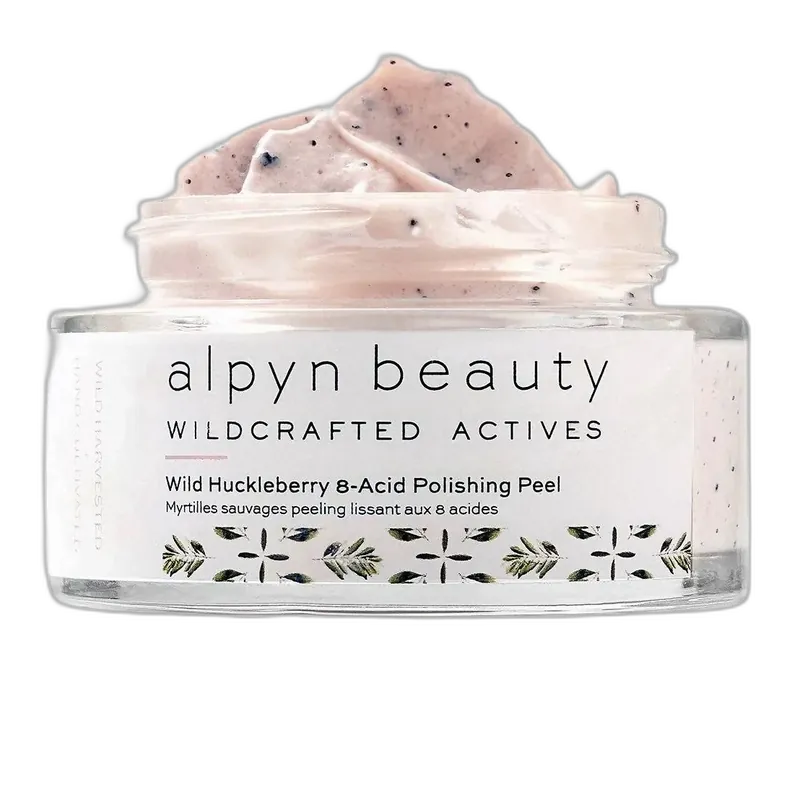
Wild Huckleberry 8-Acid Polishing Peel
Dual-Action Polishing Peel
 Verified reviewer
Pros & cons.
- +Genuinely combines chemical and physical exfoliation in a single rinse-off format
- +Eight-acid blend includes the thoughtfully chosen azelaic acid for redness and pigmentation
- +Immediate brightening and smoothing effect is visible after the first use
- +Dwell-and-massage format is engaging and feels effective
- +Bentonite clay base lifts sebum without the harshness of kaolin
- +Cumulative tone-evening from azelaic and ferulic acids becomes visible at 8-12 weeks
- +Fragrance-free with botanical-derived natural scent only
- +Sephora Clean+, cruelty-free, and vegan
- −Arnica content can trigger contact reactions in susceptible users
- −Menthyl lactate cooling sensation can cross into uncomfortable for some users
- −Premium price relative to single-mechanism peels at lower price points
- −Not appropriate for sensitive, rosacea-prone, or compromised-barrier skin
- −Salicylic acid content makes it inappropriate during pregnancy and breastfeeding
The full review.
Most exfoliants force a choice. You get a chemical peel—a single acid or small acid blend that dissolves dead surface cells via pH-dependent enzymatic action—or a physical scrub using fine particles to mechanically lift the top layer. Standard wisdom says combining both causes irritation without adding value. Alpyn Beauty’s Wild Huckleberry 8-Acid Polishing Peel rejects this idea and succeeds. The format is a thick gel-cream. Apply it to clean dry skin, leave it for five to ten minutes, then activate it by wetting your fingers and massaging in slow circular motions before rinsing. During the dwell time, the eight-acid complex works chemically: glycolic, lactic, and tartaric acids provide AHA-based surface cell-turnover; salicylic acid penetrates pores to clear sebum and clogs; azelaic acid (the most clinically interesting inclusion) addresses rosacea-style redness and post-inflammatory pigmentation through a separate mechanism; ferulic acid adds antioxidant protection; and malic and citric acids support fruit-acid exfoliation. None of these use heroic concentrations, which keeps the formula tolerable for once-or-twice-weekly use. The cumulative load is meaningful but not punishing. The massage step earns the ‘polishing’ branding. Hydrated silica and bamboo stem extract provide fine inert particles that lift surface debris and cells loosened by the acid action. Most users find this the experiential payoff—skin feels visibly smoother during massage, and the post-rinse brightening effect exceeds a chemical-only peel. The dual-mechanism works, which impresses first-time users. The supporting cast includes the brand’s wildcrafted Wyoming botanical signature: huckleberry, arnica, borage, calendula, chamomile, sage, eclipta, and apple. These provide polyphenols and flavonoids to offset typical acid-induced inflammation. Whether wildcrafted alpine sourcing offers more clinical benefit than cultivated extracts remains unproven, but the soothing role is real regardless of where the plants grew. Bentonite clay acts as a gentle absorbent base to lift excess sebum during dwell time. There are real catches. The arnica content can trigger contact reactions in many users; patch testing on the inner forearm for forty-eight hours is a genuine recommendation. Menthyl lactate creates a cooling tingle that some find pleasant and others find sharp or uncomfortable, especially during the dwell period. Combined with the acid tingle, the sensation can be intense for first-time users. If it hurts, rinse immediately. Sensitive, rosacea-prone, and compromised-barrier skin should skip this—the eight-acid load and menthyl lactate are too much. Pregnant users should also skip it due to the salicylic acid content. Price is the second consideration. Sixty dollars for fifty milliliters of a product used eight to ten times puts it in the luxury at-home peel category. Excellent multi-acid masks exist at half this price, though most lack the physical polishing or azelaic acid. You pay for the dual-mechanism format, the wildcrafted brand story, and unusual ingredient choices. For users wanting that combination, the value is defensible. For those prioritizing dollars per treatment, cheaper alternatives exist. When the product works for you, results are reliably impressive—skin looks brighter, smoother, and more reflective immediately post-rinse, and the cumulative tone-evening effect from the azelaic and ferulic acids appears at the eight to twelve week mark. The experience is as much value as the long-term outcome.
Ingredient analysis.
Full INCI list
Aqua (Water), Glycerin, Hydrated Silica, Cetearyl Alcohol, Hydroxypropyl Starch Phosphate, Glyceryl Stearate SE, Helianthus Annuus (Sunflower) Seed Oil, Bentonite, Vaccinium Membranaceum (Huckleberry) Extract, Salix Alba (Willow) Bark Extract, Bambusa Arundinacea (Bamboo) Stem Extract, Xanthan Gum, Sodium Stearoyl Lactylate, Titanium Dioxide, Sodium Phytate, Azelaic Acid, Ferulic Acid, Sodium Hyaluronate, Aloe Barbadensis Leaf Juice, Carrageenan, Glucose, Arnica Montana Flower Extract, Simmondsia Chinensis (Jojoba) Seed Wax, Borago Officinalis Flower Extract, Calendula Officinalis Flower Extract, Chamomilla Recutita (Matricaria) Flower Extract, Salvia Officinalis (Sage) Leaf Extract, Eclipta Prostrata Extract, Melia Azadirachta Leaf Extract, Moringa Oleifera Seed Oil, Pyrus Malus (Apple) Fruit Extract, Lactobacillus/Pumpkin Ferment Extract, Citric Acid, Malic Acid, Tartaric Acid, Glycolic Acid, Lactic Acid, Salicylic Acid, Menthyl Lactate, Benzyl Alcohol, Dehydroacetic Acid
Skin match.
The science.
The Science
Blending multiple acid types in one peel follows clinical practice. Many in-office cosmetic peels use blended acid systems to distribute exfoliation across different pH ranges and depths. Glycolic acid (pKa 3.83) has the smallest molecule and penetrates deepest of the AHAs. Lactic acid (pKa 3.86) uses a slightly larger molecule and acts as a humectant. Salicylic acid (pKa 2.97) is lipid-soluble and penetrates pores well. Azelaic acid is the most clinically interesting ingredient here. It treats inflammatory acne, post-inflammatory hyperpigmentation, and rosacea-related erythema via different mechanisms than the AHAs, specifically by inhibiting tyrosinase and anti-inflammatory pathways. Ferulic acid is a well-studied antioxidant that stabilizes vitamin C and other actives while scavenging free radicals independently. Hydrated silica and bamboo powder provide physical exfoliation by mechanically lifting loosened corneocytes; these inert particles are gentle enough to avoid micro-tearing when used as directed. Wildcrafted Wyoming plants provide botanical antioxidants with varying levels of laboratory evidence; no independent studies confirm their specific clinical benefit in this formulation.
Dermatologist Perspective
Dermatologists consider multi-acid blended peels appropriate for at-home use if concentrations are modest and contact time is limited—both conditions apply to this product. Board-certified dermatologists often note that azelaic acid adds clinical value to combination peels, especially for patients with both acne and post-inflammatory pigmentation, as the 15-20% prescription-strength version effectively treats that combination. Clinical commentary on this product frequently flags the arnica content, the menthyl lactate cooling agent, and suitability for rosacea-prone skin. Dermatologists treating rosacea patients typically recommend avoiding products with cooling agents or known contact allergens. For patients without these sensitivities, this peel is a reasonable at-home maintenance option between in-office treatments.
Where it fits in your routine.
Use once or twice per week, but not on consecutive days. Apply a thin, even layer to clean, dry skin. Avoid the immediate eye area, lips, and any active breakouts or broken skin. Leave on for five to ten minutes; start at the shorter end if you are new to multi-acid peels. Wet your fingers with warm water and massage the mask in slow circular motions for thirty to sixty seconds to activate the silica and bamboo polish. Rinse thoroughly with lukewarm water, pat dry, and use a hydrating serum and moisturizer. Always apply broad-spectrum SPF 30 or higher the next morning because exfoliated skin is more UV-vulnerable.
At $60 for 50 milliliters, using 5-milliliter applications once or twice weekly makes this peel cost $3 to $6 per treatment. This exceeds the price of single-mechanism multi-acid masks like The Ordinary AHA 30% + BHA 2% Peeling Solution, which provides a more aggressive single application for under $10. The Alpyn premium covers the dual chemical-plus-physical format, the azelaic acid, the wildcrafted botanical sourcing, and the brand positioning. This value works for users wanting that specific combination. Shoppers prioritizing per-treatment cost can find cheaper alternatives that provide most chemical exfoliation without the physical component or the brand premium.
Users with normal, combination, or oily skin face dullness, texture, blackheads, or large pores and want more than a single-acid peel at home. This suits anyone using azelaic acid for acne and pigmentation. It targets buyers who value the wildcrafted botanical story and pay the brand premium.
Sensitive, rosacea-prone, eczema-prone, or compromised-barrier skin faces concerns from the arnica, menthyl lactate, and acid load. The salicylic acid content affects pregnant or breastfeeding users. People who dislike tingling sensations should avoid it. This costs more per treatment than dual-mechanism alternatives.
Product details.
Thick gel-cream that turns slightly grainy when massaged before rinsing
Faint herbaceous note from the botanicals, no added fragrance
Frosted glass jar with screw cap
The mask feels cool and tingles slightly from the menthyl lactate and the acid complex. Most users feel the tingling, but it is not painful. After 5-10 minutes of dwell time, wet your fingers and massage the mask in circular motions to activate the silica and bamboo polish. The immediate post-rinse effect is visible: skin looks brighter, smoother, and more reflective. There is no purging period.
Approximately 8-10 weeks with weekly application
12 months
All Year
The backstory.
Alpyn Beauty launched the Wild Huckleberry Peel in late 2020 as the more active counterpart to its calming Midnight Mask. Founder Kendra Kolb Butler designed it around the wildcrafted alpine huckleberry — the brand's signature botanical — paired with what she described as a 'lazy peel' use case for customers who didn't want the commitment of in-clinic glycolic treatments. The dual-action format was a deliberate response to the trend of more aggressive at-home peels in the 2019-2020 period.
About Alpyn Beauty
Emerging Brand (2–5 years)Kendra Kolb Butler founded Alpyn Beauty in 2018 in Jackson Hole, Wyoming. The Wild Huckleberry Peel is a flagship treatment for the brand. It received coverage from Allure and Refinery29 at launch, but long-term independent dermatology validation is still developing.
Common myths.
More acids in a formula always equals stronger exfoliation.
Not always. Eight acids at low concentrations can be gentler than one acid at a high concentration. Total acid load matters more than the count. This peel's dwell-time-rinse-off format limits cumulative exposure anyway.
Physical and chemical exfoliation should never be combined.
Daily-use products follow this rule, but rinse-off treatment masks like this one combine both safely. Contact time is brief and controlled. Over-frequency causes risk, not the combination itself.
FAQ.
How often should I use the Wild Huckleberry Peel?
Use this once or twice per week, but not on consecutive days. Eight acids plus physical polishing is potent; frequent use compromises the barrier in most skin types. Beginners should start with weekly application.
Why does this peel tingle?
Two reasons. The acid complex causes standard chemical exfoliation tingling, and menthyl lactate (a cooling agent) adds a second tingling sensation. This cooling is intentional, but some users find it uncomfortable. Rinse immediately if the tingling feels sharp or painful.
Can sensitive skin use this peel?
Unlikely. The arnica content, menthyl lactate, and eight-acid load make this a poor fit for sensitive, rosacea-prone, or compromised-barrier skin. Use a single-acid PHA mask if your skin is reactive.
How does this differ from a standard glycolic peel?
It uses multiple acids at modest concentrations instead of one high-concentration acid. It includes physical exfoliation from silica and bamboo, plus azelaic acid for redness and pigmentation. This is a different category—a multi-purpose treatment rather than a single-mechanism peel.
Is this peel safe during pregnancy?
No. Most dermatologists recommend avoiding this category during pregnancy and breastfeeding because of the salicylic acid content. Use a gentler enzyme exfoliant or a PHA mask instead.
Can I use this with retinol?
Do not use them in the same routine. Combining the acid load with retinol compromises the barrier. Alternate them on different nights — use the peel one evening, retinol another, and use only hydrating products on the nights in between.
Does the polishing massage step matter?
Yes. The fine silica and bamboo stay inert until you wet and massage them. Skipping the massage turns the product into a chemical-only peel and removes the physical exfoliation benefit you paid for.
What the community says.
"Skin looks visibly brighter immediately after use"
"Pores look smaller after the first application"
"Polishing massage feels luxurious"
"Cumulative tone improvement is real"
"Expensive for a 1.7 oz mask"
"Menthyl lactate creates a tingling that some find uncomfortable"
"Arnica can trigger reactions in sensitive users"
"Not suitable for rosacea-prone skin"
People also looked at.