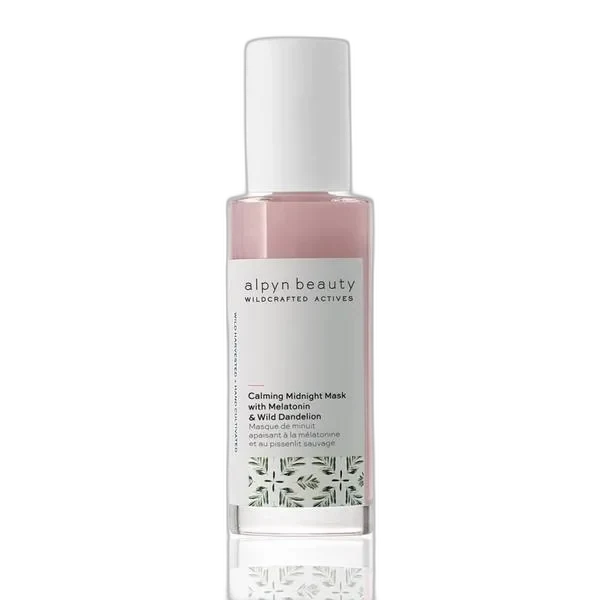
Calming Midnight Mask
Wildcrafted Sleep Mask Curiosity
 Verified reviewer
Pros & cons.
- +Genuinely unique melatonin and bakuchiol pairing — not duplicated elsewhere on the market
- +Soft whipped cream texture absorbs cleanly without overnight greasiness
- +Colloidal oatmeal provides reliable barrier-supporting calm
- +Bakuchiol delivers gentle renewal benefits without retinoid-style irritation
- +Wildcrafted alpine botanicals are authentically sourced from the Teton range
- +Squalane and sodium hyaluronate ensure the mask stays hydrated through the night
- +Sephora Clean+ certified for users prioritizing that label
- +Cruelty-free and vegan formulation
- −Bergamot and lavender essential oils limit suitability for sensitive skin
- −Premium price relative to the level of clinical evidence on topical melatonin
- −2 oz size is small for the price point — about 4-6 weeks at nightly use
- −Arnica extract can trigger contact reactions in susceptible users
- −Plant-oil and botanical-heavy base is not appropriate for fungal-acne-prone skin
The full review.
Sleep skincare became a brief obsession around 2019 and 2020. Brands launched dream-themed overnight masks, used lavender in every formulation, and added melatonin to ingredient lists. This happened because the word suggests rest, not because topical melatonin has clinical validation. Most of these products are marketing in cream form. Alpyn Beauty’s Calming Midnight Mask, launched in 2020 by a small wildcrafting brand in Jackson Hole, Wyoming, is a more substantive attempt at the category. The melatonin in Alpyn Beauty’s Calming Midnight Mask does not help you sleep. Topical melatonin does not enter circulation in meaningful amounts and won’t affect sleep cycles. Instead, laboratory research shows melatonin functions as an efficient antioxidant. It scavenges hydroxyl radicals and other reactive oxygen species at concentrations lower than vitamins C or E. Clinical evidence for visible skincare outcomes is still emerging, but the molecular basis is real. Pairing it with bakuchiol — a plant-derived compound that signals skin renewal pathways without binding retinoic acid receptors — creates a renewal-and-protection combination unique among overnight products on the market. The supporting cast defines the brand. Founder Kendra Kolb Butler built Alpyn on the premise that high-altitude plants produce more concentrated phytochemicals than lowland plants. Plant biochemistry supports this hypothesis, though its translation to topical skincare benefits remains unproven. The mask includes wildcrafted dandelion, huckleberry, choke cherry, arnica, borage, sage, calendula, and bearberry. These botanicals come from the Teton range rather than being a marketing flourish; this shows supply chain commitment but offers no verifiable clinical advantage. Colloidal oatmeal acts as the FDA-recognized skin protectant to calm reactivity from the actives, while squalane plus sodium hyaluronate provide the hydration backbone. The texture is the formula’s most praised quality. This soft whipped cream spreads thin and absorbs in one to two minutes, leaving a satin finish that isn’t heavy or sticky. Skin feels softer and calmer the morning after first use. After two to three weeks of consistent use, dullness reduces and minor redness improves. Bakuchiol-driven texture and tone benefits become more visible around the eight to twelve week mark, the standard bakuchiol timeline. The catches are real. The formula contains bergamot fruit oil and lavender oil, both common essential oil sensitizers. Bergamot is also slightly photosensitizing, though this matters less in an overnight product. The essential oil content is a drawback for sensitive, rosacea-prone, or fragrance-reactive skin. Arnica extract is also somewhat allergenic and can trigger contact reactions in susceptible users. Patch-testing for forty-eight hours on the inner forearm is recommended before facial use. Price is the second issue. At sixty-eight dollars for two ounces, this is a luxury overnight mask. The wildcrafted sourcing, brand premium, and unusual ingredient combination justify the price. Compared to clinically validated overnight masks from established brands at half the cost, value depends on the brand. If you want the wildcrafted story and the melatonin and bakuchiol pairing, the price is defensible. If you want an overnight mask with the strongest clinical evidence per dollar, you can do better elsewhere. This product’s experience often outperforms the data. Users tend to love it, the texture is excellent, and the immediate softening effect is real. Do not expect it to induce sleep, and do not buy it if your skin reacts to bergamot or lavender.
Ingredient analysis.
Full INCI list
Aqua (Water), Glycerin, Cetearyl Alcohol, Brassicyl Isoleucinate Esylate, Prunus Amygdalus Dulcis (Sweet Almond) Oil, Helianthus Annuus (Sunflower) Seed Oil, Aloe Barbadensis Leaf Juice, Brassica Alcohol, Glyceryl Stearate, Bakuchiol, Melatonin, Taraxacum Officinale (Dandelion) Extract, Vaccinium Membranaceum (Huckleberry) Extract, Prunus Virginiana (Choke Cherry) Extract, Chamomilla Recutita (Matricaria) Flower Extract, Arnica Montana Extract, Borago Officinalis Extract, Salvia Officinalis (Sage) Leaf Extract, Calendula Officinalis Flower Extract, Arctostaphylos Uva-Ursi Leaf Extract, Salix Alba (Willow) Bark Extract, Lactic Acid, Colloidal Oatmeal, Squalane, Caprylhydroxamic Acid, Citrus Aurantium Bergamia (Bergamot) Fruit Oil, Arginine, Caprylyl Glycol, Oleyl Lactate, Lavandula Angustifolia (Lavender) Oil, Sodium Hyaluronate, Butyrospermum Parkii (Shea) Butter, Mangifera Indica (Mango) Seed Butter, Tocopherol, Xanthan Gum, Sodium Phytate, Citric Acid
Skin match.
The science.
The Science
Researchers have studied topical melatonin as a free-radical scavenger since the late 1990s. Lab research shows it neutralizes hydroxyl radicals and other reactive oxygen species at lower concentrations than ascorbic acid or alpha-tocopherol. It also works through mechanisms beyond direct radical scavenging, such as stimulating endogenous antioxidant enzymes. Clinical translation to topical skincare outcomes is less established than its molecular pharmacology. Bakuchiol, the second hero active in this formula, was validated in a 2018 comparative study in the British Journal of Dermatology. That study showed 0.5% bakuchiol improves photoaging metrics similarly to 0.5% retinol over twelve weeks, with significantly less reported irritation. It likely works by indirectly activating retinoid-responsive genes without binding the same nuclear receptors. The FDA recognizes colloidal oatmeal as a skin protectant; its avenanthramide content provides documented anti-inflammatory and barrier-supporting effects. Laboratory studies show varying antioxidant evidence for the wildcrafted alpine botanicals — dandelion, huckleberry, arnica, calendula, and others — though clinical literature does not support the brand's claim that altitude-stressed plants produce superior topical actives.
References
- Prospective, randomized, double-blind assessment of topical bakuchiol and retinol for facial photoageing — British Journal of Dermatology (2019)
Dermatologist Perspective
Dermatologists generally see bakuchiol as a reasonable alternative for patients seeking renewal benefits without the irritation of retinoids — especially during pregnancy, breastfeeding, or for patients with prior retinoid intolerance. Clinical commentary on bakuchiol frequently cites the 2018 British Journal of Dermatology comparison study. Topical melatonin is more emerging; board-certified dermatologists acknowledge the antioxidant mechanism but note that clinical translation is still developing. This mask's combination is interesting but lacks dermatology-led trial evidence. Clinical commentary most frequently flags the essential oil content — dermatologists do not typically recommend bergamot and lavender for patients with rosacea, eczema, or contact dermatitis history. For users without those sensitivities, this product is a reasonable antioxidant-focused overnight treatment.
Where it fits in your routine.
Apply this as your final evening skincare step, two to three nights per week as a treatment or nightly as a moisturizer replacement. Smooth a thin layer over your face and neck after cleansing, toning, and any treatment serums. Wait one to two minutes for absorption before lying down. Do not rinse — leave it on overnight. Do not use with retinol, vitamin C, or strong AHAs in the same routine, as the bakuchiol and lactic acid in the mask provide their own activity. Always use broad-spectrum SPF 30 or higher the next morning.
At sixty-eight dollars for two ounces, this overnight mask costs more than most in its category. The price covers wildcrafted alpine sourcing, the melatonin and bakuchiol combination, and the brand's clean beauty positioning. Compared to clinically validated overnight masks from established brands at thirty to forty dollars, you pay for brand affinity. The price works for users who value the ingredient story and wildcrafted ethos. For shoppers prioritizing dollars-per-evidence, the value is harder to justify. The single 2 oz size offers no per-milliliter savings from a larger format.
Normal-to-dry skin users seeking an antioxidant-focused overnight treatment with a unique ingredient story. People interested in bakuchiol as a gentle retinol alternative who want the hydration and calm of an overnight mask. Buyers drawn to wildcrafted clean beauty who do not react to essential oils.
Bergamot, lavender, and arnica content concerns sensitive, rosacea-prone, or eczema-prone skin. Fungal acne-prone skin should avoid the plant-oil base. Better-validated overnight masks exist at lower price points for those seeking the strongest clinical evidence per dollar. This is for users who do not want to spend sixty-eight dollars on a 2 oz mask.
Product details.
Soft whipped cream that spreads thin and absorbs in 1-2 minutes
Bergamot-lavender natural essential oil blend, distinctly noticeable
Cream-colored frosted glass jar with screw cap
The cream feels thick on first application but absorbs quickly. The bergamot-lavender scent is strong at first and fades within an hour. Skin feels softer the next morning. There is no purging period because this is a calming treatment, not an aggressive active. Sensitive users should patch-test the essential oil content before use.
Use as a treatment thrice weekly for about 2 months, or 4-6 weeks if used nightly as a moisturizer replacement
6 months
fall winter
The backstory.
Alpyn Beauty was founded in 2018 in Jackson Hole, Wyoming, by Kendra Kolb Butler, a former entertainment executive who relocated to the Tetons and became fascinated by the alpine plants growing at high altitude. The brand's premise is that plants surviving harsh mountain environments produce more concentrated phytochemicals than lowland equivalents — a hypothesis that has some basis in plant biochemistry but limited clinical translation to topical skincare. The Calming Midnight Mask was the brand's bid to get into the trending sleep-skincare category in 2020.
About Alpyn Beauty
Emerging Brand (2–5 years)Alpyn Beauty launched in 2018 in Jackson Hole, Wyoming, using wildcrafted alpine botanicals. The brand has Sephora distribution and a small, loyal following, though its scientific track record lags behind legacy clinical brands.
Common myths.
Topical melatonin makes you sleep better.
Melatonin in skincare does not enter circulation in meaningful amounts and does not affect sleep cycles. In this mask, it works purely as a topical antioxidant. Laboratory studies support this function, though clinical outcomes show less evidence.
Wildcrafted botanicals outperform cultivated extracts in scientific studies.
Horticultural research shows how altitude and stress affect phytochemical production, but this doesn't translate directly to skincare benefits. The wildcrafted story is real, but it lacks proof of measurable superiority over lab-grade botanical extracts.
FAQ.
Does the melatonin in this mask actually work topically?
Laboratory studies show topical melatonin has antioxidant activity. It scavenges free radicals at lower concentrations than vitamins C or E. Clinical skincare evidence is limited. It is a promising but not yet well-established active.
Can sensitive skin use this mask?
Probably not. The formula contains bergamot oil, lavender oil, and arnica — all of which can trigger reactions in sensitive or rosacea-prone skin. Patch-test on the inner forearm for 48 hours before facial application if you're uncertain.
Is this mask suitable for daily use?
You can use it nightly instead of a moisturizer, but the brand recommends using it 2-3 nights per week as a treatment mask. Daily use exhausts the bottle in 4-6 weeks.
Does the bakuchiol cause retinol-like irritation?
No. Bakuchiol triggers skin renewal pathways without binding the retinoic acid receptors that cause retinoid irritation. This means bakuchiol works more gently over a longer period — expect visible texture changes in 8-12 weeks.
Can I use this mask with retinol or AHAs?
Do not use these in the same routine. The bakuchiol overlaps with retinol's mechanism. The lactic acid in the mask plus another exfoliant over-activates the skin. Use this mask on different nights than your active treatments.
Is the mask safe during pregnancy?
The active ingredients (bakuchiol, melatonin, lactic acid) are generally safe for topical use during pregnancy, but the bergamot and lavender essential oils may be a concern. Talk to your prescribing doctor if uncertain.
Why is the price so high for a 2 oz mask?
You pay for wildcrafted botanical sourcing, premium brand positioning, and the melatonin and bakuchiol combination. Value depends on how you weigh the proprietary ingredient story against cheaper, established overnight masks.
What the community says.
"Skin feels noticeably softer overnight"
"Cream texture absorbs without greasiness"
"Calms minor redness"
"Genuinely unique ingredient story"
"Bergamot and lavender essential oils irritate sensitive skin"
"Expensive for an overnight mask"
"Melatonin claims are more marketing than proven"
"Small 2 oz size"
People also looked at.