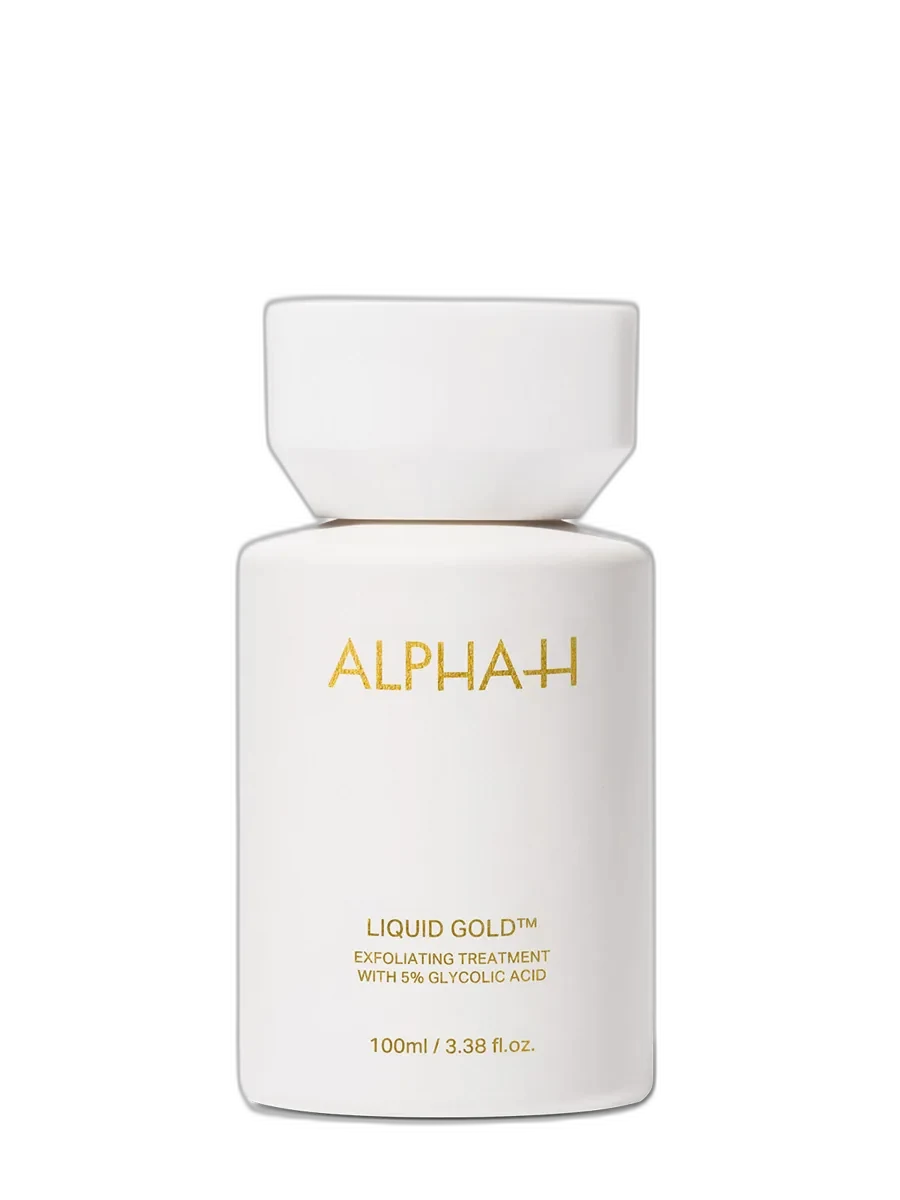
Liquid Gold Exfoliating Treatment
Cult Glycolic Original
 Verified reviewer
Pros & cons.
- +pH 2.8 puts the 5% glycolic in a far more active free-acid state than buffered competitors
- +Genuine 'morning-after glow' is visible from the first application
- +Licorice root extract addresses post-inflammatory pigmentation risk
- +One 100ml bottle lasts six to eight months at recommended frequency
- +Nearly thirty years on market with no meaningful reformulation
- +Available in a 200ml size for committed users or body application
- +Cumulative pigment and texture improvement is reliable and well-documented
- +Fragrance-free formulation aside, the actives are well-chosen and supportive
- −Contains fragrance (parfum), which adds irritation risk without benefit
- −Too aggressive for sensitive, rosacea-prone, or compromised barriers
- −Stings noticeably on first several uses, particularly around the nose
- −Cannot be used in the same routine as retinoids without compromising the barrier
- −Glass bottle with screw cap is inelegant compared to airless modern packaging
The full review.
Most modern glycolic acid products use buffers. Brands take 5% or 7% glycolic and raise the pH to 3.5 or 4, which cuts the active free-acid percentage. This makes the product gentler and easier to sell, but less effective. Liquid Gold, formulated by Michelle Doherty in 1997, has a pH of 2.8. This single number explains why the product has stayed unchanged for nearly three decades while competing AHA reformulations fail, and why a small frosted bottle from a small Australian brand became a cult object in British beauty cabinets. The chemistry is the story. At pH 2.8, roughly forty to fifty percent of the glycolic acid is in its active free-acid state—the form that penetrates the stratum corneum and breaks bonds between dead corneocytes. At pH 3.5, the free-acid ratio drops below twenty percent. At pH 4, it is below ten. This formulation detail determines what the product actually does to your skin. The morning-after glow Liquid Gold devotees describe—that smoothness and brightness upon waking—is a predictable consequence of using glycolic acid in a more active form. The rest of the formula is a thoughtful supporting cast. Licorice root extract is high on the INCI as a tyrosinase inhibitor to address the risk that an aggressive AHA triggers post-inflammatory pigmentation in melanin-rich skin. Hydrolyzed silk amino acids leave a slight humectant film to soften the burn. Botanical extracts from apple, sugar cane, and citrus add trace fruit acids; these are mostly marketing texture but do not hurt the formula. The glaring miss is the fragrance. Parfum is at the bottom of the INCI, but it is noticeable and adds nothing functional. For a product with this acid load, fragrance is a liability—it raises irritation potential without benefit. Alpha-H kept it because it is part of the 1997 formula heritage, and longtime fans associate the citrus-floral scent with the product’s identity. That is a reasonable business decision but an unreasonable formulation decision. The texture is water. Apply it to dry skin with a cotton pad or fingertips, and it disappears in seconds. You will feel a noticeable tingle during the first few uses, especially around the nose and chin where skin is thinner. The tingle stops once your skin adjusts. Most skin types should use this two to three nights per week—daily use of 5% glycolic at this pH will compromise the barrier in nearly everyone. Results appear after the first application: skin looks smoother, brighter, and more reflective. After two to three weeks of twice-weekly use, texture refinement is obvious—sun damage fine lines soften, surface roughness flattens, and pore appearance improves. Pigment lightening from the licorice and the cell-turnover effect builds over six to eight weeks. The price is fair. At around fifty-six dollars for a hundred milliliters that lasts six to eight months, this is cheaper per use than most cult AHA products. The 200ml size offers even better value for body use. Core caveats: skip this if you have rosacea, eczema, psoriasis, or a compromised barrier. Skip it if you are sensitive to fragrance or already use a strong retinoid in the same routine. For everyone else—especially those with dull, sun-damaged, or texture-bothered skin—this remains one of the best AHA treatments available, almost three decades after its first formulation.
Ingredient analysis.
Full INCI list · pH 2.8
Aqua (Water), Glycolic Acid, Glycerin, Sodium Hydroxide, Glycyrrhiza Glabra (Licorice) Root Extract, Silk Amino Acids, Pyrus Malus (Apple) Fruit Extract, Saccharum Officinarum (Sugar Cane) Extract, Citrus Aurantium Dulcis (Orange) Fruit Extract, Citrus Limon (Lemon) Fruit Extract, Camellia Sinensis (Green Tea) Leaf Extract, Phenoxyethanol, Ethylhexylglycerin, Parfum (Fragrance)
Skin match.
The science.
The Science
Glycolic acid pharmacology is well-documented. Glycolic acid weakens corneodesmosomal bonds between superficial corneocytes, which speeds up desquamation and smooths skin within days. Free-acid concentration depends on both the total glycolic percentage and the pH; this relationship is logarithmic, not linear. A 5% glycolic formula at pH 2.8 has much more bioavailable acid than the same percentage at pH 3.5, explaining the pronounced visible effect. Long-term studies show that using 5-10% glycolic acid for 12-24 weeks improves skin texture, photodamage markers, and pigmentation. The licorice root extract in this formula contains glabridin, which shows tyrosinase inhibition in lab studies and modest brightening in clinical formulations. Silk amino acids have little published evidence beyond their humectant function. This combination—high free-acid AHA paired with a tyrosinase inhibitor—targets both cell-turnover and pigment-production to renew skin more effectively than single-ingredient AHAs.
Dermatologist Perspective
Dermatologists generally favor glycolic acid to treat photodamage, hyperpigmentation, and texture concerns. The 5% concentration in this formula is in the standard cosmetic range, and the pH 2.8 formulation sits on the active end of over-the-counter AHA treatments. Board-certified dermatologists often warn that aggressive AHAs require disciplined sun protection, as increased cell turnover leaves fresh skin more vulnerable to UV damage. Dermatologist-led skincare guides often list Liquid Gold as a potent over-the-counter glycolic treatment—usually recommending a twice-weekly start and advising against combining it with retinoids in the same routine. Clinical commentary most frequently cites the fragrance as a drawback for this product.
Where it fits in your routine.
Apply two to three nights per week to dry, freshly cleansed skin. Use a cotton pad or fingertips to sweep the product across your face and neck. Avoid the eye area, active breakouts, and broken skin. Wait at least one minute before applying hydrating serums or moisturizer. Do not use retinoids in the same routine; alternate nights instead. Always apply broad-spectrum SPF 30 or higher the next morning. Start with one application per week and increase only if your skin shows no persistent redness or tightness.
At about fifty-six dollars per hundred milliliters, Liquid Gold is moderately priced for a cult AHA treatment. The 200ml size offers better per-milliliter value and is the standard choice for regular users or those applying it to the body. Cheaper 5% glycolic products exist — The Ordinary's 7% glycolic toner costs under ten dollars — but most use a higher pH buffer and lack the same morning-after experience. You pay a premium for the formulation pH, the licorice complement, and a nearly thirty-year track record. Liquid Gold provides genuine value for dull, sun-damaged, or texture-bothered skin. No price justifies it for sensitive or rosacea-prone skin.
This works for normal, combination, or oily skin with dullness, texture irregularities, sun damage, or hyperpigmentation. The pH 2.8 formulation works when gentler buffered AHAs fail. It is also a strong choice for users in their thirties and forties seeking one hardworking treatment.
Sensitive skin, rosacea, eczema, psoriasis, or any compromised-barrier condition. Anyone reactive to fragrance — the parfum here is high enough to matter. Do not add this to a routine using a strong retinoid prescription. Pregnant users who want to avoid scented exfoliants entirely.
Product details.
Watery liquid with no slip — applies via cotton pad or soaked fingertips
Citrus-floral, distinctly perfumed
Frosted glass bottle with screw cap — stays mostly the same since the late 1990s
You will feel a noticeable tingle during the first few uses, especially around the nose and chin. The main effect occurs the morning after the first application — skin looks smoother and brighter, often called the 'Liquid Gold glow.' Sensitive skin may feel tight for a few days during adjustment. Increase frequency slowly.
Approximately 6-8 months with twice-weekly application using cotton pad method
12 months
fall winter
The backstory.
Alpha-H founder Michelle Doherty developed Liquid Gold in 1997 as a treatment for her own scarring after a serious car accident. The original formula was sold to Australian beauty therapists for in-clinic use before retail availability. Its cult status in the UK began in the early 2000s when British beauty editors discovered it and began reordering it religiously — the product became one of Cult Beauty's founding bestsellers and has remained on its top-ten list ever since.
About Alpha-H
Legacy Brand (20+ years)Alpha-H launched Liquid Gold in 1997, two years after the brand's founding. It has been the brand's signature product for nearly three decades and is one of the longest-continuously-sold glycolic acid treatments on the global market.
Common myths.
Liquid Gold and other 5% glycolic products work the same way.
pH matters more than percentage. At pH 2.8, this formula has a higher free-acid ratio than glycolic toners buffered to pH 3.5+, so the visible results land harder.
You need to use Liquid Gold every night for it to work.
Most skin types do best with two to three nights a week. Using 5% glycolic daily at this pH compromises the barrier for most users — the morning-after glow comes from intermittent, properly-spaced application.
FAQ.
How often should I use Alpha-H Liquid Gold?
Use this two to three nights per week. The pH 2.8 formulation is potent; nightly use compromises the barrier in most skin types. The visible glow effect comes from intermittent use, not daily layering.
Can I use Liquid Gold with retinol?
Not in the same routine. The pH 2.8 free-acid load combined with retinol is too aggressive for nearly everyone. Alternate them on different nights — Liquid Gold one night, retinol another, with a hydrating night in between.
Does Liquid Gold contain fragrance?
Yes — it includes parfum, a rare weakness in the formula. The fragrance is part of the product's heritage but lacks functional benefits; this makes the treatment unsuitable for sensitive or fragrance-reactive skin.
Is Liquid Gold safe during pregnancy?
Glycolic acid is safe for topical use during pregnancy at concentrations up to 10%. The 5% concentration here is within that range. Fragrance is a separate issue; some pregnant users avoid scented products as a precaution. Check with your prescribing doctor.
Why does Liquid Gold sting more than other glycolic products?
Because of the pH. At 2.8, this formula has a much higher percentage of glycolic acid in its active free-acid form than products buffered to pH 3.5 or above. The sting is real and is functionally tied to the product's effectiveness.
Will Liquid Gold help with hyperpigmentation?
Yes — via two mechanisms. Glycolic acid speeds pigmented surface cell turnover, and licorice extract inhibits tyrosinase to reduce new pigment production. Consistent twice-weekly use shows visible results on dark spots in 6-8 weeks.
Can I use Liquid Gold on my body?
Yes. The 100ml size is generous enough to use on the back of arms for keratosis pilaris or on the chest for sun damage. Many longtime users specifically buy the 200ml for this reason.
Community
What the community says.
"Genuinely visible morning-after glow"
"Smooths texture faster than gentler AHAs"
"One bottle lasts months"
"Cult product for a reason"
"The fragrance is unnecessary in an exfoliating treatment"
"Stings on first use"
"Too aggressive for sensitive skin"
"Pricier than equivalent 5% glycolic from indie brands"
People also looked at.