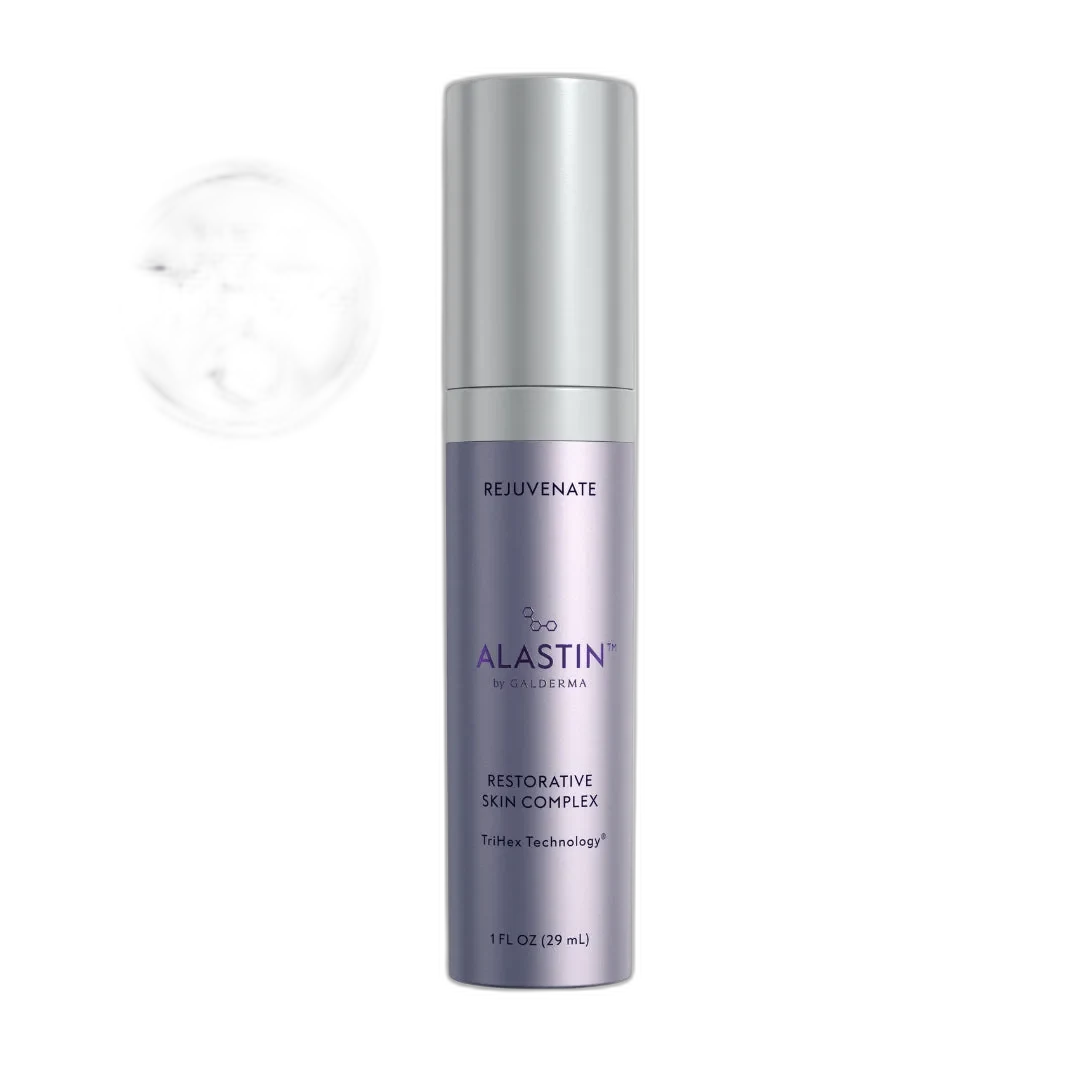
Restorative Skin Complex
Premium Anti-Aging Workhorse
 Verified reviewer
Pros & cons.
- +Seven-peptide TriHex+ complex is the most comprehensive peptide approach in any commercial serum
- +Ceramides and niacinamide provide dual-pathway barrier support alongside the peptide actives
- +Ergothioneine offers rare cellular-level antioxidant protection for newly formed structural proteins
- +2025 multi-center clinical study confirms hydration, texture, and elasticity improvements
- +416+ reviews with 4.8-star average demonstrate consistent real-world satisfaction
- +Completely fragrance-free and alcohol-free with minimal irritation potential
- −At $258 for 1 oz, annual cost of $1,100-1,500 makes it one of the most expensive daily serums available
- −Isopropyl palmitate may cause breakouts in acne-prone users — a frustrating inclusion at this price
- −Results require 8-12 weeks of patience — not a quick-fix product
- −The incremental benefit over well-formulated $50-100 peptide serums may not justify the price premium
- −Clinical studies are proprietary rather than independently published in peer-reviewed journals
The full review.
Alastin has a unique advantage in the anti-aging serum market: the brand learned to formulate for compromised skin before targeting normal skin. When product development begins with freshly lasered, peeled, and microneedled skin—tissue that is raw, compromised, and intolerant of irritation—you build a philosophy of efficacy-without-aggression. The Restorative Skin Complex applies that philosophy to daily anti-aging instead of procedure recovery.
Peptide density is the formula’s main feature. Seven distinct peptides each target different aspects of extracellular matrix renewal. Palmitoyl tripeptide-1 and palmitoyl hexapeptide-12 form the original TriHex core to stimulate collagen and support elastin. Palmitoyl tripeptide-5 adds TGF-beta mimicry, signaling cells to produce collagen through another pathway. The dipeptide pairs (palmitoyl dipeptide-5 diaminobutyroyl hydroxythreonine and its butyrate counterpart) add more matrix-remodeling signals. Acetyl hexapeptide-38 targets cellular communication. Finally, octapeptide-45, the newest addition in the TriHex+ upgrade, stimulates HAS2 enzyme activity to boost the skin’s own hyaluronic acid production.
This is not a serum that adds one peptide to a moisturizer base. It uses a deliberate, multi-vector approach to extracellular matrix renewal—a coordinated strategy rather than a single tactic.
Niacinamide is third in the ingredient list, suggesting a 3-5% concentration. At this level, niacinamide supports the barrier, inhibits melanin transfer, and stimulates ceramide synthesis. This is clever because the formula also contains ceramides NP and AP directly. This creates a dual approach: supplying ceramides topically while stimulating the skin to produce its own.
Ergothioneine separates this formula from competitors. This rare amino acid antioxidant, found in mushrooms, is so biologically valued that cells use a dedicated transporter protein (OCTN1) to import it. In an anti-aging serum focused on rebuilding structural proteins, ergothioneine protects newly synthesized collagen and elastin from oxidative degradation, ensuring the peptides’ regenerative work persists.
The texture is ideal for a daily anti-aging serum: lightweight, fluid, and fast-absorbing. It is not sticky or greasy and does not interfere with other products. It layers cleanly under moisturizer, sunscreen, and makeup. For such an ingredient-dense formula, the cosmetic elegance is impressive.
Clinical backing has grown over time. A 2025 open-label, multi-center study confirmed improvements in hydration, volume, elasticity, and extracellular matrix renewal after 12 weeks of twice-daily use. Ninety-eight percent of participants reported improved hydration, 89% reported improved texture, and 93% reported overall satisfaction. These are proprietary studies, but the multi-center design and Galderma’s pharmaceutical standards provide credibility.
User reviews match the clinical data. With 416+ reviews and a 4.8-star average, this is one of the most reviewed products in the physician-dispensed serum category. Users consistently report improved texture, reduced fine lines, and healthier-looking skin. The timeline aligns with clinical data, as most report visible changes at the 6-12 week mark.
The formula has flaws. Isopropyl palmitate, used as an emollient, has a moderate comedogenicity rating. Most users tolerate it, but a minority of acne-prone reviewers report breakouts. For a $258 product, this is a frustrating choice; alternatives to isopropyl palmitate exist that would avoid this issue.
Then there is the price. Two hundred and fifty-eight dollars for one fluid ounce of a serum that lasts four to six weeks with twice-daily use. The annual cost of $1,100-1,500 for this single product is a substantial investment. Alastin sells this in the physician-dispensed channel where $200+ serums are common, but the question remains: does the TriHex+ peptide complex deliver proportionally better results than $50-100 peptide serums?
The answer is: probably not proportionally, but measurably. The formulation complexity is exceptional—no other serum combines seven targeted peptides with ceramides, ergothioneine, and niacinamide in one product. The clinical validation is real and the user satisfaction is convincing. However, skincare has diminishing returns; the gap between a good $80 peptide serum and this $258 one is narrower than the price suggests.
For patients under a dermatologist’s care seeking the most comprehensive peptide-based anti-aging approach, this serum is the best in class. For budget-conscious enthusiasts who can get 80% of these results with cheaper products, the premium is a luxury. The Restorative Skin Complex is a premium product for people who want the best available technology and will pay for it.
Ingredient analysis.
Full INCI list
Water, Glycerin, Niacinamide, Isopropyl Palmitate, Polyacrylate-13, Butylene Glycol, Palmitoyl Hexapeptide-12, Palmitoyl Tripeptide-1, Palmitoyl Tripeptide-5, Palmitoyl Dipeptide-5 Diaminobutyroyl Hydroxythreonine, Palmitoyl Dipeptide-5 Diaminohydroxybutyrate, Acetyl Hexapeptide-38, Octapeptide-45, Swertia Chirata Extract, Magnolol, Ornithine, Ceramide AP, Ceramide NP, Ergothioneine, Dunaliella Salina Extract, Phytosterols, Phospholipids, Glycolipids, Tremella Fuciformis Sporocarp Extract, Caprylic/Capric Triglyceride, Sodium Stearoyl Glutamate, Stearic Acid, Betaine, Squalane, Lecithin, Caprylyl Methicone, Disodium EDTA, Polysorbate 20, Tocopherol, Caprylyl Glycol, Glyceryl Caprylate, Pentylene Glycol, Oleic Acid, Palmitic Acid, Hexylene Glycol, Propanediol, Polyisobutene, Potassium Sorbate, Levulinic Acid, Sodium Hydroxide, Helianthus Annuus Seed Oil, P-Anisic Acid, Sorbitan Isostearate, Ethylhexylglycerin, Phenoxyethanol
Skin match.
The science.
The Science
TriHex+ Technology uses a comprehensive approach to extracellular matrix (ECM) renewal. This multi-peptide strategy targets several distinct pathways at once. Palmitoyl tripeptide-1, a matrikine from collagen fragments, stimulates type I collagen synthesis via TGF-beta signaling—a mechanism documented in the International Journal of Cosmetic Science. Palmitoyl hexapeptide-12 (Biopeptide EL) targets tropoelastin production, the precursor to mature elastin.
The TriHex+ upgrade adds octapeptide-45 to target hyaluronic acid synthase 2 (HAS2), the enzyme that produces high-molecular-weight hyaluronic acid in the dermis. This addresses the age-related decline in dermal HA content shown in the Journal of Investigative Dermatology, which reports an approximately 50% reduction in dermal HA between ages 20 and 50.
Ergothioneine uses emerging research on this uniquely bioavailable antioxidant. Studies in Free Radical Biology and Medicine show ergothioneine protects against UV-induced oxidative damage and inhibits MMP activation—both factors that preserve the structural proteins the TriHex peptides help produce. A dedicated cellular transporter (OCTN1) for ergothioneine shows that cells actively import this molecule, indicating biological value.
The ceramide complex (NP and AP) and phytosterols replicate key parts of the skin's natural lamellar lipid structure. Research in the Journal of Clinical Investigation shows topical ceramide application restores barrier function in aging and compromised skin, supporting the dual approach of exogenous ceramide supply and niacinamide-stimulated endogenous ceramide production.
Dermatologist Perspective
Cosmetic and anti-aging dermatologists frequently recommend the Restorative Skin Complex as a cornerstone daily serum. Board-certified dermatologists note the multi-peptide approach aligns with current science: effective anti-aging requires targeting multiple ECM pathways simultaneously instead of relying on one active. The product works as a daily anti-aging treatment and complements in-office procedures—pre-treatment to optimize skin condition and post-treatment to support recovery. Dermatologists like the fragrance-free, gentle formulation, which allows use alongside retinoids and other actives without additive irritation.
Where it fits in your routine.
Apply 1-2 pumps to clean skin every morning and evening after cleansing. Spread it evenly over the face, neck, and decolletage. Follow with other serums if you want (vitamin C in the morning, retinol in the evening), then moisturizer and sunscreen. Wait 1-2 minutes for the serum to absorb before layering. Use it twice daily for 8-12 weeks to see visible structural improvements.
At $258 for 1 oz, this ranks among the most expensive daily serums in the physician-dispensed category. The price covers the seven-peptide TriHex+ complex, ceramides, ergothioneine, and clinical validation. One bottle lasts 4-6 weeks, making the annual cost $1,100-1,500. A travel size exists for trial. The honest assessment: the technology is best-in-class, but the marginal benefit over well-formulated $50-100 peptide serums likely does not match the price difference. This product suits those who want the most comprehensive available technology and have the budget.
This is for anyone wanting the most comprehensive peptide-based anti-aging serum and willing to pay premium prices. It works well for patients in a dermatologist's care, those preparing for or recovering from skin-rejuvenating procedures, and aging skin types needing a gentle, effective, clinically validated daily treatment.
Budget-conscious shoppers get comparable results by layering cheaper peptide and niacinamide products. Acne-prone users must watch for isopropyl palmitate. This serum uses peptide mechanisms rather than retinoid pathways; for photodamage and deep wrinkles, a retinoid works better.
Product details.
This lightweight, fluid serum has a slightly silky finish. It absorbs fast and layers well under moisturizer and sunscreen. It is non-greasy.
Unscented — completely fragrance-free.
An opaque airless pump bottle protects the peptide formula from light and air. A precise pump dispenser allows controlled application.
It smooths and hydrates immediately. This anti-aging serum is one of the gentlest available, causing no stinging, tingling, or irritation. Skin feels softer and more supple within days. Structural changes develop over weeks to months.
4-6 weeks with twice-daily face application
12 months
All Year
The backstory.
The Restorative Skin Complex evolved from Alastin's post-procedure recovery expertise into the brand's flagship daily anti-aging product. Originally designed to help skin rebuild after laser treatments, dermatologists noticed that patients using it daily showed improvements in skin quality beyond what the procedures alone could account for. The latest TriHex+ upgrade added octapeptide-45 for endogenous HA production and new dipeptide pairs, making it the most complex iteration of Alastin's signature technology.
About Alastin
Established Brand (5–20 years)Alastin Skincare launched in 2015 and Galderma acquired it in 2022. The Restorative Skin Complex is the brand's top-selling daily anti-aging product. It uses TriHex+ Technology and has 416+ reviews and a 2025 multi-center clinical study confirming efficacy.
Common myths.
Peptide serums do not penetrate deep enough into the skin to work.
The palmitoylated peptides in this formula use lipid modification to improve skin penetration; the palmitoyl chain carries them through the stratum corneum lipid layers. Alastin also uses phospholipid encapsulation to increase bioavailability. A 2025 multi-center study confirmed measurable improvements in elasticity and hydration, showing the peptides reach their targets.
A $258 serum must work better than a $30 serum.
Price does not correlate linearly with efficacy. This price point buys formulation complexity (seven peptides, ceramides, ergothioneine), clinical validation, and physician-dispensed brand backing. Whether the incremental benefit over a well-formulated $50-80 peptide serum justifies the extra $180+ depends on your budget, expectations, and how much you value the specific technology.
FAQ.
Can I use Alastin Restorative Skin Complex with retinol?
Yes — this serum pairs well with retinol. Apply the Skin Complex first as a treatment serum, let it absorb, then apply your retinol. The niacinamide and ceramides in this formula support the skin barrier during retinol use and reduce irritation. Many dermatologists recommend this combination.
How long does it take to see results from Alastin Restorative Skin Complex?
Hydration and softness improve within 1-2 weeks. Texture, fine lines, and skin quality show visible improvement after 8-12 weeks of consistent twice-daily use. The 2025 clinical study measured significant improvements at 12 weeks. Some users report 80% improvement in fine lines after 4-6 weeks.
Will Alastin Restorative Skin Complex break me out?
The formula contains isopropyl palmitate, which has a moderate comedogenicity rating. Most users tolerate it well, but some acne-prone users report breakouts. If you are highly acne-prone, patch test a small area for 1-2 weeks before full-face application.
What's the difference between Alastin Skin Nectar and Skin Complex?
The Regenerating Skin Nectar uses a water-free silicone formula for post-procedure recovery. The Restorative Skin Complex uses a water-based formula with a broader anti-aging profile (niacinamide, ceramides, seven peptides) for daily use. Many dermatologists recommend the Regenerating Skin Nectar for acute post-procedure recovery and the Restorative Skin Complex for daily anti-aging maintenance.
What the community says.
"Noticeable improvement in skin texture and firmness"
"Reduced fine lines visible within 6-8 weeks"
"Elegant lightweight texture absorbs quickly"
"Gentle enough for daily use without irritation"
"$258 for 1 oz is extremely expensive for a daily serum"
"Some acne-prone users report breakouts (isopropyl palmitate)"
"Results require patience — 8-12 weeks for visible changes"
"Difficult to justify the premium over less expensive peptide serums"
People also looked at.