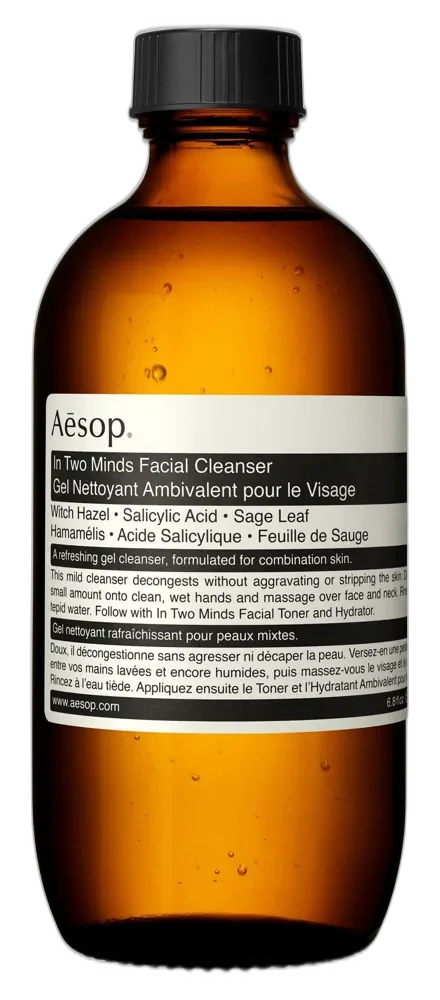
In Two Minds Facial Cleanser
Combination-Skin BHA Cleanser
 Verified reviewer
Pros & cons.
- +Genuinely smart dual-zone combination skin design
- +Low-dose salicylic acid targets t-zone congestion effectively
- +Witch hazel adds mild clarifying support without stripping
- +Panthenol and glycerin prevent dryness on the cheek areas
- +Reduces visible pore appearance over consistent use
- +Signature Aesop sensory experience and packaging
- +Vegan and Leaping Bunny certified
- −Citrus-heavy fragrance excludes sensitive and rosacea-prone users
- −Significantly pricier than dedicated pharmacy BHA cleansers
- −Not fungal-acne safe due to fatty esters and essential oils
- −Can feel too gentle for users who want aggressive oil removal
- −Mild photosensitivity concern from citrus oils (though low in rinse-off)
The full review.
Combination skin is one of the most common skin types and one of the hardest to shop for. The t-zone — forehead, nose, chin — tends toward oilier production, larger pores, and occasional congestion. The cheeks and jawline lean drier, more reactive, and more prone to flaking. Most cleansers are built for one of these patterns and ignore the other, which is why combination skin users often end up with two separate cleansers in the bathroom, or a single compromise product that doesn’t really work on either zone. The whole category has an unsolved problem at its center, and most brands have stopped trying to solve it at all.
Aesop’s In Two Minds is one of the few products that seriously tries. The name itself is a tiny joke — combination skin users are literally ‘in two minds’ about what their skin needs — and the formulation follows through with a surprisingly thoughtful dual-target structure. The cleansing base is built around sodium methyl cocoyl taurate and cocamidopropyl betaine, both mild surfactants that won’t strip the dry zones. Layered on top of that are two targeted additions for the oily zones: low-dose salicylic acid, which is lipophilic and capable of gently penetrating pore linings even in a rinse-off format, and witch hazel water, which contributes mild astringent and clarifying effects. Glycerin, panthenol, allantoin, and hydrolyzed wheat protein handle the humectant and conditioning side so the cheeks don’t rebel.
It’s a genuinely clever piece of formulation work. The salicylic acid is the key addition — most cleansers for combination skin skip it entirely or use token amounts that don’t do anything, while dedicated BHA cleansers for acne tend to be too drying for the cheeks. At the level Aesop uses it, the acid is active enough to meaningfully reduce surface congestion, blackheads, and t-zone shine over 2-4 weeks of daily use, but gentle enough that most users don’t experience dryness or irritation on their drier areas. The pairing with witch hazel is a nice reinforcement — witch hazel on its own can be drying when used as a leave-on toner, but in a rinse-off cleanser it provides a clarifying nudge without the barrier risk.
On the skin, the experience is distinctly different from the other Aesop cleansers. The texture lathers into a softer, low-volume foam. The scent is brighter and more citrus-forward, with lemon peel oil and litsea cubeba giving it a zingy top note over a patchouli base. It rinses cleanly, leaves skin feeling refreshed rather than tight, and most users notice a visible reduction in t-zone shine after a few weeks of consistent use. For combination skin that’s been struggling to find a cleanser that addresses both zones, this is often a revelation — the first product that makes the t-zone feel clean without punishing the cheeks.
The catch is the same catch that applies to every Aesop product. The fragrance is significant, and the essential oil supporting cast — lemon peel oil, litsea cubeba, patchouli — adds both sensory depth and sensitization potential. Users with rosacea, fragrance reactivity, or eczema should steer clear; the acid content plus the fragrance load is too much risk for reactive skin, even though the cleanser is otherwise well-built. Citrus oils are also mildly photosensitizing, though the concentration in a rinse-off product is unlikely to cause actual sun sensitivity in daily use.
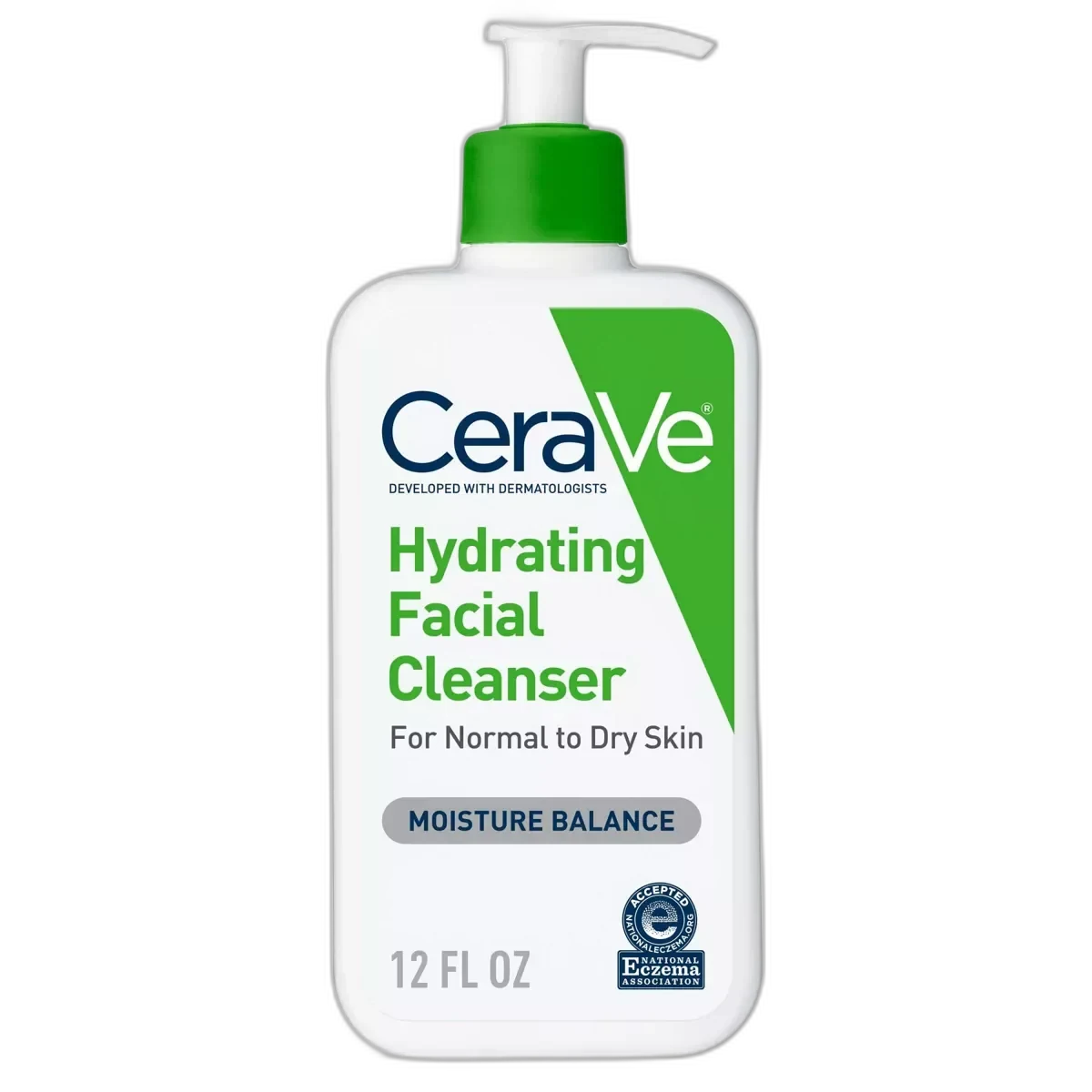
Price is the usual Aesop conversation. At $42 for 100ml, this is significantly more expensive than dedicated BHA cleansers like CeraVe Renewing SA ($17), Paula’s Choice Clear Pore Normalizing Cleanser ($13), or La Roche-Posay Effaclar Medicated Gel Cleanser ($16). Those products contain similar or higher concentrations of salicylic acid, and the CeraVe and La Roche-Posay options are fragrance-free and dermatologist-recommended. On a pure ingredient-to-dollar basis, they beat In Two Minds clearly. What In Two Minds offers is the dual-zone design (most pharmacy BHA cleansers are more aggressive and not combination-skin-optimized), the sensory experience, and the brand aesthetic.
For Aesop devotees with combination skin, this is probably the best cleanser in the lineup to justify — it’s the one that delivers the most actual skincare work per bottle, and the formulation sophistication is the highest among the brand’s cleansers. For value-focused shoppers, a $15 BHA cleanser from CeraVe or Paula’s Choice will give you 80% of the same benefits at a fraction of the cost. For genuinely reactive skin, neither the fragrance load nor the citrus oil content makes sense regardless of price. Choose based on which category you’re in, and In Two Minds will either be an excellent addition to your routine or an obvious pass.
Ingredient analysis.
Full INCI list
Water (Aqua), Sodium Methyl Cocoyl Taurate, Glycerin, Cocamidopropyl Betaine, Decyl Glucoside, PEG-7 Glyceryl Cocoate, Witch Hazel (Hamamelis Virginiana) Water, Panthenol, Allantoin, Salicylic Acid, Lactic Acid, Hydrolyzed Wheat Protein, Rosmarinus Officinalis (Rosemary) Leaf Extract, Citric Acid, Sodium Hydroxide, Citrus Limon (Lemon) Peel Oil, Litsea Cubeba Fruit Oil, Pogostemon Cablin (Patchouli) Leaf Oil, Fragrance (Parfum), Linalool, Limonene, Citronellol, Sodium Benzoate, Phenoxyethanol, Ethylhexylglycerin.
Skin match.
The science.
The Science
The formulation works by layering active ingredients to address specific skin needs. Salicylic acid is the most studied beta hydroxy acid in dermatology. Research in journals like the Journal of the American Academy of Dermatology shows its effects on comedones, surface congestion, and mild inflammatory acne. Its lipophilic nature lets it penetrate the pore lining to dissolve the sebum-keratinocyte mixture that causes blackheads and clogged pores. At typical cleanser concentrations (usually 0.5-1%), the effect is less than leave-on BHA treatments but remains clinically meaningful with consistent use.
Witch hazel (Hamamelis virginiana) has tannins and mild polyphenols that provide astringent and antioxidant activity. Topical research on witch hazel is mixed; small studies show mild anti-inflammatory properties. Older alcohol-based witch hazel toners from the mid-20th century were drying because of ethanol, not the witch hazel itself. In this modern, water-based, rinse-off format, the astringent effect is controlled and well-tolerated.
The surfactant base matters too. Sodium methyl cocoyl taurate is one of the mildest anionic surfactants in skincare and irritates less than sulfate-based alternatives. Cocamidopropyl betaine, the amphoteric co-surfactant, lowers irritation potential and creates the product's soft, low-volume lather. This combination shows a chemist targeting minimum barrier disruption, which is vital for a cleanser for combination skin where dry zones cannot tolerate stripping. The fragrance and essential oil components are the main science caveat; they improve the sensory experience but add unnecessary sensitization risk.
Dermatologist Perspective
Dermatologists see salicylic acid cleansers as useful adjunct products for patients with combination skin, mild acne, or blackhead-prone t-zones. Board-certified dermatologists often recommend this category for patients not ready for dedicated leave-on BHA treatments, or as a complement to aggressive acne protocols. However, dermatologists typically avoid fragranced cleansers for patients with rosacea, sensitive skin, or fragrance reactivity, regardless of the active ingredient selection. This specific product is not commonly prescribed in clinical settings due to the price and fragrance content, but it is acceptable for non-reactive combination-skin patients who prefer luxury-tier products.
Where it fits in your routine.
Wet your face with lukewarm water. Dispense one pump of cleanser into damp hands and massage it onto your face for 30-60 seconds so the salicylic acid works. Focus on the t-zone and congested areas. Rinse well and pat dry. Use it morning and night, but if you use other strong exfoliants, use it once daily to avoid irritation. Follow with a toner, treatment serum, and moisturizer. Always apply sunscreen in the morning to protect the refined skin surface.
At $42 for 100ml, this sits firmly in luxury cleanser pricing territory. Functional equivalents with similar or stronger salicylic acid concentrations are widely available for $13-17 from brands like CeraVe, La Roche-Posay, and Paula's Choice, all of which are fragrance-free and more appropriate for sensitive combination skin. What Aesop's product uniquely delivers is the dual-zone formulation philosophy (most pharmacy BHA cleansers skew more aggressive), the sensory experience, and the brand coherence for users building a branded routine. For Aesop enthusiasts with combination skin, it's arguably the best cleanser in the lineup to justify. For value-focused users, pharmacy alternatives win on pure cost-to-performance.
Combination and mildly oily skin types with T-zone congestion, blackheads, or occasional breakouts use this. It suits Aesop enthusiasts wanting a technical cleanser with active ingredients, and users preferring a luxury sensory experience over a utilitarian pharmacy BHA wash.
Users with sensitive, rosacea-prone, eczema-prone, or fragrance-reactive skin should avoid this because it contains essential oils and fragrance. The formula targets oily-zone concerns, so very dry skin may not benefit. For better cost-to-performance, CeraVe, Paula's Choice, or La Roche-Posay offer better value.
Product details.
Aesop cleansers usually lack this citrus profile. This formula uses lemon and litsea cubeba notes over a patchouli base. It is distinctive and strong.
Aesop uses its signature amber glass bottle with pump dispenser. It is heavy, considered, and hygienic. Finish non-greasy satin
Creates a low-volume foam with a bright citrus aroma. Rinses clean and leaves no tightness. Some users feel a mild tingle from the acids, which usually stops after a few uses.
2-4 months with twice-daily use.
12 months
All Year
The backstory.
In Two Minds was part of the original Aesop facial cleanser lineup, developed specifically for 'blemish-prone or congested skin' — the third pillar alongside Amazing Face (normal/combination) and Fabulous (dry). The name reflects the formulation challenge of combination skin, which often leaves users genuinely torn between gentle and clarifying cleansers.
About Aesop
Legacy Brand (20+ years)Aesop launched in 1987 and has nearly four decades of history in botanical formulation. Aesthetic and design consistency, editorial coverage, and a loyal global customer base drive its credibility, not clinical validation.
Common myths.
Combination skin requires two different cleansers for the t-zone and cheeks.
A well-formulated combination cleanser addresses both zones in one product. This cleanser uses mild surfactants and targeted actives like BHA or witch hazel.
Salicylic acid in cleansers lacks the strength to affect blackheads.
Low-dose salicylic acid in a cleanser is less potent than leave-on BHA treatments, but massaging it for 30-60 seconds reduces blackheads and surface congestion over 2-4 weeks of daily use.
FAQ.
What's the difference between In Two Minds and Amazing Face Cleanser?
Amazing Face is a neutral gel cleanser for normal/combination skin. In Two Minds uses salicylic acid and witch hazel to target oilier, congested, or blemish-prone skin. In Two Minds works better if your t-zone gets shiny or you have blackheads.
Can I use this every day?
Most users use it twice daily. If you use a leave-on BHA or AHA treatment, use it once daily to avoid over-exfoliation. Watch for dryness or irritation and adjust frequency as needed.
Is it effective for acne?
The salicylic acid makes this a helpful maintenance cleanser for mild to moderate acne, but it is not a dedicated acne treatment. Use a leave-on BHA product or a prescribed treatment from a dermatologist for active breakouts.
Will it dry out the cheeks of combination skin?
Usually no — humectants (glycerin, panthenol, hydrolyzed wheat protein) balance the formula. If your cheeks are dry or sensitive, watch for tightness and adjust frequency or add a thicker moisturizer afterward.
Can sensitive skin use this?
Use caution. The acids are low-dose, but the fragrance and citrus oil content make this unsuitable for users with rosacea, fragrance reactivity, or compromised barrier. Use a fragrance-free BHA cleanser like CeraVe SA or La Roche-Posay Effaclar instead.
Does it remove makeup?
Yes, for light to medium makeup. Use an oil or balm cleanser first for heavier makeup or waterproof formulas, then use this as the second cleanse.
What the community says.
"Reduces t-zone shine visibly"
"Helps with blackheads over time"
"Doesn't strip the dry areas"
"Signature Aesop scent"
"Expensive for a cleanser"
"Citrus oils can irritate sensitive skin"
"Too rich for oily skin that wants a deeper clean"
"Fragrance overpowering for some"
People also looked at.