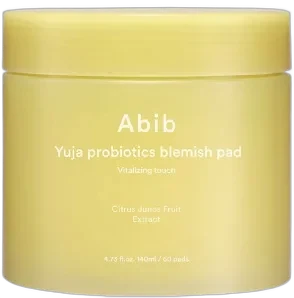
Yuja Probiotics Blemish Pad Vitalizing Touch
Sensitive-Skin Brightener
 Verified reviewer
Pros & cons.
- +Genuinely gentle enough for daily twice-a-day use on sensitive skin
- +Niacinamide at clinical 2-3% concentration for proven brightening
- +Pairs perfectly with retinoids and vitamin C serums
- +Saturated, soft pads that don't feel cheap
- +Pregnancy-safe and fungal-acne-safe formulation
- +Yuja and rice ferment add real hydration alongside brightening
- +No fragrance, no alcohol, no aggressive actives
- −Brightening effect is slower than L-ascorbic acid serums
- −Open-jar packaging less hygienic than wrapped pads
- −Per-pad price higher than DIY niacinamide-and-cotton-round setup
- −Not enough on its own for deep melasma or significant sun damage
The full review.
Brightening skincare contains a paradox. People who need to fade dark spots—those with post-inflammatory hyperpigmentation from acne, sensitive skin, or melasma—often have skin that reacts poorly to strong actives. L-ascorbic acid stings. Hydroquinone irritates. Strong AHAs and BHAs trigger the inflammation that creates more pigment. You see dark spots form, reach for a brightening serum, and stop because your face burns.
Abib’s Yuja Probiotics Blemish Pad addresses this. It is a brightening product that prioritizes gentleness. Niacinamide is the workhorse, appearing in the upper INCI at a clinically meaningful 2-3% concentration. Decades of study show niacinamide fades post-inflammatory hyperpigmentation, and it is better tolerated than vitamin C. The formula also includes yuja extract (Korean citrus, naturally vitamin-C-adjacent), Lactobacillus/rice ferment for amino acid hydration, centella asiatica and allantoin for soothing, and a small dose of gluconolactone for gentle PHA exfoliation. It contains no AHAs, no BHAs, no L-ascorbic acid, and no retinoids. Nothing stings.
The experience matches the formula. The pads are thick, plush, and saturated, unlike dry K-beauty pads. The essence is slightly viscous, almost gel-like, and absorbs without tackiness. It has a faint citrus note from the yuja but no added fragrance. After one week of twice-daily use, most users see softer, more luminous skin. After 4-6 weeks, brightening appears on darker spots—slowly and gently. It lacks the immediate, dramatic glow of a fresh L-ascorbic acid serum, but it does not cause three days of redness.
This pad works well with other treatments. Niacinamide pairs with retinoids to offset dryness and irritation; the two target pigment through different mechanisms. If your skin fails to tolerate retinoids, layering this pad underneath is a good strategy. It also works with vitamin C: use a mid-strength L-ascorbic acid serum in the morning and this pad in the evening. The combination outperforms either alone.
There are limitations. First, the price-to-pad math is poor. At around $22 for 60 pads, each use costs about 37 cents, which adds up if using two pads twice a day. The actives are standard; a $15 niacinamide serum and a cotton round could replicate much of this benefit. You pay for the format: convenience, saturated cotton, and dual-purpose hydration-and-treatment. Second, the open-jar packaging is less hygienic than individually wrapped pads. Use clean hands or tweezers and avoid steamy bathrooms. Third, this pad alone will not fix severe melasma or deep sun damage. It is a supporting player, not the lead.
The “probiotics” in the name are slightly misleading. The pad lacks live bacteria; it contains Lactobacillus/rice ferment, the byproduct of bacteria acting on rice. It does not provide microbiome modulation. Instead, fermentation breaks rice into small peptides and amino acids that hydrate the skin. The benefit is real, even if it differs from the marketing.
Abib’s Yuja Probiotics Blemish Pad fills a gap in the Korean indie market. Most toner pads are either aggressive acids or basic hydration. Abib built a third option for sensitive skin that wants brightening and reactive skin that wants tone correction without inflammation. It is a gentle daily step that does not conflict with other products. It is not a headline-grabbing hero ingredient, but it is a thoughtful formula that works after a few weeks.
Ingredient analysis.
Full INCI list
Purified Water, Dipropylene Glycol, Glycerin, Lactobacillus/Rice Ferment, Niacinamide, Citrus Junos Fruit Extract, 1,2-Hexanediol, Panthenol, Butylene Glycol, Paeonia Suffruticosa Root Extract, Centella Asiatica Extract, Chamomilla Recutita (Matricaria) Flower Extract, Polyglyceryl-10 Laurate, Glyceryl Caprylate, Carbomer, Tromethamine, Ethylhexylglycerin, Allantoin, Adenosine, Xanthan Gum, Sodium Hyaluronate, Gluconolactone, Glyceryl Acrylate/Acrylic Acid Copolymer, Gardenia Florida Fruit Extract, Pantolactone, PVM/MA Copolymer, Diethylhexyl Sodium Sulfosuccinate, Dextrin, Disodium EDTA
Skin match.
The science.
The Science
Niacinamide is a widely studied topical brightening agent. Peer-reviewed research shows it inhibits melanosome transfer from melanocytes to keratinocytes, the cellular step that moves pigment to the surface. Concentrations from 2% to 5% work for post-inflammatory hyperpigmentation and general tone evening over 8-12 weeks of consistent use. The 2-3% concentration in this pad is at the low end of the effective range, but it is well-tolerated and builds benefit through twice-daily application.
Lactobacillus/rice ferment has less rigorous study. Available evidence shows it acts as a humectant and amino acid source rather than a microbiome-active ingredient. In vitro, Saccharomyces and Lactobacillus ferment filtrates influence skin moisturization and barrier markers, but human clinical data on visible brightening is limited. This ingredient provides gentle hydration to support skin appearance rather than direct pigment reduction.
Yuja (Citrus junos) extract contains natural vitamin C and flavonoids like hesperidin and naringenin. These compounds show antioxidant activity in vitro, but the concentration in a leave-on toner is much lower than a dedicated L-ascorbic acid serum. Yuja acts as a brightening support ingredient that works alongside the niacinamide.
The gluconolactone in this pad is a polyhydroxy acid (PHA), a milder alternative to AHAs. PHAs have larger molecular structures than glycolic or lactic acid and penetrate the stratum corneum more slowly, which exfoliates with less irritation. Dermatologists often recommend PHAs as a tolerable entry point to chemical exfoliation for sensitive skin.
Dermatologist Perspective
Dermatologists often recommend niacinamide as a first-line treatment for post-inflammatory hyperpigmentation, especially for patients who cannot tolerate hydroquinone or L-ascorbic acid. Board-certified dermatologists note that niacinamide inhibits melanosome transfer instead of blocking melanin synthesis directly, making it a slow but reliable tool for long-term pigment management. Many dermatologists pair niacinamide with retinoids for mild-to-moderate hyperpigmentation because the mechanisms are complementary and niacinamide softens retinoid side effects. For patients with sensitive skin or rosacea who develop pigment from inflammation, dermatologists generally favor low-irritation brighteners like niacinamide over aggressive options.
Where it fits in your routine.
Apply twice daily after cleansing. Swipe one pad across your forehead, cheeks, nose, chin, and neck. Pat any leftover essence into the skin instead of wiping it off. Apply serums, treatments (including retinoids), and moisturizer in your normal order. Use broad-spectrum SPF every morning. This is suitable for daily long-term use; you do not need to cycle off.
At around $22 for 60 pads, this lands in the middle tier of K-beauty toner pads. The actual actives — niacinamide, yuja extract, rice ferment, gluconolactone — are not exotic and could be replicated more cheaply with a basic niacinamide serum applied via cotton round. What you're paying for is the format convenience and the thoughtful gentle blend. From an emerging brand without legacy clinical data, the price feels fair if the format-and-gentleness combination matches your needs, but harder to justify if you're comfortable with a serum-and-cotton-pad routine.
Users with sensitive, reactive, or post-inflammatory hyperpigmentation-prone skin seeking gentle daily brightening. People who cannot tolerate vitamin C serums or AHAs. Pregnant or nursing users needing a brightening tool safe for the whole nine months. Beginners starting a first K-beauty routine.
People with severe melasma or deep sun damage needing a stronger primary treatment. Anyone wanting fast results who prefers a 15% L-ascorbic acid serum. Routine minimalists who use a niacinamide serum and do not need the pad format.
Product details.
Cotton pads soak in a slightly viscous, gel-like essence that absorbs without tackiness
Subtle yuja citrus note from the extract; no added fragrance
Wide-mouth plastic jar with inner seal and lid; single-textured smooth cotton pads stack inside.
It feels refreshing on application without sting or tingle. Skin feels softer immediately and looks subtly more even-toned within the first week. The formula contains no aggressive actives, so there is no purge or adjustment period.
About 1 month with twice-daily use, or roughly 2 months as an evening-only step
12 months
All Year
The backstory.
Yuja is a Korean citrus traditionally used in winter teas and folk remedies for brightening and skin nourishment. Abib launched the Yuja Probiotics line in 2021 as the gentler counterpart to its more active Pine Needle pad — same form factor, completely different chemistry. The pad became a sleeper hit among reviewers who needed a brightening step their reactive skin could actually tolerate.
About Abib
Emerging Brand (2–5 years)Abib launched in 2017 as a Korean indie brand using plant-derived, minimalist formulas. Its toner pad line is the brand's most recognized category. These pads have large followings on TikTok and Korean beauty retailers, but independent clinical validation is limited.
Common myths.
Probiotic skincare has no effect on the microbiome.
Most products work this way—this pad lacks live probiotics. It uses Lactobacillus/rice ferment, a fermentation byproduct rather than live bacteria. It doesn't modulate the microbiome; instead, it provides amino acids and small peptides released during fermentation.
Yuja is just a marketing version of regular vitamin C.
Yuja extract has natural ascorbic acid, flavonoids, and limonene, but at lower concentrations than a 10-20% L-ascorbic acid serum. It works as a gentle brightening adjunct that supports niacinamide, not a replacement for a dedicated vitamin C step.
FAQ.
How is the Yuja pad different from Abib's Pine Needle pad?
The Pine Needle Clear Touch uses four acids (salicylic, betaine salicylate, glycolic, lactic) to exfoliate oily, congested skin. The Yuja Vitalizing Touch is a gentle daily brightening pad with no strong acids; it uses niacinamide, yuja extract, rice ferment, and PHA. These pads target opposite skin needs.
Can I use this pad every day, morning and night?
Yes — it works for twice-a-day use. Because the formula has no AHAs, BHAs, or other strong actives, daily use does not compromise the barrier. It is one of the most beginner-friendly toner pads on the market.
Will this pad actually fade dark spots?
Niacinamide at 2-3% has evidence for fading post-inflammatory hyperpigmentation over 8-12 weeks. The yuja extract and rice ferment add mild brightening. Deep melasma or stubborn sun spots require stronger actives like a vitamin C serum or prescription tretinoin alongside this pad.
Is this pad safe during pregnancy?
Yes. It has no salicylic acid, retinoids, or other ingredients flagged for pregnancy. Niacinamide, yuja extract, rice ferment, and centella are all pregnancy-safe per mainstream dermatology guidance.
Can I use this with my retinoid?
Yes — that is one of its best uses. Niacinamide pairs well with retinoids and offsets the dryness and irritation they cause. Apply this pad after cleansing, then layer your retinoid on top once the essence absorbs.
Is the Yuja pad fungal acne safe?
Yes. The formula lacks fatty acids, esters, or ferments that feed Malassezia yeast. It is one of the few brightening toner pads that works for people with pityrosporum folliculitis.
Why does my skin tingle slightly when I use this?
The gluconolactone (PHA) or the niacinamide can cause a very mild tingle; both concentrations are normal. If you feel burning, persistent redness, or stinging, stop use and check if another product in your routine compromised your barrier.
What the community says.
"Genuinely gentle even for sensitive skin"
"Visible glow after 2-3 weeks"
"Saturated, non-drying pads"
"Non-stinging brightening for skin that can't tolerate vitamin C serums"
"Brightening effect is slow compared to L-ascorbic acid"
"Jar packaging less hygienic than wrapped pads"
"Pricier than basic cotton-and-toner setups"