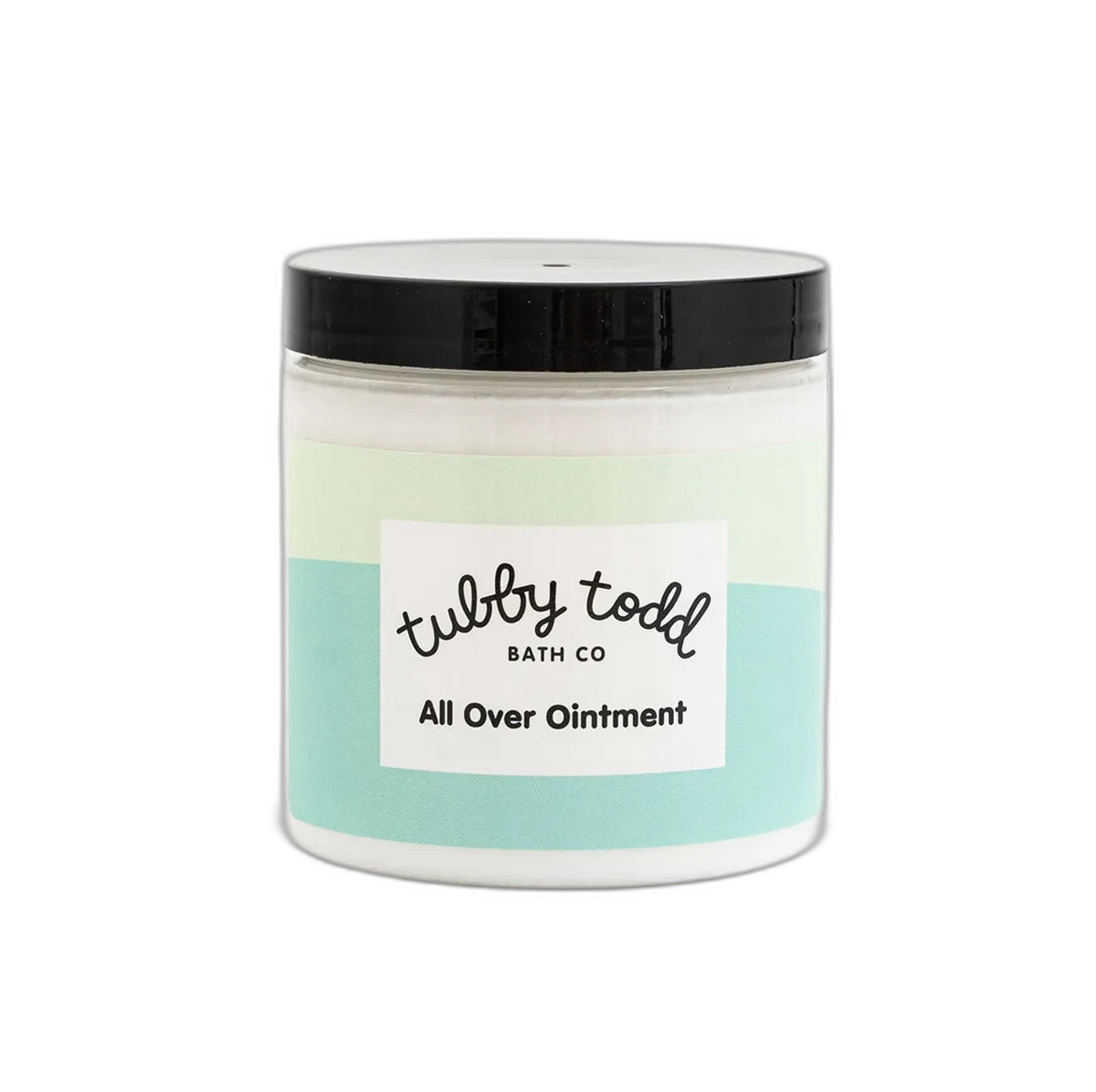
All Over Ointment
Baby-Eczema Cult Favorite
 Verified reviewer
Pros & cons.
- +Linoleic-rich sunflower oil base is especially supportive of eczema-prone skin
- +Meaningful doses of calendula and chamomile, not just marketing sprinkles
- +Gentle enough for daily use on cradle cap, diaper rash, and mild flares
- +Short, transparent eight-ingredient list easy to screen for reactive babies
- +Thick yet non-greasy texture that spreads once warmed between fingers
- +Multi-use across the whole family from cuticles to chapped lips
- +Made in the USA by a long-running independent family brand
- −Contains lavender essential oil that some pediatricians avoid for newborns
- −Beeswax base is comedogenic for most acne-prone adult faces
- −Per-ounce price is significantly higher than plain petrolatum alternatives
- −Texture stiffens noticeably in cold weather and needs warming
- −Not a substitute for prescription treatment in moderate-to-severe eczema
The full review.
Before TikTok made balms sell out overnight, moms shared Tubby Todd’s All Over Ointment in private Facebook groups, pediatrician waiting rooms, and baby-registry printouts. It spent years as a skincare “secret menu” item—passed from friend to friend to treat baby eczema. This grassroots growth is rare in a market driven by fifteen-second videos. A product that grows this slowly usually does so for a reason.
The base uses sunflower seed oil, a smart choice for atopic, eczema-prone skin. Research shows atopic dermatitis skin often lacks linoleic acid, and sunflower oil is a rich plant source of it. Beeswax creates a thick, protective texture that warms between fingertips and clings to diaper-rash-raw skin through a nap. Jojoba oil is structurally closer to human sebum than traditional fats; it carries botanicals into the upper skin layers and feels lighter than a pure petrolatum balm. It is a clean, sensible oil phase.
The actives set Tubby Todd’s All Over Ointment apart from other beeswax-and-oil balms. Calendula officinalis flower extract is the star, appearing high enough on the ingredient list to function rather than act as marketing garnish. Calendula has a long history in wound and diaper-rash care. While research is not as robust as the data for petrolatum, enough clinical reports support its anti-inflammatory activity for dermatologists to use it in baby products. Chamomile adds bisabolol and chamazulene, both well-studied soothing agents. This pair explains why the ointment settles red, irritated skin so quickly.
The texture matches the ingredient list: a thick, waxy balm that requires body heat to spread. A small amount warms between fingertips and turns silky, absorbing quickly for an ointment. It has no petrolatum shine, no sticky residue, and no heaviness on baby arms. It smells mildly herbal with chamomile, calendula, and soft lavender. This is both a charm and a formulation flaw. Lavender essential oil adds fragrance to a product designed for reactive skin, and some pediatricians avoid essential oils on very young infants. The dose is small, but a newborn-safe version would omit it.
Tubby Todd’s All Over Ointment performs as promised. For cradle cap, it softens scales so gentle shampoo lifts them without scrubbing. For diaper rash, it stays on the skin long enough to let a sore bottom heal. On eczema flares, it calms redness and itch in mild patches within one or two days. Used over a prescribed or ceramide moisturizer, it helps stretch the time between flares. It is not a replacement for medical treatment for moderate-to-severe eczema, and the brand is honest about that. As a daily supportive balm, it competes with more expensive options.
Adults can use these same properties for chapped lips, cuticles, shaving nicks, elbows, and knees. It does not work well on adult faces: the beeswax base is comedogenic for many adult complexions, and lavender oil can sting skin stripped by retinoids or acids. Use it on the body, not the face.
Value varies. Per ounce, Tubby Todd’s All Over Ointment costs more than plain petrolatum or sunflower oil. You pay for the botanicals, the cleaner ingredient list, the brand story, and the packaging. For families with persistent mild eczema or cradle cap who have tried drugstore basics, upgrading to a calendula base is a reasonable splurge. For occasional diaper rash, petrolatum does the same job for less money.
The short version: this is a well-built, useful balm with a decade of mom-community validation, one minor formulation flaw, and a price above bare-minimum alternatives. For the families who use it, the math works.
Formula
Ingredient analysis.
Full INCI list
Helianthus Annuus (Sunflower) Seed Oil, Cera Alba (Beeswax), Simmondsia Chinensis (Jojoba) Seed Oil, Butyrospermum Parkii (Shea) Butter, Calendula Officinalis Flower Extract, Chamomilla Recutita (Matricaria) Flower Extract, Lavandula Angustifolia (Lavender) Oil, Tocopherol (Vitamin E)
Skin match.
The science.
The Science
Sunflower oil has more clinical backing than most realize. Pediatric dermatology journals show that topical sunflower seed oil in preterm infants improves skin barrier function and reduces nosocomial infections in low-resource settings. In vitro studies show sunflower oil's high linoleic acid content supports ceramide synthesis and strengthens the stratum corneum lipid matrix. This mechanism helps atopic skin, which often lacks linoleic acid. This aligns with evidence that atopic dermatitis involves a filaggrin-driven barrier defect that benefits from lipid replenishment.
Research on Calendula officinalis focuses on wound care and radiation dermatitis. A randomized trial in the Journal of Clinical Oncology compared calendula ointment to trolamine for acute dermatitis in breast cancer patients receiving radiation; calendula reduced severity more effectively. While this population differs from infants, the anti-inflammatory mechanism—triterpenoid-mediated COX inhibition—likely works the same way on a diaper-rash-raw bottom. Dermatological and pharmacological literature characterizes chamomile's active constituents, bisabolol and chamazulene, as having anti-inflammatory and anti-pruritic activity, which matches the soothing effects families report.
The ointment's feel comes from combining a linoleic-acid-rich absorbing oil phase with two botanicals that quiet inflammatory signaling in the upper skin layers. It does not replace topical corticosteroids when medically indicated. While the evidence base is more suggestive than definitive, the components explain real-world reports without hand-waving.
References
- Effect of topical treatment with skin barrier-enhancing emollients on nosocomial infections in preterm infants in Bangladesh: a randomised controlled trial — The Lancet (2005)
- Phase III randomized trial of Calendula officinalis compared with trolamine for the prevention of acute dermatitis during irradiation for breast cancer — Journal of Clinical Oncology (2004)
Dermatologist Perspective
Dermatologists view Tubby Todd's All Over Ointment as a reasonable supportive balm for mild baby eczema, cradle cap, and diaper rash, but they emphasize it should not replace prescribed treatment for moderate or severe flares. Board-certified pediatric dermatologists note sunflower oil is a sensible base for atopic-prone skin due to its linoleic acid content. They also consider calendula safe and mildly helpful based on clinical support rather than folklore. Pediatric dermatologists often caution against the lavender essential oil in infants under three months due to anecdotal sensitization concerns. Clinical guidance for this product is: it is fine for most babies past the newborn window, use it over a fragrance-free ceramide moisturizer rather than instead of one, and switch to prescription therapy if flares worsen.
Where it fits in your routine.
Warm a small amount between clean fingers for a few seconds until soft. Apply a thin layer to dry eczema patches, cradle-cap scales, diaper rash, chapped lips, cuticles, or rough elbows. For cradle cap, massage into the scalp, leave for 10-15 minutes, then shampoo out gently. For diaper changes, apply a protective layer to clean, dry skin before fastening a fresh diaper. For mild eczema, apply on top of a fragrance-free ceramide moisturizer two to three times daily instead of alone. Stop use if redness or sensitivity appears and consult a pediatrician.
At about $18 for a 2 oz tin, Tubby Todd costs more per ounce than drugstore petrolatum ointment but less than aggressive 'clean' baby brands. The larger jar format has better per-ounce value and suits families using it daily. Compared to plain petrolatum, you pay for the sunflower-linoleic base plus calendula and chamomile — a formulation upgrade, not packaging vanity. Given the brand's decade-plus track record and ingredient profile, the price works for families with recurring mild eczema or cradle cap. For an occasional diaper-rash product used twice a year, a jar of petrolatum is the more rational buy.
Parents of babies or toddlers with mild eczema, cradle cap, or recurring diaper rash can use this as a gentler alternative to plain petrolatum. It also works as a multipurpose balm for adults with chapped hands, lips, and cuticles who are not acne-prone.
Families with newborns under three months whose pediatrician prefers essential-oil-free products, babies with confirmed moderate-to-severe eczema who need prescription treatment, and acne-prone adults looking for a facial moisturizer — the beeswax base is comedogenic for most adult complexions.
Product details.
Thick, waxy balm that softens and melts on contact with warm skin.
Light herbal scent from calendula, chamomile, and lavender.
Screw-top aluminum tin; twist-up stick and larger jar formats also exist.
The first use reveals a thick balm. Warm it between fingertips to spread it easily. It feels heavy but not greasy after absorption, and provides immediate relief for raw eczema patches and diaper rash. Most families see visibly calmer skin within a few applications.
A 2 oz tin lasts 2-4 months if used as a targeted spot treatment on a baby; daily use on larger eczema areas shortens this.
12 months
All Year
The backstory.
Tubby Todd started in 2013 when founders Brodie and Hilary Whitney began making baby bath products in their kitchen after struggling to find gentle options for their own kids. The All Over Ointment launched a couple of years later and became the brand's breakout product thanks to grassroots sharing in mom groups and eczema communities long before influencer marketing was the norm.
About Tubby Todd
Established Brand (5–20 years)Brodie and Hilary Whitney founded Tubby Todd in 2013. This family-run baby skincare brand operates in Southern California. Word-of-mouth and mom communities built its reputation instead of clinical trials. For over a decade, parents of eczema-prone babies have praised its simple botanical formulations.
Common myths.
Natural baby balms are not inherently safer than medicated creams.
Natural ingredients are not inert — this formula uses lavender essential oil and botanical extracts that can sensitize some infants. For stubborn eczema, a pediatrician-directed hydrocortisone course often works better and safer than layering botanicals.
The All Over Ointment works as an adult face moisturizer.
Use it on adult dry patches and lips. The beeswax base is comedogenic for many adult faces and the lavender can irritate sensitized skin. Use it on small targeted areas instead of the full face.
FAQ.
Is Tubby Todd All Over Ointment safe for newborns?
The brand markets this as newborn-safe, but the formula contains lavender essential oil. Some pediatricians avoid lavender essential oil in babies under 3 months due to anecdotal concerns. A plain petrolatum-based balm is the safer default for very young newborns; older infants use this ointment without issue.
Can Tubby Todd All Over Ointment be used on eczema?
Yes — this is a popular use. The sunflower oil, calendula, and chamomile combination helps mild eczema flares. For moderate-to-severe eczema, it works best as an occlusive layer over a prescribed or fragrance-free ceramide cream instead of a standalone treatment.
How does Tubby Todd compare to Aquaphor?
Aquaphor is a petrolatum-based ointment that creates a highly occlusive seal but has no added actives. Tubby Todd is a beeswax-and-sunflower-oil base with soothing botanicals — it is less occlusive but offers calming calendula and chamomile. Many families keep both on hand for different situations.
Does Tubby Todd All Over Ointment help with cradle cap?
Yes. Massage the oil-rich base into the scalp and leave it before a gentle shampoo. This softens waxy cradle-cap scales so they lift away easily. The sunflower and jojoba oils work well here because they absorb without heavy residue.
Can adults use Tubby Todd All Over Ointment?
Yes, many parents use it on chapped lips, dry cuticles, elbows, and rough patches. Do not use it as a facial moisturizer if you have acne-prone skin, as the beeswax base is comedogenic for many adult faces.
Is Tubby Todd All Over Ointment fragrance-free?
No. It contains lavender essential oil and naturally scented botanical extracts. For a fragrance-free option for highly reactive skin, use plain petrolatum or a fragrance-free ceramide cream.
How long does one tin of Tubby Todd last?
A 2 oz tin lasts 2-4 months when used as a targeted spot treatment on a baby. Using it daily on large body areas or by multiple family members reduces that to about 6 weeks.
What the community says.
"Calms eczema flares quickly"
"Multi-use from diaper rash to chapped lips"
"Gentle and non-stinging on broken skin"
"Small tin lasts a long time"
"Contains lavender essential oil which some pediatricians discourage for infants"
"Price per ounce is high versus plain petrolatum"
"Waxy texture can feel stiff in cold weather"
"Scent is noticeable despite being natural"