The Clarifying Clay Mask
Luxury Pore Ritual
 Verified reviewer
Pros & cons.
- +Unique warming and color-changing formula makes weekly masking genuinely enjoyable
- +Triple-clay blend effectively absorbs oil without the extreme tightness of harsh masks
- +Konjac glucomannan provides gentle physical exfoliation during rinse-off
- +Niacinamide and licorice root help keep skin balanced post-treatment
- +Immediate visible brightening and smoother texture after a single use
- +Three-minute treatment time is quick and convenient for a deep-cleansing mask
- +Elegant packaging with hygienic spatula dispensing
- −Very expensive at $74 for a clay mask with standard active ingredients
- −Contains fragrance, alcohol, citral, limonene, and linalool — unsuitable for sensitive skin
- −Warming sensation may be too intense for some users
- −Not appropriate for dry, sensitive, or eczema-prone skin types
- −Pore-minimizing effects are largely temporary and cosmetic
- −The sensorial experience carries a significant price premium over the ingredient value
The full review.
About ninety seconds after applying the Tatcha Clarifying Clay Mask, the sage-green paste turns a warm, ruddy red. Your skin feels heated, the clays transform visibly, and the process feels more interesting than standard skincare. This mask turns a simple category—clay absorbs oil, then you rinse—into an event.
The formula uses what Tatcha calls Okinawa kucha clay, but the INCI list shows a standard triple-clay system: kaolin, illite, and bentonite. Kaolin absorbs surface oil. Illite, derived from Okinawan sea sediment, provides ultrafine particles and a mineral-rich profile. Bentonite adds heavier oil-binding capacity. Together, they absorb everything from surface shine to deep pore congestion.
Volcanic soil creates the warming effect through an exothermic reaction with skin moisture. This is not the sting of an acid or the tingle of a chemical peel; it is a gentle warmth that feels like it opens pores. Whether this thermal effect improves clay absorption more than a cold-apply mask is debatable dermatologically, but the sensorial benefit is clear. It makes the experience enjoyable.
Glucomannan, from konjac root, provides exfoliation. When you massage the mask off after three minutes, the konjac particles act as a gentle, non-abrasive scrub to lift dead skin cells and debris. This is more effective and safer than the crushed walnut shells or microbeads used in older skincare.
The supporting ingredients work well. Niacinamide helps with oil control and post-mask pore appearance. Dipotassium glycyrrhizate from licorice root provides anti-inflammatory support to balance the clay and heat. Rice ferment filtrate and green tea extract add antioxidant support. These ingredients prevent the mask from being purely extractive.
The less pleasant details: this mask contains parfum/fragrance, alcohol, citral, limonene, and linalool. For a $74 luxury product in 2026, putting a fragrance cocktail and alcohol in a product applied to skin with opened pores is a puzzling choice. The herbal scent is pleasant, but it excludes users with fragrance sensitivity, rosacea, or reactive skin.
The price requires scrutiny. At $74 for 50 mL, used 1-2 times weekly, this jar lasts 2-3 months. This costs roughly $25-37 per month for a clay mask. The core technology is oil-absorbing clay with a warming mineral. The konjac exfoliation, niacinamide, licorice, and Okinawan clay provenance are all nice, but these ingredients are not expensive to source. The formulation is elegant but not complex. You pay for the experience: the color change, the warmth, the weighted glass jar, and the Tatcha mystique.
Post-use results are good. Skin looks brighter, smoother, and less oily immediately after rinsing. Pores appear tighter, though this is likely temporary smoothing rather than permanent reduction. The glycerin base and licorice derivative prevent the tight, stripped feeling of aggressive clay masks, keeping skin balanced. Consistent use over weeks improves oil control and texture, though not differently from a well-formulated drugstore clay mask.
The Tatcha Clarifying Clay Mask is a good clay mask inside an excellent experience. If the ritual—the color change, warmth, herbal scent, and beautiful jar—brings you joy and fits your budget, the product works well. If you evaluate purely on ingredient efficacy per dollar, the math fails. The warming, color-changing gimmick is clever, but the fragrance, alcohol, and luxury pricing prevent this from being an easy recommendation.
Formula
PM routine
Ingredient analysis.
Full INCI list
Glycerin, Butylene Glycol, Kaolin, Illite, Propanediol, Bentonite, Aqua/Water/Eau, Glucomannan, Glyceryl Stearate SE, Hydroxyapatite, Behenyl Alcohol, Maris Sal/Sea Salt/Sel Marin, Stearyl Alcohol, Parfum/Fragrance, Saccharomyces/Rice Ferment Filtrate, Camellia Sinensis Leaf Extract, Cladosiphon Okamuranus Extract, Dipotassium Glycyrrhizate, Niacinamide, Volcanic Soil, Quillaja Saponaria Bark Extract, Sapindus Mukorossi Peel Extract, Rosa Multiflora Fruit Extract, Belamcanda Chinensis Root Extract, Eriobotrya Japonica Leaf Extract, Houttuynia Cordata Extract, Tocopherol, Cellulose Acetate, Lauryl Glucoside, Capryloyl Glycine, Propylene Glycol Stearate, Magnesium Stearate, Acrylates/Ammonium Methacrylate Copolymer, Alcohol, Ethylhexylglycerin, Phenoxyethanol, Citral, Limonene, Linalool, Titanium Dioxide (CI 77891), Iron Oxides (CI 77491)
Skin match.
The science.
The Science
Clay masks work through a known principle: negatively charged clay minerals attract and bind positively charged impurities, excess sebum, and dead skin cells via electrostatic adsorption. Kaolin is the gentlest of these three clays; its low cation exchange capacity allows for mild oil absorption. Bentonite has a higher adsorptive capacity due to its swelling properties, while illite uses a fine particle structure to penetrate pores more deeply.
Contact with water and skin moisture triggers an exothermic reaction in the volcanic soil, creating a warming effect. This thermal sensation is real and measurable, but clinical studies do not confirm the dermatological benefit of warming pores before applying clay. The theory that heat causes mild vasodilation and opens pores to give clay particles better access to sebum is plausible but anecdotal.
Evidence supports niacinamide's role in this formula. Clinical studies show niacinamide reduces sebum production and improves pore appearance at 2-5% concentrations. A study in the British Journal of Dermatology (Draelos et al., 2006) found that 2% niacinamide significantly reduced sebum excretion rate versus placebo over 4 weeks. In a clay mask, niacinamide extends oil-control benefits past the immediate post-rinse period.
Dipotassium glycyrrhizate, a licorice-derived anti-inflammatory, inhibits prostaglandin E2 and thromboxane B2 production to reduce inflammation and erythema. This ingredient mitigates potential irritation from three aggressive clays and volcanic warming on skin with temporarily opened pores.
References
- The effect of 2% niacinamide on facial sebum production — Journal of Cosmetic and Laser Therapy (2006)
Dermatologist Perspective
Dermatologists view clay masks as useful supplementary treatments for oily and acne-prone skin, though the benefits are primarily cosmetic and temporary. Board-certified dermatologists would note the triple-clay blend provides thorough oil absorption, and the niacinamide and licorice root show awareness of post-treatment skin balance. However, dermatologists would likely worry about the fragrance, alcohol, and allergen content applied to skin with heat-opened pores, as this combination increases sensitization risk over time. The warming effect lacks clinical evidence showing superior pore cleansing compared to standard clay masks. Dermatologists would recommend this mask only for patients with non-sensitive, oily skin types.
Guidance
Where it fits in your routine.
Apply a thin, even layer to clean, dry skin, avoiding the eye area. Massage in circular motions to start the warming sensation and color change. Leave on for 3 minutes; leaving it longer does not add benefit. Rinse with lukewarm water using gentle circular motions to activate the konjac exfoliation. Follow immediately with a hydrating toner and moisturizer. Use 1-2 times per week. Do not use on the same evening as retinoids or chemical exfoliants.
At $74 for 50 mL, this mask has premium pricing in a category with effective options at every price point. The core functional ingredients — kaolin, illite, bentonite, niacinamide — are cheap and widely available. The premium price pays for the warming volcanic soil effect, the color-changing experience, Okinawan kucha clay sourcing, and the Tatcha luxury packaging. Using it twice weekly, the jar lasts about 2-3 months, costing $25-37 per month. A 10 mL travel size at $20 has worse per-unit value but works as a reasonable trial option. The sensorial experience is unique and may justify the cost for those who find routine masking boring, but the efficacy-per-dollar makes this a hard sell.
Oily and combination skin types wanting a weekly deep-cleansing ritual with a thick feel. It suits anyone who finds standard clay masks boring and wants the warming, color-changing experience to make pore care enjoyable rather than a chore.
People with sensitive, dry, eczema-prone, or rosacea-affected skin will find the fragrance, alcohol, allergens, and warming effect too aggressive. Budget-conscious shoppers can find effective clay masks for less. This also suits anyone who prefers fragrance-free skincare.
Product details.
The added parfum has a herbal, slightly earthy fragrance with citral and linalool notes. It is noticeable but pleasant and spa-like for most users. ***
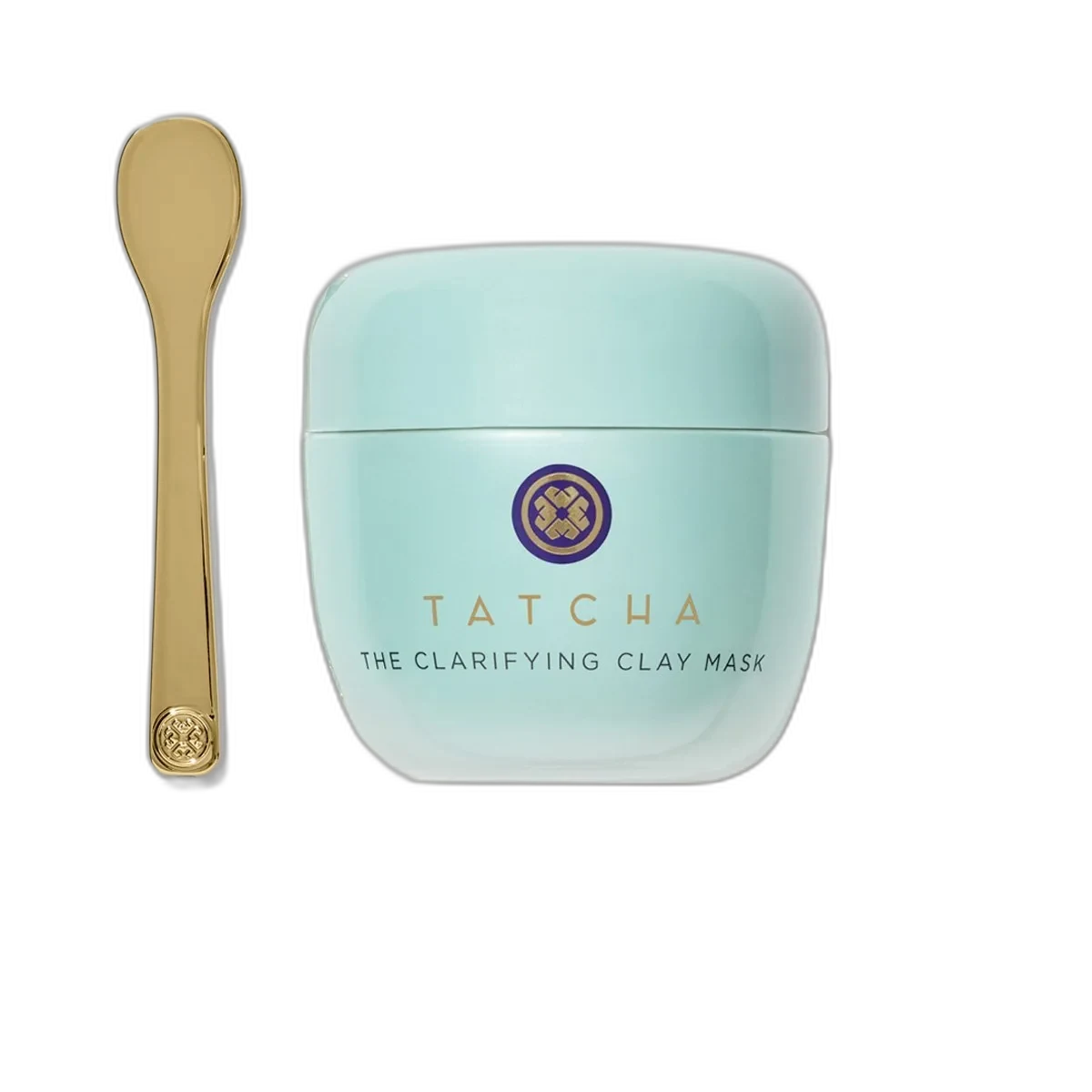
A sage-green glass jar features Tatcha's signature gold-accented lid. A small spatula allows hygienic dispensing. Opaque glass protects the formula from light degradation.
The mask creates a warming sensation as the volcanic soil activates on contact. The color shifts from green to red during the 3-minute treatment. Konjac particles provide a gentle scrub texture during rinse-off. Skin feels smoother, tighter, and less oily immediately. Results show from the first use with no purging period.
2-3 months with twice-weekly use, applying a thin layer to the full face ***
12 months ***
spring summer ***
The backstory.
Tatcha developed this mask around Okinawa kucha clay, a mineral-rich sea sediment found only in the Okinawan seabed. Kucha clay has been used in Okinawan beauty rituals for generations, valued for its ultrafine particle size that allows deeper pore penetration than standard kaolin or bentonite. The warming volcanic soil and color-changing formula were engineered to make the weekly masking step feel like a ritual rather than a chore.
About Tatcha
Established Brand (5–20 years)Vicky Tsai founded Tatcha in 2009, using traditional Japanese beauty rituals. Unilever acquired Tatcha in 2019. The brand uses Japanese botanical ingredients and fermentation science to build a loyal following, but relies on traditional knowledge instead of peer-reviewed clinical trials for its specific products.
Common myths.
Leave clay masks on until they are completely dry to maximize effectiveness
Use this mask for a 3-minute treatment, not until it is bone-dry. Over-drying any clay mask strips the skin barrier and causes rebound oiliness. The volcanic warming and clay absorption in this formula work within minutes. Leaving it on longer does not improve results and may increase irritation.
The warming sensation means the product causes irritation.
Volcanic soil's exothermic reaction with skin moisture creates the warmth, not chemical irritants. This controlled thermal effect opens pores gently. Rinse immediately if the warmth feels uncomfortable or burning; individual tolerance varies.
FAQ.
How does the Tatcha Clarifying Clay Mask change color?
The mask turns from sage green to soft red. This happens because volcanic soil warms and mineral-rich clays react with your skin's oils and moisture. This color change shows the mask is absorbing oil and impurities, usually finishing within the 3-minute treatment window.
Can I use Tatcha Clarifying Clay Mask with retinol?
Yes, but not on the same evening. This mask's triple-clay blend and warming volcanic soil temporarily compromise the skin barrier, just as retinol does. Use the clay mask on nights you skip retinol. Space them at least 24 hours apart to avoid cumulative irritation.
Is Tatcha Clarifying Clay Mask good for acne?
The triple-clay formula absorbs excess oil and the konjac exfoliation prevents pore congestion, which benefits acne-prone skin. This is a cosmetic mask, not a medicated acne treatment—it lacks active acne-fighting ingredients like salicylic acid or benzoyl peroxide. Use it as a supplementary clarifying step alongside your acne treatment routine.
How often should I use Tatcha Clarifying Clay Mask?
Tatcha recommends using this 1-2 times per week. Use it twice weekly for oily skin. For combination skin, once a week manages the T-zone without drying out other areas. Do not use daily; even well-formulated clay masks disrupt the skin barrier if used too often.
Why does Tatcha Clarifying Clay Mask feel warm?
Volcanic soil in the formula creates a warming sensation. It generates mild heat via an exothermic reaction when it touches moisture on your skin. This thermal effect is intentional. It opens pores before the clays absorb oil, making the clarifying process more effective than cold-application clay masks.
Is Tatcha Clarifying Clay Mask suitable for sensitive skin?
This mask is not for sensitive skin. It has fragrance (parfum), alcohol, and known allergens (citral, limonene, linalool). The warming volcanic soil and triple-clay formula also irritate reactive skin. If you have sensitive skin but want a Tatcha mask experience, use the brand's gentler options.
What is kucha clay in the Tatcha mask?
Kucha clay is a mineral-rich sea sediment from the Okinawan seabed, used in local beauty rituals for generations. Its ultrafine particles penetrate pores deeper than standard clays. This mask uses Kucha clay as the illite component, working with kaolin and bentonite to absorb oil.
What the community says.
"Unique warming and color-changing experience feels luxurious"
"Skin looks visibly brighter and smoother after a single use"
"Effectively reduces oiliness without leaving skin feeling stripped"
"Fine konjac texture provides gentle exfoliation during rinse"
"Herbal scent is pleasant and spa-like"
"Very expensive at $74 for a clay mask you use once or twice a week"
"Contains fragrance and alcohol, surprising for a luxury brand"
"Warming sensation can be too intense for some users"
"Not suitable for dry or sensitive skin types"
"Small jar depletes quickly at the recommended layer thickness"
Featured in.
People also looked at.