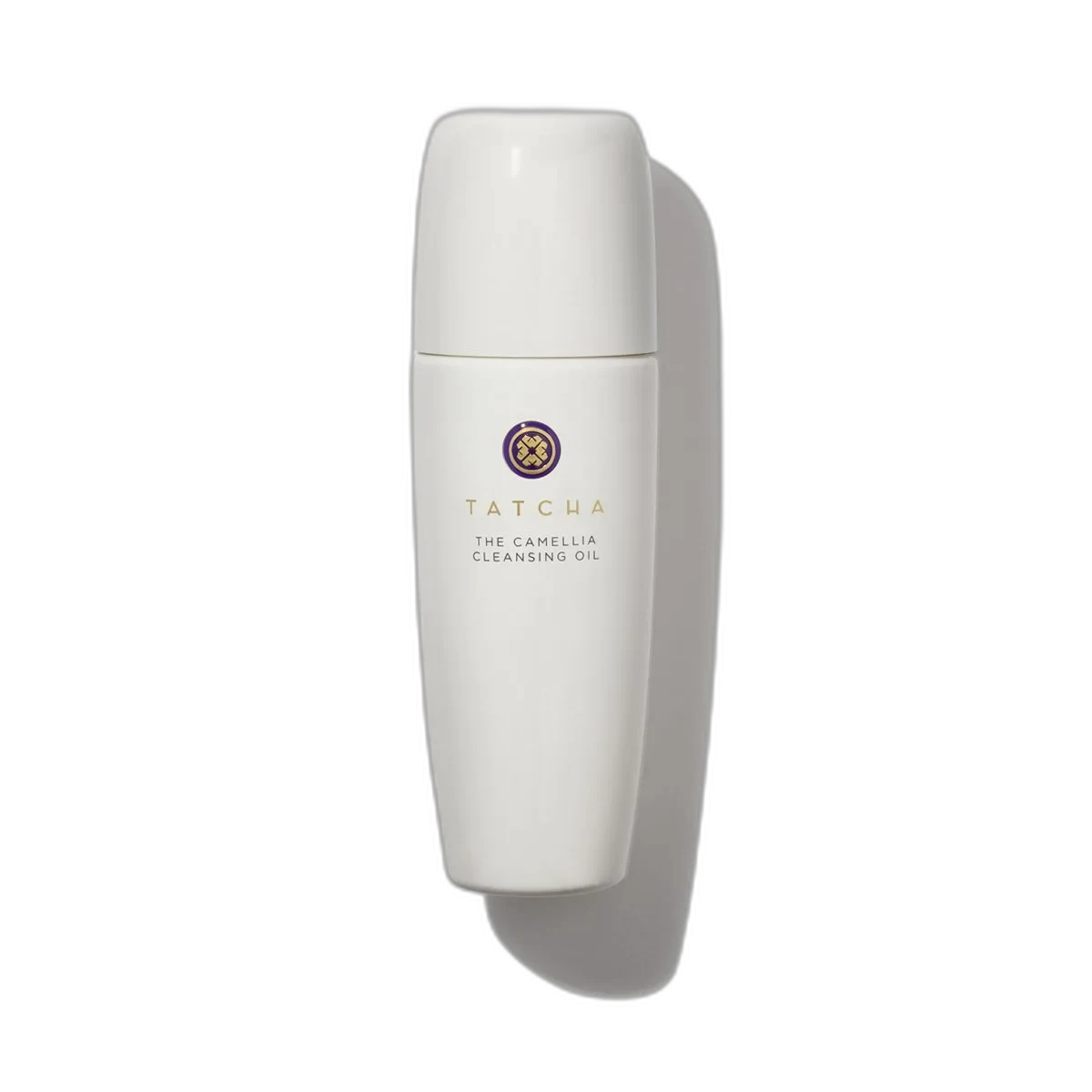
The Camellia Cleansing Oil
Luxury Double-Cleanse Essential
 Verified reviewer
Pros & cons.
- +Remarkably short 17-ingredient INCI list for a luxury product — no filler
- +Camellia japonica oil has documented procollagen-boosting and anti-inflammatory benefits
- +Emulsifies cleanly into a milky rinse with zero greasy residue
- +Dissolves waterproof mascara and heavy sunscreen within 30 seconds
- +Hadasei-3 complex adds genuine skincare benefits to a wash-off step
- +Elegant glass packaging with a reliable gold pump dispenser
- +Leaves skin feeling soft and nourished without any post-cleanse tightness
- −At $50 for 150 ml, this is one of the pricier cleansing oils on the market
- −Contains fragrance plus limonene and citral — not suitable for fragrance-sensitive skin
- −Some users report breakouts despite non-comedogenic marketing claims
- −Not truly a one-step cleanser — most users still need a second cleanse
- −Glass packaging, while premium, is not travel-friendly or shower-safe
The full review.
There is something quietly satisfying about learning that the product you are massaging into your foundation-coated face traces its lineage to Kyoto geisha removing layers of white oshiroi powder with tsubaki oil. When Vicky Tsai launched Tatcha in 2009, she built the entire brand around this insight — and The Camellia Cleansing Oil was one of the first three products to embody it. Over a decade later, it remains the brand’s most practical manifestation of that founding philosophy.
The formula is notable for what it is not. At just 17 ingredients, this is one of the shortest INCI lists you will find in the luxury cleansing category. There are no mineral oils, no synthetic fragrance cocktails pretending to be botanical, no filler ingredients padding out the label. The base is built on rice bran oil — rich in gamma-oryzanol and ferulic acid — with camellia japonica seed oil providing the signature skin-conditioning benefits that Japanese women have relied on for centuries.
In practice, the texture is lighter than you might expect from an oil cleanser. Two to three pumps glide across dry skin with a silky, almost weightless feel. The oil grabs onto makeup, sunscreen, and the accumulated debris of a long day with impressive efficiency. Waterproof mascara dissolves within about thirty seconds of gentle massage. The real magic, though, happens when you introduce water. The polyglyceryl emulsifiers transform the oil into a milky white emulsion that rinses clean without any of the greasy film that cheaper cleansing oils leave behind.
What sets this apart from the typical luxury oil cleanser is Tatcha’s Hadasei-3 complex — a trio of Japanese superfoods woven into the formula. The saccharomyces and rice ferment filtrate delivers amino acids and peptides that support barrier function. Green tea extract contributes EGCG polyphenols for antioxidant protection. And Okinawa mozuku algae adds fucoidan-rich hydration. For a product that spends maybe ninety seconds on your face before being rinsed away, that is a genuinely thoughtful ingredient stack.
The experience is where this product earns its luxury credentials. The subtle botanical scent — a gentle citrus-floral note — feels considered rather than overwhelming. The gold pump dispenser on the frosted glass bottle works flawlessly every time, which matters more than you think when your hands are slippery. After rinsing, skin feels clean but genuinely nourished, not stripped or tight. It is the opposite of that squeaky-clean feeling that makes dermatologists wince.
Research supports the choice of star ingredient. A 2007 study in the Journal of Ethnopharmacology found that camellia japonica oil stimulated type I procollagen synthesis and reduced transepidermal water loss in 30 volunteers. A 2012 study in BMB Reports demonstrated significant anti-inflammatory activity. These are not earth-shattering findings, but they confirm that tsubaki oil does more than just dissolve grime — it actively supports the skin it touches.
The honest limitations are straightforward. At fifty dollars for five ounces, this is an expensive way to wash your face. The product lasts about two to three months with nightly use, which works out to roughly fifty cents per cleanse — reasonable by luxury standards, but still a hard sell if you view cleansers as purely utilitarian. The inclusion of fragrance, along with limonene and citral, means this is not the choice for anyone with known fragrance sensitivities. And despite Tatcha’s marketing as a one-step cleanser, most users find they still need a water-based second cleanse to feel truly clean, particularly after heavy makeup days.
There is also the breakout question. A small but consistent minority of reviewers report cystic acne developing after a few days of use. While the formula is marketed as non-comedogenic and dermatologist-tested, the polyglyceryl emulsifiers are flagged as potentially problematic for those prone to fungal acne, and oil cleansers in general can be tricky for highly acne-prone skin. If you are breakout-prone, patch testing for a full week is wise.
The value calculation ultimately depends on what you want from your cleansing step. If you view it as a purely functional task — remove stuff, move on — there are excellent cleansing oils at a fraction of this price. But if your evening cleanse is a ritual you look forward to, if the texture and scent and packaging contribute to an experience that makes you actually want to take your makeup off instead of falling asleep in it, then Tatcha has built something that delivers on its promise. The formula is genuinely good, the ingredient list is impressively restrained, and the Japanese botanical tradition it draws from is more than marketing copy — it is backed by real research and real history.
Formula
Texture
In practice, the texture is lighter than you might expect from an oil cleanser. Two to three pumps glide across dry skin with a silky, almost weightless feel.
Scent
The subtle botanical scent — a gentle citrus-floral note — feels considered rather than overwhelming.
Common Praise
After rinsing, skin feels clean but genuinely nourished, not stripped or tight.
Common Complaints
The inclusion of fragrance, along with limonene and citral, means this is not the choice for anyone with known fragrance sensitivities. And despite Tatcha’s marketing as a one-step cleanser, most users find they still need a water-based second cleanse to feel truly clean, particularly after heavy makeup days.
Not ideal for
If you are breakout-prone, patch testing for a full week is wise.
Ingredient analysis.
Full INCI list
Cetyl Ethylhexanoate, Oryza Sativa (Rice) Bran Oil, Polyglyceryl-10 Dioleate, Polyglyceryl-2 Sesquicaprylate, Camellia Japonica Seed Oil, Saccharomyces/Rice Ferment Filtrate, Camellia Sinensis Leaf Extract, Cladosiphon Okamuranus Extract, Aqua/Water/Eau, Glyceryl Behenate/Eicosadioate, Propanediol, Tocopherol, Ethylhexylglycerin, Parfum/Fragrance, Phenoxyethanol, Limonene, Citral
Skin match.
The science.
The Science
Camellia japonica seed oil is the star ingredient, and research supports its dermatological benefits. A 2007 study in the Journal of Ethnopharmacology by Jung et al. shows the oil activates the COL1A2 promoter in a concentration-dependent manner, increases type I procollagen synthesis, and inhibits MMP-1 (the enzyme that breaks down collagen). In a clinical part of that study, topical application to 30 human volunteers reduced transepidermal water loss without adverse reactions, confirming its safety and barrier-repair profile.
A 2012 study in BMB Reports by Kim et al. examined camellia oil's anti-inflammatory properties. It found the oil suppresses nitric oxide, PGE2, and TNF-alpha production by downregulating iNOS and COX-2 gene expression through inhibition of NF-kB and AP-1 signaling pathways. This anti-inflammatory mechanism matters during cleansing, when massage and surfactant exposure can trigger low-grade inflammation.
The rice bran oil base adds more evidence-backed benefits. Gamma-oryzanol, a unique component of rice bran, shows UV-protective and antioxidant activity in multiple studies. The fermented rice filtrate in the Hadasei-3 complex shares a lineage with sake ferments that Japanese researchers have studied for skin-brightening and hydrating effects, though the specific Saccharomyces/Rice Ferment Filtrate used here has limited product-specific clinical data. The EGCG from the green tea component is one of the most studied botanical antioxidants in dermatology and has well-documented photoprotective and anti-inflammatory effects.
References
- Effect of Camellia japonica oil on human type I procollagen production and skin barrier function — Journal of Ethnopharmacology (2007)
- Anti-inflammatory activity of Camellia japonica oil — BMB Reports (2012)
Dermatologist Perspective
Dermatologists favor oil cleansing for dry and normal skin types because it preserves the skin's natural lipid barrier better than foaming surfactant-based cleansers. The camellia and rice bran oil base in this formula works for most skin types, and the emulsifying system ensures clean removal without residue. Board-certified dermatologists note the short ingredient list reduces sensitization risk compared to complex formulations. However, dermatologists typically recommend this as the first step of a double cleanse rather than a standalone wash. They advise patients with active acne or fungal acne to use oil cleansers with caution, as occlusive ingredients can exacerbate these conditions.
Where it fits in your routine.
Apply 2-3 pumps to dry hands and a dry face. Massage in circles for 30-60 seconds, focusing on areas with heavy makeup or sunscreen. Add lukewarm water and massage until the oil turns into a milky emulsion. Rinse well. Use a water-based cleanser next for a complete double cleanse. Use once daily in the evening. Keep the oil away from eyes — if contact occurs, rinse with water immediately.
At $50 for 150 ml, this cleansing oil is a premium product — about 50 cents per nightly use. The travel size ($20 for 50 ml) costs less upfront but has worse per-ounce value. Tatcha has existed since 2009 and manufactures in Japan, which justifies the price. The formula uses quality botanical oils and a short ingredient list to deliver on its promises. However, you wash the product off your face within ninety seconds, and excellent cleansing oils cost half this much. The value comes from the experience — the packaging, the texture, the ritual — and the proven ingredient quality.
This works for anyone wearing daily makeup or sunscreen who wants a gentle, nourishing first cleanse that removes everything without stripping the skin. It suits dry, normal, and combination skin types who want a thick evening skincare ritual.
Skip this if you have known fragrance allergies or sensitivities to limonene or citral. People with fungal acne should avoid it because of problematic emulsifiers. If you view cleansing as purely functional and object to paying $50 for a wash-off product, spend your money on treatment products instead.
Product details.
This lightweight, silky oil flows easily and turns into a soft milky emulsion when water touches it. It is not thick or viscous like some cleansing balms.
Light botanical fragrance uses camellia and green tea extracts for subtle citrus-floral notes, plus limonene and citral.
A frosted glass bottle has a gold pump dispenser and Tatcha's signature purple and gold Japanese-inspired design. The pump controls dispensing and the glass feels premium.
The oil feels silky and lightweight on dry skin during first use. It dissolves makeup quickly as you massage it in. Adding water turns the oil into a milky white emulsion. Skin feels soft and clean immediately after rinsing — no adjustment period is needed.
2-3 months with nightly use, using 2-3 pumps per cleanse
12 months
All Year
The backstory.
This was among the first three products Tatcha ever released, born from founder Vicky Tsai's discovery that geisha in Kyoto used camellia oil as a cleansing and conditioning staple. The formula represents Tatcha's founding philosophy of merging centuries-old Japanese beauty wisdom with modern formulation science, and it remains one of the brand's anchor products over a decade later.
About Tatcha
Established Brand (5–20 years)Vicky Tsai founded Tatcha in 2009, inspired by traditional Japanese beauty rituals. Unilever now owns the brand. Tatcha formulates and manufactures in Japan and sells at Sephora and Ulta, but has less clinical research than dermatologist-developed brands.
Common myths.
Oil cleansers clog pores and cause breakouts
This cleansing oil emulsifies and rinses clean. The oil dissolves sebum and impurities using the 'like dissolves like' principle. Polyglyceryl emulsifiers ensure it washes away without leaving pore-clogging residue.
You don't need to double cleanse if you use an oil cleanser
This oil removes makeup and sunscreen well. Most dermatologists recommend a water-based cleanser afterward to remove all emulsified residue, especially for acne-prone skin.
FAQ.
Does the Tatcha Camellia Cleansing Oil remove waterproof mascara?
The camellia and rice bran oil base dissolves waterproof mascara and long-wear makeup. Massage the oil onto dry skin around the eye area, then add water to emulsify before rinsing. A 30-second massage works for stubborn waterproof formulas.
Can I use the Tatcha Camellia Cleansing Oil if I have oily skin?
Yes — this oil cleanser works on the principle that oil dissolves oil, making it effective at removing excess sebum. The polyglyceryl emulsifiers ensure it rinses completely clean without leaving oily residue. Follow with a water-based cleanser to keep pores clear.
Is the Tatcha Camellia Cleansing Oil fragrance-free?
No, this product contains Parfum/Fragrance, Limonene, and Citral, which are EU-regulated fragrance allergens. The scent is subtle and botanical. People with fragrance sensitivities should patch test or choose a fragrance-free alternative.
Do I need to double cleanse after using this oil?
Tatcha markets this as a 2-in-1 cleanser, but most skincare professionals recommend a gentle water-based cleanser afterward — especially if you wear heavy makeup or sunscreen. The oil step removes surface impurities and the second cleanse addresses what remains.
How does camellia oil benefit the skin?
Camellia japonica seed oil has 80-85% oleic acid and vitamins A, D, and E. Research in the Journal of Ethnopharmacology shows it stimulates procollagen production, inhibits collagen-degrading MMP-1 enzymes, and reduces transepidermal water loss. This formula uses it as a cleanser and a skin-nourishing treatment.
Is the Tatcha Camellia Cleansing Oil safe during pregnancy?
This cleansing oil lacks retinoids, salicylic acid, or other common pregnancy-flagged ingredients. It does contain fragrance, which some pregnant individuals avoid. Consult your healthcare provider for personalized advice.
How long does the Tatcha Camellia Cleansing Oil last?
The full-size 150 ml bottle lasts 2-3 months if you use 2-3 pumps every night. A 50 ml travel-size option costs $20 for those testing it before buying the full size.
Community
What the community says.
"Effortlessly removes waterproof makeup and heavy sunscreen in one step"
"Leaves skin feeling soft, hydrated, and nourished without any greasy residue"
"Lightweight silky texture that emulsifies cleanly with water"
"Elegant pump packaging makes dispensing easy and hygienic"
"Subtle botanical scent that feels luxurious without being overpowering"
"Does not cause the tight stripped feeling common with other cleansers"
"Premium price point of $50 is steep for a cleanser that lasts 2-3 months"
"Contains fragrance and fragrance allergens that may irritate sensitive skin"
"Some users report breakouts after extended use despite non-comedogenic claims"
"Not sufficient as a standalone cleanser for very heavy makeup days"
People also looked at.