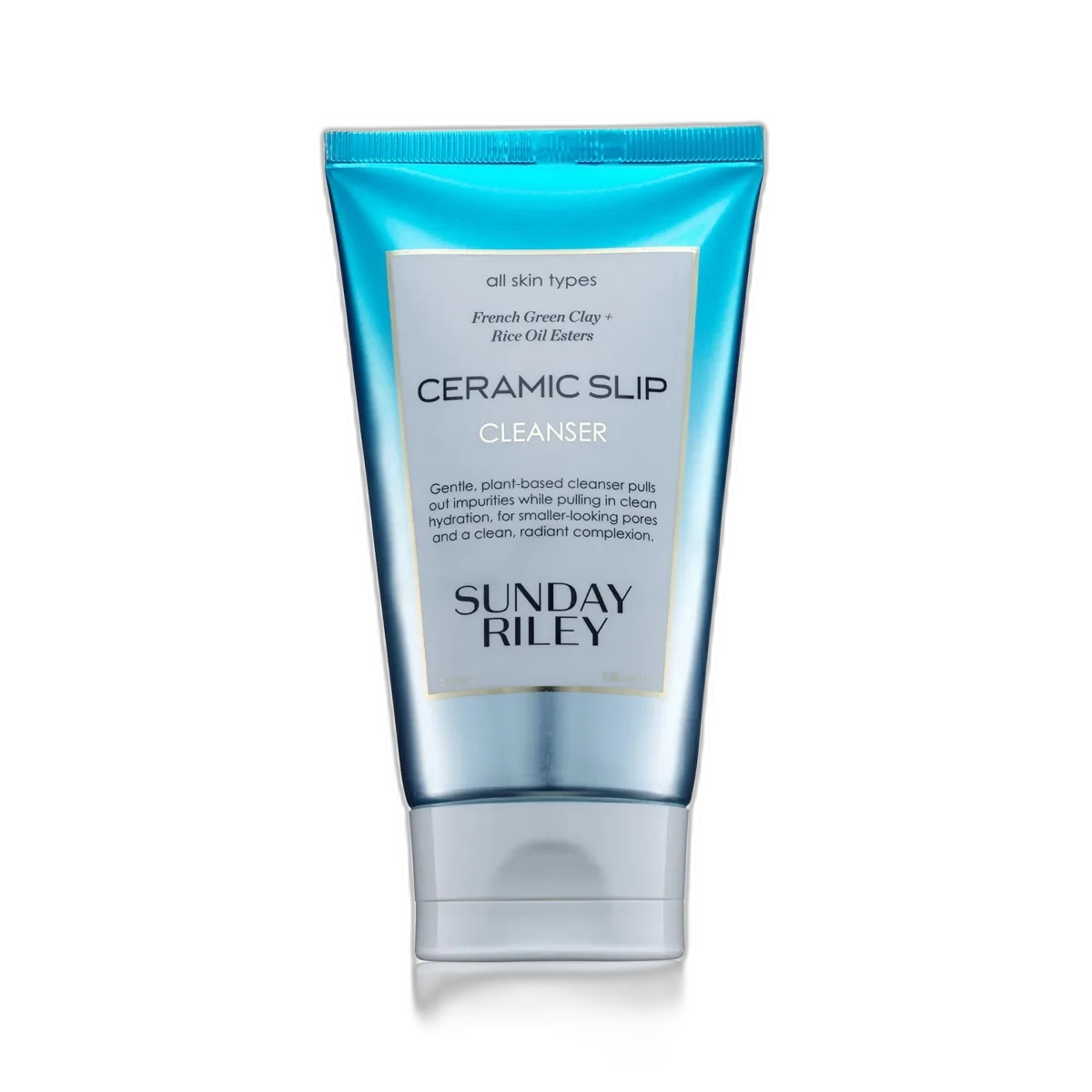
Ceramic Slip Clay Cleanser
Gentle Clay Daily Cleanser
 Verified reviewer
Pros & cons.
- +Dual clay system purifies pores without the drying effect of typical clay products
- +Multi-surfactant gentle cleansing system with an ideal pH of 5.0
- +Phospholipids and oil esters actively protect the skin barrier during cleansing
- +Bisabolol provides anti-inflammatory soothing backed by published research
- +Versatile — functions as both a daily cleanser and a short-contact mask
- +Sulfate-free formulation suitable for daily use on combination and oily skin
- −Premium price of $7 per ounce for a product that rinses off in 60 seconds
- −Contains Methylisothiazolinone — a documented allergen even at rinse-off levels
- −Reformulation removed the distinctive essential oil scent that original fans loved
- −Not effective as a first-step cleanser for heavy makeup or waterproof sunscreen
- −Slippery tube packaging prone to leaking if cap isn't properly sealed
The full review.
Sunday Riley launched the original Ceramic Slip Clay Cleanser in 2009. Users loved it for the wrong reasons. A blend of neroli, black pepper, frankincense, jasmine, and sandalwood essential oils made washing feel like aromatherapy. People praised the scent and the ritual. Then, Sunday Riley reformulated it around 2018. They removed the essential oils and softened the surfactant system. The new version is objectively gentler and safer for more skin types, but the internet reacted with fury.
This backlash shows the gap between luxury feel and skin health. The original essential oils are documented sensitizers that cause irritation, photosensitivity, and contact dermatitis over time. The new formula replaces sensory indulgence with functional ingredients: rice oil esters and olive oil esters for barrier protection, a milder surfactant system, and a minimal-scent profile. It is a better cleanser, even if it lost its personality.
The dual clay system makes Ceramic Slip interesting. Kaolin and montmorillonite (French green clay) purify pores differently. Kaolin is gentle; it absorbs surface sebum without the intense drying seen in bentonite or activated charcoal. Montmorillonite has a high adsorption capacity to pull impurities from deep within pores. Together, they provide meaningful purification in a daily-use format, unlike most clay products designed as weekly masks.
The surfactant system shows the formulation’s sophistication. Instead of one surfactant doing all the work, Ceramic Slip uses multiple gentle molecules: Sodium Cocoyl Isethionate (one of the mildest surfactants available), Disodium Laureth Sulfosuccinate, Sodium Methyl Cocoyl Taurate, and Sodium Lauroamphoacetate. This multi-surfactant approach uses lower effective concentrations for each molecule, reducing irritation potential. A pH of 5.0 stays close to the skin’s natural acid mantle.
The barrier-protection layer sets this apart from typical clay cleansers. The cleanser deposits phospholipids—skin-identical lipids—while removing impurities. Rice oil and olive oil esters add emollient conditioning. Bisabolol, a chamomile-derived anti-inflammatory, inhibits pro-inflammatory cytokines TNF-alpha and IL-6 to soothe the skin. The design extracts oil, dirt, and pollution while preserving the skin’s lipid barrier, acid mantle, and hydration.
The experience is quiet and effective. The cleanser has a creamy, slightly viscous gel texture that produces minimal lather—a silky wash rather than a foam. It may feel under-powered if you expect sulfate-style suds, but it isn’t. The clays and surfactants work without theatrical foam. After rinsing, skin feels clean, soft, and lacks residue or film. No tightness means the barrier-protection strategy works.
For extra purification, apply the cleanser to dry skin and leave it for one to two minutes as a short-contact mask. This gives the clays more time to draw out impurities. Because the formula is gentle, it won’t leave skin parched or tight like a traditional clay mask.
Methylisothiazolinone (MI) is in the ingredient list. MI is a documented contact allergen banned by the EU in leave-on products. In a rinse-off cleanser, exposure lasts only 30-60 seconds, which reduces sensitization risk. Dermatological guidance generally accepts MI in rinse-off products at low concentrations. However, those with known MI sensitivity or contact dermatitis should be aware.
The white squeeze tube packaging is functional but leaks easily due to the slippery formula. Some reviewers suggest double-checking the cap seal. This is a minor annoyance that affects use but not the product itself.
At $35 for five ounces, Ceramic Slip costs about $7 per ounce. This is a premium price for a rinse-off cleanser that goes down the drain. The gentle surfactant system, dual clay purification, and barrier-protective ingredients justify a higher price than drugstore cleansers, but the gap is large. One tube lasts two to three months with twice-daily use, making the monthly cost roughly $12-18.
Ceramic Slip fills a niche: a daily clay cleanser for pore purification without barrier damage. It is not a deep-cleaning mask or a makeup remover. It aims to keep oily and combination skin clear and balanced daily without causing dehydration, barrier disruption, or reactive oiliness. In that role, it is well-designed.
Ingredient analysis.
Full INCI list · pH 5
Water/Aqua/Eau, Octyldodecanol, Propanediol, Polyglyceryl-2 Caprate, Polyacrylate-33, Disodium Laureth Sulfosuccinate, Sodium Cocoyl Isethionate, Propylene Carbonate, Disteardimonium Hectorite, Caprylyl Glycol, Kaolin, Montmorillonite, Olive Oil Polyglyceryl-6 Esters, Rice Oil Glycereth-8 Esters, Sodium Phytate, Xanthan Gum, Pentylene Glycol, Sodium Lauroamphoacetate, Sodium Methyl Cocoyl Taurate, Coconut Acid, Laureth-10, Trisodium Sulfosuccinate, Sodium Chloride, Phospholipids, Propylene Glycol, Benzoic Acid, Sodium Xylenesulfonate, Dehydroacetic Acid, PVP, Bisabolol, Citrus Aurantium Amara Flower Extract, Sodium Citrate, Methylisothiazolinone
Skin match.
The science.
The Science
Ceramic Slip uses two complementary mineral technologies in its dual clay system. Kaolin is a hydrated aluminum silicate clay with low cation exchange capacity; it absorbs surface sebum gently without pulling moisture from the skin. Montmorillonite (the primary component of French green clay) has a higher adsorption capacity because its layered crystalline structure creates a large surface area to bind toxins, heavy metals, and inflammatory mediators. A 2024 PMC review on calcium montmorillonite shows it binds these substances at the skin surface without systemic absorption.
A 2023 study in Skin Research and Technology evaluated kaolin-containing facial cleansing formulations. It found a 46-66% reduction in comedones by week 4, a 69% reduction in sebum immediately post-treatment, a 30% improvement in hydration, and a 20% decrease in transepidermal water loss. These results support using kaolin in daily cleansing products, especially since hydration improved—showing the formulation's barrier-protective ingredients work.
Bisabolol, the chamomile-derived soothing agent in the formula, has strong evidence for anti-inflammatory activity. A 2014 study in Current Pharmaceutical Biotechnology (Maurya et al.) shows alpha-bisabolol dose-dependently inhibited production of TNF-alpha and IL-6—two key pro-inflammatory cytokines—and reduced TPA-induced inflammation in a mouse model. A 2022 review in Molecules confirmed bisabolol's anti-inflammatory, antimicrobial, and wound-healing properties across multiple experimental models.
The surfactant system is notable. Sodium Cocoyl Isethionate is one of the mildest surfactants in cosmetic chemistry; clinical studies show it produces less barrier disruption than sodium lauryl sulfate at comparable cleansing efficacy. The multi-surfactant approach (combining SCI with Disodium Laureth Sulfosuccinate and Sodium Methyl Cocoyl Taurate) distributes the cleansing load, lowering the effective concentration of each individual surfactant to minimize potential irritation.
References
- Comprehensive assessment of the efficacy and safety of a clay mask in oily and acne skin — Skin Research and Technology (2023)
- Alpha-(-)-bisabolol reduces pro-inflammatory cytokine production and ameliorates skin inflammation — Current Pharmaceutical Biotechnology (2014)
Dermatologist Perspective
Board-certified dermatologists generally support gentle clay-based cleansers for oily and combination skin types, noting that the surrounding formulation differentiates beneficial clay products from harmful ones. A clay cleanser with barrier-protective lipids and gentle surfactants at an appropriate pH—which Ceramic Slip provides—helps manage sebum production and pore congestion without the rebound oiliness harsh cleansers cause. Dermatologists note Methylisothiazolinone with awareness but generally consider it acceptable in rinse-off products at low concentrations, though patients with known MI sensitivity should avoid it. The pH of 5.0 is favorable; cleansers with a pH above 7 can disrupt the acid mantle and increase bacterial colonization susceptibility.
Where it fits in your routine.
Product details.
The reformulated version is mostly fragrance-free, with a faint botanical note from the neroli (Citrus Aurantium Amara) extract. The original formula used neroli, black pepper, frankincense, jasmine, and sandalwood essential oils; loyal users often miss this complex scent.
White squeeze tube with a 5 fl oz flip-top dispensing cap. The viscous, slippery formula leaks if the cap is not sealed properly. The previous version used a pump bottle design.
The first use feels gentler than typical clay cleansers — no tightness or dryness, only clean, smooth skin. The minimal lather feels different if you use foaming cleansers. Skin feels balanced and soft right after patting dry. The difference from harsh clay masks shows after the first wash.
2-3 months with twice-daily use
12 months
All Year
The backstory.
Ceramic Slip was one of Sunday Riley's first products, launching alongside the brand in 2009. The name references the liquid clay ('slip') used in ceramics to create smooth, refined surfaces — a metaphor for what the cleanser does to pores. The original formula featured a complex essential oil blend that earned a devoted following, but a 2018 reformulation removed most essential oils in favor of a gentler, more inclusive formulation. Long-time fans were divided, but the reformulation aligned with the industry's move away from fragrant essential oils in skincare.
About Sunday Riley
Established Brand (5–20 years)Cosmetic chemist Sunday Riley founded Sunday Riley in 2009 in Houston, Texas. Ceramic Slip is an original launch product and underwent reformulation around 2018. Sunday Riley has PETA and Leaping Bunny certifications and B Corporation status, though the 2020 FTC fake review settlement is relevant brand context.
Common myths.
Clay cleansers are too drying for daily use.
Many clay masks and pure clay washes dry the skin, but Ceramic Slip counteracts this. The phospholipids, rice oil esters, and olive oil esters replenish the lipid barrier while the clays remove excess sebum. This purifies skin without dehydration — though very dry skin types may still need a hydrating toner.
Cleansers that do not foam much do not clean effectively.
Surfactant type, not cleaning power, determines foam volume. The sulfate-free surfactants in Ceramic Slip (Sodium Cocoyl Isethionate, Disodium Laureth Sulfosuccinate) produce little lather but dissolve oil and debris. Sulfate-heavy cleansers foam more but often damage the skin barrier.
FAQ.
Can I use the Sunday Riley Ceramic Slip as a mask?
Yes — apply a thin layer to dry skin and leave for 1-2 minutes before rinsing. The dual clay system (kaolin and montmorillonite) purifies deeper with more contact time. This is gentler than a traditional clay mask, so combination skin tolerates the short-contact mask approach without excessive drying.
Is the Ceramic Slip good for acne-prone skin?
The dual clay system absorbs excess sebum and keeps pores clear to help manage acne. The sulfate-free surfactants and pH of 5.0 do not aggravate a compromised barrier. This is a gentle cleanser, not an acne treatment — use it with targeted actives like salicylic acid or benzoyl peroxide for active breakouts.
Why was the Ceramic Slip reformulated?
Around 2018, Sunday Riley removed most essential oils (black pepper, frankincense, jasmine, sandalwood) and used a gentler surfactant system. This reformulation works better for sensitive and reactive skin types, but fans of the original's scent and aggressive cleansing feel disliked the change.
Does the Ceramic Slip remove makeup?
It removes light makeup and daily grime, but it does not remove heavy foundation, waterproof mascara, or tenacious sunscreen. Use an oil cleanser or micellar water first, then use Ceramic Slip as your second cleanse. The clay components target skin-level impurities instead of surface cosmetics.
Is the Ceramic Slip too drying for dry skin?
Phospholipids, rice oil esters, and olive oil esters prevent over-drying by protecting the skin barrier during cleansing. Most dry skin types use it comfortably once daily (evening), but twice-daily use may be too frequent. Apply a hydrating toner and moisturizer immediately after to replenish moisture.
Community
What the community says.
"Removes dirt and oil effectively without leaving skin feeling stripped or tight"
"Skin feels genuinely soft and smooth after rinsing"
"Pores appear visibly smaller with consistent daily use"
"Gentle enough for daily use without disrupting the skin barrier"
"Versatile — works as both a daily cleanser and a short-contact mask"
"Reformulation disappointed fans of the original essential oil-scented version"
"Premium price of $7 per ounce is steep for a rinse-off cleanser"
"Slippery viscous texture can leak from the packaging"
"Not effective at removing heavy sunscreen or waterproof makeup alone"
"Some users with oily skin paradoxically report dryness after use"
People also looked at.