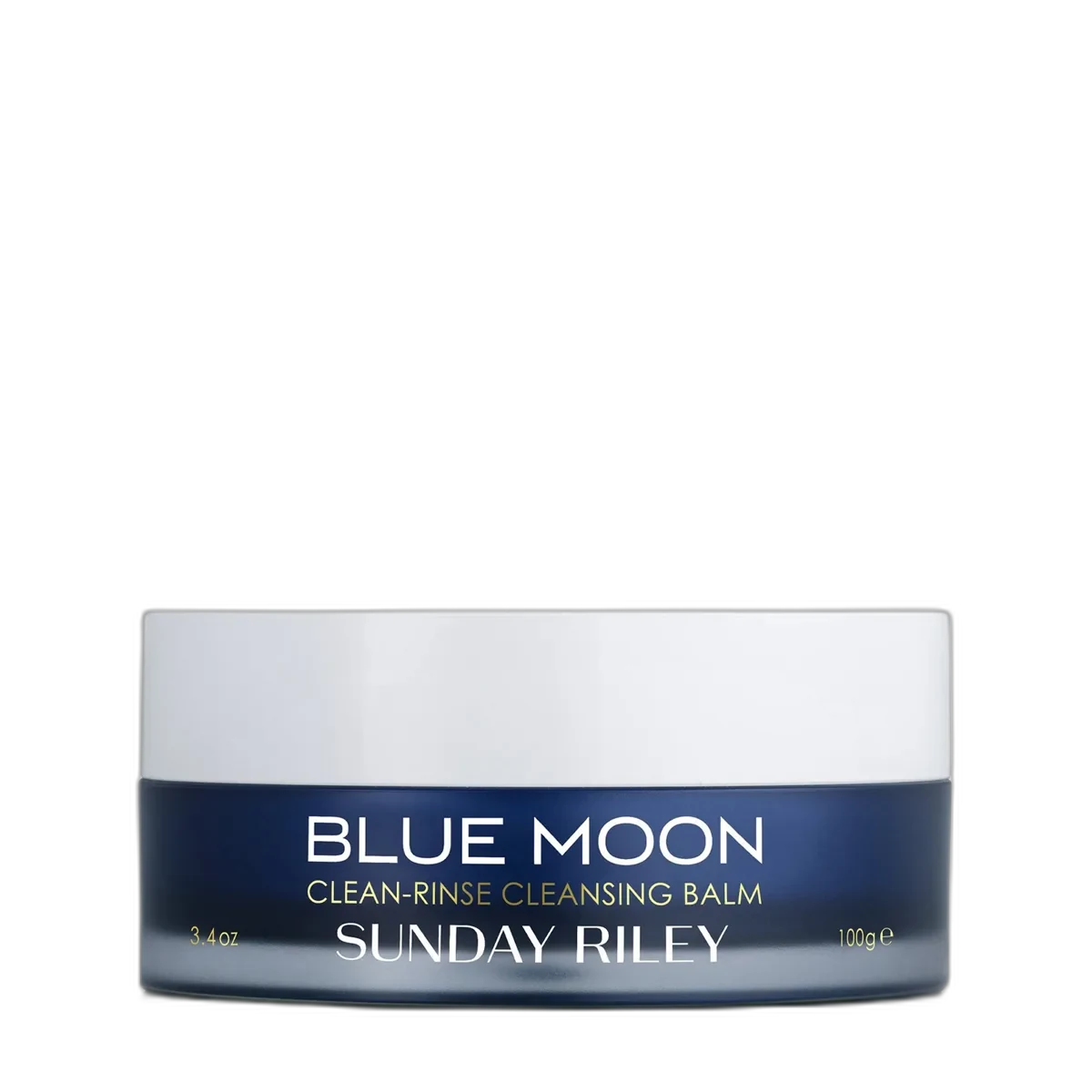
Blue Moon Tranquility Cleansing Balm
Botanical Ritual Cleanser
 Verified reviewer
Pros & cons.
- +Natural chamazulene from blue tansy and German chamomile provides genuine anti-inflammatory soothing
- +Sugar-based surfactant system cleanses thoroughly without stripping the skin barrier
- +Skin feels genuinely moisturized and soft after rinsing — never tight or dry
- +Stunning natural blue color creates a visually unique and memorable product experience
- +Versatile as both a first cleanse and a hydrating face mask for extended use
- +Silicone-free, paraben-free, sulfate-free from a B Corp certified brand
- −Seven essential oils create significant sensitization risk for fragrance-allergic users
- −Cocoa butter (comedogenicity rating 4/5) may trigger breakouts in acne-prone skin
- −Waxy texture has less glide than many popular cleansing balms — some find it sticky
- −At $50 for a wash-off product, the price is a hard sell for budget-conscious consumers
- −Contains beeswax — not vegan despite the brand's cruelty-free certification
- −May not fully remove stubborn waterproof liquid liner without a second cleanse
The full review.
About Sunday Riley
Launched in October 2015, Blue Moon arrived at the intersection of two trends: the Western adoption of K-beauty-inspired double cleansing, and the growing consumer appetite for products that feel like rituals rather than routines.
Myth
None explicitly stated.
Reality
The formula centers on blue tansy (Tanacetum annuum) and German chamomile (Matricaria recutita), both of which contain chamazulene — the compound responsible for the blue hue and the anti-inflammatory claims. A 2024 review in Current Functional Foods summarized the available evidence on blue tansy’s constituents and documented “strong anti-inflammatory properties” from chamazulene, along with antibacterial qualities. However, the review also acknowledged that no formal clinical trials on human skin subjects have been published. The evidence sits between traditional use and emerging science — more substantive than pure folklore, less robust than the clinical validation behind ingredients like niacinamide or retinol.
How to Use
Massage onto dry skin to dissolve makeup and impurities, then rinse with warm water. Can also be used as a hydrating mask.
Who Should Buy
Blue Moon is not for the practical consumer who views cleansing as a functional task to complete efficiently. It is for the person who believes that the ten minutes they spend on their evening skincare routine deserve to feel special — who wants to open a jar, see a vivid blue, smell a complex botanical garden, and feel the day dissolving away under their fingertips. That desire is entirely valid, and for that consumer, Blue Moon delivers an experience that no other cleanser replicates.
Texture
The texture is polarizing. Blue Moon is richer and waxier than the silky, sherbet-like cleansing balms that have become mainstream. There is a slight graininess from the sugar-based particles that provides gentle physical exfoliation. Some users find this tactile variety luxurious and interesting. Others find it sticky, lacking the easy glide they expect from a cleansing balm. If your reference point is a Korean cleansing balm that melts like butter on contact, Blue Moon’s thicker, more deliberate texture will be an adjustment.
Scent
The essential oil blend demands discussion. Seven distinct essential oils — tangerine, sweet orange, blue tansy, German chamomile, ylang ylang, neroli, and Roman chamomile — create a complex herbal-citrus-floral aroma that is pronounced and unmistakable. Sunday Riley has sometimes positioned the product as having no added synthetic fragrance, which is technically true. But the essential oils function as fragrance, they contain allergenic compounds (limonene, linalool), and for anyone with essential oil sensitivities, the concentration here is significant. The citrus oils in particular raise photosensitivity concerns, though as a PM-use product, this is less problematic than it would be in a morning cleanser.
Packaging
Not explicitly stated.
Best Season
The mask-mode application is particularly satisfying during dry winter months when skin craves both moisture and calm.
Common Praise
Multiple reviewers confirm effective single-pass removal of standard makeup.
Common Complaints
Not explicitly stated.
Pairs Well With
Not explicitly stated.
Conflicts With
Not explicitly stated.
Best for
For dry and normal skin types, this transforms an otherwise unremarkable nightly task into something that skin looks forward to.
Works for
Skin that is irritated, sensitized, or simply tired at the end of a long day feels calmed during the massage-and-rinse process.
Not ideal for
Where it falls short is with truly stubborn waterproof liquid liners and heavy theatrical makeup — for those, a second water-based cleanser is necessary. For acne-prone skin, even the temporary presence of a highly comedogenic ingredient on the face can contribute to clogged pores, particularly if the balm is not rinsed thoroughly or if it is used as a leave-on mask.
AM routine
Not explicitly stated.
PM routine
As a PM-use product, this is less problematic than it would be in a morning cleanser.
Ingredient analysis.
Full INCI list
Caprylic/Capric Triglyceride, Sucrose Laurate, Jojoba Esters, Acacia Decurrens Flower Wax, Glycerin, Helianthus Annuus (Sunflower) Seed Wax, Polyglycerin-3, Glyceryl Behenate, C10-18 Triglycerides, Theobroma Cacao (Cocoa) Seed Butter, PEG-8 Beeswax, Cetyl Alcohol, Ceteth-20, Steareth-20, Polyglyceryl-6 Distearate, Polyglyceryl-3 Beeswax, Squalene, Tangerine (Citrus Tangerina) Oil, Citrus Sinensis (Sweet Orange) Oil, Tanacetum Annuum (Blue Tansy) Leaf Oil, Matricaria Recutita (German Chamomile) Essential Oil, Vanilla Planifolia Fruit Extract, Ylang Ylang (Cananga Odorata) Flower Oil, Citrus Aurantium Var. Amara (Neroli) Flower Oil, Anthemis Nobilis (Chamomile Roman) Flower Oil, Phenoxyethanol, Moringa Oil/Hydrogenated Moringa Oil Esters, Chlorphenesin, Caprylyl Glycol
Skin match.
The science.
The Science
The anti-inflammatory claims for Blue Moon center on chamazulene, a sesquiterpene compound present in both blue tansy (Tanacetum annuum) and German chamomile (Matricaria recutita) essential oils. Chamazulene forms during steam distillation from matricine, a precursor compound in the plant material. A 2024 review in Current Functional Foods summarized the pharmacological profile of blue tansy oil, documenting strong anti-inflammatory activity attributed to chamazulene's ability to inhibit leukotriene B4 synthesis — a key inflammatory mediator. The review also noted antibacterial properties from other constituents including sabinene and myrcene.
However, the evidence base for blue tansy specifically applied to skin remains in the emerging category. No formal randomized controlled trials on human skin subjects have been published for blue tansy oil. The anti-inflammatory mechanism of chamazulene is well-characterized in vitro, but clinical validation in dermatological applications is limited to anecdotal and case-based evidence, including a 2015 finding in Clinical Aromatherapy documenting blue tansy's soothing effects on radiation burns in cancer patients.
German chamomile has a more established evidence base. Bisabolol — another key component of German chamomile — has documented anti-inflammatory, anti-irritant, and wound-healing properties supported by multiple clinical studies. The combination of chamazulene from two sources (blue tansy and German chamomile) creates a concentrated anti-inflammatory cocktail, though the specific concentrations in this cleansing balm are not disclosed.
Dermatologist Perspective
Board-certified dermatologists generally regard oil-based cleansing balms as effective first-cleanse options that dissolve makeup and sunscreen without disrupting the acid mantle. The sugar-based surfactant system in Blue Moon is well-regarded as a gentler alternative to sulfate-based cleansers. However, dermatologists who treat acne-prone skin express concern about the cocoa butter content, noting its high comedogenicity rating. The essential oil load — seven distinct oils including citrus and ylang ylang — is flagged by dermatologists who specialize in contact dermatitis and fragrance sensitivity. While the anti-inflammatory potential of chamazulene is scientifically plausible, dermatologists note that the evidence base for blue tansy in skincare remains preliminary compared to better-studied anti-inflammatory ingredients.
Where it fits in your routine.
Use dry hands to scoop a small amount (about the size of a large grape). Massage onto a dry face in circular motions for 60 seconds to dissolve makeup, sunscreen, and impurities. Add warm water and massage more; the balm turns into a milky emulsion. Rinse thoroughly with warm water. Use a water-based cleanser next for a double cleanse, or apply serums and moisturizer if using as a standalone cleanse. To use as a mask: apply to clean, dry skin, leave for 20 minutes, then rinse.
Blue Moon costs $50 for 3.5 oz, placing it in the luxury cleanser segment. The ingredients justify the premium: blue tansy oil is expensive, the essential oil blend is complex, and Sunday Riley's B Corp certification adds ethical production costs. Daily PM use lasts 2-3 months per jar, making the annual cost $200-300. Using it as both a cleanser and mask adds functional value. However, cheaper balms replicate the core cleansing function. The price reflects the ritual experience and botanical complexity rather than irreplaceable cleansing performance.
Dry and normal skin types seeking a sensorial, ritualistic cleanse with botanical anti-inflammatory benefits. Skincare enthusiasts who value aromatherapy, natural ingredients, and products that turn a routine step into a special moment. People whose skin feels calm and comfortable with essential oil-rich products.
Anyone with essential oil sensitivities or fragrance allergies — the seven-oil blend is potent. Acne-prone skin that reacts to cocoa butter or rich oil-based products. Vegan consumers (contains beeswax). Budget-conscious shoppers who cannot justify $50 for a wash-off cleanser. Oily skin types who prefer lightweight, minimal-residue cleansing.
Product details.
This soft, slightly grainy balm uses sugar-based exfoliating particles. It turns from a solid balm to a milky emulsion when water touches it. The texture is thicker and waxier than many modern cleansing balms and has less glide; some users like this feel, while others find it sticky.
A complex herbal-citrus-floral aromatic blend of blue tansy, German chamomile, Roman chamomile, tangerine, sweet orange, ylang ylang, neroli, and vanilla. The scent is pronounced and spa-like. No synthetic fragrance is used — the aroma comes entirely from essential oils.
A glass jar has a distinctive blue lid. The balm is medium blue because blue tansy and German chamomile oils contain natural chamazulene. The flat jar format is relatively travel-friendly for a glass container.
The vivid blue color is striking on first use. The balm feels thick and waxy when scooped from the jar. It warms and dissolves makeup as you massage it onto dry skin. The herbal-citrus scent is aromatic and pronounced. Adding water turns the balm into a milky emulsion that rinses away. Skin feels soft and hydrated after rinsing — the first-use experience is sensorial.
2-3 months with daily PM use as a first cleanse
12 months
fall winter
The backstory.
Launched in October 2015, Blue Moon was Sunday Riley's entry into the cleansing balm category at a time when oil-based cleansing was gaining mainstream acceptance beyond the K-beauty community. The founder chose blue tansy — an expensive Moroccan essential oil — as the hero ingredient, betting that the vivid natural blue color and aromatherapeutic experience would differentiate it in a crowded market. The gamble paid off: Blue Moon became a cult favorite among skincare enthusiasts who were willing to spend more for a cleanser that felt like a ritual rather than a chore.
About Sunday Riley
The namesake founder started Sunday Riley in 2009 in Houston, Texas. The brand is B Corp certified, Leaping Bunny and PETA cruelty-free certified, and uses ingredient-forward formulations. Its hero product Good Genes has high editorial and dermatologist recognition, but the brand faced an FTC investigation in 2019 over fake reviews on Sephora.
Common myths.
Artificial dye or food coloring gives Blue Moon its blue color.
Chamazulene produces the blue color naturally. This compound exists in blue tansy (Tanacetum annuum) and German chamomile (Matricaria recutita) essential oils. Chamazulene forms during steam distillation and gives both oils their deep blue hue.
Cleansing balms leave an oily residue that clogs pores and causes breakouts.
Well-formulated cleansing balms rinse clean when properly emulsified with water. Blue Moon's sugar-based surfactant system (sucrose laurate) helps the oils emulsify and wash away. But the cocoa butter content in this formula may be comedogenic for acne-prone skin — the specific ingredient, not the balm format, causes the issue.
FAQ.
Why is Sunday Riley Blue Moon blue?
Chamazulene gives the formula its blue color. This compound occurs naturally in blue tansy (Tanacetum annuum) and German chamomile essential oils. Chamazulene forms during steam distillation and creates the deep blue hue in both oils. The formula uses no artificial dyes or colorants.
Is Sunday Riley Blue Moon worth $50 for a cleanser?
Your choice depends on your priorities. Blue Moon offers a unique ritual if you want a sensorial, spa-like cleansing experience with genuine anti-inflammatory botanicals and accept a premium price for a wash-off product. If you prioritize value and see cleansing as a functional step, the $50 price is hard to justify when effective cleansing balms cost much less.
Can I use Blue Moon as my only cleanser?
Blue Moon works as a standalone cleanse on lighter makeup days. The sugar-based surfactant system dissolves impurities and the balm-to-milk texture rinses clean. Use a second water-based cleanser for heavy or waterproof makeup to ensure complete removal and prevent residue buildup.
Is Sunday Riley Blue Moon fragrance-free?
No. While the brand sometimes positions it as 'no added synthetic fragrance,' Blue Moon contains seven essential oils — tangerine, sweet orange, blue tansy, German chamomile, ylang ylang, neroli, and Roman chamomile — that provide a pronounced aromatic experience. These natural fragrance sources can be sensitizing for people with essential oil allergies.
Can I use Blue Moon as a face mask?
Yes — Sunday Riley recommends applying it to clean skin for 20 minutes as a hydrating, soothing mask treatment. The blue tansy and chamomile oils provide anti-inflammatory benefits during this contact time. Rinse with warm water and follow with your regular skincare routine.
Is Sunday Riley Blue Moon vegan?
No. The formula uses PEG-8 Beeswax and Polyglyceryl-3 Beeswax, both derived from bees. The brand is cruelty-free (Leaping Bunny certified), but this specific product is not vegan.
Will Blue Moon break me out?
Results depend on your skin. The formula contains cocoa seed butter, which has a comedogenicity rating of 4 out of 5 — one of the highest among common skincare ingredients. If you have comedonal acne or clogged pores, this balm may not suit your skin despite its gentle cleansing action.
What the community says.
"Effectively removes makeup including waterproof mascara in a single cleanse"
"Skin feels clean, soft, and genuinely moisturized after rinsing — never stripped"
"Beautiful blue color and aromatic herbal scent create a luxurious spa-like experience"
"Gentle sugar-based exfoliation leaves a subtle glow after use"
"Can double as a hydrating face mask for an extra pampering step"
"Non-stripping formula maintains skin barrier during cleansing"
"Waxy sticky texture with less slip than many popular cleansing balms"
"Some users find it does not fully remove stubborn waterproof liquid liner"
"Can leave a slight residue or film on skin that requires a second cleanse"
"Strong essential oil scent is overpowering for fragrance-sensitive users"
"Cocoa butter may trigger breakouts in acne-prone skin"
"At $50 for a cleanser, the price is difficult to justify for a wash-off product"
Featured in.
People also looked at.