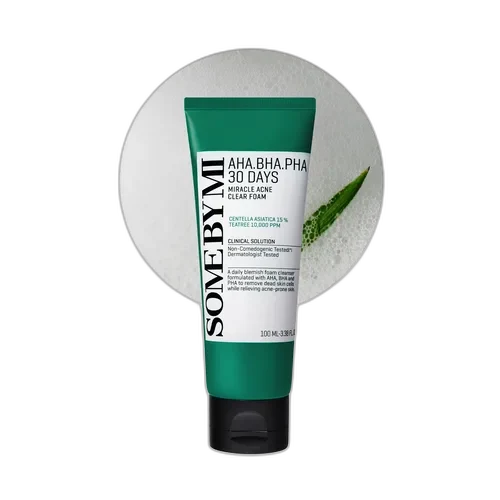
AHA BHA PHA 30 Days Miracle Cleansing Foam
K-Beauty Acne Fighter
 Verified reviewer
Pros & cons.
- +Triple-acid exfoliation (AHA, BHA, PHA) in a single affordable wash-off step
- +Sulfate-free surfactant system that foams well without stripping the skin
- +Full centella asiatica triterpene complex provides genuine soothing and anti-inflammatory benefits
- +Excellent value at around $14 for a cleanser with multiple active ingredients
- +Tea tree water and calamine help manage excess oil without harsh drying agents
- +Silicone-free and paraben-free formulation appeals to ingredient-conscious consumers
- +Dense, satisfying foam texture that rinses cleanly without residue
- −Peppermint oil is an unnecessary irritant in a product aimed at acne-prone skin
- −Acid concentrations are modest — do not expect dramatic chemical-peel results from a wash-off
- −Cooling mint sensation may be overwhelming for fragrance-sensitive users
- −Can cause dryness and tightness when used twice daily on combination or normal skin
- −The '30 Days Miracle' branding overpromises on realistic acne-clearing timelines
The full review.
Some products gain fame from viral Instagram posts rather than clinical journals. Some By Mi’s 30 Days Miracle line is one such product, and the cleansing foam is the brand’s most common entry point.
The concept is simple: combine AHA (citric acid), BHA (salicylic acid), and PHA (gluconolactone) into one wash-off step, then add botanicals to protect the moisture barrier. It reads like a chemistry lesson on paper, but it works well for its price.
The foam is thick and whips into a lather on wet skin. You will feel the peppermint immediately. It provides a cooling tingle that ranges from refreshing to assertive. If you like peppermint in skincare, this feels like a spa. If you avoid essential oils in cleansers, you have a point—Mentha Piperita Oil is a known irritant, and its use in a product for acne-prone (often sensitive) skin is a puzzling choice.
The cleanser performs well. The triple-acid approach is measured because it is a wash-off format. Skin contact lasts thirty to sixty seconds, which limits how much exfoliation the acids deliver. It acts as a gentle daily polish rather than a weekly chemical peel. The salicylic acid clears pores during brief contact, the gluconolactone adds hydration, and the citric acid provides a mild brightening effect after rinsing.
The Truecica complex—Some By Mi’s proprietary blend of centella asiatica triterpenes, tea tree water, and mugwort extract—is the formula’s core. These are not fillers. All four isolated centella compounds are present (asiaticoside, madecassoside, asiatic acid, and madecassic acid), showing the brand prioritizes soothing. Dipotassium glycyrrhizate, a licorice-root derivative, adds anti-inflammatory support. The calamine also helps absorb excess oil without the stripping effect of harsh sulfates.
This cleanser contains no sulfates. The surfactant system uses Sodium Methyl Cocoyl Taurate, Lauryl Betaine, and Coco-Betaine—all mild, non-stripping alternatives. This matters because many K-beauty acne cleansers at this price point use sodium lauryl sulfate as a cheap foaming agent. Some By Mi did not.
The cleanser rinses clean without leaving a film or a tight, squeaky feeling. Oily skin types will like the matte, fresh finish. Combination skin may find oilier zones balanced and drier areas comfortable. Normal skin types can use it without issue, though it may be more cleanser than they need.
The ‘30 Days Miracle’ branding is aspirational. Acne is not a thirty-day problem, and no cleanser will resolve moderate acne in a month without additional treatments. Users expecting clear skin by day thirty are following marketing, not science. Realistically, users can expect a gradual reduction in blackheads, smoother texture, and fewer breakouts over six to eight weeks if they use a complete routine.
The peppermint oil is a problem. It is a known sensitizer that offers no skincare benefit, making its presence in a product for acne-prone skin a formulary contradiction. Some users enjoy the cooling sensation and associate it with cleanliness, but dermatologists would prefer it was not there.
At fourteen dollars, the value is high. You get a sulfate-free, triple-acid cleanser with genuine centella actives and soothing ingredients for less than the price of a sad airport sandwich. The formula is not perfect—the peppermint oil is a drawback and the acid concentrations are modest—but it delivers reliable daily exfoliation with less irritation potential than cleansers costing three or four times as much.
This product works best when you understand its limits. It is not a replacement for prescription acne treatment, and it will not transform skin in a month. It is a well-formulated daily cleanser that gently exfoliates, manages oil, and prepares skin to absorb the rest of a routine. For the K-beauty curious, the budget-conscious, and the oily-skinned, it is worth celebrating.
Ingredient analysis.
Full INCI list
Water, Myristic Acid, Glycerin, Potassium Hydroxide, Palmitic Acid, Lauric Acid, Butylene Glycol, Benzyl Glycol, Salicylic Acid, Glyceryl Stearate, 1,2-Hexanediol, Mentha Piperita (Peppermint) Oil, Hydroxyethylcellulose, Ethyl Hexanediol, Centella Asiatica Extract, Ethylhexylglycerin, Asiaticoside, Madecassic Acid, Asiatic Acid, Dipotassium Glycyrrhizate, Melaleuca Alternifolia (Tea Tree) Leaf Water, Madecassoside, Gluconolactone, Citric Acid, Sodium Methyl Cocoyl Taurate, Lauryl Betaine, Coco-Betaine, Polysorbate 60, Disodium Phosphate, Sodium Chloride, Artemisia Vulgaris Extract, Calamine, Sodium Phosphate
Skin match.
The science.
The Science
This cleanser uses a triple-acid approach based on research into multi-hydroxy acid formulations for acne. A 2019 double-blinded comparative study in Clinical, Cosmetic and Investigational Dermatology tested glycolic acid, salicylic acid, gluconolactone, and licochalcone A as adjunctive therapy for mild-to-moderate acne. The study found this multi-acid combination was non-inferior to adapalene monotherapy for reducing inflammatory lesions and improved results on post-inflammatory spots.
Decades of dermatological literature document salicylic acid's efficacy for acne. As a lipophilic BHA, it penetrates sebaceous follicles to exfoliate the pore lining. This mechanism works in wash-off formats despite brief contact times, though the intensity is lower than leave-on treatments.
Gluconolactone, the PHA component, exfoliates more gently because of its larger molecular weight. Research shows PHAs provide comparable exfoliation to AHAs with significantly less irritation and also act as humectants. This dual role makes this cleanser feel less stripping than a pure salicylic acid wash.
The formula includes four isolated centella asiatica triterpenes (asiaticoside, madecassoside, asiatic acid, and madecassic acid). Clinical studies document centella's wound-healing and anti-inflammatory properties; a systematic review of centella asiatica for acne treatment found a statistically significant reduction in inflammatory and non-inflammatory lesions. In this cleanser, the centella complex counterbalances the acids to reduce irritation and barrier disruption from daily acid exposure.
References
- The efficacy of glycolic acid, salicylic acid, gluconolactone, and licochalcone A combined with 0.1% adapalene vs adapalene monotherapy in mild-to-moderate acne vulgaris: a double-blinded within-person comparative study — Clinical, Cosmetic and Investigational Dermatology (2019)
Dermatologist Perspective
Dermatologists generally support multi-acid cleansing for oily, acne-prone skin, but note that the wash-off format limits contact time and therapeutic intensity. Board-certified dermatologists often recommend salicylic acid as a first-line topical for mild comedonal acne, so its presence here aligns with clinical guidelines. However, dermatologists consistently flag peppermint oil as an unnecessary addition that can trigger contact dermatitis in susceptible individuals. For patients seeking an exfoliating cleanser, dermatologists would likely approve of the sulfate-free surfactant base and centella-based soothing complex, but recommend that those with rosacea, eczema, or compromised barriers choose a gentler, fragrance-free alternative.
Guidance
Where it fits in your routine.
Wet your face with lukewarm water. Squeeze a marble-sized dollop onto your palm and lather. Apply to the face in gentle circular motions, focusing on the T-zone and congestion-prone areas. Massage for 30-60 seconds. Do not massage longer, as extended contact increases irritation risk from the acids. Rinse thoroughly with lukewarm water. Follow with a hydrating toner and moisturizer. For double cleansing, use this in the evening after an oil-based first cleanser. Start with once-daily use and increase to twice daily only if your skin tolerates it.
At about $14 for 100ml, this cleanser outperforms its price class. Combining three exfoliating acids, a full centella triterpene complex, tea tree water, and sulfate-free surfactants in one product usually costs two to three times more from Western clinical brands. The value is real; you pay for active ingredients, not marketing. The 100ml tube is small. Daily users finish it in two to three months, making the annualized cost $56-84 depending on usage frequency.
This cleanser works for oily and combination skin with mild acne, blackheads, or textural roughness. It provides daily exfoliation without a complex multi-step acid routine. K-beauty enthusiasts and budget-conscious shoppers get high active ingredient density at this price.
Skip this if you have dry, sensitive, or eczema-prone skin — the triple-acid formula and peppermint oil cause irritation. Those with rosacea or a compromised skin barrier should also pass. If you use strong leave-on exfoliants like prescription retinoids or high-concentration AHA peels, adding an acid cleanser exceeds your skin's tolerance threshold.
Product details.
Thick, creamy foam lathers into a dense, fluffy texture and feels slightly cooling from mint on application
The peppermint and herbal scent is noticeable and fresh, but fragrance-averse users may find it too strong.
White squeeze tube with green accents and the brand's signature 30 Days Miracle branding
The peppermint oil causes a cooling, tingly sensation on first use. Some users feel mild tightness after rinsing during the first few days while skin adjusts to the acid blend. This usually resolves within a week. If stinging or redness persists, use it once daily or every other day.
2-3 months with once-daily use
12 months
All Year
The backstory.
Some By Mi's 30 Days Miracle line launched around 2018 and quickly became the brand's flagship, riding the K-beauty wave of ingredient-forward, affordable skincare. The cleansing foam was developed to extend the triple-acid philosophy of the bestselling toner into the first step of a routine, giving users consistent acid exposure from cleanser through treatment.
About Some By Mi
Some By Mi launched in South Korea in 2016 and exports to over 20 countries. The brand's 30 Days Miracle line uses its proprietary Truecica formula and has thousands of global reviews, though it relies on consumer validation rather than peer-reviewed clinical research. *Established Brand (5–20 years)*
Common myths.
Using AHA, BHA, and PHA together in one product causes excessive irritation and over-exfoliation
In this wash-off cleanser, acids have brief contact time with skin, which limits exfoliating intensity. The formula also uses centella and licorice derivatives to buffer potential irritation from the acid combination.
This cleanser clears acne completely in 30 days, as the name suggests.
The '30 Days' branding is aspirational marketing. Some users see improvements within a month, but acne is multifactorial. Most dermatologists recommend 6-12 weeks to evaluate any new acne treatment. A cleanser alone does not resolve persistent acne.
FAQ.
Is the Some By Mi AHA BHA PHA Cleansing Foam good for sensitive skin?
This cleanser contains peppermint oil and three types of exfoliating acids, which can irritate sensitive skin. If you have reactive or easily irritated skin, use it every other day first and watch for redness or stinging. Those with rosacea or eczema should avoid it.
Can I use this cleanser with retinol or other exfoliants?
You can, but use caution. This foam contains AHA, BHA, and PHA, so layering it with more exfoliants or retinol increases over-exfoliation risk. If you use retinol at night, use this cleanser only in the morning and skip it on nights when you apply strong exfoliating treatments.
How long does it take to see results from this cleanser?
Most users see better skin texture and fewer breakouts within 2-4 weeks of consistent use. The '30 Days Miracle' branding is optimistic; stubborn acne often needs 6-8 weeks of use and a complete skincare routine for significant improvement.
Does the Some By Mi Cleansing Foam contain sulfates?
No, this cleanser uses sulfate-free surfactants like Sodium Methyl Cocoyl Taurate, Lauryl Betaine, and Coco-Betaine. These are gentler than traditional sulfates like SLS or SLES.
Should I use this cleanser morning and night?
Oily, resilient skin handles twice-daily use well. Combination or normal skin needs once daily — usually in the evening as a second cleanser. Using it twice daily increases dryness and irritation risks, especially if you use other active products.
What the community says.
"Effectively reduces breakouts within weeks"
"Affordable for an active-ingredient cleanser"
"Leaves skin feeling clean without stripping"
"Pleasant minty-fresh sensation"
"Peppermint oil causes irritation for sensitive skin"
"Can be drying if used twice daily"
"Mint scent is overpowering for some users"
"Results less dramatic than the 30-day marketing suggests"
People also looked at.