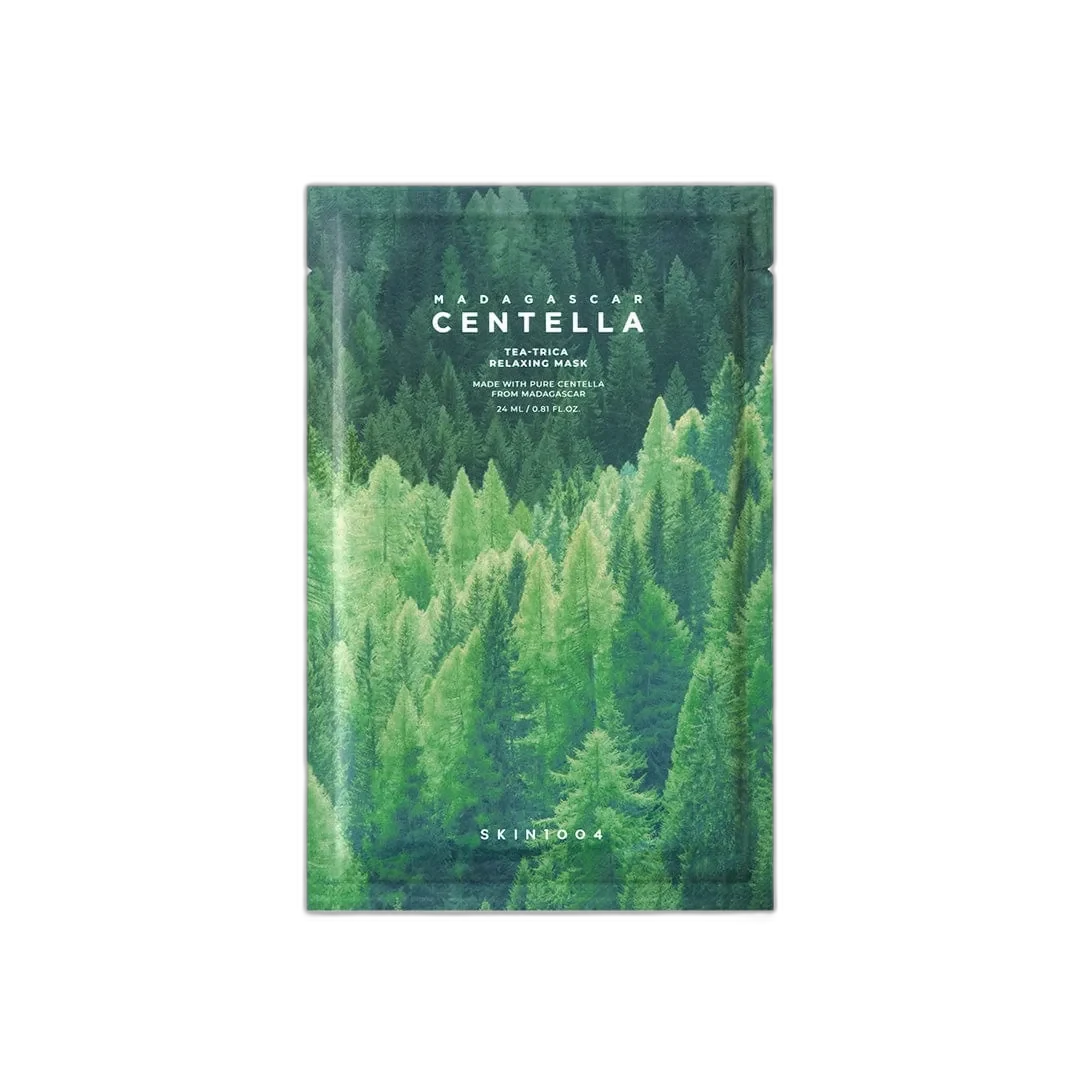
Tea-Trica Relaxing Mask
Breakout SOS Sheet Mask
 Verified reviewer
Pros & cons.
- +Tea tree leaf water as the essence base, not just a trace extract
- +Leave-on salicylic acid dose uses the sheet's occlusive contact effectively
- +Full centella triterpene panel buffers the aggressive actives
- +Niacinamide and zinc PCA add sebum regulation beyond antimicrobial action
- +Fragrance-free with a subtle rather than medicinal tea tree note
- −Not for sensitive, rosacea, or eczema-prone skin
- −Not pregnancy safe due to leave-on salicylic acid
- −Not strictly fungal acne safe due to PEG ingredient
- −Single-use format costs more per ml than the Purifying Toner
- −Not a replacement for a dedicated acne treatment
The full review.
Most ‘acne sheet masks’ are hydrating masks with tea tree extract added to the INCI, a new label, and a promise to help breakouts. Usually, you get a diluted antimicrobial essence, short contact time, and no difference from other calming sheets. The Tea-Trica Relaxing Mask is different. SKIN1004 replaced the mask base instead of just adding tea tree to an existing one. The essence uses tea tree leaf water first, at a claimed 47,000 ppm. This means the entire vehicle carries antimicrobial properties before other ingredients enter. This formulation choice makes the mask a treatment step rather than a hydration product.
Understand the tea tree evidence before deciding if this works. Clinical trials show Melaleuca alternifolia affects mild-to-moderate inflammatory acne, providing antimicrobial activity against Cutibacterium acnes and reducing lesion counts over 4-8 weeks of use. Most research uses 5% tea tree oil gel, which is higher than what a leave-on sheet tolerates. However, tea tree water and leaf extract forms carry the same antimicrobial compounds at lower concentrations without the essential oil’s irritation risk. Using leaf water as the base instead of an essential oil drop uses the evidence without the collateral damage.
The centella triterpene layer performs the same job found across the SKIN1004 line. All four triterpenes — madecassoside, asiaticoside, asiatic acid, and madecassic acid — appear in the INCI to buffer the tea tree and the leave-on salicylic acid. That leave-on BHA dose also separates this mask from average calming sheets. Salicylic acid at treatment-level exposure during a fifteen-to-twenty-minute dwell time differs from salicylic acid in a ten-second rinse cleanser. The sheet format keeps the BHA on the skin long enough to penetrate sebum-filled follicles and support pore turnover; this is one case where sheet mask occlusion changes an active’s performance.
The supporting ingredients complete the acne-targeting formula. Niacinamide sits high enough on the INCI to regulate sebum, support post-inflammatory marks, and back the barrier. Zinc PCA adds sebum control. Panthenol, allantoin, and two weights of hyaluronic acid provide hydration so the mask does not feel stripping. The construction is thoughtful for a sheet mask.
The sheet is lightweight and fits most faces well. The essence feels cool and calming on contact. Centella buffering and the leave-on format keep salicylic acid sting minimal. Use it for fifteen to twenty minutes; any longer and the sheet dries out, reversing the benefit. After removal, pat the remaining essence into the neck and jawline. The finish is matte, not dewy.
Limitations: this is not for sensitive skin. The tea tree and salicylic acid combination is too much for reactive skin. People with rosacea or eczema should use the Probio-Cica Nourishing Mask from SKIN1004 instead, which uses the same cica philosophy without aggressive actives. The leave-on BHA makes it not pregnancy-safe. The PEG-40 hydrogenated castor oil means it is not strictly fungal acne safe, though tea tree often helps against malassezia, so the answer for fungal-acne users is mixed. As with the Tea-Trica line, this does not replace a dedicated treatment-strength acne product. It is a weekly SOS step that reinforces an existing routine during breakouts.
At around $4 per sheet or roughly $18-20 for a pack of 5, the value is fair. Sheet masks cost more per milliliter than leave-on products, and the Tea-Trica Purifying Toner offers better daily value. But the mask does what the toner cannot: it holds a treatment-level active stack on the skin for twenty minutes of occlusive contact. That concentrated exposure is useful during a breakout week. For acne-prone skin using the Tea-Trica line, this is a natural weekly add-on. For new users, buy the cream and toner first, then use the mask for extra attention during breakouts.
Formula
Ingredient analysis.
Full INCI list · pH 5
Melaleuca Alternifolia (Tea Tree) Leaf Water, Centella Asiatica Leaf Water, Propanediol, Glycerin, Niacinamide, 1,2-Hexanediol, Pentylene Glycol, Salicylic Acid, Melaleuca Alternifolia (Tea Tree) Leaf Extract, Centella Asiatica Extract, Madecassoside, Asiaticoside, Asiatic Acid, Madecassic Acid, Panthenol, Sodium Hyaluronate, Hydrolyzed Hyaluronic Acid, Allantoin, Zinc PCA, Houttuynia Cordata Extract, Portulaca Oleracea Extract, Butylene Glycol, PEG-40 Hydrogenated Castor Oil, Betaine, Arginine, Xanthan Gum, Tromethamine, Carbomer, Ethylhexylglycerin, Disodium EDTA
Skin match.
The science.
The Science
Tea tree oil (Melaleuca alternifolia) has strong evidence for antimicrobial activity against acne-causing bacteria. Published clinical trials show it works similarly to low-dose benzoyl peroxide for mild-to-moderate inflammatory acne, but with a slower onset. Tea tree leaf water and leaf extract contain the same antimicrobial terpenes at lower concentrations and carry less irritation risk than the essential oil, so they work well in leave-on sheet mask formats. Salicylic acid has decades of published evidence for its comedolytic and anti-inflammatory activity; its lipophilic character lets it penetrate sebum-filled follicles and supports corneocyte turnover. The 15-20 minute occlusive contact of a sheet mask differs from the brief contact of a cleanser, giving BHA time to work on pore contents. The centella triterpene panel — madecassoside, asiaticoside, asiatic acid, and madecassic acid — has documented anti-inflammatory activity that buffers tea tree and salicylic acid. Published research shows niacinamide regulates sebum, supports post-inflammatory marks, and aids barrier function at 2-5% concentrations. This combination of antimicrobial activity, keratolytic exfoliation, sebum regulation, and anti-inflammatory support uses a multi-pathway approach to manage active breakouts during a sheet mask treatment session.
Dermatologist Perspective
Dermatologists generally view sheet masks as adjunct products rather than primary treatments, but board-certified dermatologists note that short-contact occlusive formats can enhance the delivery of water-soluble actives like salicylic acid and niacinamide. Doctors often suggest this type of treatment mask as an occasional support step for patients already using daily acne routines, not as a standalone treatment. Patients with sensitive skin or rosacea typically avoid tea tree plus BHA combinations, even in short-contact formats.
Where it fits in your routine.
Cleanse and tone first. Remove the sheet from the sachet, unfold, and apply to clean skin. Fit the sheet around the eyes, nose, and mouth. Leave on for 15-20 minutes. Do not leave it on longer, or the sheet pulls moisture from skin. Remove the sheet and pat the leftover essence into the skin, neck, and chest. Follow with moisturizer. Use 1-2 times weekly, or every other day during active breakouts. Do not use on broken or severely compromised skin.
At around $4 per sheet or roughly $18-20 for a pack of 5, this mask sits in the middle of the K-beauty treatment sheet category. It's more expensive per milliliter than leave-on daily products from the same brand, which is inherent to the sheet format, but it's cheaper than most clinical-brand acne masks and carries a denser ingredient list. For existing Tea-Trica users, it's a reasonable SOS add-on. For daily maintenance, the Purifying Toner offers better cost-per-use.
Oily or combination skin with mild-to-moderate active breakouts works well, especially for Tea-Trica line users seeking an intensive weekly treatment. This also fits anyone wanting to test treatment actives in a low-commitment sheet format before adding a daily product.
Use for sensitive skin, rosacea, or eczema. Skip during pregnancy. Use the Probio-Cica Nourishing Mask if your skin is severely dry or barrier-compromised — it works for the opposite use case.
Product details.
Watery essence on a lightweight sheet
Fragrance-free, with a faint tea tree herbal note
Individual foil sachet — sold as singles or in packs of 5
It feels cool and calming on contact. A slight tingle from the salicylic acid fades within the first minute. Skin looks visibly calmer after removal.
Single-use. A pack of 5 covers 2-3 weeks at typical use.
24 months
All Year
The backstory.
SKIN1004 added the Relaxing Mask to the Tea-Trica line so breakout-prone customers could have an SOS weekly treatment in the same sheet format already popular across K-beauty. The sheet's long contact time is what makes carrying a leave-on BHA worth the effort.
About SKIN1004
Emerging Brand (2–5 years)SKIN1004 launched in 2016 using Madagascar centella. The Tea-Trica Relaxing Mask puts the brand's acne-focused Tea-Trica line into a high-contact sheet mask with a high tea tree concentration.
Common myths.
Tea tree sheet masks irritate skin during a breakout
High concentrations of tea tree essential oil cause most irritation, not tea tree water or leaf extract. This mask uses the water and extract forms for a 15-20 minute dwell time, providing antimicrobial benefits without the sting.
FAQ.
How often should I use this mask?
Use once or twice a week for maintenance, or up to every other day during active breakouts. Do not use daily because of the leave-on salicylic acid dose.
How is this different from the Probio-Cica Nourishing Mask?
The Probio-Cica version is a calming, barrier-repair sheet mask with postbiotic ferments for sensitive, reactive skin. The Tea-Trica Relaxing Mask uses tea tree, salicylic acid, and zinc PCA for acne-prone skin. Different jobs, different routines.
Is the Tea-Trica Relaxing Mask pregnancy safe?
No — it has leave-on salicylic acid. Most dermatologists recommend avoiding leave-on BHAs during pregnancy. Use the Probio-Cica Nourishing Mask instead.
Is it fungal acne safe?
Not strictly. PEG-40 hydrogenated castor oil is present, which some fungal acne routines exclude. Tea tree often helps against malassezia, but the overall formula is not on standard safe lists.
Can I use it with other Tea-Trica products?
Yes — the mask fits the Tea-Trica routine. Use it 1-2x weekly at night after the Purifying Toner, then apply the Tea-Trica B5 Cream as usual.
What the community says.
"Visibly calms active breakouts"
"Tea tree delivered without sting"
"Essence doesn't dry out mid-use"
"Fragrance-free"
"Single-use format costs more per ml than toners"
"Too strong for sensitive skin"