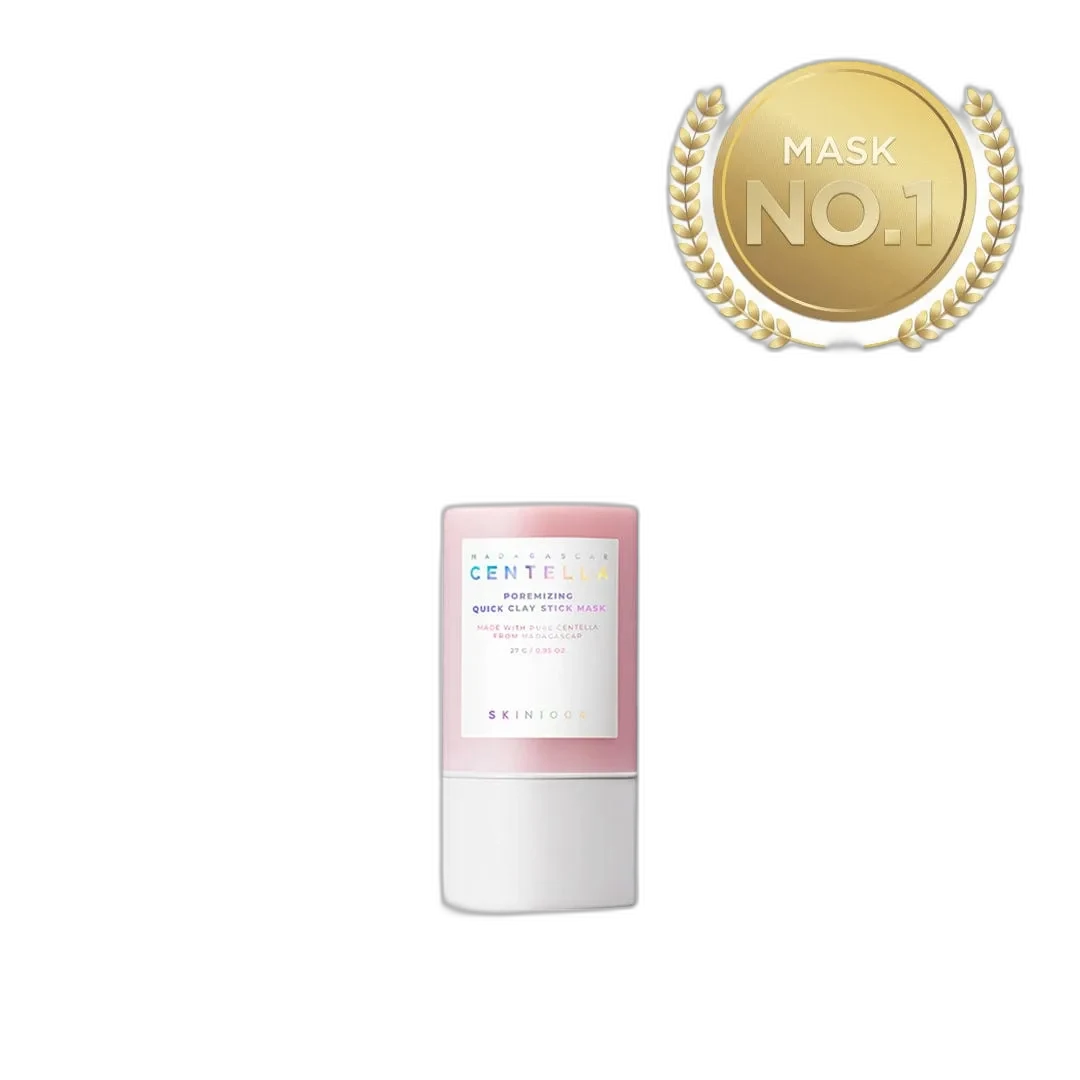
Poremizing Quick Clay Stick Mask
K-Beauty Pore Stick Innovation
 Verified reviewer
Pros & cons.
- +Genuinely convenient twist-up stick format eliminates mess
- +Kaolin at second INCI position is functional, not decorative
- +Triple clay complex broadens the oil-absorbing mechanism
- +Adzuki powder adds gentle physical exfoliation
- +Centella and aloe buffer the drying effect of traditional clay
- +Fragrance-free, unusual for the clay mask category
- +More hygienic than dipping fingers into a jar
- −Small 20g size for the premium price
- −Thinner applied layer than a traditional jar clay mask
- −Not suitable for dry, sensitive, or compromised skin
- −Stick can crumble if stored warm or dropped
- −Coverage is less generous for full-face use
The full review.
Clay masks have changed little since ancient Rome. You open a jar, use your fingers, spread the paste, wait for it to dry, and rinse. This process works—clay absorbs sebum and debris from pores—but the mess causes most owners to use clay masks only twice a year. Application is messy, cleanup requires washing hands and the jar edges, and the ritual clashes with daily skincare rhythms. The SKIN1004 Poremizing Quick Clay Stick Mask reinvents this category for convenience, rather than through new clay chemistry.
The stick delivery is simple. Twist the base, glide the solid clay stick on dry skin, and the formula transfers in a thin, smooth layer under moderate pressure. You target the nose, chin, or forehead in under a minute with zero mess and no fingertip cleanup. You can glide it across the full face if your skin is oily, though the thinner layer provides less coverage than a spreadable jar mask. The clay sets within 5 to 10 minutes, rinses with lukewarm water and a gentle massage, and leaves treated areas smoother and less shiny.
The clay chemistry is well-composed. Kaolin is the second ingredient; this primary absorbent clay does the heavy lifting. A triple clay complex near the end of the INCI—bentonite, illite, and montmorillonite—adds absorption and mineral chemistry, with bentonite providing its characteristic negative-charge sebum attraction. Phaseolus angularis (adzuki) seed powder, dosed mid-list, adds a light physical polish during rinse-off; adzuki has a centuries-long tradition in Japanese and Korean skincare as a gentle mechanical exfoliant, and the small particles ensure mild rather than scrubby abrasion. Aloe vera is high on the list as a humectant and calming agent, and centella asiatica appears mid-list as SKIN1004’s signature calming ingredient. Calamine at the end adds a traditional zinc oxide soothing note for acne-prone skin. The formula is fragrance-free and alcohol-free, which is uncommon for clay masks.
The stick delivers useful results. The thin clay layer sets firmly enough to work without the extreme dryness of a thicker jar mask. The post-rinse smoothness is real, and pore-area appearance improves for a day or two after use. With consistent use over several weeks, blackhead prominence drops modestly and surface texture smooths. The centella and aloe content buffer the drying effect so combination skin tolerates the stick without the harsh after-feel that often deters users from clay masks.
Limitations matter. First, the 20g size is small, and the premium pricing for that size is a value concern. Twenty grams lasts about two to three months with once-weekly targeted use, but full-face application twice a week lasts only six to eight weeks. Second, the stick delivers a thinner clay layer than a traditional mask, so less clay contacts your skin per use—a real convenience trade-off. If you want a heavy, thick clay mask for severe congestion, use a traditional jar format. Third, dry and sensitive skin should avoid this or use it only on pore-congested T-zone areas; even a gentle clay mask is drying and can irritate reactive skin. Fourth, the stick can crumble if dropped or stored warm. Fifth, the $17-22 price for 20g is above average for the ingredient quantity; you pay for the stick innovation and formulation quality, not a large stockpile of clay.
Value depends on your current habits. If you own a cheaper jar clay mask but rarely use it because of the mess, this stick is the better pick—a product used once weekly delivers more cumulative benefit than a cheaper product used twice a year. If you already use jar clay masks frequently and convenience is not a barrier, a traditional large jar at the same price delivers more grams and similar results. For people who want to use clay masks but dislike the application process, this stick makes the category accessible.
Ingredient analysis.
Full INCI list
Water, Kaolin, Dipropylene Glycol, Glycerin, Titanium Dioxide (CI 77891), Butylene Glycol, Sodium Stearate, 1,2-Hexanediol, Aloe Barbadensis Leaf Extract, Phaseolus Angularis Seed Powder, Cetearyl Olivate, Propanediol, Sorbitan Olivate, Dimethicone, Iron Oxides (CI 77491), Centella Asiatica Extract, Ethylhexylglycerin, Sodium Phytate, Bentonite, Illite, Mineral Salts, Montmorillonite, Calamine
Skin match.
The science.
The Science
The clay chemistry uses established cosmetic science. Kaolin is the most-studied skincare clay; dermatology and cosmetic literature has documented its sebum absorption and physical-cleansing properties for over a century. Bentonite contains high levels of montmorillonite, which has a layered silicate structure and a negative surface charge. This charge attracts positively charged particles like sebum components; research on absorption capacity and skin tolerability supports its use in cosmetic clay masks. Illite and montmorillonite (listed separately here even though montmorillonite is bentonite's main component) add mineral content and absorption — their inclusion affects formulation texture and marketing more than functional mechanisms. Phaseolus angularis seed powder has a long history in East Asian skincare as a gentle physical exfoliant, but modern peer-reviewed research on its specific exfoliation benefits is limited — its efficacy in this product relies on traditional use rather than clinical studies. Centella asiatica research, like SKIN1004's other products, shows calming and barrier-recovery benefits at meaningful doses; in this clay stick, the centella contribution is supportive, not primary. Calamine (zinc oxide and ferric oxide) has traditional dermatology use for itch relief and mild anti-inflammatory action. Overall, the science strongly supports the clay mask's oil-absorption claims and its pore-refinement claim via temporary reduction of sebum-related surface appearance — not through structural modification of the pore itself.
Dermatologist Perspective
Dermatologists view clay masks as a reasonable occasional treatment for oily, combination, and acne-prone skin, usually recommending weekly or bi-weekly use instead of daily application. The stick format of this product is a novel delivery system; board-certified dermatologists note its convenience and hygiene advantages over traditional jar formats. For patients with oily skin and mild pore congestion, dermatologists often suggest a thin clay mask layer weekly as a useful adjunct to a daily routine using niacinamide, retinoids, and salicylic acid. For patients with sensitive, dry, rosacea-prone, or compromised skin, dermatologists typically do not recommend clay masks regardless of delivery format — the core absorption mechanism is drying by design. Dermatologists generally support the centella and aloe buffering in this formulation as making it marginally more tolerable than a pure-clay alternative, though it is not suitable for sensitive skin.
Where it fits in your routine.
Use once or twice weekly as an evening treatment. Apply to clean, dry skin after cleansing. Twist the stick base to expose a small amount, then glide it over pore-congested areas (nose, chin, forehead) or the full face if your skin is uniformly oily. Use light to moderate pressure for even coverage. Leave on for 5-10 minutes until the clay sets and dries to a firm layer. Rinse thoroughly with lukewarm water; use gentle circular motions to lift the clay and engage the adzuki polish. Follow with a hydrating toner and calming moisturizer. Do not use on the same night as retinol or chemical exfoliants.
At roughly $17-22 for 20g, this stick mask costs more per gram than a traditional large-jar clay mask. You pay for the stick format and formulation quality instead of quantity. Value depends on usage: if the stick format makes you use a clay mask weekly instead of twice a year, the practical benefit exceeds a cheaper jar you ignore. Regular clay mask users who like the application process get more grams per dollar from a traditional jar. For convenience-motivated buyers, the stick justifies the premium — just know the trade-off.
Oily or combination skin users want clay mask treatments but avoid messy traditional jar formats. This works for targeted T-zone application without coating drier areas, travel-friendly skincare routines, and anyone who prefers the hygiene of a no-dip format.
Skip this product if you have dry, sensitive, rosacea-prone, or compromised skin; choose gentler pore-care alternatives instead. Heavy clay mask users with established jar-format routines will find this stick too small and too expensive for the same cumulative use. The thinner stick delivery does not provide a thick, heavy clay mask experience.
Product details.
This clay stick glides onto skin with pressure. It leaves a thin, smooth clay layer that dries in 5-10 minutes.
Essentially fragrance-free with a faint earthy clay note
Twist-up deodorant-style stick; 20g
The stick applies cool with moderate pressure. It sets into a firm clay layer within 5-10 minutes. The drying clay causes mild tightness during wear. Lukewarm water and gentle massage rinse it off cleanly, leaving skin smoother and less shiny. Most users tolerate it well, but very dry or sensitive skin may feel stripped afterwards.
About 2-3 months of weekly targeted use from the 20g stick
12 months
All Year
The backstory.
The Poremizing Quick Clay Stick Mask is SKIN1004's 2024 innovation in the clay mask category, reflecting the K-beauty trend toward convenience-oriented product formats. Stick treatments — for sunscreen, spot treatments, and now clay masks — have become increasingly popular as brands cater to users who want skincare they can apply quickly without a dedicated counter space.
About SKIN1004
Emerging Brand (2–5 years)SKIN1004 launched in 2016, focusing on Madagascar-centella. The Poremizing Quick Clay Stick Mask is a recent innovation. It follows the K-beauty trend of stick-format treatments for targeted application on pore-congested areas like the nose, chin, and forehead.
Common myths.
Stick clay masks are less effective than jar clay masks.
The clay formulation is functionally identical — kaolin, bentonite, and related clays work the same way regardless of the delivery vehicle. The stick format solves application convenience; it does not compromise efficacy, though the thinner applied layer means shorter total contact time.
Clay masks permanently unclog and shrink pores.
Clay masks temporarily clear surface sebum and loose debris from pore openings, improving appearance for hours to days. No clay mask changes pore size; genetics and skin thickness determine pore size, not topical products.
FAQ.
How often should I use the Quick Clay Stick Mask?
Most combination and oily skin types use this once to twice a week. Do not use it daily. This formula is gentler than traditional high-clay masks, but frequent clay mask use dries the skin barrier. Applying to the T-zone allows for more frequent use than full-face application.
Do I use it on the whole face or just the T-zone?
Both work. The stick format targets pore-congested areas like the nose, chin, and forehead, but you can glide it across the full face if your skin is oily everywhere. Dry cheeks usually need targeted T-zone application to avoid over-drying.
How long should I leave it on?
Leave on for 5-10 minutes until the clay sets and dries. Do not exceed 10-15 minutes. Once the clay fully dries, it pulls moisture from the skin, which is counterproductive. Rinse with lukewarm water once the clay is dry and firm.
Can I use this with retinol or exfoliating acids?
Don't use them on the same night. Clay absorption plus retinol or acids strips the skin barrier. Use this mask on a separate evening and follow with a calming, hydrating routine.
Is this stick mask hygienic?
This stick is more hygienic than a traditional jar clay mask because it only contacts clean skin. Wipe the stick with a clean tissue after use to stop skin oils from building up on the surface, then recap tightly so it does not dry out.
Why does my skin feel tight after?
Clay absorption causes mild tightness as the clay pulls surface sebum. This resolves within minutes of applying toner and moisturizer. If tightness lasts over 10 minutes or your skin feels stripped, use it less often or apply it only to targeted areas.
Does the small 20g size last a long time?
Use once weekly on target areas for 2-3 months, or twice weekly on the full face for 6-8 weeks. The stick format applies thinner layers than jar clay masks, which extends usage time — but the high price for a small size is a main value trade-off for this product.
What the community says.
"Convenient stick format for targeted application"
"No mess like traditional jar clay masks"
"Noticeable oil control and smoother skin after rinse"
"Gentle enough for regular use"
"Small 20g size for the price"
"Stick can crumble if stored warm"
"Not suitable for dry or sensitive skin"
"Coverage is thinner than a traditional clay mask"