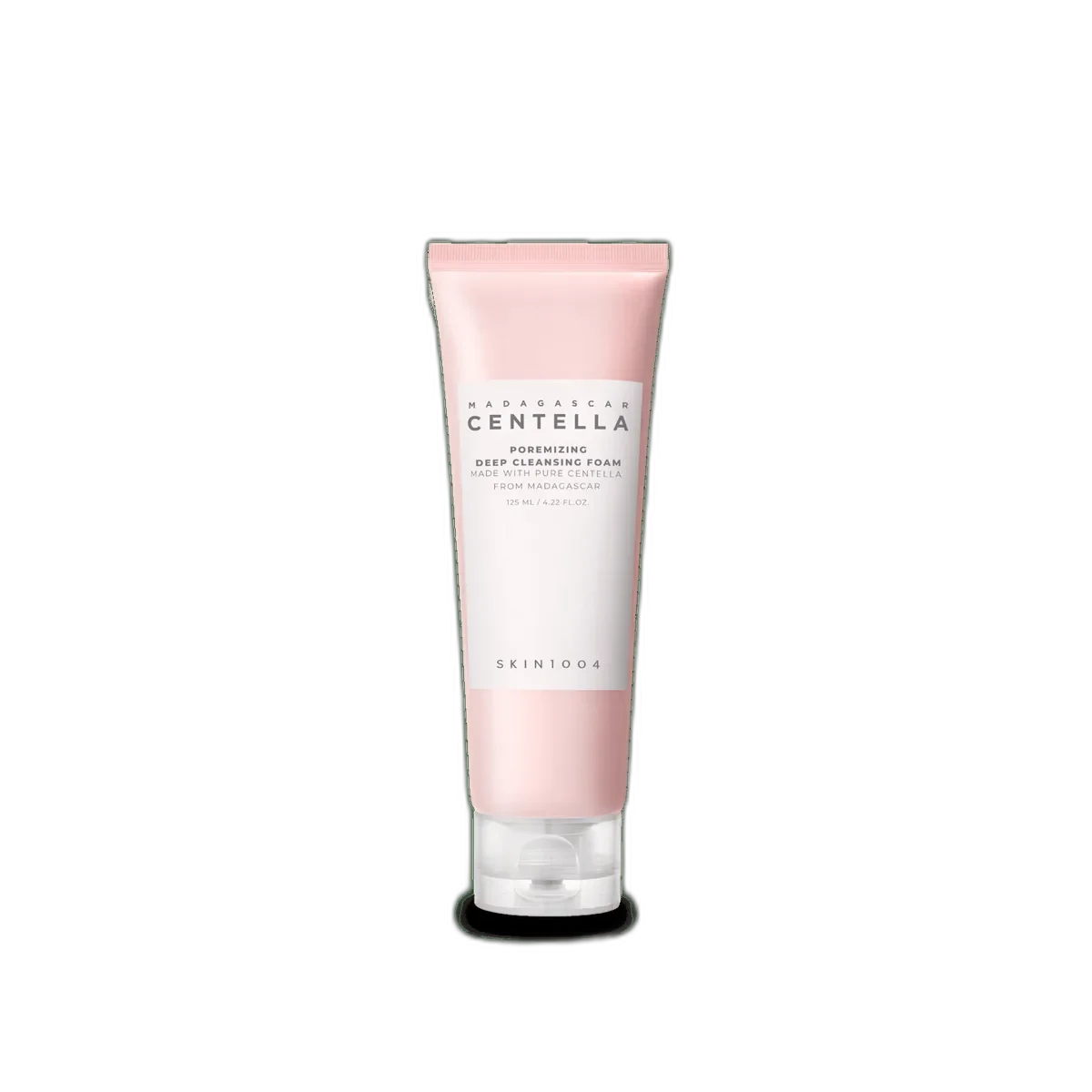
Poremizing Deep Cleansing Foam
K-Beauty Oily-Skin Foam
 Verified reviewer
Pros & cons.
- +Rich, dense foam production with good sensory experience
- +Papain enzyme adds mild exfoliation during each wash
- +Centella content softens the stripping potential of the soap base
- +Strong value per milliliter for a K-beauty foam cleanser
- +Effective as a second cleanser in double-cleansing routines
- +Kaolin clay contribution supports oil control
- −Alkaline soap-based pH is harsher than amino-acid cleansers
- −Contains rosemary leaf oil and lemon extract, potential irritants
- −Too stripping for dry, sensitive, or compromised skin
- −Foam can dry out the eye area
- −Distinct herbal scent won't appeal to fragrance-averse users
The full review.
K-beauty and Western dermatology differ in cleanser design. K-beauty traditionally favors foaming cleansers that leave skin feeling “squeaky-clean,” a sensation many users equate with efficacy. Contemporary dermatology favors low-pH amino-acid cleansers and syndet bars that clean without tightness, arguing that “squeaky-clean” skin signals barrier disruption from alkaline soap-based surfactants. Neither approach is inherently wrong; it depends on skin type, routine, and goals. The SKIN1004 Poremizing Deep Cleansing Foam follows the K-beauty tradition, using modern upgrades to soften its soap-based core.
The surfactant system uses classic saponification. Myristic acid, stearic acid, palmitic acid, lauric acid, and arachidic acid combine with potassium hydroxide to create a potassium-soap base. This architecture dominated Japanese and Korean foaming cleansers for decades and produces the dense, thick foam characteristic of the category. The pH is alkaline, and the cleansing action is firm. Cocamidopropyl betaine, an amphoteric co-surfactant, softens the soap base and improves rinse-off, while sodium C14-16 olefin sulfonate increases surfactant performance and foam stability.
These modern additions differentiate the formula from 2005-era soap cleansers. Papain enzyme provides mild enzymatic exfoliation during the wash; while 30-second contact time limits this action, it is a functional addition. Kaolin clay near the end of the list absorbs light oil. Centella asiatica extract is dosed high enough to provide calming buffering against the soap base’s stripping tendency. Aloe vera and botanical extracts add more soothing support. These ingredients do not make the product a gentle cleanser—the soap base remains the primary functional element—but they move the formula in that direction.
The foam is thick and generous. A small amount between wet palms creates a dense lather that spreads easily and rinses cleanly. Post-wash, the skin feels genuinely clean, leaving no doubt about oil cleanser residue. On oily or combination skin that tolerates soap, this feeling resolves quickly once toner is applied and skin rehydrates. On dry or sensitive skin, post-wash tightness lasts longer and can cause noticeable dryness with repeated use.
Consider these trade-offs. First, the alkaline soap base is harsher than modern amino-acid cleansers; centella buffering cannot fully offset this for dry or sensitive skin. Second, the formula contains Rosmarinus officinalis leaf oil and Citrus limon fruit extract—rosemary and lemon—which are potential irritants and allergens that provide the herbal scent. Avoid this if you avoid essential oils. Third, the foam can dry out the eye area; cleanse around the orbital bone instead of the lash line. Fourth, this cleanser is too harsh for compromised barriers or post-procedure recovery; use a gentler syndet or amino-acid cleanser instead.
A 125ml tube costs around $12-14 and lasts most users three to four months with twice-daily use. This is a competitive monthly cost, and the papain and centella content justify the slight premium over plain soap cleansers. It is an affordable, reasonable option for oily-skinned users who want the classic K-beauty foam experience. If you prefer modern low-pH amino-acid cleansers, this product will not convert you; the soap-based core feels fundamentally different and often more preferable by contemporary dermatological standards. This cleanser does its job if you know what you are buying.
Ingredient analysis.
Full INCI list
Water, Myristic Acid, Glycerin, Potassium Hydroxide, Stearic Acid, Glyceryl Stearate, Palmitic Acid, Cocamidopropyl Betaine, Sodium C14-16 Olefin Sulfonate, Butylene Glycol, Glucose, 1,2-Hexanediol, Sodium Chloride, Centella Asiatica Extract, Sorbitol, Acrylates/C10-30 Alkyl Acrylate Crosspolymer, Rosmarinus Officinalis (Rosemary) Leaf Oil, Cetearyl Alcohol, Potassium Benzoate, Polyquaternium-67, Papain, Hydrogenated Polydecene, Arachidic Acid, Lauric Acid, Aloe Barbadensis Leaf Extract, Sodium Citrate, Propanediol, Citrus Limon (Lemon) Fruit Extract, Pyrus Malus (Apple) Fruit Extract, Vinegar, Coccinia Indica Fruit Extract, Eclipta Prostrata Extract, Trisodium Ethylenediamine Disuccinate, Oleic Acid, Kaolin (CI 77004), Mineral Salts, Citric Acid, Oenothera Biennis (Evening Primrose) Flower Extract, Pueraria Lobata Root Extract, Pinus Palustris Leaf Extract, Ulmus Davidiana Root Extract, Disodium EDTA
Skin match.
The science.
The Science
The cleanser uses a well-characterized surfactant system. Potassium-saponified fatty acid cleansers (potassium myristate, potassium stearate, etc., formed in situ from the listed fatty acids and potassium hydroxide) have dominated K-beauty foam formats for decades, though they have known trade-offs. Dermatology literature shows alkaline cleansers can transiently disrupt the skin's acid mantle and increase transepidermal water loss more than low-pH cleansers, depending on skin type and contact time. Cocamidopropyl betaine is a studied, milder amphoteric co-surfactant that reduces irritation from harsher surfactants; it moderates this formula's stripping tendency. Papain enzyme is a proteolytic enzyme from papaya with keratinolytic activity. Research supports its use more in leave-on masks than short-contact rinse-off products, so the effect in this cleanser is real but modest. Centella asiatica research supports its use for post-cleansing calming and barrier support at meaningful doses, but centella is a supportive rather than primary ingredient here. Kaolin clay absorbs surface-level oil with minimal risk. The essential oil ingredients (rosemary and lemon) have traditional cosmetic use but can irritate some users. While contact time is limited in a rinse-off cleanser, sensitization still occurs in reactive users.
Dermatologist Perspective
Dermatologists generally prefer low-pH, amino-acid-based or syndet cleansers for most skin types, especially for patients with sensitive, dry, or barrier-compromised skin. Soap-based foam cleansers like this one are typically acceptable for oily, non-sensitive skin, but board-certified dermatologists who prioritize barrier support rarely recommend them first. However, for patients who prefer foam and whose skin tolerates it, the addition of papain, centella, and cocamidopropyl betaine brings this cleanser closer to the tolerability range most dermatologists accept. The rosemary and lemon essential oil content is the main concern dermatologists would flag; these inclusions are usually unnecessary and can cause contact dermatitis in some users. Dermatologists would typically recommend a different cleanser format for patients with acne, rosacea, or reactive skin.
Guidance
Where it fits in your routine.
Wet your face with lukewarm (not hot) water. Put a pea-sized amount into wet palms and work it into a foam. Massage the face gently for 20-30 seconds, but avoid the immediate eye area and orbital bone. Rinse well with lukewarm water and pat dry with a clean towel. Apply toner and the rest of your routine immediately. For evening routines, use this after an oil cleanser as the second step of a double cleanse.
At roughly $12-14 for 125ml, this cleanser lasts three to four months with twice-daily use at a reasonable monthly cost. This price competes within the K-beauty foaming cleanser category and stays below Western drugstore equivalents with similar sensory profiles. The papain and centella content justify a small premium over cheaper soap-based cleansers, but for users who cannot tolerate a soap base, no price makes this cleanser a good value. Value depends entirely on whether your skin type matches the product.
This works for oily or combination skin users who want a classic K-beauty foam cleanser feel and can use soap-based surfactants without excessive dryness. It works well as the second step in a double cleansing routine after an oil cleanser, or for morning cleansing on resilient skin.
Skip this cleanser if you have dry, sensitive, rosacea-prone, or compromised skin; use a low-pH amino-acid alternative instead. Users avoiding essential oils or fragrance in skincare should also look elsewhere. People following modern dermatological guidance for gentle, low-pH cleansing will prefer contemporary alternatives despite this product's reasonable supporting ingredients.
Product details.
Distinct rosemary-herbal note with a faint citrus edge
Plastic tube with flip cap; 125ml Finish freshcleannon-greasy What to Expect on First Use Produces a dense, satisfying foam and rinses cleanly. First-time users may notice a slightly tight feel post-wash, which is characteristic of potassium-soap cleansers. If that tightness doesn't resolve within a few minutes of applying toner, this cleanser is too stripping for your skin type. How Long It Lasts About 3-4 months of twice-daily use from the 125ml tube Period After Opening 12 months
All Year Certifications VeganCruelty-free Background
The backstory.
The Poremizing Deep Cleansing Foam is the first step in SKIN1004's pore-care routine and reflects K-beauty's longstanding preference for soap-based foam cleansers that deliver a visible, squeaky-clean feel. The addition of papain and centella is a modern touch that brings the formula closer to contemporary ingredient standards while still delivering the traditional K-beauty foam experience.
About SKIN1004
Emerging Brand (2–5 years)SKIN1004 launched in 2016, focusing on Madagascar-centella. It recently expanded into cleansers and pore care. The Poremizing range is a new sub-line for congestion and oiliness, and this cleanser starts the routine.
Common myths.
A cleanser that leaves skin feeling squeaky-clean is always good.
That squeaky feel often comes from alkaline soap-based cleansers that disrupt the slightly acidic skin barrier. Modern dermatology recommends cleansers that leave skin clean but not tight — this product's feel depends on your starting skin type.
Papain enzymes in a rinse-off cleanser exfoliate the skin.
Papain provides mild surface exfoliation, but 30-second enzymatic activity is limited. It does not replace a dedicated enzyme mask or leave-on exfoliant.
FAQ.
Is this cleanser too harsh for daily use?
Daily use works for oily and combination skin without sensitivity. For drier or more sensitive skin, twice-daily use strips the skin. Alternate with a gentler cleanser or use this one only in the evening as the second step of a double cleanse.
Does it have sulfates?
It contains sodium C14-16 olefin sulfonate, a sulfonate surfactant instead of a traditional sulfate like sodium lauryl sulfate. This is milder than SLS but harsher than amino-acid surfactants. Avoid this cleanser if you strictly avoid sulfates and sulfonates.
Will papain make me purge?
Unlikely — papain activity during a short wash is too mild to change skin cell turnover. Any initial breakouts from this product likely come from rosemary oil or citrus extract irritating sensitive skin, not active purging.
Can I use this with a cleansing brush or scrub?
Do not use these together. The soap base and papain already cleanse effectively; adding mechanical exfoliation risks over-stripping the barrier. Use one and save the other for weekly use.
Is this safe during pregnancy?
Yes. The formula lacks retinoids, salicylic acid, or hydroquinone. The papain enzyme, centella, and fatty-acid soap base are safe during pregnancy and breastfeeding. The rosemary oil dose is low enough for topical use.
Does it remove makeup?
It removes light makeup well but is not a first-step makeup remover. Use an oil cleanser or micellar water for heavier makeup or sunscreen, then use this cleanser as the second step of a double cleanse.
Why is lemon fruit extract in the formula?
Lemon extract is included at a low concentration for its traditional astringent and brightening effects. The dose does not cause irritation for most users, but note this if you have a history of citrus sensitivity.
What the community says.
"Genuinely clean feel after washing"
"Good foam production with a little water"
"Papain adds a mild exfoliating touch"
"Good value per milliliter"
"Can feel stripping on combination skin"
"Rosemary oil scent can be strong"
"Too harsh for sensitive or dry skin"
"Foam can dry out the eye area"
People also looked at.