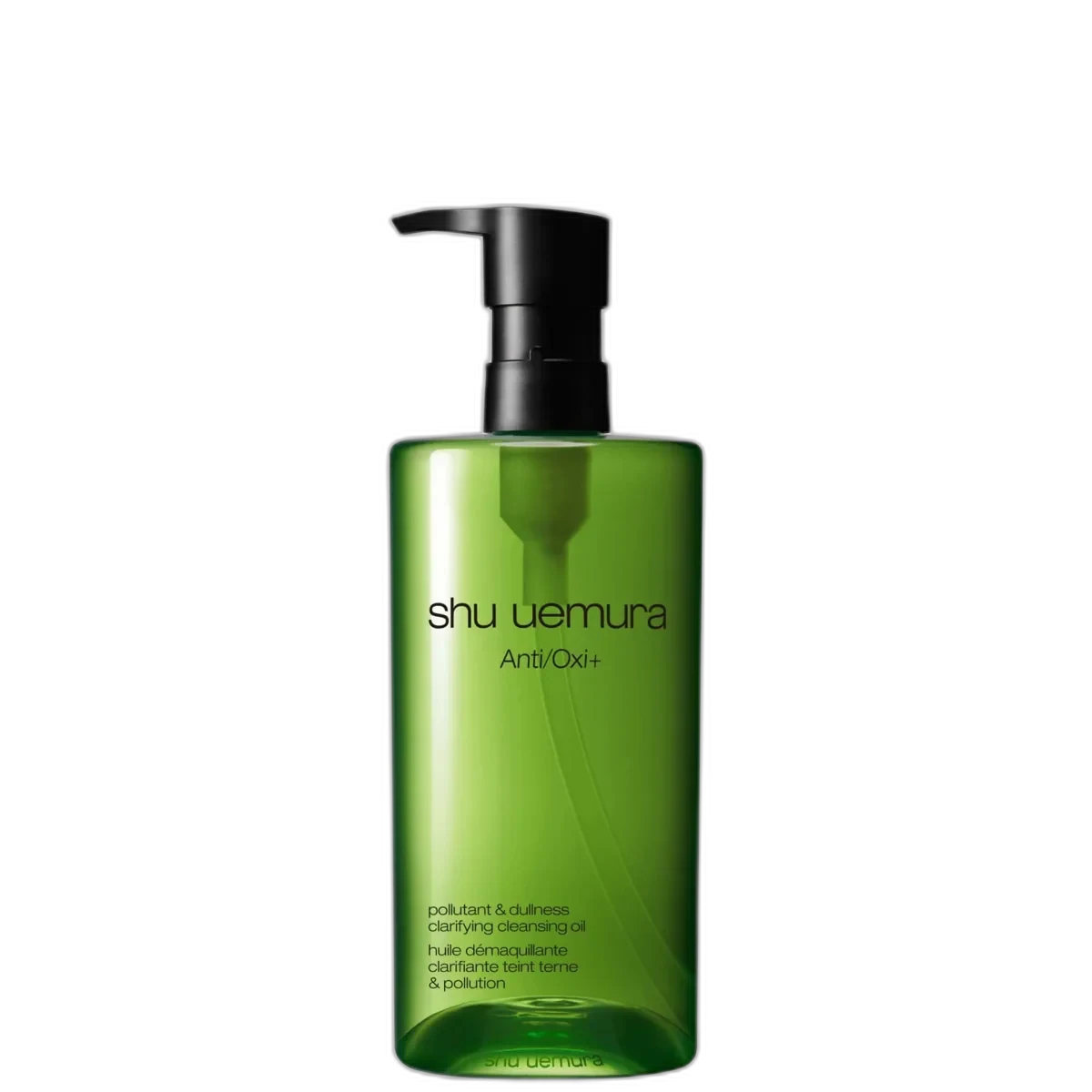
Anti/Oxi+ Skin Refining Cleansing Oil
J-Beauty Cult Favorite
 Verified reviewer
Pros & cons.
- +Three-polyglyceryl emulsifier cascade ensures clean, residue-free rinse-off
- +Moringa seed extract has published evidence for binding particulate pollution
- +Dissolves waterproof makeup and SPF in 30 seconds without scrubbing
- +Skin feels soft, not stripped, afterward
- +Legacy J-beauty formulation refined over 15+ years
- +Corn germ oil base is lighter and less occlusive than mineral oil alternatives
- −Contains fragrance, limonene, and linalool — not safe for sensitive or rosacea-prone skin
- −Isopropyl myristate and palmitate may trigger breakouts in acne-prone users
- −$52 for 150ml is premium versus comparable drugstore oil cleansers
- −Not vegan — contains animal-derived ingredients in the fragrance base
The full review.
In the late 1960s, a Tokyo-based makeup artist named Shu Uemura argued that water-based cleansers harm the skin. His logic was simple: makeup, SPF, and sebum are oil-based, so water and detergent surfactants struggle to dissolve them. An oil-based cleanser uses “like to like” to remove debris while leaving the skin’s barrier intact. Shu Uemura launched his first cleansing oil in 1967. While the rest of the world used foaming cleansers, this remained a Japanese secret for decades. By the 2010s, the beauty industry adopted the method, and Shu Uemura turned the category into a luxury mini-ritual. The Anti/Oxi variant, launched in 2009, updates this ritual for modern urban pollution.
The formula is more sophisticated than the label suggests. It uses corn germ oil instead of mineral oil, making it lighter and more plant-forward than drugstore cleansing oils. A three-layer polyglyceryl emulsifier cascade—polyglyceryl-10 dioleate, polyglyceryl-6 dicaprate, and polyglyceryl-2 oleate—triggers an oil-to-milk transformation when water hits the skin. This emulsifier system determines if a product rinses clean or leaves an oily residue. This one rinses clean.
Antioxidants and pollution-binding agents form the formula’s modern layer. Moringa seed extract is notable; research shows moringa polypeptides bind particulate pollutants like fine dust and diesel particulates. This provides a real mechanism for the “pollution removal” claim. Green tea and papaya add mild antioxidant and enzyme activity during cleansing.
The product performs as expected. A few pumps dissolve a full face of makeup, including waterproof mascara, in about 30 seconds. Water turns the oil into a light milky emulsion that rinses away. Skin feels clean but not tight, showing the cleanser respects the barrier. The light green citrus fragrance is present but not aggressive.
There are friction points. Fragrance, limonene, and linalool make this unsuitable for fragrance-sensitive or rosacea-adjacent users. Isopropyl myristate and isopropyl palmitate are high on the INCI and appear on comedogenicity lists, so acne-prone users risk breakouts despite it being a rinse-off product. At roughly $52 for 150ml, the price is steep compared to drugstore options like DHC’s, which cost half as much.
This is for users who view cleansing as a ritual, want a clean rinse and pleasant scent, and have skin that is neither sensitive nor acne-prone. It is for those who value the J-beauty cleansing oil tradition. For those users, this is one of the best-executed cleansing oils available—a legacy product refined over decades. Users seeking a straightforward, unscented, acne-safe cleanser will find better, cheaper options.
Formula
```markdown

### About Shu Uemura

*Founded in 1967*

A Tokyo-based makeup artist founded the brand and focused on oil-based cleansers.

### Myth

Water-based cleansers are better for the skin.

### Reality

Oil-based cleansers remove makeup, SPF, and sebum effectively while leaving the skin's barrier intact.

### Texture

Oil that emulsifies into a milky texture.

### Scent

Light green citrus fragrance.

### Common Complaints

Fragrance, limonene, and linalool may irritate fragrance-sensitive and rosacea-prone users. Isopropyl myristate and isopropyl palmitate may cause breakouts in acne-prone users. The price is high compared to drugstore alternatives.

### Pairs Well With

N/A

### Conflicts With

Fragrance-sensitive skin, rosacea-prone skin, acne-prone skin.

### Best for

Users who treat cleansing as a ritual, want a clean rinse and pleasant scent, and have skin that is neither sensitive nor acne-prone.

### Works for

Removing makeup, including waterproof mascara.

### Not ideal for

Fragrance-sensitive, rosacea-prone, and acne-prone skin. Users seeking a straightforward, unscented, acne-safe cleanser.

### AM routine

N/A

### PM routine

Use as the first step to remove makeup and cleanse the skin.Ingredient analysis.
Full INCI list
Zea Mays Germ Oil, Ethylhexyl Palmitate, Isopropyl Myristate, Caprylic/Capric Triglyceride, Polybutene, Polyglyceryl-10 Dioleate, Polyglyceryl-6 Dicaprate, Polyglyceryl-2 Oleate, Phenoxyethanol, Limonene, Isopropyl Lauroyl Sarcosinate, Dicaprylyl Ether, Dicaprylyl Carbonate, Tocopherol, Linalool, Glycine Soja Oil, Glyceryl Stearate Citrate, Glycerin, Aqua, Camellia Sinensis Leaf Extract, Moringa Pterygosperma Seed Extract, Disodium Phosphate, Citric Acid, Carica Papaya Extract, Potassium Sorbate, Parfum
Skin match.
The science.
The Science
Oil cleansing has stronger mechanistic support than many water-based traditions suggest. Research in Dermatologic Therapy shows oil-based cleansers remove sebum, waterproof cosmetics, and lipid-soluble debris more efficiently than water-based surfactant cleansers, with less disruption to the stratum corneum lipid matrix. The emulsification step is critical — an oil cleanser that rinses clean leaves the barrier intact, but one that leaves residue can trap debris.
The polyglyceryl emulsifier system used here is notable. Polyglyceryl esters are mild, non-ionic emulsifiers that disrupt the skin barrier less than traditional sulfate-based surfactants. The three-ester cascade in this formula creates a robust oil-to-milk transition across various water temperatures and application scenarios. This is why the cleanser rinses cleaner than single-emulsifier products.
Moringa seed extract is also significant. Research from L'Oréal researchers (Shu Uemura's parent company), which independent studies replicated, shows Moringa pterygosperma seed peptides bind particulate matter like PM10 and PM2.5 pollution particles. This flocculates them so they rinse away during cleansing instead of staying on the skin. It is one of the best-evidenced ingredients in the 'anti-pollution' skincare space, which often lacks data.
Green tea polyphenols and papaya enzymes provide antioxidant and mild exfoliating effects. Short contact time — a few minutes at most — limits their contribution in a rinse-off product, but they support the formula's anti-dullness positioning without acting as primary actives.
Dermatologist Perspective
Dermatologists increasingly view oil cleansing as a legitimate first step in a double-cleanse routine, especially for daily SPF or makeup users. This formula uses a mild polyglyceryl emulsifier system and a non-mineral-oil base, matching how dermatologists describe a well-formulated cleansing oil: one that removes lipid-soluble debris without stripping the barrier. It is a common, tolerable option for normal-to-oily skin in J-beauty-influenced routines. Dermatologists typically do not recommend this formula for patients with active acne, rosacea, or fragrance sensitivity, as fragrance-free, acne-safe alternatives exist.
Where it fits in your routine.
Use 3-4 pumps on dry skin with dry hands. Massage the face for 30-60 seconds to dissolve makeup, SPF, and sebum; spend more time on waterproof mascara and heavy foundation. Lightly wet your hands and massage to trigger oil-to-milk emulsification. Rinse with warm water. Use a water-based cleanser next to finish the double cleanse. Use only in the evening; morning cleansing usually needs only a gentle water-based cleanser.
At $52 for 150ml (with a 450ml option that drops the per-ounce cost significantly), this cleansing oil is priced in the premium tier. DHC Deep Cleansing Oil — arguably the closest alternative in the J-beauty category — delivers a similar oil-cleansing experience for around half the price. What Shu Uemura adds is the moringa pollution-binding mechanism, the three-polyglyceryl emulsifier refinement, and the sensory ritual of a well-executed luxury cleanser. For the large 450ml bottle, the per-ounce cost becomes more reasonable and makes the upgrade from drugstore cleansing oils defensible for users who value the formulation sophistication.
Users with normal, oily, or combination skin who wear daily SPF or makeup and want a high-quality J-beauty cleansing oil for the first step of a double cleanse. Best for those who enjoy a sensory ritual and aren't sensitive to fragrance.
Acne-prone users should avoid this because of the comedogenic fatty esters. Limonene and linalool content makes this unsuitable for fragrance-sensitive users and those with rosacea. Budget-conscious users can find equivalent performance in drugstore cleansing oils for half the price.
Product details.
Light golden oil that transforms into a milky emulsion on contact with water
Light green citrus fragrance
Glass bottle with pump dispenser
The oil feels thick on application, breaks down waterproof makeup within 30 seconds, and rinses without residue. Skin feels soft instead of tight afterward.
About 2 months of nightly use for 150ml, 5-6 months for 450ml
12 months
All Year
The backstory.
Shu Uemura himself championed cleansing oils as a category — the brand's original Cleansing Beauty Oil launched in 1967 and is credited with popularizing oil cleansing in Japanese and eventually Western beauty routines. The Anti/Oxi variant arrived in 2009 as a response to growing research on pollution's impact on skin aging, and it's been the brand's anti-dullness flagship for over 15 years.
About Shu Uemura
Legacy Brand (20+ years)Japanese makeup artist Shu Uemura founded Shu Uemura in 1967, pioneering the cleansing-oil category in Western markets. The Anti/Oxi line launched around 2009. It is one of the brand's most established cleansing oil families, with over a decade of refinement and wide editorial coverage.
Common myths.
Cleansing oils clog pores and cause breakouts
Cleansing oils rinse off instead of sitting on the skin. The isopropyl myristate in this specific formula is comedogenic, even with short contact, which affects acne-prone users. Oil cleansers are generally fine for non-acne-prone users.
You only need one cleanser
This oil follows the J-beauty tradition of double cleansing (oil first, then water-based). This two-step method removes oil-soluble and water-soluble debris more completely than one step alone. This product works for that specific use case.
FAQ.
How do you use a cleansing oil?
Apply a few pumps to dry skin using dry hands. Massage for 30-60 seconds to dissolve makeup and SPF. Add warm water to turn the oil into a milky emulsion, then rinse thoroughly. Use a water-based cleanser next to remove any residue.
Is this safe for acne-prone skin?
Not ideal. The formula contains isopropyl myristate, a comedogenic ingredient that triggers breakouts in acne-prone users during short cleansing contact. Non-acne-prone users tolerate it well.
***
Does this actually remove pollution?
Published research shows moringa seed extract binds fine particulate pollutants during cleansing. This action, plus the oil's makeup-removing properties, cleans pollution deposits and daily grime.
***
Will this remove waterproof mascara?
Yes — this leads the waterproof makeup removal category. Massage it gently over closed eyes for about 30 seconds before rinsing to dissolve mascara cleanly.
***
Is this fragranced?
Yes. It uses parfum, limonene, and linalool for a light green citrus scent. Users sensitive to fragrance can use a fragrance-free cleansing oil instead.
***
Community
What the community says.
"Removes stubborn makeup effortlessly"
"Skin feels clean, not stripped"
"Signature Shu Uemura luxury feel"
"Fragrance is present"
"Expensive per ounce"
"Can trigger breakouts in acne-prone users"
People also looked at.