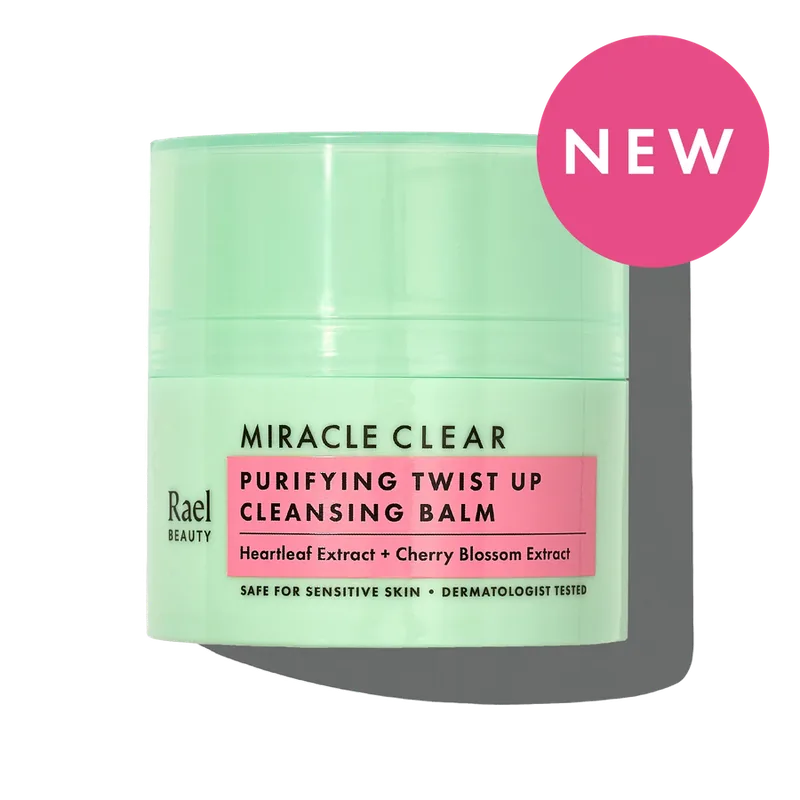
Miracle Clear Purifying Twist Up Cleansing Balm
Korean Oil Cleansing Balm
 Verified reviewer
Pros & cons.
- +97% longwear foundation + waterproof mascara removal in 1 use (clinical study, 40 participants) — strong cleansing performance
- +Twist-up format is more hygienic than tub-based balms and easier to dose
- +Jojoba oil + rice bran oil are acne-safe (low comedogenicity) — appropriate for the breakout-prone skin Rael positions for
- +Heartleaf and tamanu extracts add anti-inflammatory and antibacterial supporting function
- +Emulsifies cleanly with water rather than leaving an oil residue
- +Designed as Step 1 of a double-cleanse with the Miracle Clear Exfoliating Cleanser as Step 2
- −$18.99 for 1.6 oz = $11.87/oz — premium pricing for the category
- −Tamanu oil and rice bran oil are not zero-comedogenicity; acne-prone users should patch-test
- −Twist-up format means the balm contacts skin directly — wipe with alcohol periodically for hygiene
- −Won't substitute for the salicylic acid step of the Miracle Clear regimen — this is the makeup-removal step
The full review.
The Rael Miracle Clear Purifying Twist-Up Cleansing Balm is Rael’s first oil cleanser and Step 0 of the Miracle Clear acne regimen — the makeup-removal step that precedes the salicylic-acid water cleanser. The format is the immediately noticeable choice: a solid balm in a twist-up stick rather than the standard K-beauty tub. The formulation is the actual differentiator: an acne-specific oil-cleanser blend (jojoba + rice bran + tamanu) designed for breakout-prone skin that traditionally hasn’t been served well by the oil-cleansing category.
The “oils cause acne” myth has kept many acne sufferers from using oil cleansers at all. The reality is more nuanced. Acne-safe oils (jojoba, rice bran, squalane) actually dissolve sebum and oil-soluble pore-clogging debris more effectively than water-based cleansers can. The Comedogenicity Index — based on rabbit-ear and human-skin studies — rates oils from 0 (won’t clog pores) to 5 (highly comedogenic). Jojoba and rice bran are 1–2; coconut oil is 4. Acne-safe oil cleansers use the low-rated oils and consistently outperform water-only cleansing for makeup and SPF removal on breakout-prone skin.
Rael’s specific formulation makes thoughtful choices. Jojoba is the primary cleansing oil — structurally similar to human sebum, which gives it the unique ability to dissolve sebum specifically. Rice bran oil adds vitamin E and ferulic acid for antioxidant support. Tamanu oil contributes Polynesian wound-healing tradition’s anti-inflammatory and antibacterial function (the calophyllolide and related compounds have reasonable evidence for skin recovery). Heartleaf extract is a K-beauty soothing staple that reinforces the acne-friendly positioning.
The 97% longwear makeup and waterproof mascara removal claim is supported by Rael’s 40-participant clinical study. That’s a reasonable sample size and the direction is consistent with the general efficacy of oil cleansing for these residues. The mechanism — “like dissolves like” — is well-understood; waterproof formulations are lipid-based and don’t yield to water cleansers regardless of how aggressive the surfactant.
The twist-up format is the visible differentiator from competitor balms (Banila Co Clean It Zero, Heimish All Clean Balm). It’s more hygienic than tub-based balms (no finger contamination), travels better (no leak risk), and doses more consistently. The trade-off is that the balm contacts skin directly when applied, which a fraction of users find unsettling — wipe the surface with a clean tissue periodically.
At $18.99 for 1.6 oz ($11.87/oz), the price is premium for the category. Banila Co runs around $8/oz; Heimish around $9/oz; DHC Deep Cleansing Oil around $10/oz. Rael’s premium reflects the twist-up format and the acne-specific positioning. For users who fit that niche, the value is fair; for general-purpose users, the K-beauty tub balms are more economical.
Not ideal for
Bare-skin users who don’t wear makeup or sunscreen — a double cleanse isn’t necessary if there’s nothing to double-clean. Users with reactive responses to tamanu or rice bran (rare). People who prefer not to handle direct-contact applicators — a tub balm with clean fingers is the alternative.
Ingredient analysis.
Skin match.
The science.
Why oil cleansing is the right first step for makeup and SPF
Waterproof makeup, mineral sunscreen, and accumulated sebum are all lipid-based — they don't dissolve in water-based cleansers no matter how aggressive the surfactant. Oil cleansers work on a "like dissolves like" basis: the oils in the cleanser bond with the oils on skin, lifting both away when emulsified with water during rinse. This is the mechanism behind the standard Korean double-cleanse routine — oil first to dissolve oil-soluble residues, water cleanser second to clean off the residual oil and water-soluble debris.
The acne-skincare community has historically been skeptical of oil cleansers, conflating "all oils" with "comedogenic oils." The actual data is more nuanced. The Comedogenicity Index — based on rabbit-ear and human-skin studies — rates oils from 0 (won't clog pores) to 5 (highly comedogenic). Jojoba oil and rice bran oil are 1–2; squalane is 1; tamanu is 2; whereas coconut oil is 4 and cocoa butter is 4. Acne-safe oil cleansers use the low-rated oils and consistently outperform water-only cleansing for makeup and SPF removal.
Rael's formulation uses jojoba as the primary cleansing oil — structurally similar to human sebum, which gives it the unique ability to "dissolve like" sebum specifically. Rice bran oil adds vitamin E and ferulic acid antioxidant support. Tamanu oil contributes the Polynesian wound-healing tradition's anti-inflammatory and antibacterial function. Heartleaf extract reinforces the soothing function. The combination is a thoughtful acne-specific oil cleanser rather than a generic K-beauty balm.
References
- Oil cleansing in acne-prone skin — Journal of Cosmetic Dermatology (2019)
- Comedogenicity of cosmetic ingredients — American Journal of Cosmetic Surgery (1989)
Where it fits in your routine.
On dry skin (face and eyes if removing eye makeup), twist up the stick and apply directly to skin or to fingers, then rub onto face. Massage for 30–60 seconds to dissolve makeup and SPF. Add a small amount of water to emulsify — the balm should turn milky white. Rinse thoroughly with lukewarm water. Follow with second-step water cleanser (the Miracle Clear Exfoliating Cleanser pairs perfectly).
$18.99 for 1.6 oz = $11.87/oz. Premium for the category — Banila Co Clean It Zero is around $8/oz, DHC Deep Cleansing Oil around $10/oz. The premium goes to the twist-up format and the acne-specific positioning.
Combination and oily skin types running an acne routine who wear makeup or daily SPF. Acne-prone users who haven't found a comfortable oil cleanser. People who travel and want a non-leak format.
Bare-skin users who don't wear makeup or sunscreen — you don't need a double cleanse. Anyone with reactive tamanu or rice bran sensitivities.
Product details.
Solid balm in twist-up stick; melts on skin contact to oil consistency
Fragrance free
1.6 oz twist-up stick
12 months after opening
All Year
The backstory.
Rael's first oil cleanser — a twist-up solid balm designed as Step 0 of the Miracle Clear acne regimen, for makeup and SPF removal before the salicylic-acid water cleanse. Launched 2024 to round out the acne routine.
About Rael
K-beauty / acne-careRael was founded in 2017 by three Korean-American women — Yanghee Paik, Aness An, Binna Won. The Twist-Up Cleansing Balm extends the Miracle Clear regimen into the "pre-cleanse" step that's standard in K-beauty routines but underrepresented in Western acne care.
Common myths.
Oil cleansers cause acne.
This is one of the most persistent acne-skincare myths. Acne-safe oils (jojoba, rice bran, squalane) actually dissolve sebum and pore-clogging debris more effectively than water cleansers can. The "oil causes acne" idea conflates high-comedogenicity oils (coconut, palm) with low-comedogenicity ones. Use the right oil and oil cleansing helps acne, not hurts it.
Double cleansing is necessary for everyone.
Double cleansing is a useful step when there's something to double-clean — makeup, heavy SPF, accumulated sebum. For minimal-product users, a single cleanse is fine. The Korean double-cleanse routine assumes elaborate makeup or skincare layering; adapt to your actual routine.
FAQ.
Do I really need a double cleanse if I don't wear makeup?
Probably not. Double cleansing is meaningful when you have makeup, heavy sunscreen, or significant sebum buildup to remove. For someone wearing only SPF and a moisturizer, a single water-based cleanse is fine. This balm is the makeup-removal step; if you don't wear makeup, skip directly to the second-step cleanser.
Is the twist-up format better than a tub?
Hygienically yes — no finger contamination, no risk of contaminating the whole tub. Practically it depends on preference. The twist-up makes dosing easier and travels better. The tub format lets you take a larger scoop in one motion. Functionally identical formulations.
Will it break me out?
Most acne-prone users tolerate it well. The oils used (jojoba, rice bran) are low-comedogenicity; tamanu oil is moderate (2/5 on the comedogenicity scale). The acid step of double cleansing (Rael's Exfoliating Cleanser or any salicylic cleanser) helps prevent any residue from clogging. Patch-test if you've had problems with oil cleansers before.
How does it compare to Banila Co Clean It Zero or DHC Deep Cleansing Oil?
Banila Co is the classic K-beauty tub balm — slightly thicker, more mineral oil-based. DHC is a liquid format relying heavily on olive oil. Rael's twist-up is a different format (solid stick), uses jojoba + rice bran + tamanu rather than olive or mineral oil, and is more specifically positioned for acne-prone skin. The three are in the same general category but with distinct ingredient and format choices.
Can I use it on eye makeup?
Yes — oil cleansers are the most effective way to remove waterproof mascara and eyeliner. Apply to closed eyes gently; massage briefly; rinse with water to emulsify. Don't get the balm itself directly into the eye.
What the community says.
"97% makeup removal claim is real"
"Twist-up format is so much more hygienic than a tub"
"Doesn't break me out despite being oil-based"
"Pairs perfectly with the Exfoliating Cleanser"
"Removes mascara without harsh rubbing"
"Pricey per ounce"
"Twist-up direct contact feels weird to some users"
"Won't last long for daily makeup wearers"
People also looked at.