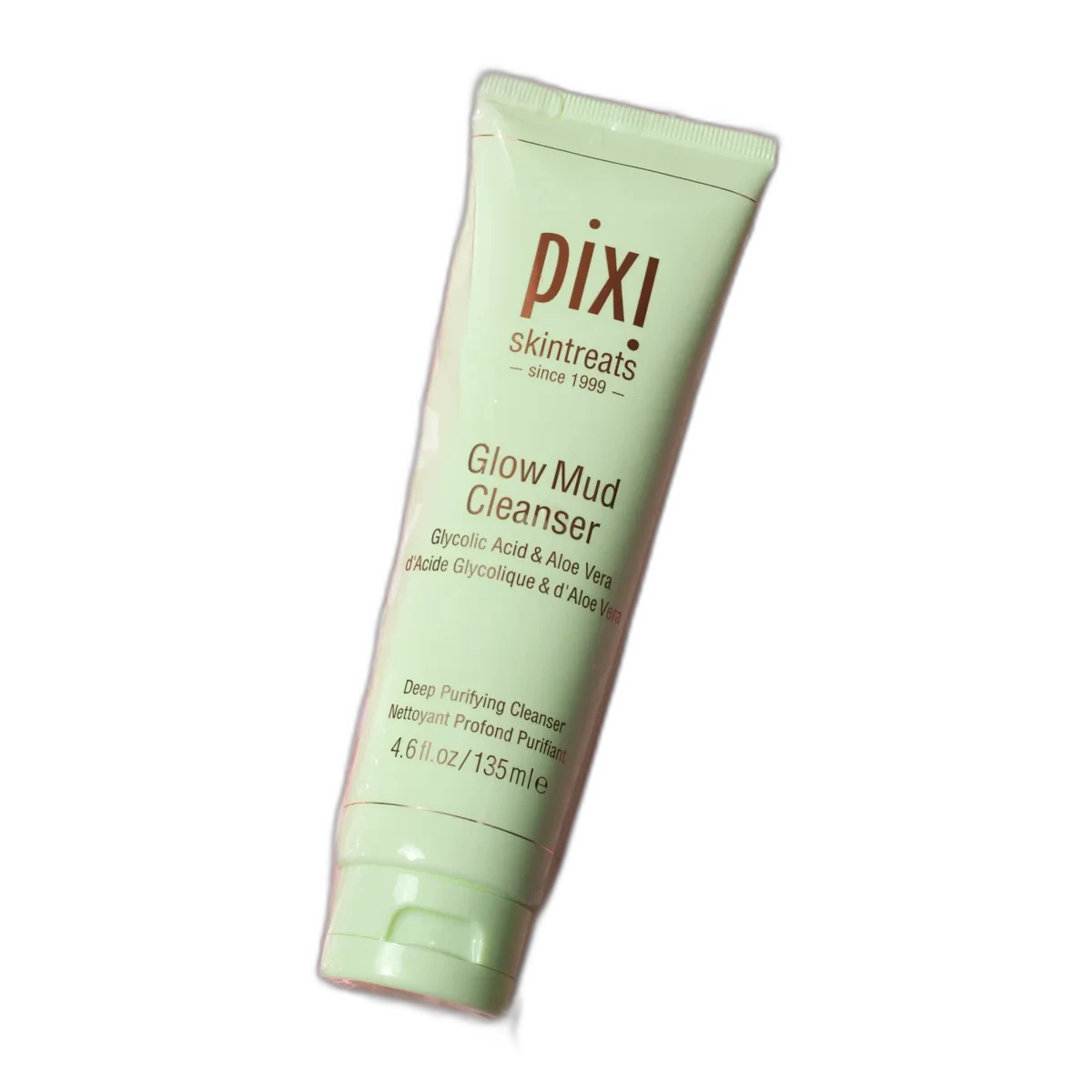
Glow Mud Cleanser
Glow-Getter Cleanser
 Verified reviewer
Pros & cons.
- +Aloe vera juice base provides built-in soothing to counterbalance the glycolic acid
- +5% glycolic acid delivers gentle daily exfoliation appropriate for a wash-off product
- +Diatomaceous earth adds oil-absorbing mud quality without harsh physical scrubbing
- +Impressively affordable at $18 for 4.57 oz with multi-mechanism exfoliation
- +Rich oil profile prevents the stripped, tight feeling common with acid cleansers
- +Cruelty-free and paraben-free formulation
- −Contains added fragrance, which is a questionable choice in a glycolic acid product
- −Sulfate surfactant may be too stripping for very dry or sensitive skin with daily use
- −5% glycolic acid in a wash-off format has limited penetration compared to leave-on products
- −Wheat germ oil is a potential allergen for individuals with wheat or gluten sensitivities
- −Not suitable for sensitive, rosacea-prone, or eczema-prone skin
The full review.
Pixi’s Glow Tonic changed the brand’s trajectory. Pixi moved from cosmetics to skincare after a single glycolic acid toner went viral on influencer shelfies. The Glow Mud Cleanser follows that success, extending the glow concept into cleansing.
The formula’s most interesting choice is the base. It uses aloe barbadensis leaf juice instead of water. This appears first on the INCI, meaning aloe’s anti-inflammatory and soothing properties form the foundation. This choice matters because the formula contains glycolic acid; the aloe counterbalances the acid’s irritation potential.
The glycolic acid concentration is 5%. This is low for an AHA but fits a wash-off cleanser where contact time lasts seconds. While massaging the product for 30-60 seconds, the glycolic acid loosens bonds between dead surface cells. It does not penetrate like a 10% leave-on serum. Instead, it provides gentle, daily exfoliation that maintains cell turnover and helps subsequent products penetrate better.
Diatomaceous earth gives the cleanser its mud texture. These fossilized microscopic algae shells create a soft, earthy grit that absorbs oil and provides physical exfoliation without the harshness of microbeads or crushed walnut shells. Combined with glycolic acid, this creates a two-mechanism approach: chemical dissolution of dead cell bonds and physical absorption of sebum and debris. This combination works well for congested skin.
The oil profile is notable. Safflower seed oil, avocado oil, hazelnut oil, sesame seed oil, wheat germ oil, and squalane are all in the formula. This is an oil-rich cleanser for a product marketed to oily and combination skin, but the formulation is logical. The oils counteract the stripping effects of the sulfate surfactant and glycolic acid so skin feels clean but not tight. It avoids the tautness often felt after using strong acid cleansers.
The texture sits between a cream cleanser and a clay mask. It is thick and substantive but does not harden like a traditional mud mask. A small amount spreads easily on damp skin and rinses without residue. Unlike many gel cleansers, the experience feels effective.
The Glow Mud Cleanser shows results over time. Within one week of daily evening use, skin texture improves. Environmental exposure, makeup, and cell buildup cause roughness and dullness, which this product smooths out. By week two, pores look cleaner. By week four, the complexion shows visible brightness from consistent, gentle exfoliation.
The fragrance is a clear limitation. Pixi uses added fragrance in this cleanser. While the floral scent is mild, adding fragrance to a product with glycolic acid is a questionable choice. Exfoliated skin is more permeable, so applying fragrance to acid-washed skin increases sensitization risk. This rarely affects most users, but it is a dealbreaker for those with fragrance sensitivities.
The sulfate surfactant, Sodium Trideceth Sulfate, is a milder version of SLS but remains a sulfate. Together with glycolic acid, it provides two stripping mechanisms. The oils and aloe buffer this, but very dry or sensitive skin may find it too intense for daily use. Using it 3-4 times weekly with a ceramide moisturizer is a reasonable compromise.
At $18 for 4.57 fl oz, the Glow Mud Cleanser is well-priced. It is a multi-mechanism exfoliating cleanser with an aloe base, 5% glycolic acid, mineral clay, squalane, and botanical oils—features many brands charge more for in a basic gel wash. The tube packaging is practical and hygienic compared to jars. For Target shoppers wanting affordable daily exfoliation, this is a thoughtful option.
Formula
Texture
The texture sits between a cream cleanser and a clay mask. It is thick and substantive but does not harden like a traditional mud mask. A small amount spreads easily on damp skin and rinses without residue. Unlike many gel cleansers, the experience feels effective.
Scent
The fragrance is a clear limitation. Pixi uses added fragrance in this cleanser. While the floral scent is mild, adding fragrance to a product with glycolic acid is a questionable choice. Exfoliated skin is more permeable, so applying fragrance to acid-washed skin increases sensitization risk. This rarely affects most users, but it is a dealbreaker for those with fragrance sensitivities.
Best for
The Glow Mud Cleanser shows results over time. Within one week of daily evening use, skin texture improves. Environmental exposure, makeup, and cell buildup cause roughness and dullness, which this product smooths out. By week two, pores look cleaner. By week four, the complexion shows visible brightness from consistent, gentle exfoliation.
Works for
Diatomaceous earth gives the cleanser its mud texture. These fossilized microscopic algae shells create a soft, earthy grit that absorbs oil and provides physical exfoliation without the harshness of microbeads or crushed walnut shells. Combined with glycolic acid, this creates a two-mechanism approach: chemical dissolution of dead cell bonds and physical absorption of sebum and debris. This combination works well for congested skin.
Not ideal for
The sulfate surfactant, Sodium Trideceth Sulfate, is a milder version of SLS but remains a sulfate. Together with glycolic acid, it provides two stripping mechanisms. The oils and aloe buffer this, but very dry or sensitive skin may find it too intense for daily use. Using it 3-4 times weekly with a ceramide moisturizer is a reasonable compromise.
PM routine
Ingredient analysis.
Full INCI list
Aloe Barbadensis Leaf Juice, Carthamus Tinctorius (Safflower) Seed Oil, Cetyl Alcohol, Glyceryl Stearate, Diatomaceous Earth, Glycerin, Glycolic Acid, Sodium Glycolate, Lauroamphocarboxyglycinate, Sodium Trideceth Sulfate, Squalane, Anthemis Nobilis Flower (Chamomile) Extract, Saponaria Officinalis Leaf/Root Extract, Hexylene Glycol, Fructose, Glucose, Sucrose, Urea, Dextrin, Alanine, Glutamic Acid, Aspartic Acid, Hexyl Nicotinate, Persea Gratissima (Avocado) Oil, Triticum Vulgare (Wheat) Germ Oil, Corylus Avellana (Hazelnut) Seed Oil, Sesamum Indicum (Sesame) Seed Oil, Phenoxyethanol, Caprylyl Glycol, Ethylhexylglycerin, Xanthan Gum, Fragrance, Chlorphenesin, Guar Gum, Sodium Hyaluronate, Citric Acid
Skin match.
The science.
The Science
Glycolic acid has the smallest molecular weight (76 Da) of all alpha-hydroxy acids. This allows it to penetrate the stratum corneum better than larger AHAs like lactic or mandelic acid. A 1996 study by Ditre et al. in the Journal of the American Academy of Dermatology shows that topical glycolic acid increases epidermal thickness, improves elastic fiber quality, and increases collagen density in the dermis. At the 5% concentration used in this cleanser, the short contact time makes desquamation—loosening the desmosomes that bind corneocytes—the primary mechanism instead of deep dermal stimulation.
The aloe vera base does more than soothe. Aloe barbadensis contains acemannan and other polysaccharides with documented anti-inflammatory and wound-healing properties. A review in the Indian Journal of Dermatology notes that topical aloe vera accelerates wound healing and has anti-inflammatory effects comparable to hydrocortisone. Using it as the formula base ensures these properties exist throughout the entire formulation rather than as a trace ingredient.
Diatomaceous earth (fossilized diatom shells) acts as a natural absorbent because of its porous silica structure. Millions of microscopic pores in each particle absorb oil and impurities through capillary action. Clinical studies on diatomaceous earth in skincare are limited, but the absorbent mechanism is well-understood from filtration and industrial uses.
Squalane, usually derived from olives, is structurally identical to the squalene human sebaceous glands produce. It works as an emollient that reinforces the skin's lipid barrier without occluding pores. This balances the stripping action of the glycolic acid and surfactants in this formula.
References
- Effects of glycolic acid on photoaged skin — Journal of the American Academy of Dermatology (1996)
Dermatologist Perspective
Dermatologists view glycolic acid cleansers as a practical entry point for patients starting chemical exfoliation. Board-certified dermatologists note that a 5% glycolic acid wash improves cell turnover and helps subsequent treatment products penetrate better. The short contact time also reduces irritation risk compared to leave-on formulations. The aloe base and oil content in this formula follow dermatological recommendations to pair exfoliating actives with soothing, barrier-supportive ingredients. The main dermatological concern is the added fragrance—it is unnecessary in an exfoliating product and poses a sensitization risk on acid-treated skin.
Guidance
Where it fits in your routine.
Wet your face with lukewarm water. Squeeze a dime-sized amount onto your fingertips. Massage into skin using circular motions for 30-60 seconds, avoiding the eye area. Rinse with lukewarm water and pat dry. Use in the evening as your second cleanser after removing makeup. Follow with toner, serum, and moisturizer. Start every other day and increase to daily use as tolerated.
At $18 for 4.57 fl oz, the Glow Mud Cleanser offers high value. This multi-mechanism exfoliating cleanser uses an aloe base, glycolic acid, mineral clay, squalane, and a botanical oil blend. Many prestige brands charge this price for a basic gel wash. Daily use makes the tube last 2-3 months, costing under $0.30 per use. The formula's quality and complexity provide strong value, especially compared to $30-50 exfoliating cleansers from clinical brands.
This cleanser works for normal, oily, and combination skin types seeking an affordable daily exfoliant for dullness, texture, and congested pores. It suits Pixi Glow Tonic fans who want the glow concept in their cleansing step.
This cleanser is not for sensitive, rosacea-prone, or barrier-compromised skin. It contains wheat germ oil and added fragrance, so avoid it if you have wheat allergies or fragrance sensitivities. Very dry skin types should use it only 2-3 times weekly.
Product details.
All Year
The backstory.
The Glow Mud Cleanser is an extension of Pixi's blockbuster Glow line, which began with the Glow Tonic — a product that went viral and essentially put the brand on the skincare map beyond its cosmetics roots. The cleanser was developed to pair with the Tonic, creating a two-step glow routine at an accessible price point.
About Pixi
Established Brand (5–20 years)Swedish-born makeup artist Petra Strand founded Pixi in London in 1999. Pixi started as a cosmetics brand but moved into skincare after the viral success of Glow Tonic. The brand sells affordable, glow-focused products through Target and specialty beauty retailers.
Common myths.
Glycolic acid in a cleanser does nothing because contact time is too short.
Leave-on products allow more acid penetration, but a 5% glycolic acid cleanser used for 60 seconds still exfoliates. This improves cell turnover and helps subsequent products penetrate better. The trade-off is gentler action and less irritation risk.
Mud cleansers dry out skin that is not oily.
Squalane, safflower oil, avocado oil, and an aloe base counterbalance the oil-absorbing diatomaceous earth. This cleanser pulls excess sebum from pores but does not strip the skin's essential moisture — dry skin types can use it 2-3 times weekly without issues.
FAQ.
Can I use the Pixi Glow Mud Cleanser every day?
Yes, if your skin tolerates it. The 5% glycolic acid concentration is mild enough for daily use in a wash-off product, thanks to the soothing aloe base. Use it every other evening first, then move to daily use if you have no irritation. If you use a leave-on AHA toner like the Pixi Glow Tonic, alternate days instead of layering both daily.
Should I use the Glow Mud Cleanser with the Pixi Glow Tonic?
These pair well, but use them thoughtfully. Most evenings, use the Glow Mud Cleanser then a hydrating toner. Use the Glow Tonic 2-3 times weekly after the cleanser. Using both daily doubles your glycolic acid exposure. This causes irritation over time, especially for combination or slightly sensitive skin.
Is the Pixi Glow Mud Cleanser good for acne?
It helps with acne-related congestion and blackheads. The glycolic acid promotes cell turnover to prevent pore clogging, and the diatomaceous earth absorbs excess sebum. It is not a targeted acne treatment — use it with dedicated acne treatments containing benzoyl peroxide or salicylic acid for active breakouts.
Does the Pixi Glow Mud Cleanser contain sulfates?
Yes, it contains Sodium Trideceth Sulfate, a sulfate-based surfactant. This sulfate is milder than the commonly avoided Sodium Lauryl Sulfate (SLS). The formula uses an aloe base, squalane, and multiple oils to prevent stripping.
Is the Pixi Glow Mud Cleanser safe for sensitive skin?
This cleanser is not ideal for sensitive skin. The 5% glycolic acid, fragrance, and sulfate surfactant create multiple irritation pathways. Sensitive skin types should patch test first and use it 2-3 times weekly maximum, or choose a fragrance-free, acid-free alternative.
What the community says.
"Leaves skin noticeably brighter and smoother without stripping"
"Good value at $18 for an exfoliating cleanser with glycolic acid"
"The mud texture feels satisfying and thorough without being harsh"
"Works well as part of the Pixi Glow routine alongside Glow Tonic"
"Pleasant texture that rinses clean without residue"
"Contains fragrance which may bother sensitive noses and skin"
"5% glycolic acid in a cleanser has limited contact time for full effect"
"Some users find it slightly drying during winter months"
"Wheat germ oil is a potential allergen for gluten-sensitive individuals"
"The tube squeezes out product inconsistently near the end"
People also looked at.