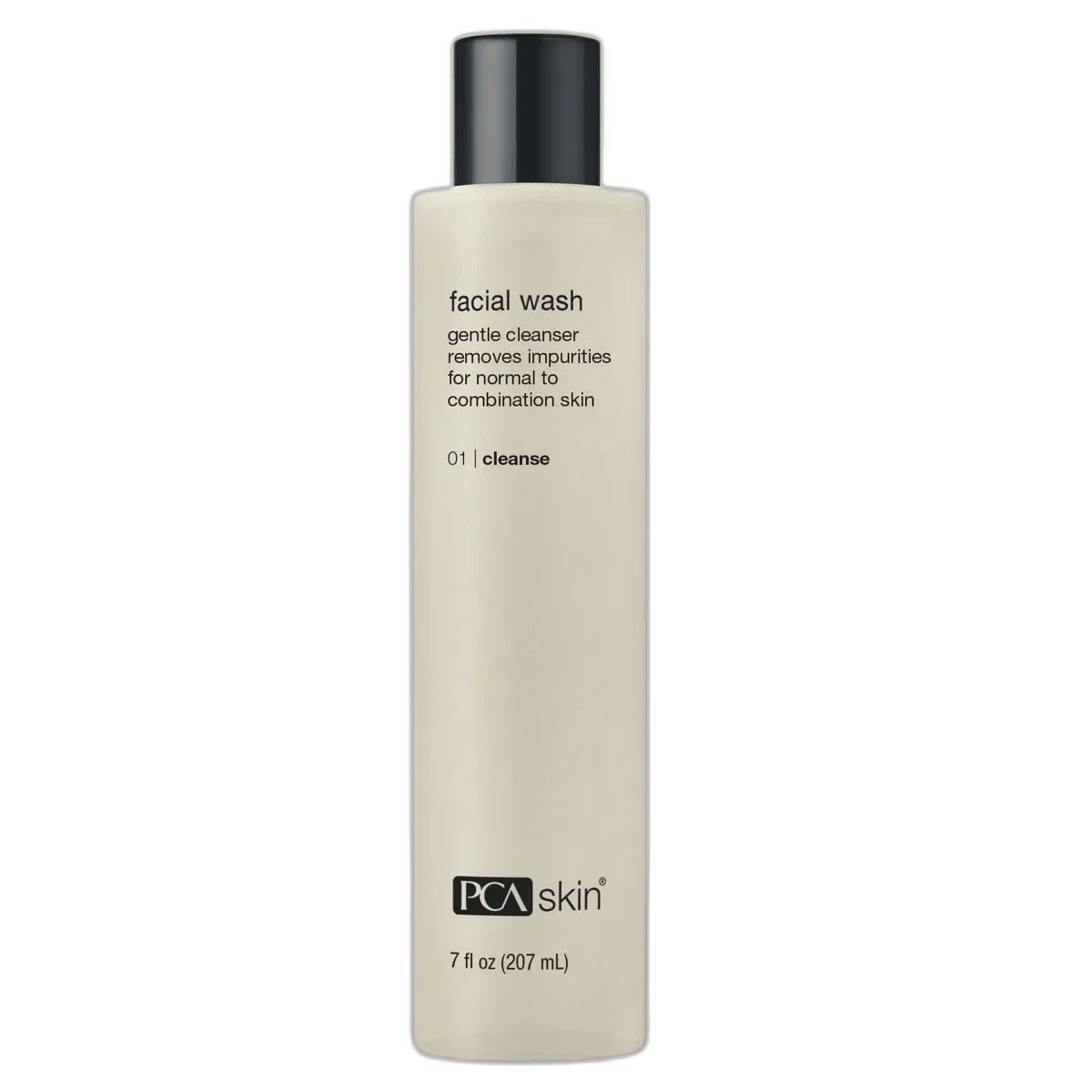
Facial Wash
Clean-Slate Daily Cleanser
 Verified reviewer
Pros & cons.
- +Remarkably short 12-ingredient list minimizes sensitization risk
- +Lactic acid provides gentle daily exfoliation during the cleansing step
- +Saccharomyces ferment adds microbiome-supporting nutrients
- +Fragrance-free oil-free and paraben-free formulation
- +Excellent value with 7 oz bottle lasting 4-5 months of daily use
- +Aloe vera and allantoin provide calming anti-inflammatory support
- +Cumulative brightening effect from daily lactic acid exposure
- −Olefin sulfonate surfactant is moderately strong for a sensitive-skin cleanser
- −Not powerful enough for very oily skin needing aggressive cleansing
- −Lactic acid concentration too low for visible standalone exfoliation
- −Cannot reliably remove heavy or waterproof makeup alone
- −Minimal lather may feel insufficient for users who prefer foaming cleansers
The full review.
Twelve ingredients. While “simple” cleansers often list twenty-five to forty components, PCA Skin’s Facial Wash uses a minimal formula. This choice reflects the brand’s professional treatment-room DNA, where unnecessary ingredients increase the risk of reactions during an esthetician’s peel.
The cleansing system uses sodium C14-16 olefin sulfonate as the primary surfactant, with cocamidopropyl betaine and cocamidopropyl hydroxysultaine as gentler co-surfactants. Olefin sulfonate is a sulfonate, not a sulfate, making it technically sulfate-free, though it can be moderately drying for very reactive skin. The co-surfactants buffer this strength, and most users report a gentle feel. However, PCA Skin’s Facial Wash has more cleansing power than amino acid-based cleansers like PCA Skin’s Creamy Cleanser.
The lactic acid makes Facial Wash unique. Most cleansers only remove debris, but lactic acid adds micro-exfoliation. The concentration is low (lactic acid is fourth on the INCI list but is neutralized by the following sodium hydroxide), so it lacks the tingling of a dedicated AHA treatment. Using it twice daily over weeks provides cumulative brightening and texture refinement. It gently dissolves dead skin cells to prevent dull buildup. It works like compounding interest—small daily deposits that add up.
Lactic acid also acts as a humectant, unlike glycolic acid; it draws moisture to the skin instead of just stripping the surface. This dual action allows Facial Wash to contain an AHA without feeling drying, making it suitable for sensitive skin that cannot tolerate glycolic acid.
Saccharomyces ferment supports the microbiome. This yeast-derived ingredient provides amino acids, peptides, and B vitamins to the skin surface during contact, supporting natural defenses without complex probiotic marketing.
Aloe vera and allantoin act as calming agents. These anti-inflammatory ingredients ensure the lactic acid and surfactants do not irritate sensitive skin. The combination exfoliates gently and calms immediately.
The texture is a clear, lightweight gel that creates a mild, airy foam. It lacks the dense lather of sulfate-based cleansers but foams enough to feel satisfying. It rinses off without residue. Skin feels clean, smooth, and slightly brighter immediately—not tight or stripped. Because it lacks fragrance, oils, silicones, and parabens, there is nothing for reactive skin to object to except the surfactant.
At $42 for 7 ounces, the value is strong. This concentrated formula lasts four to five months with twice-daily use. The daily cost is under thirty-five cents, which is cheaper per use than many drugstore cleansers.
Minimalism creates limitations. This won’t remove enough oil for very oily skin, and it isn’t a makeup remover for heavy coverage; you will need a first cleanse. If even moderate surfactants cause reactions, PCA Skin’s Creamy Cleanser with amino acid surfactants is a safer choice.
For normal, combination, and moderately sensitive skin, Facial Wash provides an effective cleanse through a simple formula. Lactic acid turns this basic wash into a daily treatment, and the short ingredient list minimizes risks. Sometimes the best formulation choice is knowing when to stop adding ingredients.
Ingredient analysis.
Full INCI list
Water/Aqua/Eau, Sodium C14-16 Olefin Sulfonate, Cocamidopropyl Betaine, Lactic Acid, Sodium Hydroxide, Saccharomyces Ferment, Cocamidopropyl Hydroxysultaine, Aloe Barbadensis Leaf Juice, Allantoin, Chlorphenesin, Sodium Benzoate, Potassium Sorbate
Skin match.
The science.
The Science
Lactic acid acts as both an exfoliant and a humectant, setting it apart from other alpha hydroxy acids in cleanser formulations. A 1996 study in the Journal of the American Academy of Dermatology shows that low concentrations of lactic acid work mainly as a humectant and pH modulator, but concentrations above 5% shift to keratolytic activity. Because Facial Wash is a rinse-off product, the brief contact time makes exfoliation subtle but cumulative. Research in Dermatologic Surgery (2002) found that even brief AHA exposure in cleanser formulations improves skin texture and brightness over 12 weeks of daily use.
Lactic acid also has a unique mechanism among AHAs: it stimulates ceramide synthesis in the stratum corneum. A study in the Journal of Investigative Dermatology found that topical lactic acid upregulates ceramide production. This explains why lactic acid-based products are often less drying than glycolic acid equivalents—they support the barrier while exfoliating.
Saccharomyces ferment is a yeast-derived ingredient that provides a complex of amino acids, vitamins (especially B vitamins), and minerals. While rinse-off products have less data than leave-on formulations, research on fermented skincare ingredients in the Journal of Cosmetic Dermatology (2019) suggests brief exposure delivers microbiome-supporting metabolites to the skin surface.
The surfactant system balances cleansing power with mildness. Cocamidopropyl betaine and cocamidopropyl hydroxysultaine are amphoteric surfactants that reduce the irritation potential of the primary anionic surfactant while maintaining foam quality and cleansing power.
References
- Alpha-hydroxy acids in the treatment of signs of photoaging — Journal of the American Academy of Dermatology (1996)
- Lactic acid enhancement of ceramide synthesis in the stratum corneum — Journal of Investigative Dermatology (2003)
Dermatologist Perspective
Dermatologists value the minimalist approach of PCA Skin Facial Wash, as fewer ingredients usually mean fewer potential allergens and irritants. Board-certified dermatologists recommend lactic acid in cleansers for patients seeking gentle chemical exfoliation without the irritation risk or commitment of leave-on AHA treatments. The formula follows dermatological guidance for patients with sensitive or rosacea-prone skin who need effective cleansing without barrier disruption. However, dermatologists specializing in contact dermatitis might note that olefin sulfonate, while not a sulfate, is still a moderately strong surfactant—and the most reactive patients might prefer an amino acid-based surfactant system.
Guidance
Where it fits in your routine.
Massage a small amount onto damp skin in circular motions for 30-60 seconds so lactic acid has brief contact time. Rinse well with lukewarm water. Use morning and evening. To remove makeup, double-cleanse with an oil cleanser or micellar water before using Facial Wash. Apply toner and treatment products immediately after.
At $42 for 7 oz, PCA Skin Facial Wash offers value in the professional skincare category. Daily use lasts 4-5 months, making the per-use cost about $0.15-0.17 — lower than many drugstore cleansers per wash. The lactic acid exfoliates mildly, which usually requires a separate product step. PCA Skin's professional reputation and its use in esthetician protocols justify the price, even though the 12-ingredient formula is simpler than some cheaper cleansers.
Facial Wash works for normal, combination, or sensitive skin. It provides a simple daily cleanser with mild exfoliation and no extra steps or irritation. It suits people who want minimal ingredient lists and a cleanser that supports professional treatment results at home.
Very oily skin types needing aggressive oil removal can use PCA Skin's Facial Wash Oily/Problem instead. For reactive skin that cannot tolerate surfactant strength, PCA Skin's Creamy Cleanser with amino acid surfactants is a gentler option.
Product details.
Clear, lightweight gel that lathers into a mild foam on contact with water
Unscented — clean, neutral
Squeeze bottle — hygienic and easy to dispense
Creates a light, airy lather that cleanses without stripping. It rinses off easily and completely, leaving skin smooth and slightly brightened. The lactic acid concentration causes no tingling. Skin feels clean but hydrated—no tightness or dryness.
4-5 months with twice-daily use
12 months
All Year
The backstory.
PCA Skin's reputation was built on chemical peels, and the brand understood that what happens before and between peels matters as much as the peel itself. Facial Wash was formulated as the everyday cleanser that would maintain the brightening and exfoliating effects of professional treatments at home — the lactic acid keeps cell turnover gently elevated between appointments without requiring a separate exfoliant step.
About PCA Skin
Established Brand (5–20 years)An aesthetician founded PCA Skin in 1990, developing it with dermatologists. PCA Skin is the number-one professional chemical peel brand for estheticians, with over one million peels performed globally each year. PhD chemists develop its formulations in-house.
Common myths.
Lactic acid in a cleanser stays on the skin too briefly to work.
Contact time is shorter than a leave-on product, but research shows brief exposure to AHAs in a cleanser provides measurable exfoliation — especially with twice-daily use over weeks. Daily lactic acid cleansing improves texture and brightness through cumulative effects without the irritation risk of leave-on acids.
Cleansers with fewer ingredients work less effectively.
Cleansers are rinse-off products; most ingredients wash away in a minute. Short ingredient lists mean fewer potential sensitizers and less irritation risk. Facial Wash's 12-ingredient formula has only what it needs (surfactants, exfoliant, soothers) and nothing else.
What the community says.
"Cleans thoroughly without leaving skin tight or dry"
"Gentle enough for daily sensitive skin use"
"Short ingredient list with no unnecessary additives"
"Skin feels smoother and more refined over time from lactic acid"
"Large 7 oz bottle provides excellent longevity"
"Doesn't foam heavily which some users find unsatisfying"
"May not be strong enough for very oily skin"
"Lactic acid concentration is quite low for visible exfoliation"
"Contains olefin sulfonate which is stronger than some gentle surfactants"
Featured in.
People also looked at.