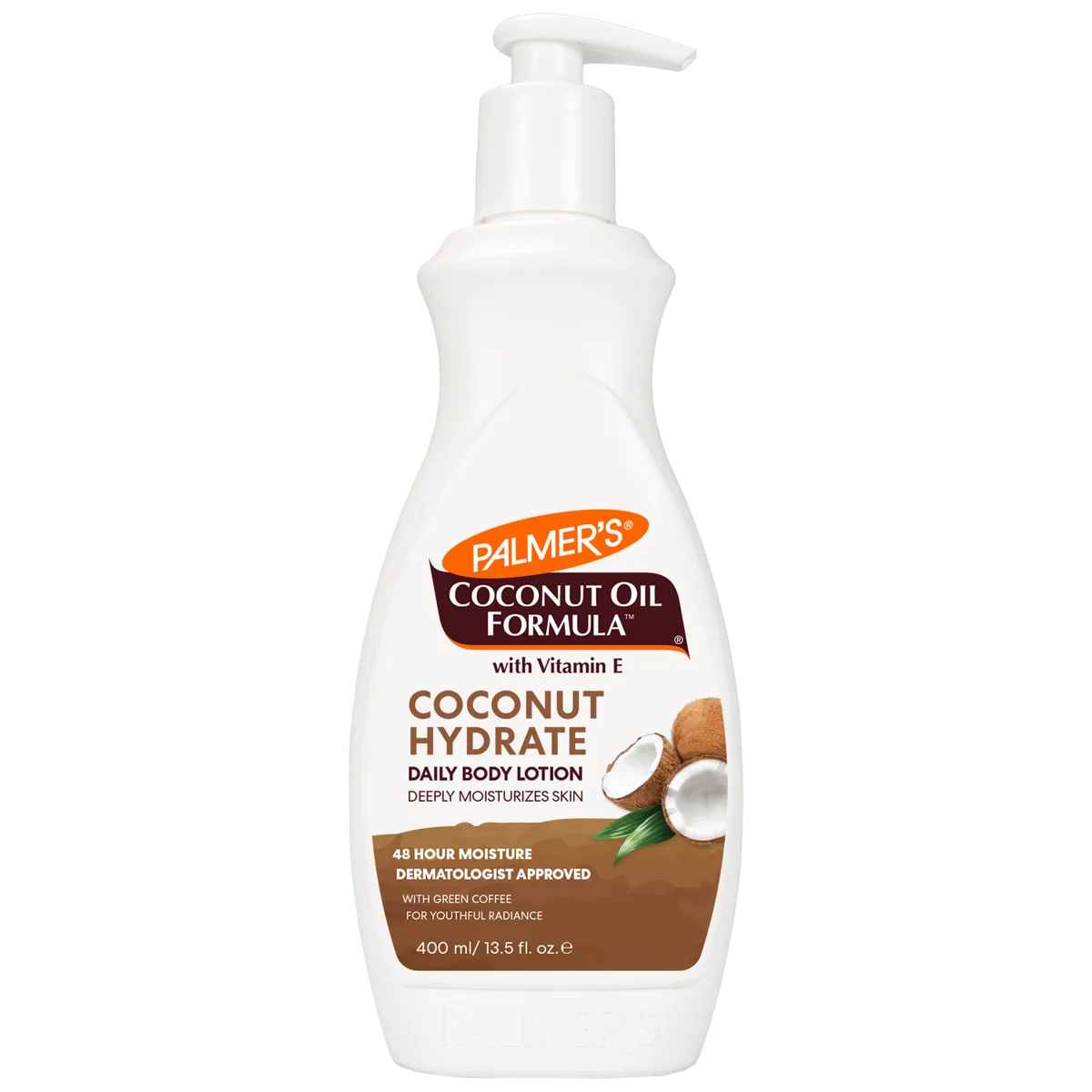
Coconut Oil Formula Body Lotion
Tropical Body Care Upgrade
 Verified reviewer
Pros & cons.
- +Cleaner ingredient list than the Cocoa Butter Formula with no mineral oil, artificial dyes, or parabens
- +Lighter, quicker-absorbing texture that is comfortable under clothing immediately after application
- +Sophisticated plant-oil blend including shea butter, macadamia, sweet almond, and monoi oils
- +Green coffee extract adds genuine antioxidant functionality beyond basic moisturization
- +Excellent value at approximately six to seven dollars for 13.5 oz with larger economy sizes available
- +Silicone-free formula for those who prefer silicone-free body care
- −Contains fragrance allergens (coumarin, benzyl benzoate) that may irritate sensitive skin
- −Coconut oil and isopropyl myristate are highly comedogenic for acne-prone body areas
- −Tropical fragrance is polarizing — some find it too strong or artificially sweet
- −Less occlusive than the petrolatum-based Cocoa Butter Formula for very dry winter skin
- −Product has been reformulated at least once with some users reporting performance changes
The full review.
About Palmer’s
Around 2015, coconut oil became a cultural phenomenon. It was used for cooking, hair, skin, and oil pulling. Palmer’s built its identity on cocoa butter starting in 1975, but later pivoted to launch the Coconut Oil Formula line. A decade later, we can see if this was a trend-chasing move or a real formula improvement.
The answer is mostly the latter.
Formula
The ingredient list shows the change. While the classic Cocoa Butter Formula uses petrolatum and mineral oil as its moisturizing base, the Coconut Oil Formula uses plant oils: coconut fruit extract is at position two, soybean oil is at three, and shea butter is at four. Macadamia oil, sweet almond oil, monoi oil, and aloe vera complete a botanical blend more sophisticated than the legacy Palmer’s formula. Green coffee extract adds antioxidant benefits. The absence of mineral oil and artificial dyes gives this product clean beauty credentials for a mass-market drugstore brand.
Texture
The texture reflects this change. It is noticeably lighter than the Cocoa Butter Formula—more like a lotion than a cream. It absorbs within one or two minutes without the greasy window required by the cocoa butter version. The finish is clean and satin, so it feels comfortable under clothing immediately. The Coconut Oil Formula solves the problem for people who found the Cocoa Butter Formula too heavy for daily use in warm months.
Moisturizing Performance
Moisturizing performance is good, though slightly less intense than the petrolatum-heavy Cocoa Butter Formula. The coconut oil and shea butter combination provides emollient coverage, while glycerin and propylene glycol deliver humectant hydration. This provides all-day moisture for normal to dry skin with one application. Very dry winter skin may need twice-daily use or layering over a body oil because the absence of petrolatum reduces occlusion.
Scent
The scent is the most noticeable feature and is divisive, much like the cocoa butter version. This tropical coconut fragrance is sweet, warm, and artificial, typical of drugstore tropical scents. Fans say it smells like vacation, but detractors find it aggressively sweet. The monoi oil (gardenia tahitensis flower extract) adds a floral undercurrent for more complexity, but it remains a fantasy-tropical scent rather than a subtle natural coconut.
Limitations
The fragrance formulation is the product’s most significant limitation. Unlike the simpler Palmer’s Cocoa Butter fragrance, the Coconut Oil Formula contains listed fragrance allergens—coumarin and benzyl benzoate—plus benzyl alcohol. These are EU-regulated compounds that require disclosure above trace levels. Their presence means this product carries a sensitization risk for fragrance-reactive individuals. It is ironic that a product marketed as the cleaner Palmer’s option contains more specified allergens than the classic formula.
Coconut System
The dual coconut system mirrors the dual cocoa approach in the Cocoa Butter line. Coconut fruit extract is at position two, suggesting a high concentration, while coconut oil is at position ten. The extract delivers polyphenols and medium-chain fatty acids, while the oil provides lauric acid with antimicrobial properties. Together, they create a coconut-centric moisturizing base that differs from generic drugstore body lotions.
Shea Butter
Shea butter at position four is a meaningful inclusion. Rich in anti-inflammatory triterpenes (lupeol, alpha-amyrin), shea butter has better evidence for supporting skin barrier repair than coconut oil alone. Its fatty acid profile—high in oleic and stearic acids—is more skin-compatible than the lauric acid-heavy composition of coconut oil. Shea butter elevates this formula beyond the coconut-focused marketing.
Green Coffee Extract
Green coffee extract is the signature additive Palmer’s features on the packaging as ‘with Green Coffee Extract.’ It contains chlorogenic acid, an antioxidant that shows photoprotective properties in cell studies. The concentration in a body lotion is likely modest, but it is a genuine attempt to add functional benefit beyond basic moisturization.
Comedogenic Concern
The comedogenic concern is important. Coconut oil has a comedogenic rating of 4 out of 5, and isopropyl myristate rates 3-5 depending on the assessment. This is rarely an issue for body skin, which is thicker and less reactive than facial skin. However, these ingredients could exacerbate breakouts for anyone prone to acne on the back, chest, or shoulders. This is not a facial moisturizer.
Value
The value remains strong, though less dramatic than the Cocoa Butter Formula. At approximately six to seven dollars for 13.5 ounces, this is an excellent price for a plant-oil body lotion without mineral oil or synthetic dyes. The 33.8 oz size at ten to thirteen dollars drops the per-ounce cost to around thirty to forty cents—outstanding for the ingredient quality. Amazon Subscribe and Save deals have reportedly dropped the price to as low as three and a half dollars for the standard size.
Conclusion
Palmer’s Coconut Oil Formula Body Lotion outlasted the coconut oil trend because it offered a cleaner ingredient list, a lighter texture, and a more sophisticated botanical blend than its predecessor. It did not replace the Cocoa Butter Formula, but it proved that Palmer’s can evolve beyond its heritage while keeping the price point accessible to everyone.
Ingredient analysis.
Full INCI list
Water, Cocos Nucifera (Coconut) Fruit Extract, Glycine Soja (Soybean) Oil, Butyrospermum Parkii (Shea) Butter, Isopropyl Myristate, Propylene Glycol, Cetyl Alcohol, Palmitic Acid, Stearic Acid, Cocos Nucifera (Coconut) Oil, Theobroma Cacao (Cocoa) Seed Butter, Tocopherol, Tocopheryl Acetate, Coffea Robusta Seed Extract, Gardenia Tahitensis Flower Extract, Macadamia Ternifolia Seed Oil, Prunus Amygdalus Dulcis (Sweet Almond) Oil, Aloe Barbadensis Leaf Juice, Stearyl Alcohol, Aminomethyl Propanol, Carbomer, Glycerin, Ethylhexylglycerin, Citric Acid, Potassium Sorbate, Leuconostoc/Radish Root Ferment Filtrate, Tetrasodium EDTA, PEG-40 Stearate, Sodium Benzoate, Phenoxyethanol, Fragrance (Parfum), Benzyl Benzoate, Coumarin, Benzyl Alcohol
Skin match.
The science.
The Science
This formula uses plant-derived emollients instead of the petrolatum-mineral oil strategy used in the classic Palmer's Cocoa Butter Formula. A 2004 randomized controlled trial by Agero and Verallo-Rowell in Dermatitis shows virgin coconut oil works as well as mineral oil to treat xerosis, plus its lauric acid content provides antimicrobial activity.
Shea butter (Butyrospermum parkii) has anti-inflammatory properties from triterpenes, specifically lupeol and alpha-amyrin. Akihisa et al. documented the anti-inflammatory activity of shea butter triterpenes in a 2010 Journal of Oleo Science study, which supports its use for barrier repair and soothing dry, irritated skin.
Green coffee extract (Coffea Robusta seed extract) contains chlorogenic acid, a polyphenol with antioxidant and photoprotective properties. Bresciani et al. showed in a 2015 Journal of Cosmetic Dermatology study that coffee-derived chlorogenic acid provides UV protection and antioxidant activity in skin cell models. The concentration in a body lotion won't provide standalone photoprotection, but it adds an antioxidant layer to the formula.
Monoi oil — made by infusing Gardenia tahitensis flowers in coconut oil — is a traditional Polynesian skin care ingredient. Clinical research on monoi is limited, but its coconut oil base and gardenia-derived phytochemicals provide emollient moisturization and potential antioxidant benefits.
References
- The effect of topical virgin coconut oil on SCORAD index, transepidermal water loss, and skin capacitance in mild to moderate pediatric atopic dermatitis — Dermatitis (2004)
- Anti-inflammatory and chemopreventive effects of triterpenes from shea fat — Journal of Oleo Science (2010)
- Photoprotective and antioxidant effects of chlorogenic acid in cosmetic formulations — Journal of Cosmetic Dermatology (2015)
Dermatologist Perspective
Dermatologists view plant-oil body lotions with measured enthusiasm. Coconut oil and shea butter are effective emollients with anti-inflammatory properties, but board-certified dermatologists note that lacking petrolatum reduces occlusive protection compared to the classic Palmer's formula. This formula provides adequate moisturization for mild to moderate dry skin. For severe xerosis or eczema requiring aggressive barrier repair, dermatologists typically still recommend petrolatum-containing products. Dermatologists would flag the fragrance allergens (coumarin, benzyl benzoate) for patients with known fragrance sensitivities or atopic conditions.
Guidance
Where it fits in your routine.
Apply a generous amount to damp skin right after bathing; skin moisture improves absorption and hydration retention. Massage in upward motions and focus on dry areas. Wait 1-2 minutes for full absorption before dressing. Use twice daily for best results. In winter or for very dry skin, layer over a body oil before applying the lotion to lock in more moisture. If you are breakout-prone, avoid use on acne-prone body areas (chest, back, shoulders).
This mineral oil-free, plant-oil body lotion offers excellent value. At approximately $6.49 for 13.5 ounces, the per-ounce cost is about $0.48—a low price for a formula with shea butter, macadamia oil, sweet almond oil, and monoi oil. The 33.8 oz economy size lowers the per-ounce cost to roughly $0.30-0.39. Comparable plant-oil body lotions from clean or natural brands usually cost two to four times more and have fewer botanical actives.
Dry to normal skin types want a modern, plant-oil-based Palmer's experience without mineral oil or artificial dyes. This works for people who like tropical coconut scents, prefer silicone-free body care, and want more sophisticated ingredients than the classic Cocoa Butter Formula without a major price increase.
Avoid this if you have fragrance sensitivities because it contains coumarin and benzyl benzoate. People prone to body acne should watch the coconut oil and isopropyl myristate. For heavy-duty occlusive protection on very dry or eczema-prone skin, the petrolatum-based Cocoa Butter Formula (fragrance-free version) works better.
Product details.
This creamy lotion is lighter than Palmer's Cocoa Butter Formula. It spreads easily and absorbs without grease. It leaves skin smooth and soft instead of using a heavy occlusive coating.
Tropical coconut fragrance features sweet almond undertones and a floral gardenia (monoi) note. The scent is strong and lasts. Some users call it "vacation in a bottle," but others find it too aggressive or artificially sweet.
White-and-green plastic pump bottle with coconut imagery and Palmer's branding. The 13.5 oz pump is the standard size. Palmer's also sells 8.5 oz flip-cap bottles, 1.7 oz travel tubes, and a 33.8 oz economy pump. The packaging design is cleaner and more modern than the classic Cocoa Butter line.
The lotion spreads easily with a light, creamy consistency on first application. The tropical coconut scent is immediate. Skin feels softer moments after application, and the formula absorbs within 1-2 minutes without sticky or greasy residue. Most users expect no adjustment period or reactions.
2-3 months with twice-daily full-body application using the 13.5 oz bottle
12 months
All Year
The backstory.
Palmer's launched the Coconut Oil Formula line around 2015 as a strategic extension targeting younger, ingredient-conscious consumers who were gravitating toward coconut oil products during the ingredient's peak popularity. The line leverages the Palmer's brand trust while pivoting toward a cleaner, more tropical positioning — trading the heritage cocoa butter scent and mineral oil base for coconut, monoi, and plant-derived emollients.
About Palmer's
Legacy Brand (20+ years)E.T. Browne Drug Co. produces Palmer's. Founded in 1840, it is one of America's oldest skincare companies. The Coconut Oil Formula line launched around 2015 to extend the brand with cleaner formulations (no mineral oil, no dyes, no parabens) using the parent brand's 180+ years of heritage.
Common myths.
Coconut oil is the best natural moisturizer for all skin types
Coconut oil has documented emollient and antimicrobial properties, but its comedogenic rating is 4 out of 5 — among the highest for natural oils. This makes it a poor choice for acne-prone skin, especially on the face, back, and chest. This lotion works well for dry body skin that does not break out.
Mineral oil-free products are better for your skin.
Mineral oil is a well-studied, effective occlusive with a long safety record. Palmer's decision to exclude mineral oil from this formula follows consumer preference, not safety science. The coconut and shea butter base moisturizes well, but it is not better than a well-formulated mineral oil product.
FAQ.
How is Palmer's Coconut Oil Formula different from the Cocoa Butter Formula?
The Coconut Oil Formula replaces the mineral oil, artificial dyes, and cocoa-forward scent of the classic Cocoa Butter Formula. It uses a plant-oil base of coconut, shea butter, monoi oil, and green coffee extract. The texture is lighter, the scent is tropical rather than chocolatey, and it has more 'free-from' credentials (no mineral oil, no dyes, no sulfates).
Is Palmer's Coconut Oil Body Lotion good for eczema?
Some eczema users report positive results. The mineral oil-free, dye-free formula is gentler in some ways. However, the synthetic fragrance and fragrance allergens (coumarin, benzyl benzoate) may irritate eczema-prone skin. For eczema management, the Cocoa Butter Formula Fragrance Free variant is a safer choice.
Will Palmer's Coconut Oil lotion clog pores?
The formula contains coconut oil (comedogenic rating 4/5) and isopropyl myristate (comedogenic rating 3-5/5), both pore-clogging ingredients. Most body skin tolerates these well, but those prone to body acne on the chest, back, or shoulders should patch-test first and avoid breakout-prone areas.
Is Palmer's Coconut Oil Formula cruelty-free?
Palmer's lacks cruelty-free certification from Leaping Bunny, PETA, or other third-party organizations. Some retailers call Palmer's cruelty-free because the brand says so, but Palmer's has no independent verification. Palmer's sells products in markets that may require animal testing.
Does Palmer's Coconut Oil Body Lotion really provide 48-hour moisture?
Palmer's claims 48-hour moisture from their own clinical testing. In practice, the lotion provides comfortable all-day hydration for most skin types with one application. Very dry skin in harsh conditions needs twice-daily application instead of one application to last two full days.
What the community says.
"Tropical coconut scent that users describe as smelling like a vacation"
"Non-greasy texture that absorbs quickly without heavy residue"
"Excellent all-day moisturization for dry skin at a budget price"
"Cleaner formula without mineral oil or artificial dyes compared to the Cocoa Butter version"
"Rich blend of plant oils including macadamia, sweet almond, and monoi"
"Fragrance can be too strong or artificial-smelling for some users"
"Contains fragrance allergens (coumarin, benzyl benzoate) unsuitable for sensitive skin"
"Coconut oil and isopropyl myristate are highly comedogenic for acne-prone body areas"
"May feel too lightweight for severely dry winter skin"
"Product may have been reformulated with reports of formula changes affecting performance"