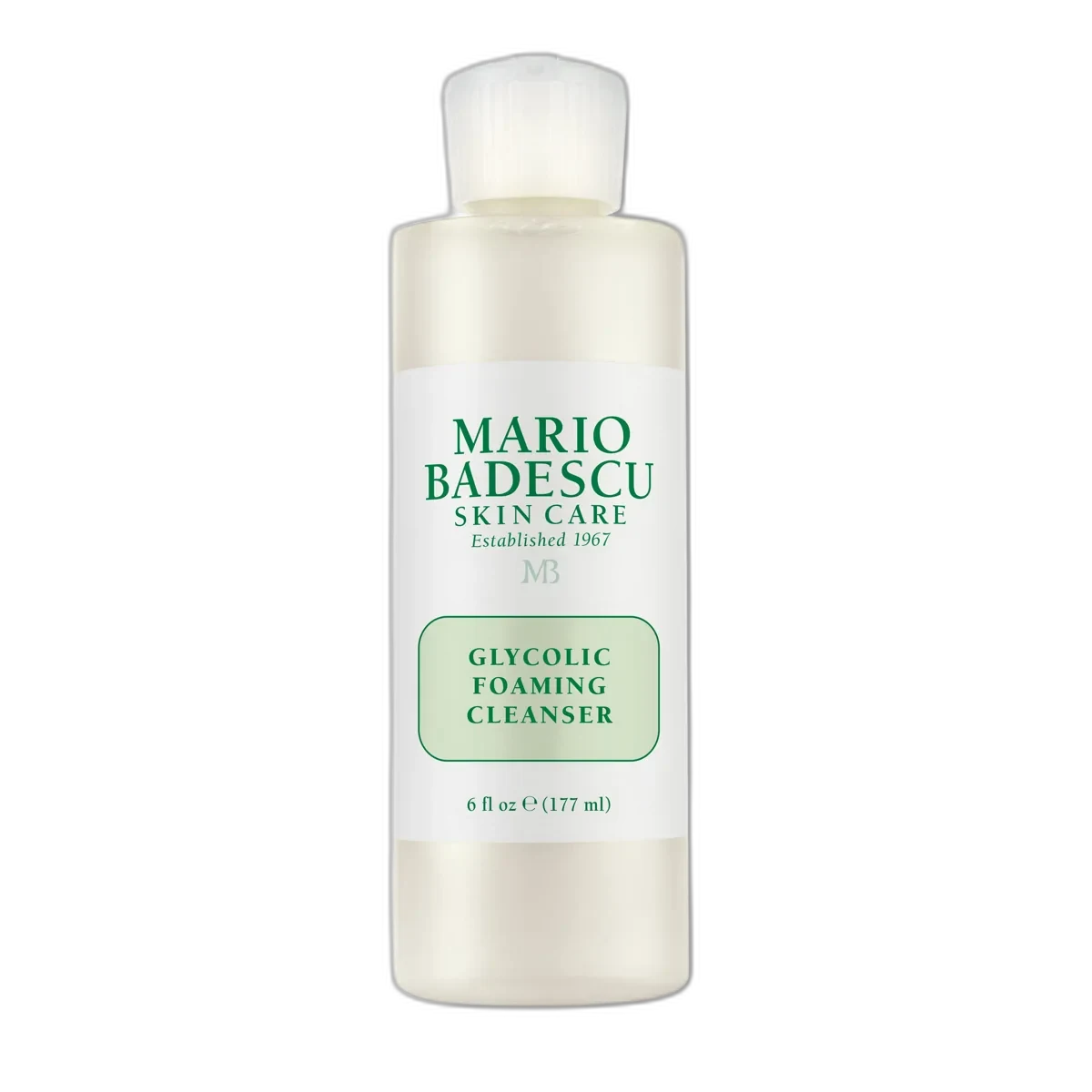
Glycolic Foaming Cleanser
Budget Brightening Workhorse
 Verified reviewer
Pros & cons.
- +Glycolic acid delivers measurable brightening and texture improvement within 1-2 weeks
- +Exceptional value at 6 for 6 fl oz that lasts 4-6 months with proper use frequency
- +Five soothing botanical extracts help buffer the acid's irritation potential
- +Foaming wash-off format provides gentler AHA introduction than leave-on products
- +Rich, satisfying lather that feels thorough without requiring much product
- +Effectively fades post-inflammatory hyperpigmentation and dark spots over time
- −SLS as the primary surfactant is unnecessarily harsh paired with an exfoliating acid
- −Contains methylparaben, propylparaben, and diazolidinyl urea — a formaldehyde-releasing preservative
- −Five EU-designated fragrance allergens plus synthetic fragrance add significant sensitization risk
- −Not suitable for daily use — requires careful frequency management to avoid over-exfoliation
- −The combination of actives makes it genuinely risky for sensitive, dry, or reactive skin types
- −Glycolic acid concentration is not disclosed, making it difficult to calibrate use
The full review.
The Mario Badescu Glycolic Foaming Cleanser divides skincare communities. Long-term users swear by its brightening effects and ignore the ingredient controversies. Conversely, ingredient-conscious consumers recoil at the SLS-parabens-formaldehyde-releaser trifecta. Both sides have valid points; the truth lies between them.
Glycolic acid drives this product. As the smallest alpha-hydroxy acid molecule, glycolic acid penetrates the stratum corneum more effectively than larger AHA molecules like lactic or mandelic acid. The foaming cleanser format limits contact time to 30 to 60 seconds, which moderates exfoliation compared to leave-on products. However, research confirms short-contact glycolic acid at effective concentrations promotes measurable desmosomal breakdown, dissolving dead skin cell bonds during the wash. Skin feels smoother after one use and looks visibly brighter within one to two weeks of consistent application.
Five botanical extracts—chamomile, sage, marshmallow root, yarrow, and St. John’s wort—act as soothing agents against glycolic acid and SLS. Chamomile’s bisabolol is a documented anti-inflammatory, while marshmallow root provides emollient cushioning. It is debatable if these botanicals at undisclosed concentrations fully counteract the irritation from SLS and glycolic acid, but they show the formula needs buffering.
The formula uses sodium lauryl sulfate. SLS is the second ingredient—not the gentler sodium laureth sulfate, but sodium lauryl sulfate, a potent surfactant. It produces a thick foam but is a documented irritant that can strip natural lipids and compromise barrier function. Pairing SLS with an exfoliating acid prioritizes cleansing power over skin comfort. This may not affect resilient oily skin, but for those with mild sensitivity, it causes tightness, redness, and a cycle of over-stripping and overproducing oil.
The preservative system shows the formula’s age. Methylparaben and propylparaben are present, contradicting the industry shift toward paraben-free formulations. More concerning is diazolidinyl urea, a formaldehyde-releasing preservative and known sensitizer and contact allergen. These preservatives work and have kept products shelf-stable for decades, but modern alternatives exist with less sensitization risk. In 2026, their inclusion suggests inertia.
Fragrance adds concern. The formula contains synthetic fragrance and lists five EU-designated fragrance allergens: citral, linalool, citronellol, geraniol, and limonene. The orange blossom floral scent is pleasant to most. However, for those prone to fragrance reactions, this list acts as a warning.
Despite these issues, the product works. Users who tolerate the formula report visible improvements in skin brightness, texture, and dark spot fading. At 6 for six ounces, it is one of the most affordable glycolic acid products on the market. Because it is a wash-off product, it lasts for months. The value is high if your skin handles the delivery mechanism.
The foaming format benefits people new to chemical exfoliation. Brief contact time provides controlled AHA exfoliation; the wash-off nature prevents the sustained irritation leave-on products cause in beginners. Use it two to three times per week in the evening, followed by a hydrating toner and a ceramide-based moisturizer, to use this cleanser as a gateway to chemical exfoliation.
The brand recommends not using this with topical prescriptions like retinoids. Stacking glycolic acid with retinol on the same evening compromises the barrier. Instead, alternate nights: use the glycolic cleanser two or three evenings per week and retinol on other evenings, using a gentle non-exfoliating cleanser on glycolic nights as a buffer.
Mario Badescu has manufactured this cleanser at their Edison, New Jersey facility since the brand was a small Manhattan skincare studio. It follows the brand’s philosophy: effective ingredients at accessible prices without overcomplicated formulations. This philosophy has merit, even if specific ingredients deserve scrutiny. This cleanser gets results through glycolic acid and brute-force cleansing, buffered by botanicals and priced low. Whether it asks too much of your skin barrier depends on your skin.
Formula
PM routine
Ingredient analysis.
Full INCI list
Aqua (Water, Eau), Sodium Lauryl Sulfate, Cocamidopropyl Betaine, Cocamide MEA, Glycolic Acid, Triethanolamine, Salvia Officinalis (Sage) Leaf Extract, Hypericum Perforatum Extract, Chamomilla Recutita (Matricaria) Flower Extract, Althaea Officinalis Leaf/Root Extract, Achillea Millefolium Extract, Sodium Chloride, Parfum (Fragrance), Propylene Glycol, Methylparaben, Propylparaben, Diazolidinyl Urea, Citral, Linalool, Citronellol, Geraniol, Limonene
Skin match.
The science.
The Science
Glycolic acid is a heavily studied exfoliant in dermatology, backed by decades of peer-reviewed research. A 1997 study in Archives of Dermatological Research (PMID: 9248619) by Fartasch et al. shows that 4% glycolic acid applied twice daily for three weeks breaks down desmosomes in the outermost stratum corneum layer. This dissolves bonds between dead skin cells while keeping transepidermal water loss values unchanged, preserving barrier function. This targeted action improves brightening and texture without disrupting the barrier.
A 2021 study in the Journal of Cosmetic Dermatology (PMC7891644) found that 8-25% glycolic acid, neutralized to pH 4, induces dose-dependent desquamation and increases total collagen levels without triggering inflammatory TNF-alpha expression. This means properly formulated glycolic acid can promote cell turnover and collagen synthesis at the same time—the mechanism for its anti-aging benefits.
Because this cleanser is a wash-off format, contact time lasts only 30-60 seconds, which reduces the exfoliating effect but does not eliminate it. A 2013 review in Clinical, Cosmetic and Investigational Dermatology (PMC3875240) confirmed glycolic acid works for acne, melasma, photoaging, and scarring even at lower concentrations and brief contact times. Some protocols show up to 90% response rates for acne treatment.
References
- Mode of action of glycolic acid on human stratum corneum: ultrastructural and functional evaluation of the epidermal barrier — Archives of Dermatological Research (1997)
- Glycolic acid adjusted to pH 4 stimulates collagen production and epidermal renewal without affecting levels of proinflammatory TNF-alpha in human skin explants — Journal of Cosmetic Dermatology (2021)
- Glycolic acid peel therapy — a current review — Clinical, Cosmetic and Investigational Dermatology (2013)
Dermatologist Perspective
Dermatologists know glycolic acid as an established exfoliant that brightens, improves texture, and provides mild anti-aging benefits. However, board-certified dermatologists would likely worry about the SLS in this formula; pairing a potent surfactant with an exfoliating acid increases irritation risk and barrier disruption unnecessarily. Dermatologists treating acne or hyperpigmentation often recommend glycolic acid products, but they usually prefer leave-on formulations at known concentrations or suggest gentler surfactant bases for wash-off products. The formaldehyde-releasing preservative would also draw scrutiny in clinical settings where patients have contact dermatitis.
Where it fits in your routine.
Wet your face with lukewarm water. Apply a small amount of cleanser and massage in circular motions for 30-60 seconds, avoiding the eye area. Rinse thoroughly. Use 1-3 times per week in the evening—not daily. Follow with a hydrating toner, moisturizer, and SPF 30+ the next morning. Do not use on the same evenings as retinol or other chemical exfoliants.
At 6 for 177 mL, this is among the most affordable glycolic acid products on the market. The wash-off format lasts 4-6 months when used 2-3x weekly. The per-use cost is negligible. For oily, resilient skin types that tolerate the formula, the value is high — you get glycolic acid results for less than leave-on treatments. The question is if the cost savings justify the formulation trade-offs. A 2 fl oz travel size offers a low-risk way to test tolerance before buying the full size.
Oily and combination skin types with resilient barriers want effective glycolic acid exfoliation at an unbeatable price. This works for dullness, texture, and post-inflammatory hyperpigmentation without expensive leave-on treatments.
Sensitive, dry, or rosacea-prone skin. People who avoid parabens, SLS, or formaldehyde-releasing preservatives. Fragrance-sensitive users. Daily retinoid users who cannot alternate evenings.
Product details.
Pleasant orange blossom floral fragrance from the synthetic fragrance blend. Contains EU-designated fragrance allergens including citral, linalool, citronellol, geraniol, and limonene.
Standard Mario Badescu white plastic squeeze tube with green text branding. The design is simple and functional. A 2 fl oz travel size also exists.
A tingling sensation on first use is normal; it shows the glycolic acid is working. The foam cleanses thoroughly. Skin feels smooth and refreshed after rinsing, but the SLS causes tightness for some. Sensitive or reactive skin may show redness on first use. Tingling typically stops with regular use as skin builds tolerance.
4-6 months with 2-3x weekly use
12 months
All Year
The backstory.
Mario Badescu built his brand on the belief that professional-grade skincare should be accessible to everyone — and at 6 for six ounces, this cleanser embodies that philosophy. Developed at their Edison, New Jersey facility where every Mario Badescu product has been manufactured since the brand's founding, this cleanser represents the old-school esthetician approach: effective actives, botanical support, no unnecessary frills.
About Mario Badescu
Legacy Brand (20+ years)Romanian esthetician Mario Badescu founded Mario Badescu in New York City in 1967. The brand manufactures all products in-house at its Edison, New Jersey facility. Mario Badescu has nearly six decades of market presence and sells in prestige retail. The brand is not dermatologist-developed and faced past controversies regarding undisclosed active ingredients in some products.
Common myths.
Glycolic acid in a cleanser washes off too fast to work.
Leave-on glycolic products provide sustained exfoliation. However, research shows brief contact with glycolic acid at effective concentrations causes desmosomal breakdown in the stratum corneum. A 30-60 second wash with a glycolic cleanser delivers measurable exfoliation. This is less intense than a leave-on product but works over consistent use.
The tingling means the product is too strong for your skin.
Mild tingling from glycolic acid is normal; it shows the acid has an effective pH. But burning, stinging that lasts after rinsing, or redness that stays for hours means the product is too strong or you use it too often for your skin's tolerance level.
FAQ.
How often should I use the Mario Badescu Glycolic Foaming Cleanser?
Start once a week. Increase to 2-3 times per week as skin tolerance builds. Do not use this daily; the combination of glycolic acid and SLS over-exfoliates and damages the skin barrier if used too often. Use a gentle, non-exfoliating cleanser on non-glycolic days.
Can I use this cleanser with retinol?
Do not use this glycolic cleanser on the same nights as retinol. Both exfoliate, so using them together causes irritation, redness, and barrier damage. Alternate nights—use the glycolic cleanser 2-3 times per week and retinol on separate evenings—to get the benefits of both without overloading your skin.
Does this cleanser contain SLS?
Yes, Sodium Lauryl Sulfate is the second ingredient in the formula. SLS is a potent surfactant that creates thick foam but irritates and strips some skin types. This is a concern for sensitive or dry skin. Some retailers incorrectly market this product as sulfate-free — always check the actual INCI list.
Is the Mario Badescu Glycolic Cleanser paraben-free?
No — despite retailer claims, this product contains methylparaben, propylparaben, and diazolidinyl urea (a formaldehyde-releasing preservative). If you avoid these ingredients, use glycolic cleansers with alternative preservative systems.
Will this cleanser help with acne scars?
Glycolic acid increases cell turnover and gradually fades post-inflammatory hyperpigmentation (the dark marks left after acne). Use it 2-3 times weekly to see acne mark improvement over 4-8 weeks. Indented acne scars require professional treatments; no topical cleanser fixes structural scarring.
What the community says.
"Visibly brightens and evens skin tone within 1-2 weeks"
"Makes skin feel baby-smooth after use"
"Excellent value — a little goes a long way at 6 for 6 oz"
"Effectively reduces dark spots and old acne marks over time"
"Lathers well and feels like a deep, thorough cleanse"
"Can cause stinging, tingling, or redness especially on first use or with overuse"
"Contains SLS which can be stripping and drying for some skin types"
"Contains parabens and a formaldehyde-releasing preservative (diazolidinyl urea)"
"Fragrance and fragrance allergens are problematic for sensitive skin"
"Not gentle enough for daily use — requires careful frequency management"
People also looked at.