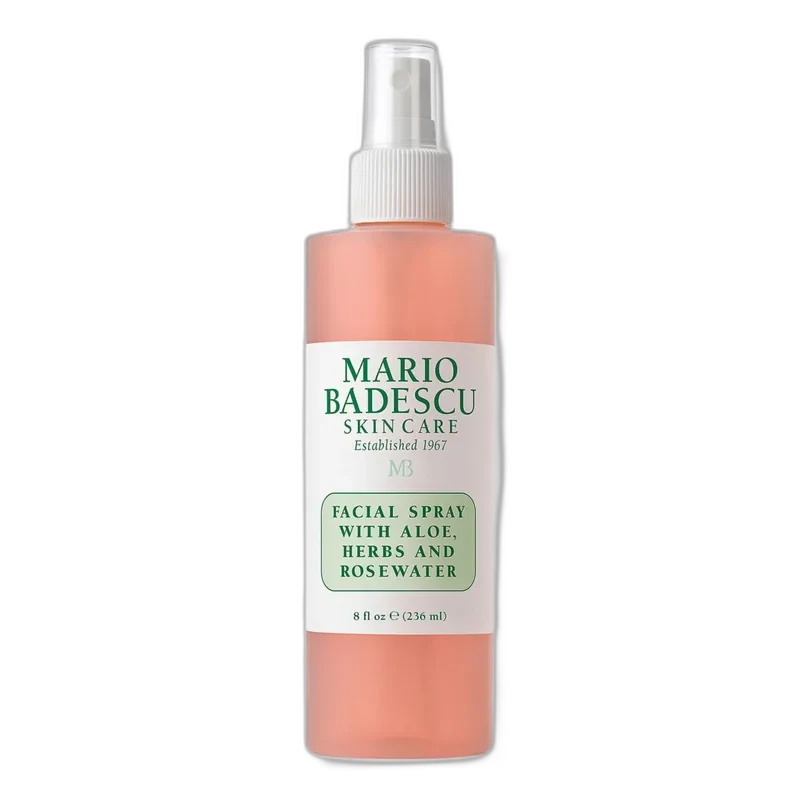
Facial Spray with Aloe Herbs and Rosewater
The OG Cult Mist
 Verified reviewer
Pros & cons.
- +Iconic cult product with over four decades of genuine word-of-mouth credibility
- +Immediately refreshing with a pleasant rose scent that is not overwhelming
- +Genuinely versatile as a toner, setting spray, midday refresh, and makeup tool
- +Excellent value at twelve dollars for four ounces with multiple size options
- +Aloe and propylene glycol deliver real lightweight hydration to the stratum corneum
- +Thyme and bladderwrack extracts add clarifying and antioxidant support beyond basic mists
- +Over 22,000 reviews with a consistent 4.5-star average across major retailers
- −Contains fragrance allergens (citronellol, geraniol) that limit use for sensitive and rosacea-prone skin
- −Synthetic dyes (Red 33, Blue 1) serve no skincare function and concern ingredient-conscious consumers
- −Rosa Canina extract is rosehip, not true steam-distilled rosewater — the name is misleading
- −Botanical extracts are at undisclosed and likely low concentrations for meaningful clinical effect
- −Does not provide sufficient hydration for dry skin without a moisturizer follow-up
- −Formula has not been updated to modern clean formulation standards
The full review.
The story of this facial spray is, in many ways, the story of how cult beauty products used to be made. Not through influencer campaigns or viral launches, but through one person telling another person, who told another, in an unbroken chain of recommendation that stretched from Mario Badescu’s small New York salon in the 1980s to over twenty thousand reviews across major retailers today. Martha Stewart has been going to the Mario Badescu salon since the 1960s. Jessica Chastain keeps it in her trailer. Kylie Jenner takes it on vacation. Nobody orchestrated this.
The product itself is almost comically simple. Water, propylene glycol, aloe vera juice, rosehip extract, thyme, bladderwrack, gardenia, some preservatives, some fragrance, and two dyes to make it pink. Seventeen ingredients. In an era when serums routinely contain thirty-plus actives in multi-patented delivery systems, the Rosewater spray is a bottle of lightly scented, lightly botanical water. And somehow, it has outsold, outlasted, and out-charmed nearly everything that tried to replace it.
The experience explains the devotion. You mist it on and there is an immediate cooling refresh — pleasant, soft, undeniably lovely. A light rose scent settles without lingering aggressively. Your skin looks dewier, feels calmer, seems a little more alive. It is the skincare equivalent of opening a window in a stuffy room. Nothing dramatic happens, but everything feels better.
Aloe vera, the third ingredient, does the heaviest lifting. A 2006 study in Skin Research and Technology confirmed that even low concentrations of aloe extract significantly increase stratum corneum water content. The aloe polysaccharides draw moisture in, and the propylene glycol — second ingredient, present in meaningful concentration — helps maintain that hydration at the surface. Together, they deliver the dewy feel that launched a million repurchases.
The botanical supporting cast is more interesting than it first appears. Thyme extract brings documented antibacterial and anti-inflammatory properties — thymol and rosmarinic acid that give this mist a subtle clarifying quality for oily and combination skin. Bladderwrack, a seaweed extract, contains fucoidan and phlorotannins with antioxidant activity, and a 2002 study found it improved skin elasticity with topical application. Gardenia fruit extract adds polyphenol antioxidants. None of these are present at concentrations likely to deliver dramatic clinical effects in a mist format, but they elevate the formula beyond truly basic rosewater-and-glycerin alternatives.
The name, however, requires an honest note. The formula contains Rosa Canina Extract — rosehip extract, from the dog rose — not steam-distilled rosewater from Rosa damascena petals. These are different ingredients processed in different ways. A 2025 class action lawsuit has brought this distinction into public discussion. The rose scent that most users associate with the product comes primarily from the added fragrance and its components citronellol and geraniol, not from the Rosa Canina extract itself. This does not make the product less effective at what it does — hydrating, refreshing, and looking lovely on a vanity — but it is a naming nuance that informed consumers deserve to know.
The fragrance components are also this product’s most significant limitation for sensitive skin. Citronellol and geraniol are both listed separately from the general parfum entry because they are recognized allergens under EU cosmetic regulation. For anyone with rosacea, eczema, or general fragrance sensitivity, these ingredients make this spray a risk. The synthetic pink dyes — Red 33 and Blue 1 — add another unnecessary element that offers no skincare benefit. For a product that launched decades before clean beauty was a concept, these inclusions are understandable. But the brand now offers a fragrance-free Adaptogens spray with actual functional actives, which makes the Rosewater spray’s formula feel increasingly dated by comparison.
The versatility argument, though, is real and robust. This mist works as a post-cleansing toner, a makeup setting spray, a midday refresh, a brush-dampening tool, a pre-mask prep, and a hair mist. The watery consistency supports all of these applications without conflict. No other product in most people’s routines serves this many functions at nine to twelve dollars.
The value proposition remains exceptional. Multiple sizes — from a one-ounce travel size to an eight-ounce stock-up bottle — keep it accessible at every budget level. At twelve dollars for four ounces, it costs less than a mediocre coffee drink and provides months of daily use.
This is not the most effective product in your routine. It is not going to treat acne, reverse hyperpigmentation, or meaningfully address aging. What it will do is make every other step feel nicer, give your skin a visible dewy glow, and remind you why you started caring about skincare in the first place. Sometimes a product earns its cult status not by being the most sophisticated formula in the room, but by being the one you reach for without thinking, every single day, for years.
Ingredient analysis.
Full INCI list
Aqua (Water), Propylene Glycol, Aloe Barbadensis Leaf Juice, Rosa Canina Extract, Thymus Vulgaris (Thyme) Leaf Extract, Fucus Vesiculosus (Bladderwrack) Extract, Gardenia Florida Fruit Extract, Caprylyl Glycol, Hexylene Glycol, Polysorbate 20, Parfum (Fragrance), Phenoxyethanol, Sodium Chloride, Citronellol, Geraniol, CI 17200 (Red 33), CI 42090 (Blue 1)
Skin match.
The science.
The Science
The Rosewater spray's functional backbone rests on aloe vera and its supporting botanicals. A 2006 study by Dal'Belo and colleagues in Skin Research and Technology found that aloe vera extract at concentrations as low as 0.10 to 0.50 percent significantly increased stratum corneum water content after two weeks of use, confirming its role as a topical humectant through polysaccharide-mediated water binding.
Bladderwrack (Fucus vesiculosus) provides the formula's most interesting supporting evidence. A 2002 study by Fujimura and colleagues in the Journal of Cosmetic Science found that twice-daily topical application of one percent bladderwrack gel for five weeks significantly improved skin elasticity and decreased skin thickness as measured by ultrasound and Cutometer, suggesting genuine anti-aging activity from the fucoidan and phlorotannin content.
Thyme extract's antimicrobial credentials were documented in a 2017 study by de Oliveira and colleagues in Archives of Oral Biology, which found significant antimicrobial activity against multiple pathogens alongside reduction in inflammatory markers IL-1 beta and TNF-alpha, with no cytotoxic or genotoxic effects.
Rosa Canina extract contains galactolipids, polyphenols, carotenoids, and vitamin C precursors with documented anti-inflammatory activity via COX-1/2 inhibition and NF-kB pathway modulation, as confirmed in a 2008 systematic review in Phytotherapy Research.
The critical caveat is that all of these studies examine ingredients at defined concentrations in controlled formulations — not in a mist where contact time, concentration, and delivery are fundamentally different. The spray's primary function is sensory hydration and refresh; clinical treatment effects from the botanicals are plausible but unquantifiable at the undisclosed concentrations used.
References
- Moisturizing effect of cosmetic formulations containing Aloe vera extract in different concentrations assessed by skin bioengineering techniques — Skin Research and Technology (2006)
- Treatment of human skin with an extract of Fucus vesiculosus changes its thickness and mechanical properties — Journal of Cosmetic Science (2002)
- Thymus vulgaris L. extract has antimicrobial and anti-inflammatory effects in the absence of cytotoxicity and genotoxicity — Archives of Oral Biology (2017)
- A systematic review on the Rosa canina effect and efficacy profiles — Phytotherapy Research (2008)
Dermatologist Perspective
Dermatologists view facial mists as a supplementary hydration step rather than a treatment product. Board-certified dermatologists would note that the aloe vera and propylene glycol in this formula provide genuine lightweight humectant action, and the botanical extracts add mild antioxidant and antimicrobial support. However, dermatologists would flag the fragrance components — citronellol and geraniol — as unnecessary allergen risks in a product applied to the face, and would typically recommend fragrance-free alternatives for patients with any history of skin reactivity. The formula delivers on its promise as a refreshing mist but should not be expected to replace functional treatment products in a dermatological regimen.
Where it fits in your routine.
Hold the bottle six to eight inches from your face. Close your eyes and mist evenly. Use after cleansing to hydrate skin before serum and moisturizer. Spritz over finished makeup for a dewy setting effect. Use throughout the day to refresh. Dampen makeup sponges or brushes before blending for smoother application. Mist onto hair for a light refresh. Store at room temperature; some users refrigerate for an extra-cooling sensation.
At twelve dollars for four ounces, with sizes from a one-ounce travel size to an eight-ounce stock-up bottle, the Rosewater spray offers high value. This versatile, multi-use mist comes from a brand with nearly sixty years of heritage. The per-use cost is negligible. Compare this to other facial mists, not treatment products; few competitors match its sensory quality, versatility, and price at mass-market availability. The brand's newer Adaptogens spray has more functional actives at a similar price point, providing better value for skincare benefits, but the Rosewater spray's sensory experience and cult status set it apart.
Use this if you want a versatile daily mist that refreshes, preps for makeup, and adds a dewy glow at an accessible price. If you value sensory skincare and genuine cult heritage, the Rosewater spray provides both atmosphere and utility.
Skip this if you have sensitive skin, rosacea, or fragrance allergies; citronellol and geraniol can cause irritation. Skip this if you want measurable skincare actives from a mist. The Adaptogens spray offers niacinamide, hyaluronic acid, and a clinically studied blend at a similar price without fragrance. Those prioritizing ingredient transparency should investigate the rosehip-versus-rosewater distinction.
Product details.
This ultra-lightweight watery mist settles on the skin as a fine veil. It is not sticky or heavy. It absorbs within seconds and leaves a subtle dewy finish.
It smells lightly floral with rose notes and herbal thyme and gardenia extracts. The fragrance is noticeable but not overwhelming, though fragrance-sensitive users will detect it immediately.
A cylindrical pale pink spray bottle has a gold cap and fine-mist pump nozzle. Synthetic dyes (Red 33 and Blue 1) create the pink liquid color, not the botanicals. Sizes include 1 oz, 2 oz, 4 oz, and 8 oz.
The first spritz feels cooling and refreshing with a soft rose scent. Skin looks dewier within seconds. It requires no adjustment period and causes no surprising sensations. The experience provides sensory comfort, which is the goal. One use shows why people become lifetime repurchasers.
1-2 months with twice-daily use and occasional midday refreshing (4 oz size)
12 months
All Year
The backstory.
The Facial Spray with Aloe, Herbs and Rosewater was born in Mario Badescu's small New York City salon, where clients received it as part of their facial treatment. It spread through Manhattan social circles by word of mouth — passed from socialite to model to actress over decades. Martha Stewart has been using it since the 1960s. When social media arrived, the product found an entirely new generation of devotees without the brand spending a dollar on advertising. A 2025 class action lawsuit alleging the product contains rosehip extract rather than true rosewater has added a layer of controversy to its otherwise unassailable reputation.
About Mario Badescu
Legacy Brand (20+ years)Mario Badescu launched in 1967 in New York City. This Rosewater spray is the brand's original flagship product and predates the modern facial mist category. It has over 20,000 reviews across retailers and organic celebrity endorsements from Martha Stewart to Kylie Jenner, making it one of the most recognized products in skincare.
Common myths.
This spray uses real rosewater distilled from rose petals.
The formula contains Rosa Canina Extract — an extract from rosehip (dog rose), not steam-distilled rosewater from Rosa damascena petals. A 2025 class action lawsuit highlights this distinction. The rose scent comes mostly from added fragrance, citronellol, and geraniol.
A facial mist provides enough hydration to replace moisturizer.
This spray uses aloe and propylene glycol for light hydration, but lacks the occlusive or emollient ingredients that lock in moisture. All skin types — especially dry skin — need a moisturizer after use. The mist preps and refreshes; it does not moisturize.
FAQ.
Can I use this spray as a makeup setting spray?
Yes — many people use it this way. Mist over finished makeup from six to eight inches away for a dewy finish. The lightweight formula settles onto makeup without disturbing it and adds a natural-looking glow. It lacks the long-wear properties of polymer-based setting sprays, but it provides a dewy finish.
Is the Mario Badescu Rosewater spray good for sensitive skin?
This formula has added fragrance, citronellol, and geraniol—common fragrance allergens that trigger reactions in sensitive skin. It also has propylene glycol, which some sensitive skin types react to. People with reactive skin, rosacea, or eczema should patch test first or use the brand's fragrance-free Adaptogens spray instead.
Why is the spray pink?
Synthetic dyes CI 17200 (Red 33) and CI 42090 (Blue 1) create the pink color, not rose petals or botanical extracts. These colorants are cosmetic additions and have no skincare function.
How is this different from the Mario Badescu Adaptogens spray?
The Rosewater spray focuses on sensory experience with rose fragrance and basic botanical extracts. The Adaptogens spray focuses on function with niacinamide, hyaluronic acid, and a clinically studied five-adaptogen blend — and no fragrance. The Adaptogens spray provides more measurable skincare benefits; the Rosewater spray offers a more indulgent sensory experience.
What the community says.
"Instantly refreshing with a pleasant rose scent"
"Lightweight and non-sticky — works beautifully over makeup"
"Versatile for use as toner, setting spray, and midday refresh"
"Extremely affordable with multiple size options"
"Iconic cult product with decades of genuine word-of-mouth credibility"
"Fragrance and allergens (citronellol, geraniol) can irritate sensitive skin"
"Synthetic pink dyes feel unnecessary in a skincare product"
"Formula is primarily water and propylene glycol with limited active concentrations"
"Contains Rosa Canina extract rather than true steam-distilled rosewater"
"Does not meaningfully hydrate dry skin without a moisturizer follow-up"