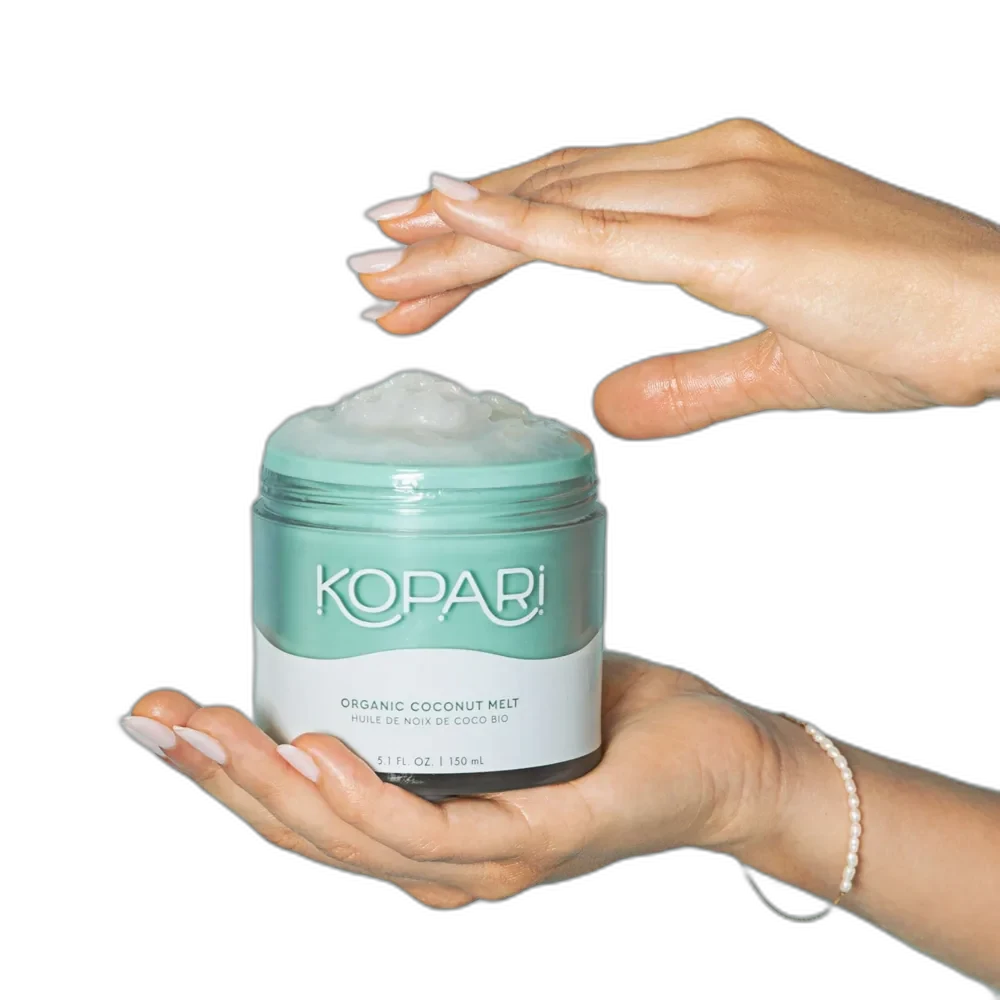
Coconut Melt
Coconut Oil Dressed Up
 Verified reviewer
Pros & cons.
- +100% organic, unrefined virgin coconut oil — genuinely effective emollient for body and hair
- +Truly multi-purpose: body moisturizer, hair mask, makeup remover, lip conditioner, cuticle oil
- +Single-ingredient simplicity eliminates any concern about additives or preservatives
- +Beautiful glass jar packaging makes it an appealing gift
- +Natural coconut aroma without added fragrance or essential oils
- +USDA Organic and Leaping Bunny certified cruelty-free
- −Significantly overpriced for what is chemically identical to grocery-store coconut oil
- −Highly comedogenic (4/5) — risky for facial use on acne-prone skin
- −Solidifies in cool temperatures, making application inconsistent
- −Can stain clothing, sheets, and towels due to pure oil content
- −No supporting actives, emulsifiers, or formulation sophistication beyond raw coconut oil
The full review.
Here is an honest sentence that no beauty brand wants to lead with: the Kopari Coconut Melt is coconut oil. Not coconut-oil-enriched. Not a coconut-oil-based formula with supporting actives. It is one hundred percent organic, unrefined virgin coconut oil in a glass jar. The INCI list has a single entry. This is the simplest product you will ever read a review about, and yet it launched an entire beauty brand, moved millions of units, and convinced a generation of shoppers that the coconut oil in the beauty aisle was fundamentally different from the coconut oil in the cooking aisle.
Let’s separate what’s real from what’s marketing. The coconut oil itself is genuinely excellent for certain applications. Lauric acid, which comprises nearly half of coconut oil’s fatty acid profile, has documented antimicrobial properties. The medium-chain fatty acids penetrate the skin more effectively than many mineral oil-based moisturizers — a finding supported by a 2004 study in Dermatitis comparing coconut oil to mineral oil for xerosis treatment. For dry body skin, rough elbows, cracked heels, and parched cuticles, coconut oil is a legitimate and effective emollient. As a hair mask, it reduces protein loss from damaged hair, which has been demonstrated in research published in the Journal of Cosmetic Science.
The Coconut Melt experience is, admittedly, nicer than fishing a spoon into a jar from the grocery store. Kopari sources their coconut oil from the Philippines, where it’s cold-pressed and unrefined, preserving the natural coconut aroma — a subtle, warm, genuinely pleasant scent that doesn’t smell like artificial sunscreen. The glass jar is attractive, feels substantial in your hand, and looks appropriate on a bathroom shelf next to products that cost four times as much. When you scoop it out, it melts between your fingers into a clear, silky oil that spreads easily and absorbs reasonably well, especially when applied to damp skin.
The multi-purpose positioning is valid. This works as a body moisturizer, a pre-shave oil, a hair mask, a cuticle softener, a makeup remover (massage onto dry face, rinse thoroughly), and a lip conditioner. If you’re someone who likes the simplicity of one product doing many jobs, the appeal is clear. It’s also one of the few products that parents report using safely on babies for dry skin patches.
Now for the honest part. You can buy organic, unrefined, virgin coconut oil at Trader Joe’s for about eight dollars for a jar that’s three times this size. It is chemically identical. The fatty acid profile is the same. The lauric acid content is the same. The emollient effect on your skin is the same. What you’re paying the premium for is packaging, brand experience, and the psychological comfort of a product that says ‘beauty’ on the label rather than ‘cooking.’ For some people, that premium is worthwhile — the jar is prettier, it feels more intentional to use a beauty product rather than raiding the pantry, and the gifting appeal is real. For others, it’s a fundamental value mismatch.
The comedogenicity issue is significant and worth emphasizing. Coconut oil scores a 4 out of 5 on the comedogenic scale, which means it has a high probability of clogging pores. Using this on your face — despite Kopari listing makeup removal and facial moisturizing among its uses — is risky for anyone with oily, combination, or acne-prone skin. The reviews are full of people who tried it on their face and broke out. For body skin, which is thicker and less acne-prone, this is less of a concern, but back and chest acne sufferers should still be cautious.
The product also has practical limitations. It solidifies below about 76 degrees Fahrenheit, which means in cooler climates or air-conditioned rooms, you’re scooping out a solid chunk rather than pouring a liquid. It can stain fabrics. It leaves a noticeable sheen on skin that some people find greasy rather than dewy. And because it’s pure oil with no water phase or emulsifiers, it doesn’t absorb as cleanly as a well-formulated body lotion.
Kopari’s Coconut Melt is a perfectly good coconut oil. It does what coconut oil does — moisturize dry skin, condition hair, soften rough patches. The question every buyer needs to answer for themselves is whether the packaging, branding, and sourcing story are worth the three-to-four-times markup over the grocery store equivalent. If the jar on your counter matters to you, if you want to give it as a gift, if the beauty-product ritual is part of the appeal — this delivers. If you care about what the product does rather than what it looks like, save your money.
Ingredient analysis.
Full INCI list
Cocos Nucifera (Organic Coconut) Oil
Skin match.
The science.
The Science
Studies show coconut oil's dermatological profile is clear, making this single-ingredient product easy to evaluate. Lauric acid is the primary active component, making up about 49% of coconut oil's fatty acid profile. A randomized double-blind clinical trial in Dermatitis (2004) compared virgin coconut oil to mineral oil for treating xerosis (dry skin). Coconut oil showed better skin hydration and surface lipid levels.
Multiple studies document the antimicrobial properties of lauric acid. Research in the Journal of Investigative Dermatology (2009) shows lauric acid has bactericidal activity against Propionibacterium acnes (now Cutibacterium acnes), the bacterium linked to inflammatory acne. However, coconut oil's high comedogenicity complicates this benefit. While it kills acne-causing bacteria, it also occludes pores and can trigger the breakouts it fights.
For hair care, a Journal of Cosmetic Science (2003) study found coconut oil significantly reduced protein loss in undamaged and damaged hair as a pre-wash or post-wash treatment. The study credits lauric acid's high affinity for hair proteins and its low molecular weight, which lets it penetrate the hair shaft. Mineral oil and sunflower oil did not show these properties in the same study.
References
- A randomized double-blind controlled trial comparing extra virgin coconut oil with mineral oil as a moisturizer for mild to moderate xerosis — Dermatitis (2004)
- Antimicrobial property of lauric acid against Propionibacterium acnes — Journal of Investigative Dermatology (2009)
- Effect of mineral oil, sunflower oil, and coconut oil on prevention of hair damage — Journal of Cosmetic Science (2003)
Dermatologist Perspective
Dermatologists view virgin coconut oil as an effective emollient for body skin, especially for xerosis and eczema maintenance on non-facial areas. Board-certified dermatologists note coconut oil's fatty acid profile enables effective penetration and moisturization, while lauric acid's anti-inflammatory properties soothe irritated skin. However, dermatologists warn against facial use for acne-prone individuals because of coconut oil's 4/5 comedogenicity rating. Since it lacks SPF, humectants, or barrier-repair ingredients beyond basic emolliency, dermatologists typically see this as a supplemental moisturizing step rather than a complete skincare solution.
Where it fits in your routine.
Scoop a small amount from the jar; it melts on contact. For body moisturizing, apply to damp skin right after showering to maximize absorption. For a hair mask, apply a thick layer to dry ends, wrap in a warm towel for 20-30 minutes, then shampoo out. As a makeup remover, massage onto a dry face in circles, then rinse or wipe with a warm cloth. For cuticles and lips, apply a small amount and massage in.
At approximately $28 for 5.1 oz, the Kopari Coconut Melt costs much more than equivalent organic virgin coconut oil at grocery stores ($6-10 for 14-16 oz). A 2.5 oz mini size costs less for those testing the product, and a larger refill pouch has slightly better per-ounce value. The premium price covers glass packaging, brand positioning, and sourcing transparency — not a different or superior formulation. The price works for gifting or those who value the beauty-product experience. For purely functional use, it is one of the most overpriced products in the clean beauty space.
Choose this if you want a pure, single-ingredient body and hair moisturizer with premium packaging. It works for gifting, minimalist routines using natural ingredients, and people who prefer beauty products over pantry staples.
Coconut oil is highly comedogenic for acne-prone skin on the face, chest, or back. Budget-conscious shoppers get identical results from organic grocery-store coconut oil. Use this if you want a sophisticated, multi-active formulation with humectants, peptides, or other treatment ingredients.
Product details.
It is solid at room temperature and melts into a clear, lightweight oil on skin contact. It feels slightly greasy at first but absorbs within a few minutes, especially on damp skin.
Unrefined virgin coconut oil has a natural, subtle coconut aroma. It contains no added fragrance.
Attractive glass jar with a screw-top lid. This premium packaging differs from generic coconut oil and makes it giftable, though glass is heavier and harder to travel with.
Scoop a small amount from the jar. It melts between your fingers into a smooth, clear oil. It spreads easily and absorbs well, leaving skin soft with a light sheen. Most people experience no burning, tingling, or adverse reactions.
2-3 months with daily body use after showering.
24 months
fall winter
The backstory.
The Coconut Melt was Kopari's genesis product — the item that launched the entire brand. Co-founders Bryce Goldman and Gigi Goldman were inspired by their Hawaiian upbringing and the traditional use of coconut oil for skin and hair care. They bet that packaging premium coconut oil as a beauty product rather than a cooking ingredient would resonate with consumers, and they were right — it became a viral sensation and spawned an entire clean beauty line.
About Kopari
Established Brand (5–20 years)Kopari Beauty launched in 2015 in San Diego, California, with Coconut Melt as a flagship product. The brand is vegan and cruelty-free, using coconut oil as its core philosophy. Kopari Beauty sells at Ulta and Sephora, but Coconut Melt is 100% unrefined organic coconut oil — an ingredient available cheaper from food-grade sources.
Common myths.
Coconut oil works for every skin type and concern.
Coconut oil works as an effective emollient for dry body skin and hair, but it rates 4 out of 5 on the comedogenicity scale. It worsens acne, triggers facial breakouts, and feeds Malassezia yeast in fungal acne. Use it on the body if you are acne-prone.
Beauty-branded coconut oil differs fundamentally from grocery store coconut oil.
If both are 100% organic, unrefined virgin coconut oil, they are chemically identical. Packaging, sourcing transparency, and perceived quality differ, but molecular composition does not. A $10 jar from the health food store moisturizes your skin identically.
FAQ.
Is Kopari Coconut Melt just coconut oil?
Yes — the INCI list contains a single ingredient: Cocos Nucifera (Organic Coconut) Oil. It is 100% unrefined, organic virgin coconut oil. What Kopari adds is Philippine sourcing, premium glass jar packaging, and the convenience of a beauty-product format.
Can I use Kopari Coconut Melt on my face?
Use with caution on facial skin. Coconut oil scores 4 out of 5 on the comedogenicity scale. This means it often clogs pores and causes breakouts, especially on oily or acne-prone skin. Use it for body, hair, and lip care instead.
Is Kopari Coconut Melt worth the price compared to regular coconut oil?
Any 100% organic virgin coconut oil provides the same skin and hair benefits. Kopari's premium price covers the packaging, sourcing story, and beauty product positioning. Buy it if you value the aesthetic jar and brand experience. If you focus only on ingredients, grocery-store organic coconut oil is identical.
How do I use Kopari Coconut Melt?
Scoop a small amount from the jar — it melts on skin contact. Apply to damp body skin after showering for best absorption. Other uses: hair mask (apply to dry ends, wrap in a towel for 20 minutes, then shampoo), makeup remover (massage onto dry face, rinse), shave oil, cuticle treatment, or lip conditioner.
Does Kopari Coconut Melt cause breakouts?
This happens, especially on acne-prone facial skin. Coconut oil is highly comedogenic. Many users report breakouts when they use it on their face. Body use causes fewer breakouts, but they still occur on acne-prone areas like the back and chest.
What the community says.
"Beautifully packaged and giftable"
"Melts into skin instantly and absorbs well"
"Multi-purpose — works for body, hair, lips, and cuticles"
"Genuinely softens dry skin after consistent use"
"Smells like fresh coconut without added fragrance"
"It's literally just coconut oil — overpriced for what it is"
"Highly comedogenic for facial use — caused breakouts"
"Can stain clothing and sheets due to oil content"
"Solidifies in cooler temperatures which can be inconvenient"