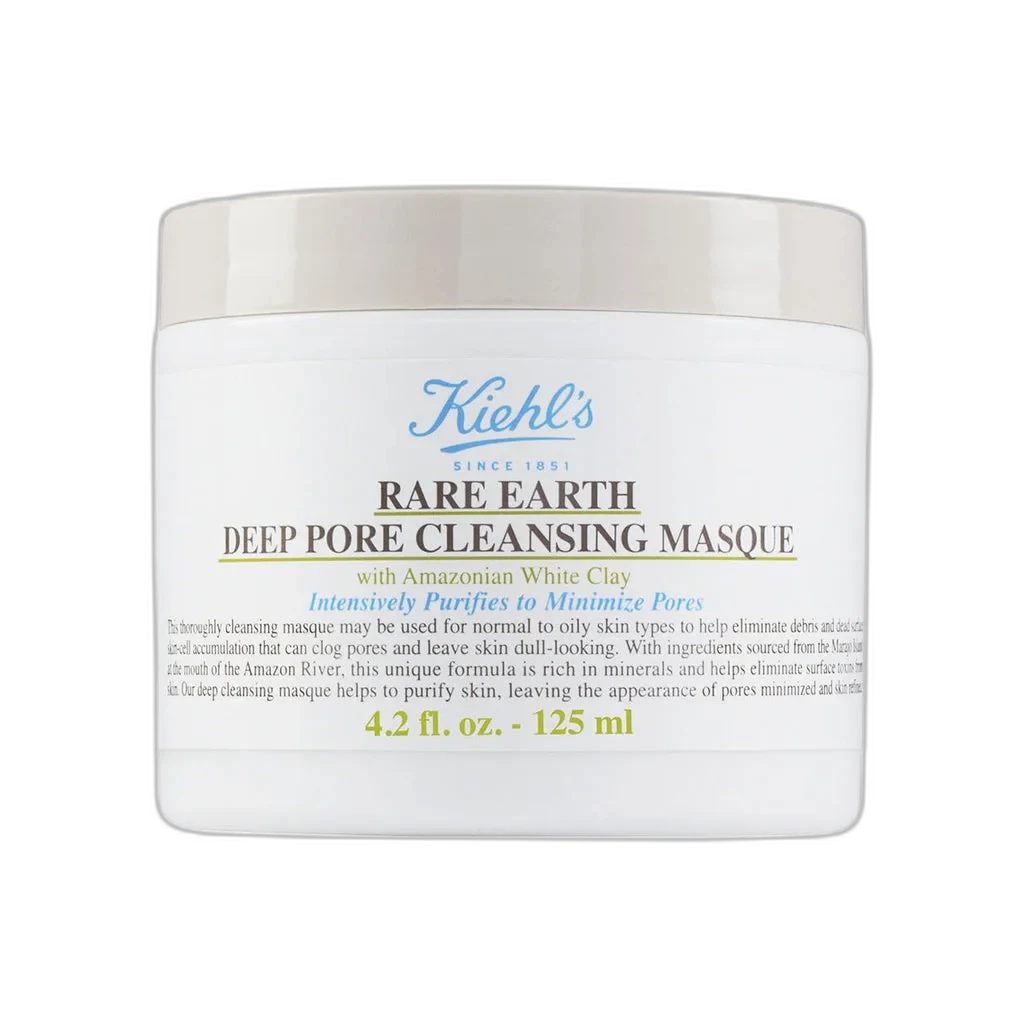
Rare Earth Deep Pore Minimizing Cleansing Clay Mask
Pore-Clearing Essential
 Verified reviewer
Pros & cons.
- +Dual kaolin-bentonite clay system clears pores without harsh drying — clinically tested on 54 subjects
- +Triple soothing complex (aloe, oat, allantoin) prevents the irritation typical of clay masks
- +Fragrance-free, alcohol-free, silicone-free formula — unusually clean for a prestige clay mask
- +Gentle enough for consistent 1-2x weekly use without compromising the skin barrier
- +Fairly Traded Amazonian White Clay sourced ethically from local communities
- +Easy rinse-off removal with no residue — no scrubbing or multiple cleansing steps needed
- −Does not fully harden — users expecting a tight, dramatic clay experience may feel underwhelmed
- −May not be strong enough for very oily or severely congested skin
- −Jar packaging is less hygienic than a tube — consider using a spatula
- −Can leave skin feeling slightly tight despite soothing agents — follow with moisturizer
- −$47 is premium pricing for a clay mask despite the ethical sourcing story
The full review.
Most clay masks feel masochistic. You apply a thick layer that dries like concrete, cracking whenever you move your face. Removing it via peeling or scrubbing often leaves skin feeling stripped and raw for hours. Users tolerate this because the results—momentarily smaller pores and less oil—feel earned. Pain becomes part of the ritual.
Kiehl’s Rare Earth mask rejects this. Apply it, wait ten minutes, and you see something unusual: the mask firms but does not harden or crack. Your face still moves. When you rinse it off with lukewarm water—easily, without the scrubbing gymnastics other masks require—your skin feels clean and refined, not punished.
The dual-clay formula uses kaolin (Fairly Traded Amazonian White Clay) and bentonite in complementary roles. Kaolin is the gentler partner; this non-swelling clay absorbs surface oil through adsorption without pulling moisture from deeper skin layers. Bentonite adds a stronger drawing action, expanding when hydrated to pull impurities from within pores. Together, they manage surface oil and deeper pore clearing. Clinical data confirms this works: a 37.3 percent immediate reduction in clogged pores, 44.8 percent at two weeks, and a 46 percent reduction in surface oil.
A triple soothing system—aloe vera, oat kernel flour, and allantoin—prevents this from being just another clay product. This trio counterbalances the drying and tightening inherent to clay. Aloe provides anti-inflammatory hydration. Oat flour adds physical smoothing texture and documented anti-irritant properties. Allantoin promotes cell healing and comfort. This system allows weekly use without skin irritation.
Glycerin and propanediol add humectant moisture, while caprylic/capric triglyceride provides emolliency. The result is a clay mask that hydrates while it purifies. Most clay formulations do not attempt this paradox because conventional wisdom views purifying and moisturizing as opposing goals.
The texture is a thick, white cream that spreads evenly and smoothly. It lacks the gritty, chunky quality of some clay masks, making application pleasant and removal effortless. Rinse with water and pat dry—no residue, no tugging, and no need for a separate cleansing step.
The fragrance-free, alcohol-free, silicone-free formula is rare in the clay mask category, where many products add unnecessary essential oils or fragrance. For those who experience post-mask irritation and suspect fragrance, this clean formulation removes that variable.
The ethical sourcing is not marketing fluff. Communities near the Amazon River mouth harvest the Amazonian White Clay through a Fair Trade partnership, supporting local livelihoods and sustainable harvesting. This adds meaning beyond the formula.
At $47 for 4.2 ounces, the price is reasonable for a prestige clay mask, especially with a 4-6 month lifespan at weekly use. A 0.95 oz travel size is available for trials. The jar packaging works for a thick product that needs scooping, though a spatula helps hygiene.
The one limitation is intensity. If you want a deep-purifying, almost-painful clay experience that leaves your face tight and tingly for an hour, this mask will not deliver. It is engineered for gentle consistency, not dramatic single-use impact. Very oily or congested skin may find it too mild and prefer a stronger kaolin-only or sulfur-based mask. But for combination skin, normal-to-oily skin, or sensitive-leaning skin burned by harsher masks, this mask earns its place in a weekly rotation by being effective without being aggressive.
Ingredient analysis.
Full INCI list
Aqua/Water, Kaolin, Bentonite, Propanediol, Glycerin, CI 77891/Titanium Dioxide, Caprylic/Capric Triglyceride, Cetearyl Alcohol, Zea Mays Starch/Corn Starch, Phenoxyethanol, Ceteareth-20, Caprylyl Glycol, Xanthan Gum, Ethylhexylglycerin, Tocopherol, Lecithin, Aloe Barbadensis/Aloe Barbadensis Leaf Juice, Avena Sativa Flour/Oat Kernel Flour, Allantoin
Skin match.
The science.
The Science
Clay minerals absorb excess sebum via adsorption, where oil molecules physically bind to clay particle surfaces. Kaolin (aluminum silicate) is a non-swelling clay. It has moderate oil-absorbing capacity and low skin irritation potential, so it works for regular use. Bentonite (montmorillonite) is a swelling clay with much higher adsorption capacity. Research in Applied Clay Science shows bentonite absorbs up to 4 times its weight in oil; its swelling action pulls impurities from within pore structures.
These two clays use a graduated approach: kaolin handles surface oil and bentonite provides deeper extraction. Clinical results show a 37.3% immediate reduction in clogged pores, 44.8% at two weeks, and 46% reduction in surface oil. These numbers match the expected performance of a dual-clay system at the concentrations shown by their INCI positions (second and third ingredients after water).
Aloe barbadensis provides polysaccharides that form a protective, hydrating film on the skin surface to partially counteract the clays' dehydrating effect. Research in the Journal of Ethnopharmacology shows aloe suppresses inflammatory cytokines, which helps prevent post-mask irritation that triggers rebound oil production.
Oat kernel flour (Avena sativa) contains avenanthramides, which are polyphenolic compounds with anti-inflammatory and anti-itch properties. The FDA recognizes colloidal oatmeal as a skin protectant because it forms a moisture-retaining barrier on the skin surface.
Allantoin stimulates fibroblast activity and cell proliferation and suppresses inflammatory mediators. This provides a healing dimension that supports skin recovery after the clay's oil extraction process.
Dermatologist Perspective
Dermatologists often recommend clay masks as a supplementary treatment for oily and acne-prone skin. Kiehl's Rare Earth mask is a common option because of its gentle approach. Board-certified dermatologists note the dual-clay formula absorbs sebum effectively without the barrier disruption seen in stronger clay or sulfur masks. The fragrance-free, alcohol-free formulation is a safe recommendation for patients who have had irritation from other masks. Dermatologists typically advise using this mask 1-2 times weekly and say to follow with a moisturizer to replenish the lipids the clay removes. For patients with severe congestion or cystic acne, dermatologists may suggest this mask as a maintenance step rather than a primary treatment.
Where it fits in your routine.
Apply a thin, even layer to clean, dry skin. Avoid the eye and lip areas. Leave on for 10 minutes; the mask firms but does not crack or fully harden. Rinse thoroughly with lukewarm water using gentle circular motions to lift the clay. Pat dry and immediately follow with a hydrating toner, serum, and moisturizer. Use 1-2 times per week. Do not use on the same day as strong chemical peels or retinoids.
At $47 for 4.2 oz, this clay mask costs more than most, but lasts 4-6 months with weekly use. Each use costs roughly $2-3 — similar to a high-quality sheet mask, but this is reusable and more effective. Fairly Traded Amazonian White Clay sourcing adds ethical value. The fragrance-free, soothing formula allows consistent use without skin damage. A 0.95 oz travel size (~$15) offers a low-commitment trial.
Oily and combination skin types seeking a gentle, weekly pore-clearing treatment. Users who find other clay masks too harsh or drying. Anyone with occasional congestion and blackheads wanting a low-irritation maintenance mask. Ethically-minded consumers who value Fair Trade sourcing.
People with very oily, severely congested skin who need an intensive purifying mask. Dry or eczema-prone skin types for whom clay masks strip too much. Users who like the dramatic tightening sensation of harder-drying clay masks.
Product details.
No added fragrance. Clean, neutral clay scent that is barely perceptible.
White jar with a screw-top lid. It comes in 0.95 oz travel size and 4.2 oz standard. The jar works well for a thick clay mask that requires scooping. Use a small spatula instead of fingers for more hygienic application.
The mask applies as a smooth, white layer. It firms slightly within 5-10 minutes but stays damp; it does not pull like aggressive clay masks. Lukewarm water removes it easily. Skin feels clean, smooth, and visibly less oily after rinsing. Most users experience no stinging, burning, or redness.
4-6 months with 1-2 weekly uses of the 4.2 oz size
12 months
spring summer
The backstory.
Part of Kiehl's Rare Earth collection, this mask highlights the brand's commitment to ethically sourced natural ingredients. The Amazonian White Clay is harvested by local communities near the mouth of the Amazon River through a Fair Trade partnership. The mask was designed to bring professional-grade pore clearing into a home-use format gentle enough for weekly application — bridging the gap between harsh salon treatments and ineffective drugstore masks.
About Kiehl's
Legacy Brand (20+ years)Kiehl's started in 1851 as a New York City apothecary. The brand has used pharmaceutical expertise to formulate skincare for over 170 years. L'Oréal acquired Kiehl's in 2000, and the brand keeps its apothecary heritage through dermatologist-recommended formulations and clinical testing.
Common myths.
A clay mask works when it dries completely and feels tight.
This mask stays slightly damp during use. The clay absorbs oil via adsorption—clay particles attract and bind to sebum—rather than drying. Masks that crack and pull can damage the skin barrier. This formula firms without fully hardening, removes oil effectively, and protects skin integrity.
Clay masks permanently shrink pores.
Genetics determine pore size, so no topical product changes it permanently. This mask temporarily reduces pore appearance by clearing oil, debris, and dead cells. Clinical testing showed a 44.8% visible reduction in clogged pores at two weeks—a meaningful temporary improvement with regular use.
FAQ.
How often should I use Kiehl's Rare Earth Clay Mask?
Use 1-2 times per week for best results. The gentle formula with aloe, oat, and allantoin works for regular weekly use without over-drying. Oily skin types can use it twice weekly; combination or normal skin should start with once weekly. Do not use on the same day as strong chemical exfoliants or retinoids.
Does Kiehl's Rare Earth Mask help with blackheads?
Yes — the dual kaolin and bentonite clay system uses adsorption to pull out the sebum and debris that form blackheads. Clinical testing shows a 37.3% immediate reduction in clogged pores and 44.8% after two weeks of regular use. For best results, use this mask with BHA (salicylic acid) products on alternate days to clear pores more effectively.
Why doesn't this mask dry completely on the skin?
This mask firms without hardening. This design is gentler and more effective. The clay uses adsorption to bind to sebum particles and absorb oil without drying. Masks that crack and pull tight damage the skin barrier and cause micro-tears. The slightly damp finish removes easily and still clears pores.
Is Kiehl's Rare Earth Mask good for sensitive skin?
Aloe vera, oat kernel flour, and allantoin make this gentler than most clay masks. The fragrance-free, alcohol-free formula reduces irritation risk. Because clay masks absorb oil, very dry or eczema-prone skin should use this with caution and always follow with a hydrating toner and moisturizer.
What is Amazonian White Clay?
Fair Trade partnerships with communities near the mouth of the Amazon River source the kaolin clay in this mask. Kaolin is a gentle, non-swelling white clay. It absorbs excess oil without the aggressive drying effect of other clays. Fairly Traded sourcing supports local livelihoods and ensures sustainable harvesting practices.
Community
What the community says.
"Visibly minimizes pores and reduces oiliness after first use"
"Gentle enough for weekly use without over-drying the skin"
"Fragrance-free and non-irritating — suitable for sensitive-leaning skin"
"Creamy texture is easy to apply and rinse off"
"Leaves skin looking refined and matte without feeling stripped"
"Does not dry to a tight, hard mask — some prefer a more dramatic drying effect"
"May not be strong enough for very oily or congested skin"
"Price is premium for a clay mask at $47"
"Needs to be paired with moisturizer — can leave skin feeling slightly tight"
Featured in.
People also looked at.