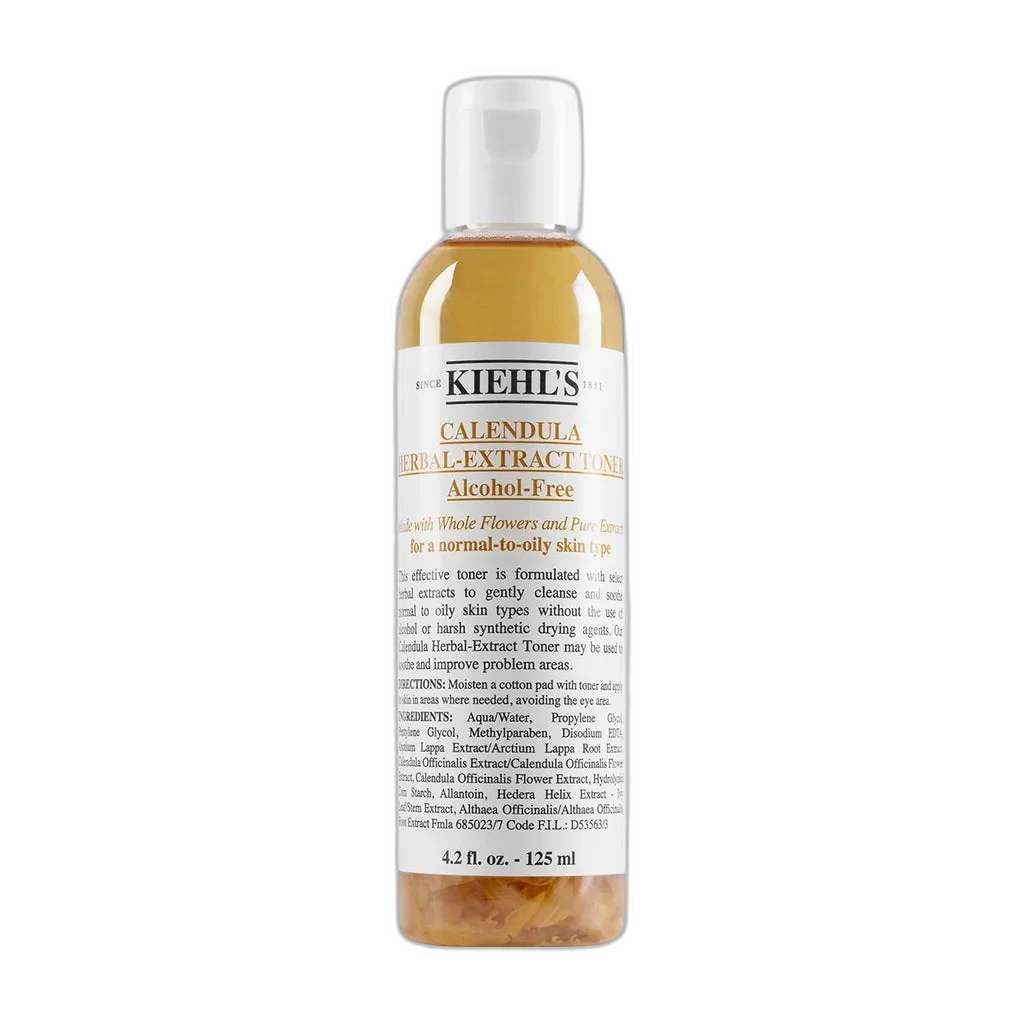
Calendula Herbal-Extract Toner
Apothecary Icon
 Verified reviewer
Pros & cons.
- +Genuinely soothing formula backed by 60+ years of real-world use and clinical data
- +Alcohol-free and fragrance-free — safe for sensitive and rosacea-prone skin
- +Clinically shown to reduce oiliness by 68% and redness by 63% in 28 days
- +Iconic apothecary aesthetic with visible hand-picked calendula petals in every bottle
- +Lightweight texture absorbs instantly and layers beautifully under any product
- +Available in multiple sizes including a 16.9 oz value option for committed users
- +Simple formula with no unnecessary actives that could conflict with treatment products
- −Premium price of $48 for 8.4 oz is hard to justify by ingredient list alone
- −Contains methylparaben despite some marketing suggesting paraben-free status
- −Propylene glycol may irritate the small subset of sensitive skin types allergic to it
- −Minimal hydration — dry skin types will need significant layering afterward
- −Formula has not meaningfully evolved since the 1960s despite advances in toner science
The full review.
The Smithsonian displays a bottle of toner in the National Museum of American History alongside objects that represent American culture. That bottle is Kiehl’s Calendula Herbal-Extract Toner. It earned its place through staying power rather than revolutionary chemistry.
Kiehl’s pharmacists began steeping hand-picked calendula flowers in a toning solution in the 1960s at a New York City apothecary that had operated for over a century. This practice resembled an herbalist’s workshop more than a modern lab. The product found a permanent audience; today, customers buy a bottle every 20 seconds worldwide.
The formula is simple. The ingredient list contains water infused with botanical extracts rather than modern actives. Calendula officinalis flower extract is the main ingredient, alongside burdock root for purification, marshmallow root for soothing mucilage, ivy extract, and allantoin. Propylene glycol and pentylene glycol act as humectants and solvents for the extracts.
The formula lacks several common ingredients. There is no alcohol, fragrance, or essential oils. It also contains no trendy peptides or acids. While other toners pack in many actives, Kiehl’s Calendula Toner is restrained. It focuses on one goal: calming the skin.
The texture is like slightly enriched water. Iconic calendula petals drift through the liquid like botanical confetti. These petals are largely ceremonial because the active compounds are already dissolved in the solution. The product looks like it came from an apothecary rather than a factory. On the skin, it feels like nothing. It leaves no tingle, film, or residue, providing a brief, cool, herbal refreshment.
Clinical evidence supports the benefits. A Kiehl’s dermatologist-controlled study on 62 subjects showed a 68 percent reduction in oiliness, 66 percent reduction in shine, 63 percent reduction in visible redness, and a 37 percent decrease in blemish count after 28 days. These results align with research on calendula. A 2021 study in Cosmetics journal confirmed calendula flower extract inhibits iNOS more potently than chamomile or centella asiatica.
This toner fits a niche for oily, combination, or sensitive skin that deals with redness. Most oil-controlling toners use astringents or acids that irritate reactive skin. This formula mattifies and clarifies through gentle botanical action that rosacea-prone skin often tolerates.
The price is $48 for 8.4 ounces, a premium for an ingredient list that costs much less to replicate. The formula contains methylparaben, which is safe at cosmetic concentrations but notable for paraben-averse users, especially since some marketing calls the product paraben-free. Propylene glycol is an effective humectant but can irritate a small percentage of sensitive skin.
The 16.9-ounce size at select retailers lowers the per-ounce cost. For long-term users, buying in bulk is the pragmatic choice.
You pay for pedigree. This product has over 60 years of use from a brand with over 170 years of pharmaceutical heritage. This track record offers confidence from testing on millions of faces across six decades while still selling a bottle every 20 seconds. The formula is simple, but it is an honest simplicity.
For oily, combination, or sensitive skin prone to redness, Kiehl’s Calendula Toner is a reliable, soothing step. It will not transform your skin or replace your actives. It acts like a botanical cool compress twice a day without causing trouble. In skincare, this reliability outlasts trends.
Formula
Ingredient analysis.
Full INCI list
Aqua/Water, Propylene Glycol, Pentylene Glycol, Methylparaben, Disodium EDTA, Arctium Lappa Extract/Arctium Lappa Root Extract, Calendula Officinalis Extract/Calendula Officinalis Flower Extract, Calendula Officinalis Flower Extract, Hydrolyzed Corn Starch, Allantoin, Hedera Helix Extract/Ivy Leaf/Stem Extract, Althaea Officinalis/Althaea Officinalis Root Extract
Skin match.
The science.
The Science
Calendula officinalis has more evidence than many botanical skincare ingredients. Triterpenoid esters—especially faradiol—and flavonoids like quercetin and isorhamnetin glycosides drive the flower's anti-inflammatory activity. A 2021 study in Cosmetics (Nicolaus et al., 2021) shows calendula flower extract inhibits inducible nitric oxide synthase (iNOS) more potently than chamomile or centella asiatica extracts.
The anti-inflammatory mechanism uses multiple pathways: calendula's triterpenoids inhibit pro-inflammatory cytokines like IL-6, IL-1β, TNF-α, and IFN-γ, and suppress COX-2 and prostaglandin synthesis. A 2023 review in Pharmaceuticals (Buzzi et al., 2023) catalogued calendula's therapeutic potential, noting that topical formulations with 0.0001% to 0.8% flower extract are clinically safe and effective at reducing inflammation.
Allantoin is the formula's secondary active and a well-validated soothing agent in dermatology. It promotes cell proliferation and shows wound-healing and anti-irritant properties in clinical studies. Using it with calendula creates a dual soothing mechanism: calendula suppresses the inflammatory cascade while allantoin supports tissue repair.
Burdock root (Arctium lappa) provides antioxidant polyphenols, specifically chlorogenic acid and caffeic acid, which offer mild antimicrobial and sebum-regulating effects relevant to the toner's oil-controlling claims. Marshmallow root (Althaea officinalis) provides polysaccharide mucilage that forms a protective film, adding barrier support to the formula.
The formula's scientific limitation is concentration transparency. Without disclosed percentages, one cannot confirm if the botanical extracts reach concentrations used in published research. The clinical study Kiehl's conducted (62 subjects, 28 days) provides product-specific evidence, but independent replication would strengthen the case.
References
- Anti-Inflammatory Activity of Calendula officinalis L. Flower Extract — Cosmetics (2021)
- An Updated Review on the Multifaceted Therapeutic Potential of Calendula officinalis L. — Pharmaceuticals (2023)
- A systematic review of Calendula officinalis extract for wound healing — Wound Repair and Regeneration (2019)
Dermatologist Perspective
Dermatologists often recommend alcohol-free toners for patients with rosacea, contact dermatitis, or post-procedure sensitivity; Kiehl's Calendula Toner is a common choice here. Board-certified dermatologists note the formula's strength is what it lacks—no alcohol, fragrance, essential oils, or harsh astringents—making it a safe step before prescription treatments like tretinoin or azelaic acid. Dermatological literature recognizes the anti-inflammatory properties of calendula extract, though dermatologists note botanical toners provide support rather than therapy. For patients who find active toners cause redness and irritation, this product is a well-tolerated alternative that conditions skin without interfering with subsequent treatment products.
Where it fits in your routine.
After cleansing, pour a small amount onto a cotton pad and sweep it across the face, or press it from your palms into the skin. Use morning and evening. There is no wait time — apply serums, treatments, and moisturizer immediately. For extra soothing on irritated days, hold a saturated cotton pad against red or inflamed areas for 30 seconds as a mini compress. Store at room temperature away from direct sunlight to preserve the botanical extracts.
At $48 for 8.4 oz, this toner is a premium-priced option, even with an ingredient list simpler than many drugstore products. The value comes from Kiehl's 170+ year pharmaceutical heritage, clinical testing, and 60 years of use with this specific formula. The 16.9 oz size (available at Costco and select retailers) has better per-ounce value for regular users. The 4.2 oz travel size at around $25 is a reasonable entry point. This toner earns its price through reliability: it does what it promises, causes no problems, and has proven this to millions of users over decades. Whether that reliability justifies a 3-4x premium over simpler botanical toners is a personal calculation.
Oily and combination skin types with redness, sensitivity, or irritation from aggressive toners. People seeking a gentle, alcohol-free prep step that works with prescription treatments. Users who want a heritage product with decades of proven safety.
Dry skin types seeking humectant-heavy hydrating toners get minimal moisture here. Ingredient-conscious consumers avoiding parabens or propylene glycol will find this unsuitable. Budget shoppers want more formulation complexity per dollar from their toner step.
Product details.
Watery, lightweight liquid with visible hand-picked calendula petals floating throughout. Feels refreshing and barely-there on the skin — more like splashing your face with herbal water than applying a traditional toner.
No added fragrance. Botanical extracts leave a faint, natural herbal scent that dissipates almost immediately.
Tall glass bottle with a screw cap. Clear glass shows calendula petals for an apothecary aesthetic. Sizes range from 1.7 oz travel sizes to a 16.9 oz value size.
The toner feels like cool, slightly viscous water with a faint herbal scent on first use. It causes no tingling, stinging, or adjustment period. Sensitive skin types feel immediate comfort. The calendula petals are purely aesthetic in the bottle and filter out during dispensing.
3-4 months with twice-daily use of the 8.4 oz size
12 months
All Year
The backstory.
Born in the back of a New York City apothecary that had been operating since before the Civil War, this toner was created when Kiehl's pharmacists began steeping hand-picked calendula flowers directly in their toning formula. Over six decades later, it remains the brand's signature product and one of the most recognized toners in the world — one bottle sells every 20 seconds globally.
About Kiehl's
Legacy Brand (20+ years)Kiehl's started in 1851 as a New York City apothecary. The brand has used pharmaceutical expertise to formulate skincare for over 170 years. L'Oréal acquired Kiehl's in 2000, but the brand keeps its apothecary heritage through dermatologist-recommended formulations and clinical testing.
Common myths.
Visible calendula petals make the toner effective.
The petals are mostly decorative — the active soothing compounds dissolve into the liquid extract. The petals add aesthetic charm and signal whole-flower sourcing, but the efficacy comes from the dissolved flavonoids and triterpenoids in the extract itself.
This toner is too gentle to work on oily or acne-prone skin.
A Kiehl's clinical study on 62 subjects showed a 68% reduction in oiliness and a 37% reduction in blemish count after 28 days. Gentle formulas still work; calendula and burdock root balance oil without aggressive actives.
FAQ.
Is Kiehl's Calendula Toner good for sensitive skin?
Yes — this alcohol-free formula targets normal-to-oily, sensitive skin. Calendula, allantoin, and marshmallow root extracts provide calming botanical effects. Clinical testing shows a 63% reduction in redness after 28 days. Because it lacks alcohol, fragrance, and essential oils, this toner is one of the gentler options available.
Does Kiehl's Calendula Toner help with acne?
It works as part of a broader acne routine. A Kiehl's clinical study shows a 37% reduction in blemish count after 28 days of use. The burdock root extract purifies mildly and the calendula calms breakout-related inflammation. Because it lacks traditional acne-fighting actives like salicylic acid or benzoyl peroxide, it works best with dedicated acne treatments.
Why does Kiehl's Calendula Toner have petals in the bottle?
Kiehl's apothecary heritage includes hand-picked, visible calendula flower petals in every bottle. The dissolved extract provides the main soothing benefits, but the petals show whole-flower sourcing. This follows a tradition from the 1960s when Kiehl's pharmacists first steeped fresh calendula in their toner formula.
Does Kiehl's Calendula Toner contain parabens?
Yes — the current formula uses methylparaben as a preservative. Major regulatory bodies approve parabens at cosmetic concentrations, but consumers who avoid parabens should note this. Check the packaging's most current ingredient list, as formulations change.
How should I apply Kiehl's Calendula Toner?
Apply to a cotton pad and sweep across the face after cleansing, or pour a small amount into your palms and pat onto clean, slightly damp skin. Use morning and evening before serums and moisturizer. The lightweight formula absorbs instantly, so you can apply your next step immediately.
Is Kiehl's Calendula Toner worth the price?
That depends on your priorities. The ingredient list is simple—mostly water, humectants, and botanical extracts—so the $48 price tag for 8.4 oz may seem high. But its 60+ year track record, clinical backing, and soothing effect earn a loyal following. The 16.9 oz size at some retailers offers better per-ounce value for regular users.
Can I use Kiehl's Calendula Toner with retinol?
This toner's gentle, soothing formula works well with retinol. Apply it after cleansing and before your retinol treatment. The calendula and allantoin calm the skin and buffer the irritation retinol causes, especially during the adjustment period.
What the community says.
"Visibly calms redness and irritation"
"Refreshing without being drying"
"Visible calendula petals feel luxurious"
"Gentle enough for sensitive skin"
"Alcohol-free formula that doesn't sting"
"Expensive for what is essentially botanical-infused water"
"Propylene glycol and methylparaben may concern ingredient-conscious buyers"
"Minimal active ingredients for the price"
"Does not provide deep hydration on its own"