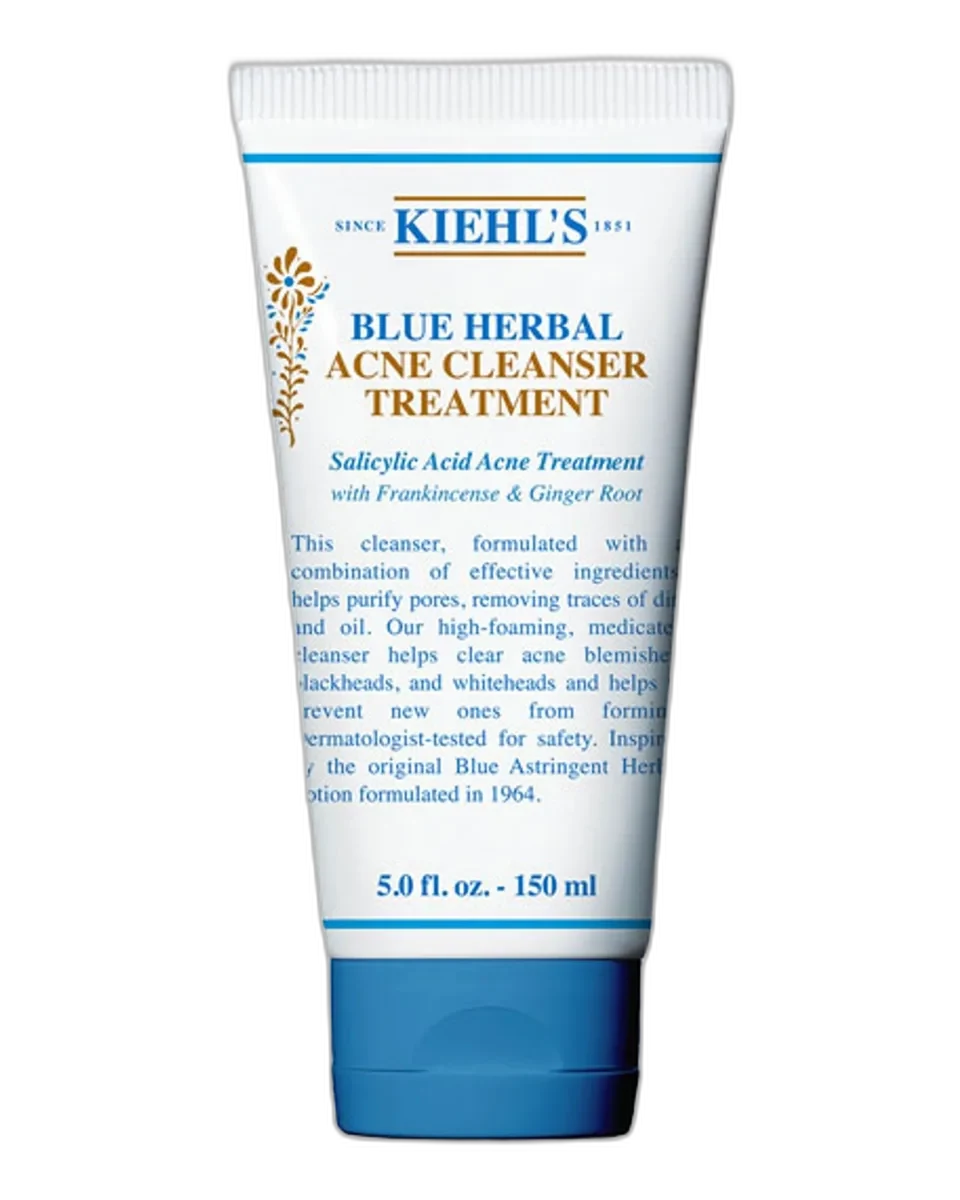
Blue Herbal Acne Cleanser Treatment
Dual-Acid Acne Cleanser
 Verified reviewer
Pros & cons.
- +Unique dual-acid system pairs 1.5% salicylic acid with patented LHA for two-depth pore clearance
- +Sulfate-free surfactant system is gentler than typical SLS-based acne cleansers
- +Fragrance-free with all scent derived from functional botanical ingredients
- +FDA OTC drug registered with a clinically validated active ingredient concentration
- +Economical in use — a small amount lathers well and tubes last 3-4 months
- +Traditional botanicals (boswellia, witch hazel, zinc) complement the modern acid technology
- −Camphor and menthol create an intense cooling sensation that is too aggressive for many users
- −Contains alcohol and T-butyl alcohol that can compromise barrier integrity
- −Cinnamon bark extract is a known contact allergen that may cause sensitization
- −Not suitable for dry, sensitive, eczema-prone, or rosacea-affected skin
- −Discontinued as of late 2024 with limited remaining availability
The full review.
Losing a long-term skincare product causes a specific, valid kind of grief. When Kiehl’s discontinued the Blue Herbal Acne Cleanser Treatment in late 2024, long-time users—some using this translucent blue gel for over ten years—reacted with dismay.
The product earned that loyalty. While most 2% salicylic acid cleansers are identical, the Blue Herbal Cleanser used a different method: it paired 1.5% salicylic acid with Capryloyl Salicylic Acid, a lipophilic BHA derivative patented by L’Oréal. Standard SA dissolves in water and penetrates pores quickly. LHA dissolves in lipids and penetrates more gradually, providing slower, sustained exfoliation deeper in the follicle. Using both creates a two-speed pore-clearing system: a fast surface sweep from the SA and a slower, deeper clean from the LHA.
This dual-acid approach was rare in OTC acne cleansers at launch and remained rare until discontinuation. A 2006 study in Skin Pharmacology and Physiology showed LHA achieved acne reduction comparable to adapalene 0.1%, placing it in clinical territory for a cosmetic ingredient.
The remaining formula resembles a pharmacist’s botanical cabinet. Boswellia serrata extract—frankincense—provides anti-inflammatory and sebum-regulating properties. Witch hazel water offers astringent oil control, linking this formula to the original 1964 Blue Astringent Herbal Lotion. Ginger root extract provides antioxidant support. Zinc sulfate adds antimicrobial mineral action. Even the cinnamon bark extract has documented antibacterial properties for acne treatment, despite being a potential sensitizer.
The sensory experience was polarizing. Camphor and menthol deliver a cooling sensation that some users found invigorating and others found aggressive. The blue gel lathers into a light, silky foam that rinses clean without stripping. The herbal-medicinal scent comes from functional ingredients, not added fragrance, signaling that this is a treatment rather than a gentle ritual.
Results for oily and combination skin were consistent. Users reported clearer pores within two weeks, fewer blackheads within a month, and sustained acne control with twice-daily use. The sulfate-free surfactant system (coco-glucoside, sodium cocoyl isethionate, coco-betaine) is gentler than typical SLS-based acne washes, letting the acids work without adding barrier damage.
However, the irritation potential is high. Camphor, menthol, alcohol, T-butyl alcohol, cinnamon bark extract, propylene glycol, and dual salicylic acids in one cleanser create a heavy irritation load. This product is a non-starter for sensitive skin and is contraindicated for eczema-prone or rosacea-affected skin. Even for oily, acne-prone skin, some users found the cooling sensation too intense near the thin skin around the eyes.
At $29 for five ounces, the Blue Herbal Cleanser provided good value for a prestige acne treatment. The product is economical; a small amount lathers enough for a full face wash, and one tube typically lasts three to four months with twice-daily use. As an FDA-registered OTC drug with active ingredients at therapeutic concentrations, it has more clinical credibility than many similarly priced cleansers.
The discontinuation is the main issue. Kiehl’s has not explained why they removed this product. It may be portfolio simplification, reformulation economics, or because the camphor-menthol-cinnamon combination lacks appeal in an era focused on gentle, barrier-respecting skincare. Regardless, the product’s departure leaves a gap, as the dual SA/LHA cleanser concept is not replicated in the mass market.
If you are mourning the Blue Herbal Cleanser, the advice is practical: stockpile remaining stock if possible, then transition to alternative salicylic acid cleansers. None offer the exact dual-acid mechanism, but effective SA cleansers exist in both drugstore and prestige categories. The Blue Herbal Cleanser combined pharmaceutical and herbal traditions for acne, and its absence will be felt.
Ingredient analysis.
Full INCI list
Active Ingredient: Salicylic Acid 1.50%. Inactive Ingredients: Water, Coco-Glucoside, Propylene Glycol, Ammonium Polyacryloyldimethyl Taurate, Glycerin, Coco-Betaine, Sodium Cocoyl Isethionate, Sodium Methyl Cocoyl Taurate, Dipropylene Glycol, Sodium Chloride, Butylene Glycol, Phenoxyethanol, Hydrogenated Coconut Acid, Capryloyl Salicylic Acid, Coconut Acid, T-Butyl Alcohol, Sodium PCA, Camphor, Menthol, Boswellia Serrata Extract, Sodium Isethionate, Hamamelis Virginiana (Witch Hazel) Water, Peumus Boldus Leaf Extract, Disodium EDTA, Alcohol, Zingiber Officinale (Ginger) Root Extract, Sanguisorba Officinalis Root Extract, Cinnamomum Cassia Bark Extract, Xanthan Gum, Laminaria Saccharina Extract, Zinc Sulfate, Pyridoxine HCl, Sodium Hydroxide, Citric Acid
Skin match.
The science.
The Science
The Blue Herbal Acne Cleanser Treatment uses 1.5% salicylic acid, an FDA-registered acne treatment at a proven therapeutic concentration. Arif's 2015 review in Clinical, Cosmetic and Investigational Dermatology documented salicylic acid's comedolytic, anti-inflammatory, and antibacterial properties, confirming it as a first-line OTC acne treatment.
Capryloyl Salicylic Acid (LHA) adds a dual-depth exfoliation system missing from standard SA cleansers. A 2006 randomized, double-blind study in Skin Pharmacology and Physiology by Saint-Leger et al. showed 5% LHA cream reduced acne similarly to 0.1% adapalene gel — a prescription retinoid. This makes LHA a potent acne-fighting ingredient. In this cleanser, the combination provides rapid surface exfoliation (SA) and slower, sustained deeper-pore penetration (LHA).
A 2013 study in Skin Research and Technology examined 1.5% salicylic acid — the exact concentration in this product — and confirmed significant facial acne improvement with topical use, validating this specific dose.
Supporting botanicals add complementary mechanisms. Boswellia serrata extract contains boswellic acids with documented anti-inflammatory properties that help reduce acne-related redness and swelling. Zinc sulfate provides antimicrobial and anti-inflammatory activity; multiple clinical studies show zinc benefits acne management both topically and orally.
References
- Salicylic acid as a peeling agent: a comprehensive review — Clinical, Cosmetic and Investigational Dermatology (2015)
- A randomized, double-blind comparison of 0.1% adapalene gel and 5% lipo-hydroxy acid cream on acne vulgaris — Skin Pharmacology and Physiology (2006)
- Clinical evidence on the efficacy and safety of an antioxidant optimized 1.5% salicylic acid cream in the treatment of facial acne — Skin Research and Technology (2013)
Dermatologist Perspective
Dermatologists view 1.5% salicylic acid as an effective OTC acne concentration, and the LHA addition provides a dual-exfoliation approach rare in wash-off products. Board-certified dermatologists would value the sulfate-free surfactant system and the lack of added fragrance. However, dermatologists would warn patients about irritation from camphor, menthol, and cinnamon bark — ingredients that create a strong sensory experience but can compromise barrier function in sensitive individuals. For patients with oily, resilient skin and persistent acne, this cleanser is a well-formulated treatment option in the Kiehl's lineup.
Where it fits in your routine.
Wet your face with lukewarm water. Apply a small amount of the blue gel and lather gently, avoiding the immediate eye area. Massage for 30-60 seconds so the salicylic acid has contact time. Rinse thoroughly. Use twice daily — morning and evening. Follow with an oil-free moisturizer. Do not use other topical acne medications at the same time without consulting a healthcare provider.
At $29 for 5 fluid ounces, the Blue Herbal Cleanser provides high value for a prestige brand FDA OTC drug product. The dual-acid SA/LHA formula is unique at this price. Because it lathers easily, each tube lasts 3-4 months, making the monthly cost under $10. The Blue Herbal Cleanser is now discontinued; third-party sellers sell remaining stock at variable prices.
Oily or combination skin types with persistent acne, blackheads, and clogged pores want a clinically formulated cleanser from a trusted pharmacy brand. This works best for skin that tolerates active ingredients without excessive sensitivity. Note: this product is discontinued; buy while stock remains.
This works for dry, sensitive, eczema-prone, or rosacea-affected skin. Avoid this product if you are sensitive to camphor, menthol, or cinnamon. The cooling sensation and acid load may exceed the tolerance of those preferring gentle, barrier-respecting cleansers.
Product details.
Translucent blue gel foams into a light, silky lather with water. It has medium viscosity and a smooth, non-gritty feel.
Herbal and medicinal — camphor and menthol give a strong cooling, minty note with ginger and cinnamon undertones. No synthetic fragrance is added; functional botanical ingredients provide all scent.
White squeeze tube uses Kiehl's apothecary-style labeling and the signature blue accent from the Blue Herbal line. The pharmacy-inspired design is clean. Multiple tube sizes exist.
Camphor and menthol create an immediate cooling, tingly sensation. The blue gel lathers into a light foam and rinses clean. Skin feels refreshed, clean, and slightly tightened after the first wash. Mild dryness occurs during the first week as skin adjusts to the dual-acid formula.
3-4 months with twice-daily use from the 5 oz tube
12 months
All Year
The backstory.
The Blue Herbal line is rooted in one of Kiehl's most iconic products: the Blue Astringent Herbal Lotion, first introduced in 1964. The Acne Cleanser Treatment extended this heritage into an OTC drug-classified acne treatment, combining the brand's traditional botanical approach with modern L'Oréal acid technology. Its discontinuation in late 2024 left a devoted user base searching for alternatives.
About Kiehl's
Legacy Brand (20+ years)Kiehl's started in 1851 as a New York City apothecary and L'Oréal has owned it since 2000. The Blue Herbal line uses the legacy of the iconic 1964 Kiehl's Blue Astringent Herbal Lotion. This specific cleanser ended production in late 2024.
Common myths.
Camphor and menthol create a cooling sensation that shows the product works on acne.
The cooling sensation is a sensory effect, not an indicator of acne-fighting activity. Salicylic acid and LHA treat acne by penetrating pores and exfoliating dead cells—a process you cannot feel or see during the wash. Camphor and menthol provide mild antimicrobial benefits but act primarily as sensory ingredients.
Rinse-off salicylic acid cleansers fail because the acid washes away.
Leave-on BHA products provide longer contact time, but studies show 1.5% salicylic acid in a wash-off format still improves acne significantly. The acid penetrates pores during cleansing, and the LHA in this formula penetrates pores gradually and steadily even during brief skin contact.
FAQ.
Is Kiehl's Blue Herbal Acne Cleanser discontinued?
Yes — as of late 2024, the Kiehl's official website lists this product as discontinued. Third-party retailers may have remaining stock while supplies last. Long-time users can explore alternative dual-acid or salicylic acid cleansers.
Is this cleanser safe during pregnancy?
ACOG guidelines consider 1.5% salicylic acid in a rinse-off cleanser safe during pregnancy because brief skin contact limits systemic absorption. However, consult your healthcare provider before using any medicated skincare during pregnancy.
Can you use this cleanser with benzoyl peroxide?
FDA drug labeling warns that using another topical acne medication at the same time increases skin irritation and dryness risks. If you use benzoyl peroxide, alternate — use this cleanser in the morning and benzoyl peroxide at night — instead of layering both in one routine.
Why is the cleanser blue?
The blue color references Kiehl's iconic Blue Astringent Herbal Lotion from 1964, linking this modern acne treatment to the brand's apothecary heritage. The formulation provides the color; no functional ingredient does.
What makes LHA different from regular salicylic acid in this cleanser?
Capryloyl Salicylic Acid (LHA) is a lipophilic salicylic acid derivative patented by L'Oréal. It enters pores more slowly than standard SA, which provides sustained exfoliation and less irritation. This cleanser uses both standard SA (1.5%) and LHA for dual-depth pore clearance — a combination rare in OTC acne cleansers.
What the community says.
"Effectively clears acne and blackheads without over-drying the skin"
"A little product goes a long way making the bottle last months"
"Cooling menthol sensation feels refreshing after a long day"
"Clears blackheads and whiteheads noticeably within weeks"
"Long-term users report sustained clear skin for years of consistent use"
"Can be harsh around the delicate eye area during use"
"Strong herbal menthol scent may irritate the nose and eyes"
"Camphor and menthol cooling sensation too intense for some users"
"Product has been discontinued leaving loyal users searching for alternatives"
"Alcohol and cinnamon bark in the formula may sensitize reactive skin"
People also looked at.