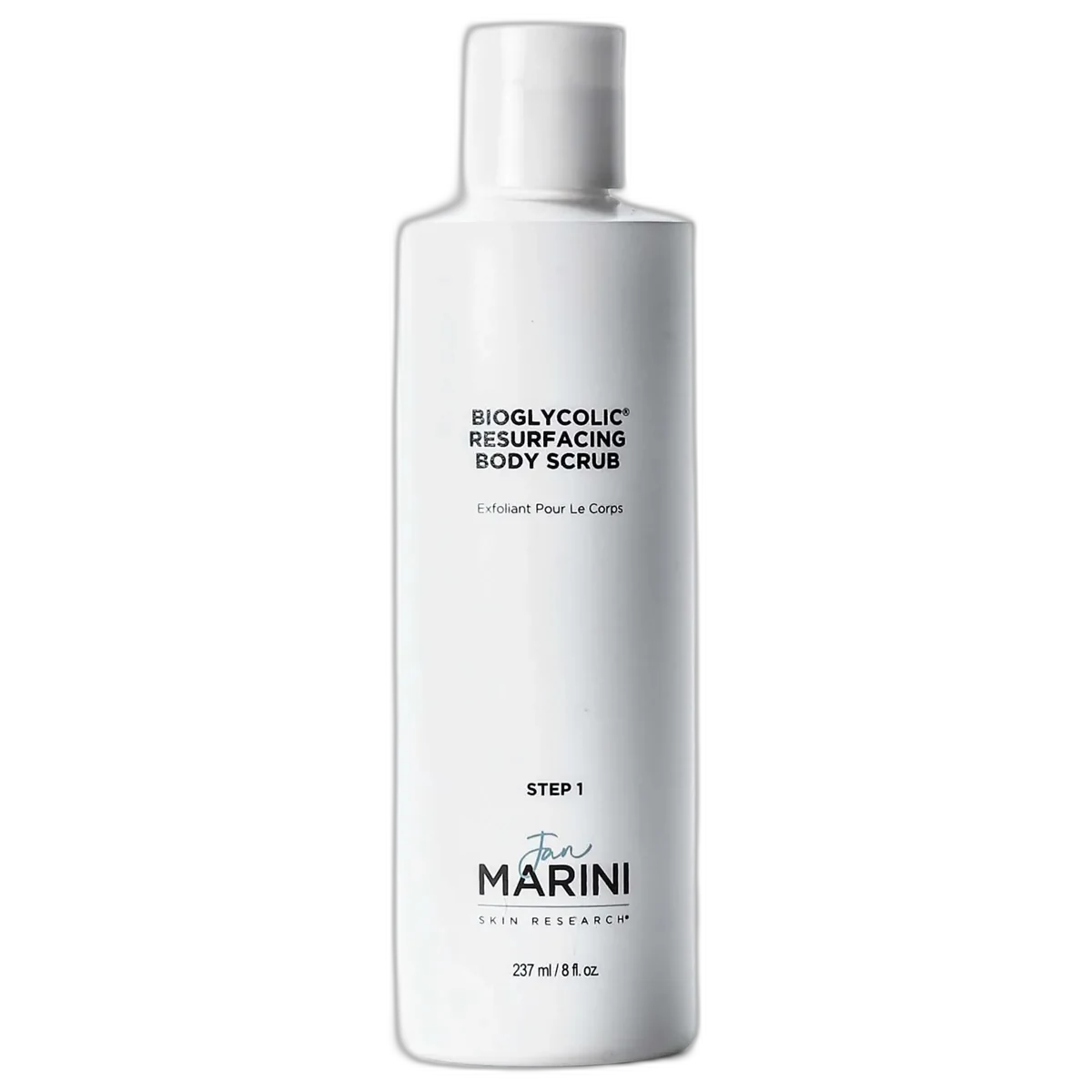
Bioglycolic Resurfacing Body Scrub
KP Ally
 Verified reviewer
Pros & cons.
- +Meaningfully high glycolic dose for a body scrub
- +Uniform polylactic acid beads exfoliate without scratching
- +Visibly softens keratosis pilaris within 2 to 3 weeks
- +Excellent on rough feet, elbows, and calluses
- +Legacy formula updated to remove polyethylene microbeads
- +Cream base glides on wet skin without dragging
- −$82 for 8 oz is expensive for a body scrub
- −Contains added fragrance with limonene and linalool
- −Preservative system uses methylisothiazolinone
- −Not suitable for sensitive or eczema-prone body skin
- −Cannot be used on recently shaved legs
The full review.
Keratosis pilaris is a chronic condition that spawned countless body lotions, yet few work alone. Keratin plugs inside follicles keep arm bumps present; breaking them down requires a two-part approach: a chemical to soften the plug and mechanical action to lift it. Most body scrubs only use mechanical action, often with sugar or sea salt, which dissolve too quickly. Jan Marini’s Bioglycolic Resurfacing Body Scrub uses both. It contains glycolic acid at the third ingredient slot and uses round, biodegradable polylactic acid beads in a thick emulsion that stays on wet skin long enough to work.
Texture
The texture is thicker than expected, similar to a cream cleanser mixed with a gentle microdermabrasion paste. Massage a quarter-sized amount onto damp skin on the upper arms or thighs for about a minute. The beads work without the scratchy drag of walnut shell or apricot pit scrubs. Skin feels softer after the first use. For moderate keratosis pilaris, bumps begin flattening in the second week. By six weeks, the skin on the backs of the arms looks like skin without KP, a result most lactic acid lotions take months to achieve alone.
About
The formula logic is smart. The glycolic acid is buffered in the emulsion instead of using a stinging pH, the PLA beads are round and uniform rather than angular, and the base uses aloe and botanical extracts to cool the skin after resurfacing. Jan Marini replaced the original polyethylene microbeads with polylactic acid beads in the 2010s without a sustainability campaign. On thicker body skin that turns over slower than the face, the scrub balances aggression and tolerance. It also works well on rough feet and elbows.
Common Complaints
There are drawbacks. This is a fragranced product. It has a clean, herbal rosemary and chamomile scent with a soapy top note, but it is perfumed by clinical skincare standards; the INCI lists limonene and linalool as fragrance components. Avoid this if you are reactive to body fragrance or manage eczema or prurigo. The preservative system uses methylchloroisothiazolinone and methylisothiazolinone. These work at low doses in rinse-off products but fall outside current European best practice for leave-on cosmetics and pose a sensitization risk for some users. Finally, the price is high. Eighty-two dollars for an eight-ounce body scrub is expensive, and while the formula justifies more than a drugstore scrub, the cost remains high for the average buyer.
Who Should Buy
This product suits people with moderate to severe keratosis pilaris who found only modest improvement with Eucerin or AmLactin and want a faster rinse-off treatment. It also works for anyone with consistently rough, dull body skin who uses body sunscreen and self-tanner regularly and wants professional-grade prep. If your skin is fine and you just want a nice shower product, skip this. But if a specific body-texture problem persists, Bioglycolic Resurfacing Body Scrub is one of the few products that solves it, which is why it remains in dermatology back rooms two decades after its launch.
Ingredient analysis.
Full INCI list · pH 4
Water/Aqua/Eau, Polylactic Acid, Glycolic Acid, C12-15 Alkyl Benzoate, Cetyl Ethylhexanoate, Ammonium Lauryl Sulfate, Cetyl Alcohol, Glyceryl Stearate, PEG-100 Stearate, C12-20 Acid PEG-8 Ester, Sodium Hydroxide, Aloe Barbadensis (Aloe Vera) Leaf Juice, Chamomilla Recutita (Matricaria) Flower Extract, Rosmarinus Officinalis (Rosemary) Leaf Extract, Glycerin, Xanthan Gum, Magnesium Aluminum Silicate, Fragrance (Parfum), Limonene, Linalool, C10-16 Alcohols, Ammonium Sulfate, Methylchloroisothiazolinone, Methylisothiazolinone, Phenoxyethanol.
Skin match.
The science.
The Science
Hyperkeratinization around the hair follicle drives both keratosis pilaris and general body roughness. Literature supports a dual mechanism approach. Peer-reviewed research on keratosis pilaris shows that topical alpha hydroxy acids, specifically glycolic and lactic acid, soften keratin plugs by disrupting corneocyte cohesion. Mechanical exfoliation with uniform particles then removes that softened material. Clinical dermatology sources, like the American Academy of Dermatology's patient guidance on KP, recommend this exact pattern of gentle exfoliation plus an AHA. This scrub delivers both in one step. The use of polylactic acid beads is evidence-informed. PLA is a biodegradable polymer that forms uniform spherical particles. This reduces the microtears linked to ground walnut shell or apricot pit scrubs while providing the physical loosening the glycolic layer needs. Body skin desquamates slower and is less reactive than facial skin, so the higher glycolic dose appropriate for thighs and upper arms would be too harsh for the face. No formal randomized trial exists for this specific product, but every mechanism inside it has supporting evidence, and the combination follows standard dermatologic logic for treating KP and body roughness.
Dermatologist Perspective
Dermatologists often recommend Bioglycolic Resurfacing Body Scrub for keratosis pilaris protocols, especially for patients who plateau with a leave-on lactic acid body lotion. Board-certified dermatologists frequently pair this scrub with a daily leave-on AHA cream and note the scrub is not for daily use. It also works as a preparation step before body peels, professional spray tanning, and cosmetic laser treatments on the body, as the combined chemical and mechanical action strips the uneven keratin layer more thoroughly than a simple wash. Dermatologists usually advise patients to avoid the scrub on freshly shaved skin, to pause around body lasers or waxing, and to follow it with a humectant-rich body lotion to restore hydration immediately after use.
Where it fits in your routine.
Use in the shower on wet, unshaven skin. Massage a quarter-sized amount into your palm using circular motions over the upper arms, thighs, chest, and rough spots like elbows, knees, and feet for 60 seconds. Avoid the face, the bikini area, and any freshly shaved skin. Rinse with lukewarm water and apply a humectant-rich body lotion while skin is still damp. Use two or three times per week. Pause for several days around waxing, professional peels, spray tanning, or body laser treatments.
At $82 for 8 oz, this scrub costs more like a professional treatment than a shower upgrade; judge it that way. One bottle lasts most users three to four months using it twice weekly on rough zones, lowering the per-use cost. The scrub works as a sensible home extension compared to in-office glycolic body peels that cost hundreds of dollars per session. It is an obvious overspend for most people compared to an AmLactin bottle from the drugstore. The fair verdict: the price is justified for people with real keratosis pilaris or body-texture problems who want a professional-grade rinse-off treatment, but unjustified for anyone seeking a pleasant shower scrub.
This rinse-off treatment works for moderate to severe keratosis pilaris, rough or dull body skin, or chronic buildup on the back, elbows, knees, or feet. It is also a strong choice for regular self-tanner users needing thorough prep before application.
People with sensitive or eczema-prone body skin, active body rosacea, or fragrance intolerance should avoid this, as the added perfume and preservative system triggers reactions. Budget shoppers can replicate part of the effect using a lactic acid body lotion and a soft washcloth for a fraction of the price.
Product details.
Clean herbal rosemary-chamomile with a faint soapy edge. It smells more perfumed than the brand's face products.
Standard white plastic squeeze bottle with a flip cap. Works well in the shower.
Rougher areas like the backs of the arms may tingle briefly, followed by a faint flush that fades in minutes. Skin feels softer immediately after the first rinse. Keratosis pilaris bumps soften visibly within two to three weeks of regular use. ***
Use two to three times per week on arms, thighs, and feet for 3 to 4 months. ***
12 months ***
All Year ***
The backstory.
Jan Marini extended the Bioglycolic franchise to the body in the early 2000s in response to aesthetician demand for a professional-grade scrub to use before spray tanning and before body peels. The formula was updated in the 2010s to replace the original polyethylene microbeads with biodegradable polylactic acid spheres after growing pressure on plastic microbead use in rinse-off products.
About Jan Marini
Legacy Brand (20+ years)Jan Marini Skin Research launched in 1994 and has focused on glycolic acid formulations for three decades. The Bioglycolic line is the brand's flagship franchise and appears in many dermatology and medspa offices.
Common myths.
Body scrubs do not treat keratosis pilaris; only leave-on acids work.
A leave-on lactic acid lotion remains the gold standard. However, a glycolic-plus-bead scrub used two to three times a week speeds up the flattening process, especially for skin too sensitive for daily leave-on acids.
All physical scrubs damage the skin barrier.
Uniform spherical beads like the polylactic acid used here are less abrasive than walnut shells or apricot pits. The historical microtears complaint applies to angular fruit particles, not modern PLA spheres in a cream base.
FAQ.
Is this scrub safe for keratosis pilaris?
Yes, dermatologists often recommend it for KP. The combination of glycolic acid softening keratin plugs and PLA beads mechanically lifting them is the classic two-step approach for KP.
Can I use it on my face?
No. The bead size, glycolic concentration, and added fragrance target body skin. Use Jan Marini's facial resurfacing products on the face instead.
How often should I use the scrub?
Most people get best results using this two to three times per week on rough areas. Daily use exceeds what most skin types need and can leave the barrier pink and irritated.
Can I use it after shaving?
No. Apply the scrub before shaving or on a non-shaving day. Using it on freshly shaved skin stings and increases the risk of irritation and ingrown hairs.
Is this scrub safe during pregnancy?
Glycolic acid in a rinse-off body product is generally low-concern, but policies vary. Many pregnant users continue use and many do not. Confirm with your own physician if uncertain.
Why does it cost $82 when drugstore body scrubs are under $20?
You pay for the professional glycolic concentration and the switch to polylactic acid beads in a cream base. This combination is rare on drugstore shelves, though the scent system and preservatives do not justify the price tier.
Does it help with body acne or bacne?
Yes, slightly. The glycolic component keeps follicles on the back and chest clear, but salicylic acid body wash plus a leave-on treatment works better for inflammatory back acne than this scrub alone.
What the community says.
"Dramatically smooths keratosis pilaris on arms and thighs"
"Great for rough, calloused feet and elbows"
"Works visibly after the first use"
"Bead texture is firm but not scratchy"
"Very expensive for a body scrub"
"Added fragrance can irritate reactive skin"
"Preservative system includes methylisothiazolinone"
"Too harsh for daily use"