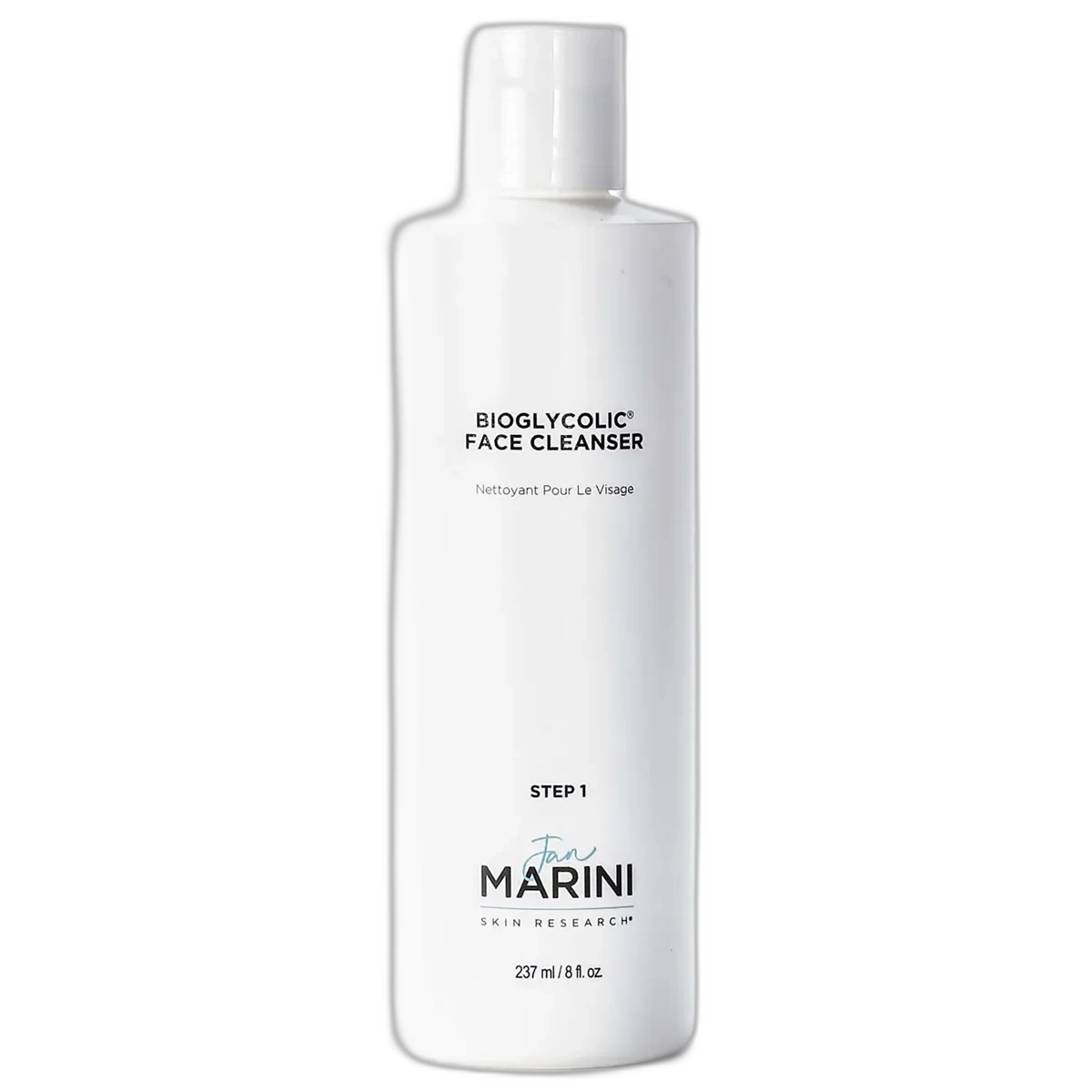
Bioglycolic Face Cleanser
Professional Staple
 Verified reviewer
Pros & cons.
- +Non-foaming lotion base is unusually well tolerated by dry skin
- +Meaningful glycolic dose that actually works in contact time
- +Primes skin effectively for leave-on acids and retinoids
- +Fragrance-free and alcohol-free despite being an active cleanser
- +Leaves a cushioned finish without residue
- +Proven three-decade track record in dermatology offices
- −Primary surfactant is ammonium lauryl sulfate
- −Expensive for a cleanser at $50 for 8 ounces
- −Too active for genuinely sensitive or rosacea skin twice daily
- −Plain packaging feels clinical rather than premium
- −Not suitable the night of a peel or procedure
The full review.
Every professional skincare brand has a product that built the company. For Jan Marini, that product is not a flashy growth factor serum or a Bioclear acid cream. It is this unassuming white bottle of non-foaming cleanser. The founder started shipping it to dermatology offices in 1994 to provide a consistent at-home priming step for her in-office glycolic peels. The formula has changed over the years, but the logic remains the same. Most glycolic cleansers on the shelf today are foaming gels that put a high percentage of glycolic into a drying sulfate base. They deliver the acid, but they leave the skin too stripped to enjoy it. Bioglycolic Face Cleanser does the opposite. It puts a meaningful glycolic dose into a lotion base with sorbitol and fatty alcohols. This cushions the damage usually associated with a glycolic wash the moment the acid works.
That structural decision keeps this cleanser in dermatology routines almost thirty years after it launched. You feel it during the first use. Skin gets a faint tingle on the lower cheeks and chin; this shows the pH has dropped without scraping your barrier. After you rinse, your face feels soft instead of tight. Over the next two weeks, tiny surface bumps on the forehead and jaw clear, clogged pores shrink slightly, and tone evens as expected from a good at-home glycolic protocol. It does not do the work of a leave-on acid cream, and it does not pretend to. It lowers the bar for every treatment that follows, which is how a priming cleanser should behave.
Texture
The texture is unglamorous. It is a thick milky white lotion that sits on damp skin, massages smoothly, and rinses cleanly. No foam. No fragrance. No aesthetic ambition.
Packaging
The packaging is a plain squeeze bottle in the 8 oz consumer size and a pump on the 16 oz professional size. This detail shows the product still acts as a clinic supply first and a retail item second.
Scent
The scent is faintly soapy from the surfactants. Nothing is added, which is a relief since many modern glycolic cleansers try to smell like a spa.
Common Complaints
There are honest limitations. The surfactant backbone is ammonium lauryl sulfate, which is effective but sits on the harsher end of modern cleanser design. This is a non-issue for most combination and oily skin, but sensitive or reactive skin may find twice-daily use too much. Rosacea-prone skin should use it at most once a day. The price is the other factor. Fifty dollars for eight ounces is professional pricing. While the formula earns more of that price than many prestige cleansers, you can find a competent glycolic cleanser for a third of the cost. You cannot find a cheap non-foaming emollient base, which makes this one tolerable on drier skin where cheaper options fail.
Who Should Buy
This cleanser is for the adult who just received a Jan Marini routine at a dermatology visit or is building one alone. It is the correct first step because the rest of the line assumes you used it. It is also a credible standalone pick for any adult with clogged, dull, or mildly breakout-prone skin who dislikes foaming acid cleansers and wants exfoliation as part of a routine rather than an event. In that context, the price feels less like a luxury markup and more like the cost of a system that has outlived almost every trend cycle since it launched.
Ingredient analysis.
Full INCI list · pH 4
Water/Aqua/Eau, Glycolic Acid, Sorbitol, Cetyl Alcohol, Stearyl Alcohol, Sodium Hydroxide, Ammonium Lauryl Sulfate, Palmitic Acid, Caprylyl Glycol, Ethylhexylglycerin, Hexylene Glycol, Phenoxyethanol.
Skin match.
The science.
The Science
Glycolic acid cleansers have less evidence than leave-on glycolic products, but the evidence exists. Research from the last two decades shows short-contact glycolic exposure lowers surface pH enough to activate endogenous desquamation enzymes and loosen corneocyte adhesions. This works if the concentration and base keep the acid unbuffered on the skin during the cleanse. Van Scott and Yu's 1990s research established how glycolic acid disrupts corneocyte cohesion. Later clinical work on glycolic acid for acne and photoaging shows improvement at the concentrations and pH values a well-designed cleanser can momentarily deliver. Bioglycolic Face Cleanser uses a non-foaming lotion base. This format keeps the acid in closer contact with the skin instead of losing activity to bubbles in a gel or foam. This, plus humectants like sorbitol that protect the barrier, separates a glycolic cleanser that performs meaningful priming from a mere marketing label. The product does not replace a leave-on AHA, and research does not support treating it as one. However, as a preparation step before Bioclear, a retinoid, or an in-office peel, the mechanism has a reasonable foundation.
Dermatologist Perspective
Dermatologists often use Bioglycolic Face Cleanser to prime patients starting the Jan Marini system, especially when the plan includes Bioclear leave-on creams or in-office glycolic peels. Board-certified dermatologists note the non-foaming base makes a glycolic cleanser easier to recommend for patients who cannot tolerate a typical AHA foaming wash. The meaningful acid dose is why they specify this product by name instead of a generic glycolic cleanser. It works as a twice-daily option for oilier and combination skin and a once-a-day evening cleanser for drier or more reactive complexions. Dermatologists advise patients to pause use on the day of an in-office peel, avoid layering with other AHA or BHA cleansers, and use daily sunscreen due to the routine's cumulative resurfacing effect.
Where it fits in your routine.
Massage a nickel-sized amount into damp skin for 30 to 60 seconds, targeting the forehead, nose, and chin. Rinse with lukewarm water and pat dry. Use twice daily for combination or oily skin and once nightly for drier or more reactive skin. Follow with a Jan Marini treatment such as Bioclear, C-Esta, or Factor-A Plus, or any other leave-on actives. Do not use with other AHA or BHA cleansers on the same day. Skip use the night of a peel, microneedling, or waxing. Always use daily broad-spectrum SPF 30 or higher.
At $50 for 8 oz, this sits in professional-tier pricing. The simple formula means you pay for distribution more than raw materials. You pay for a non-foaming lotion base with a high glycolic dose, which is hard to find under $30. A 16 oz pro size exists and costs less per ounce for those committed to the routine. Casual glycolic users will overspend. For those using a complete Jan Marini system on dry or mature skin, the daily cost is reasonable and the cleanser works instead of acting as a marketing introduction to the rest of the line.
Adults with combination, oily, or normal skin building a glycolic-based at-home routine can use this cleanser to prime the skin for other actives. It also works for anyone whose skin feels stripped by foaming glycolic cleansers but wants the same acid effect in a non-foaming lotion base.
People with sensitive skin, rosacea-prone skin, or an actively compromised barrier do better with a plain gentle cleanser and limit acid exposure to a leave-on product. Budget shoppers find competent glycolic cleansers for less, and minimalists who do not use the Jan Marini system will not get full value.
Product details.
This milky white non-foaming lotion stays on damp skin long enough for a massage.
Faint, clean, and slightly soapy with no added fragrance.
The 8 oz size comes in a plain white squeeze bottle, while the pro 16 oz version uses a pump bottle. The design is functional and clinic-friendly, not aspirational.
Expect a light tingle around the nose and chin during the first few uses. Skin feels soft and cushioned, not squeaky. Some users see tiny surface bumps clear within the first week as glycolic acid loosens existing clogs.
About 3 to 4 months of twice-daily use from the 8 oz bottle.
12 months
All Year
The backstory.
Bioglycolic Face Cleanser is the original Jan Marini product, dating back to the brand's launch in 1994 when glycolic acid was only beginning to move from peel rooms into daily routines. It was designed as the priming step for the brand's professional glycolic peels and evolved into the cleanser dermatologists still recommend for patients starting an at-home acid regimen.
About Jan Marini
Legacy Brand (20+ years)Jan Marini Skin Research started in 1994. It built its reputation on glycolic acid formulations and has been a physician-dispensed staple for three decades. The Bioglycolic line defines that identity and dermatologists and medspa offices use it widely.
Common myths.
Glycolic acid has no effect in a cleanser because rinsing happens too fast.
Low percentages do little. Bioglycolic uses enough glycolic acid that a 60 second massage lowers surface pH and starts corneocyte loosening. Users confirm this through a tingle and measurable texture change.
You cannot use a glycolic cleanser if you have dry skin.
Dry skin reacts poorly to glycolic cleansers with harsh foaming bases. This one is non-foaming and uses sorbitol and fatty alcohols, so drier skin types often tolerate it twice a day.
FAQ.
Does this cleanser actually exfoliate given that it is rinsed off?
Yes, modestly. The formula has enough glycolic acid to lower surface pH during the cleanse and loosen dead cells. It does not substitute for a leave-on acid treatment like Bioclear, but it primes skin so those products work better.
Can I use it with a retinoid or Bioclear at night?
Yes, the Jan Marini system works this way. Cleanse with Bioglycolic, then apply Bioclear or your retinoid to dry skin. If your skin is irritated, use a plain cleanser on retinoid nights instead.
Is it safe for sensitive skin?
This formula is gentler than a typical sulfate glycolic cleanser, but it has ammonium lauryl sulfate and a meaningful amount of glycolic acid. Sensitive or rosacea-prone skin usually needs a milder daily cleanser.
Is Bioglycolic Face Cleanser safe during pregnancy?
Glycolic acid in a rinse-off cleanser is low-concern, though policies vary. Most obstetricians accept short-contact glycolic cleanser use, but uncertain users should confirm with their physician.
Does it remove makeup?
It removes light makeup and sunscreen well but fails on long-wear foundation or waterproof mascara. Full makeup users typically double cleanse with an oil or balm first.
How long does an 8 oz bottle last?
Most people use an 8 oz bottle for three to four months with twice-daily application on the face and neck. This usage rate matches other professional cleansers at this tier.
What the community says.
"Leaves skin genuinely cleaner without the tight feeling"
"Noticeably smoother texture within two weeks"
"Pairs perfectly with the rest of the Bioglycolic line"
"Non-foaming formula is gentle enough for morning use"
"Expensive for a cleanser"
"Contains ammonium lauryl sulfate"
"Too active for sensitive skin twice a day"
"No pump on the smaller size"
Featured in.
People also looked at.