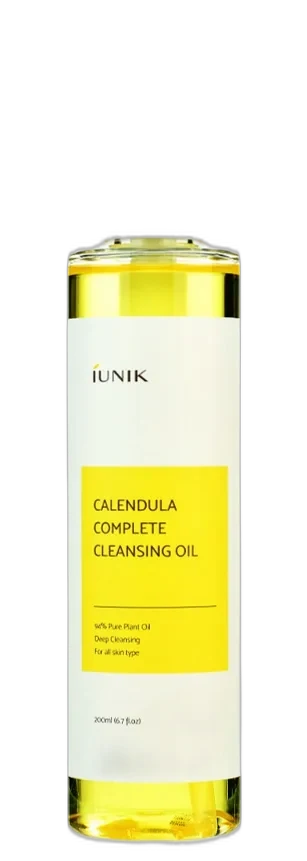
Calendula Complete Cleansing Oil
K-Beauty Budget Cleanse Hero
 Verified reviewer
Pros & cons.
- +Meaningful 7% calendula concentration, rare in the category
- +Linoleic-rich sunflower oil base is gentle and well-tolerated
- +Effectively removes sunscreen and long-wear makeup
- +Short, transparent ingredient list
- +Excellent value at 200ml for around $20
- +Emulsifies cleanly without leaving residue
- +Pleasant citrus scent for users who enjoy it
- −Contains multiple citrus essential oils that can irritate sensitive skin
- −Documented fragrance allergens (limonene, linalool, citral) present
- −Not fungal acne safe
- −Scent may be polarizing for unscented-skincare preference
- −Pump packaging doesn't protect oils from light
The full review.
K-beauty cleansing oils often list hero ingredients like ‘cica cleansing oil,’ ‘calendula cleansing oil,’ or ‘green tea cleansing oil’ on the label in tiny, non-functional amounts. Brands put the ingredient on the front and use a gesture-level amount to let customers imagine the benefits. IUNIK’s Calendula Complete Cleansing Oil avoids this. The formula uses 70,000 ppm of calendula — 7% — a meaningful concentration, and lists it prominently on the packaging. Whether you like calendula or not, the inclusion is honest.
The short formulation fits the IUNIK brand philosophy. Sunflower seed oil forms the base; it is high in linoleic acid, works for most skin types including acne-prone skin, and dissolves makeup and sebum. Caprylic/capric triglyceride (a fractionated coconut oil derivative) and fatty esters increase the oil’s ability to dissolve sunscreen and long-wear makeup. Shea butter adds emollience so the oil doesn’t leave skin feeling tight or stripped. The calendula extract is the sixth ingredient in the INCI, which is an unusual position for a plant extract in an oil cleanser.
How to Use
The cleansing experience works. This lightweight oil feels less occlusive than thicker formulas from DHC or Banila Co; some users prefer this, while others find it insufficient for heavy makeup. Massage the oil onto dry skin for 30-60 seconds, then add water slowly to emulsify the oil into a milky white cleanser that rinses off cleanly. It removes sunscreen. Waterproof mascara requires extra work. The linoleic-rich base leaves skin soft rather than stripped, which is ideal for a first cleanse. This is an effective PM double-cleanse option, and the price — around $20 for 200ml — is impressive.
Best for
Calendula officinalis has a history of traditional use for calming and wound-healing. Modern research shows its anti-inflammatory activity via triterpenoid and flavonoid compounds. At 7%, you can expect calming benefits during cleansing, especially if massage or surfactants in foaming cleansers irritate your skin. Cleansing often causes skin irritation, so a soothing first cleanse helps sensitive or reactive skin.
Scent
The formula adds bergamot, lime, orange, and grapefruit essential oils for scent. These create a bright citrus fragrance, but they also add limonene, linalool, and citral. These are documented fragrance allergens and contact dermatitis triggers for many people. This choice contradicts the calming hero ingredient: the calendula reduces irritation while the essential oils introduce it. Citrus oils are also phototoxic if applied before sun exposure. While rinsing the product off immediately reduces this risk, PM use is better. If you react to fragranced skincare or essential oils, this isn’t the safest calendula cleansing oil despite the high active concentration.
Value
At $20 for 200ml, the value is exceptional. Most premium cleansing oils in the $25-40 range have smaller sizes. IUNIK’s pricing reflects the Korean domestic-market cost structure that K-beauty brands often pass to international customers. One bottle typically lasts 4-6 months with nightly use. The short ingredient list means you know exactly what is on your skin, which beats oils with twenty ingredients and opaque marketing.
Who Should Buy
normal to dry skin looking for an effective first cleanse at a great price; K-beauty routine builders assembling a double-cleanse workflow; budget-conscious shoppers who want genuine calendula rather than token inclusions.
Who Should Skip
anyone with fragrance sensitivity or citrus essential oil reactions; rosacea and eczema sufferers who need the gentlest possible cleansing option; fungal acne sufferers, since the sunflower-and-shea base is not Malassezia-safe.
Ingredient analysis.
Full INCI list
Helianthus Annuus (Sunflower) Seed Oil, Caprylic/Capric Triglyceride, Isopropyl Palmitate, Sorbeth-30 Tetraoleate, Ethylhexyl Palmitate, Calendula Officinalis Flower Extract (70,000 ppm), Butyrospermum Parkii (Shea) Butter, Hydrogenated Castor Oil, Tocopheryl Acetate, Citrus Aurantium Bergamia (Bergamot) Fruit Oil, Citrus Aurantifolia (Lime) Oil, Citrus Aurantium Dulcis (Orange) Oil, Citrus Grandis (Grapefruit) Peel Oil, Limonene, Linalool, Citral
Skin match.
The science.
The Science
The formulation's strongest feature is the calendula concentration. Published research shows Calendula officinalis has anti-inflammatory and wound-healing properties that reduce skin irritation and support barrier function. At 70,000 ppm (7%), this concentration provides measurable soothing during cleansing, unlike the token-level calendula inclusions common in this category. Research also supports the sunflower seed oil base regarding linoleic acid and skin barrier function: linoleic acid is a major component of healthy stratum corneum lipids, and topical linoleic-rich oils support barrier repair and reduce transepidermal water loss. Caprylic/capric triglyceride, derived from coconut oil, is an efficient, non-greasy solvent for makeup and sebum used widely in cleansing oils. Shea butter adds emollient support and contains natural tocopherols for mild antioxidant activity. The weak link in the evidence is the citrus essential oils. Bergamot, lime, orange, and grapefruit oils contain limonene, linalool, and citral—documented fragrance allergens on the EU cosmetic allergen disclosure requirements. Rinse-off products reduce the risk compared to leave-on formulas, but repeated exposure can still cause sensitization in susceptible individuals. The rinse-off application mitigates phototoxicity concerns from bergapten-containing citrus oils, but adding them is an avoidable choice in a product marketed for gentleness.
Dermatologist Perspective
Dermatologists often use cleansing oils as the first step in the double-cleanse method, especially for patients wearing daily sunscreen or heavy makeup. Dermatologists commonly recommend the linoleic-rich sunflower oil base as gentle and barrier-supportive, and calendula extract at meaningful concentrations has a long history in dermatological formulations for calming and wound-healing support. However, board-certified dermatologists frequently caution that essential oils—particularly citrus oils—often trigger contact dermatitis and patients with reactive or sensitized skin should avoid them. Dermatologists often flag the irony of adding potentially irritating essential oils to a product built around a calming hero ingredient; patients with rosacea, eczema, or known fragrance sensitivity should choose an unscented alternative. For normal to dry skin types without fragrance concerns, this product is a reasonable value pick.
Where it fits in your routine.
Apply 2-3 pumps to dry skin (not wet — oil cleansers work on dry skin). Massage the face and eye area for 30-60 seconds to dissolve makeup, sunscreen, and sebum. Add a small amount of water to your fingertips and massage; the oil turns into a milky white emulsion. Add more water gradually and rinse with lukewarm water. Follow with a gentle water-based cleanser for a complete double cleanse. Use this primarily in the evening; a water rinse or gentle cleanser works for morning cleansing. Store away from direct sunlight to preserve oil stability.
At approximately $20 for 200ml, this cleansing oil offers top value in the K-beauty cleansing category. One bottle lasts four to six months with nightly use as the first cleanse. This makes the monthly cost around $3-5—a low price for a formula with a functional calendula concentration and a well-chosen base. The per-ounce cost is lower than premium cleansing oils from brands like Tatcha or DHC, and the formula performs similarly for most use cases. The trade-off is the citrus essential oils: if you want a gentle, unscented cleansing oil, you will pay more. For most normal, dry, and combination skin types, the price-to-performance ratio is excellent.
Normal, dry, or combination skin seeking an effective, affordable first cleanse with calendula. K-beauty routine builders creating a double-cleanse workflow. Budget-conscious shoppers wanting transparent, short-ingredient-list formulations.
Sensitive skin with a history of fragrance or essential oil reactions. Rosacea or eczema sufferers needing the gentlest cleanse. Fungal acne sufferers needing a Malassezia-safe base. Anyone who prefers unscented skincare.
Product details.
Lightweight oil that turns into a milky white cleanser when it touches water.
Bergamot, lime, orange, and grapefruit essential oils create a bright citrus fragrance.
Frosted plastic bottle with pump dispenser. The pump works well but lets light in.
It applies as a thin oil that dissolves makeup on dry skin. It emulsifies fully with water and rinses clean without residue when you follow with a proper water-based cleanser.
4-6 months with nightly use as the first cleanse.
12 months
All Year
The backstory.
Launched in 2018 as part of IUNIK's expansion beyond its original Black Snail franchise. The brand built its identity around short-ingredient-list formulations centered on a single hero extract, and the 70,000 ppm calendula concentration was designed as a signature claim to differentiate from similarly priced K-beauty oils.
About IUNIK
Established Brand (5–20 years)IUNIK is a Korean skincare brand founded in 2017. It uses simple, short-ingredient-list formulations centered on one hero extract per product. K-beauty circles know the brand for affordable, well-formulated basics and transparency.
Common myths.
Cleansing oils clog pores.
Cleansing oils using linoleic-rich oils like sunflower are non-comedogenic. Korean dermatologists recommend these for the double-cleanse method. Emulsification and thorough rinsing are key.
FAQ.
Does it remove sunscreen and waterproof makeup?
Yes, it works. Sunflower seed oil and caprylic/capric triglyceride dissolve mineral and chemical sunscreens, plus long-wear and waterproof makeup. Massage for 30-60 seconds, then add water to emulsify.
Is it fungal acne safe?
No. Sunflower seed oil and shea butter in the formula are not fungal acne safe. If you have Malassezia concerns, use a cleansing oil based on squalane or MCT oil instead.
Why does it contain citrus essential oils if it's meant to be gentle?
That critique is fair. The citrus oils (bergamot, lime, orange, grapefruit) provide a bright natural scent but include fragrance allergens (limonene, linalool, citral) that irritate sensitive skin. If you react to essential oils, this isn't the safest option despite the high calendula content.
Can I use it in the morning?
Yes, but most users use it as the first step in a PM routine to remove sunscreen and makeup. A water rinse or a gentle water-based cleanser often works for a morning cleanse.
How should I emulsify it?
Apply the oil to dry skin (not wet) and massage for 30-60 seconds. Wet your hands slightly and massage again; the oil turns into a milky white emulsion. Rinse with lukewarm water and use a water-based cleanser.
Community
What the community says.
"Effective at removing sunscreen and makeup"
"Gentle, doesn't strip"
"Affordable for the size"
"Pleasant citrus scent"
"Good for sensitive skin in small amounts"
"Contains essential oils"
"Can sting reactive skin"
"Citrus scent is polarizing"
"Leaves slight residue if not emulsified properly"
People also looked at.