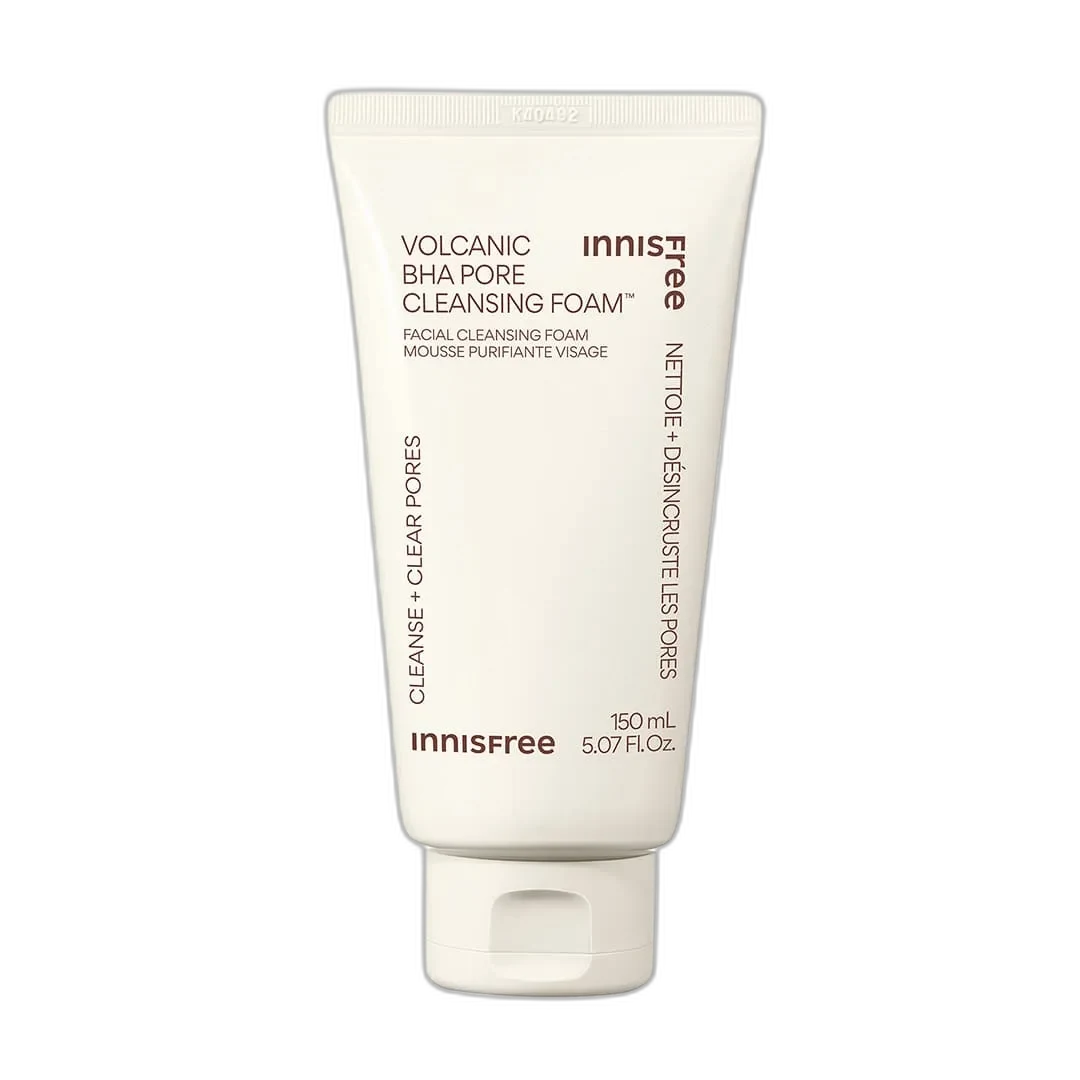
Jeju Volcanic Pore Cleansing Foam
K-Beauty Pore Warrior
 Verified reviewer
Pros & cons.
- +Triple-acid system (BHA + glycolic acid + sustained-release AHA copolymer) provides genuine pore-clearing exfoliation
- +Zinc PCA regulates sebum production upstream rather than just removing surface oil
- +Dense, satisfying foam from a sulfate-free formula — excellent lather from minimal product
- +Madecassoside adds anti-inflammatory soothing to counterbalance the exfoliation
- +Outstanding value at $14 for 150 mL lasting 3-4 months of daily use
- +12-year product evolution demonstrates genuine iterative improvement
- +Vegan, cruelty-free, sulfate-free, and silicone-free
- −Can be too stripping for dry, sensitive, or dehydrated skin types
- −Contains fragrance with no fragrance-free alternative available
- −Saponified fatty acid base pushes pH higher than ideal for skin
- −Scientific evidence for Jeju volcanic ash specifically is limited to physical principles
- −Contact time in a rinse-off product limits how much the acids can actually do
- −May cause tightness or dryness without immediate follow-up hydration
The full review.
If K-beauty has a Mount Rushmore of cleansers, the Innisfree Jeju Volcanic Pore Cleansing Foam is carved into the basalt. Since 2012, this gray tube has sat in bathroom cabinets from Seoul to São Paulo, promising that volcanic rock from a UNESCO World Heritage island fixes pores. For most of that decade, the formula was simple: saponified fatty acids, volcanic ash microparticles, and the hope that porous mineral fragments sponge up sebum better than a regular cleanser. It worked—mostly. It also stripped skin and damaged the moisture barrier.
The 2023 BHA reformulation rethinks what this product should be. The volcanic ash remains, but the formula now layers three exfoliating acids (salicylic acid, glycolic acid, and a lactic acid/glycolic acid copolymer for sustained release), zinc PCA for sebum regulation, and madecassoside for anti-inflammatory protection. This is no longer a cleanser that just washes oil away. It is a cleanser that dissolves pore congestion, smooths surface texture, calms inflammation from oily skin, and absorbs excess sebum—all in the sixty seconds it takes to lather and rinse.
How to Use
The triple-acid system is smart for a rinse-off product. The limitation of active ingredients in cleansers is contact time—thirty to sixty seconds is not enough for most actives to penetrate. Salicylic acid partially sidesteps this because it is oil-soluble and has a natural affinity for sebum-filled pores, allowing some penetration during brief contact. The lactic acid/glycolic acid copolymer is the more interesting inclusion—this sustained-release form extends the exfoliating window and works even as you rinse. Whether this delivers clinically meaningful exfoliation in a cleanser is debatable, but the formulation intent is more sophisticated than most foam cleansers.
Zinc PCA addresses the upstream problem. Rather than just removing sebum from the skin surface, zinc PCA helps regulate sebum production at the cellular level. This is the difference between mopping a floor and fixing a leak—combining both approaches in one product gives oily skin a fighting chance on both fronts.
Madecassoside, a purified Centella asiatica active, is the formula’s gesture to skin that might object to triple-acid exfoliation. Its anti-inflammatory properties soothe the irritation BHA and glycolic acid can trigger, especially on skin inflamed from acne or congestion. Whether the concentration in a rinse-off product is sufficient for meaningful soothing is unclear, but its presence signals a formula designed with more nuance than the original strip-and-go approach.
Reality
The volcanic ash—Innisfree’s signature ingredient—works through physical adsorption. The porous microstructure of Jeju volcanic rock creates a high surface area that absorbs oil on contact, like microscopic charcoal sponges. Scientific evidence for this mechanism is limited to general mineral adsorption principles rather than peer-reviewed skincare studies. Innisfree’s consumer testing claims a 94 percent reduction in oiliness after one use in a 32-person study, but independent clinical validation of Jeju volcanic ash’s superiority over other mineral-based cleansing agents does not exist. It works. Whether it works better than kaolin clay or bentonite is an open question.
Texture
The sensory experience satisfies oily skin types. A small amount of the dense cream-colored paste whips into a voluminous, pillowy foam that feels substantial. The volcanic ash and silica particles provide a subtle grit—not scrubby or harsh, just enough texture to feel the action. Rinsing leaves skin matte, clean, and tight. That tightness is a double-edged sword. For oily skin, it feels thorough. For anything drier than combination skin, it feels stripping. The earlier formula tested at a pH around 7.6—above the skin’s natural pH of 4.5 to 5.5—and while the BHA version likely runs lower due to the added acids, the saponified fatty acids base pushes pH upward.
Scent
The fragrance is present and polarizing. Some users find it clean and fresh with an earthy mineral quality. Others find it perfumy and unnecessary for a product that touches the face for sixty seconds. For fragrance-sensitive skin, there is no fragrance-free version of this cleanser—it is a take-it-or-leave-it situation.
Value
At fourteen dollars for 150 milliliters, the value is strong. A small amount generates substantial foam, and most users report three to four months of daily use from one tube. For a pore-focused cleanser with BHA, dual AHAs, zinc PCA, and madecassoside, this undercuts most comparable products.
Best for
The Innisfree Jeju Volcanic Pore Cleansing Foam earned its status because the brand kept iterating. The BHA version is the best this product has ever been—smarter about cleaning, more considerate of what it leaves behind, and still accessible at the fourteen-dollar price tag. For oily and combination skin that wants a thorough cleanse with pore-clearing actives, this is the foam cleanser to beat in K-beauty.
Ingredient analysis.
Full INCI list
Water/Aqua/Eau, Glycerin, Myristic Acid, Stearic Acid, PEG-32, Potassium Hydroxide, Butylene Glycol, Palmitic Acid, Lauric Acid, Cocamidopropyl Betaine, Hydrated Silica, Lauryl Glucoside, Glyceryl Stearate, PEG-100 Stearate, Fragrance/Parfum, Sodium Chloride, Silica, Salicylic Acid, Polyquaternium-7, Zinc PCA, Volcanic Ash, Sodium Metaphosphate, Sodium Benzoate, Lactic Acid, Lactic Acid/Glycolic Acid Copolymer, Glycolic Acid, Madecassoside, Citric Acid, Polyquaternium-10
Skin match.
The science.
The Science
The BHA reformulation of this cleanser applies established exfoliating science to a rinse-off format. Salicylic acid is the most studied BHA in dermatology; its oil-soluble properties let it penetrate sebum-filled pores better than water-soluble AHAs. Kligman and Kligman showed in 1998 that salicylic acid produces desquamation of the stratum corneum and comedolysis — dissolving the dead cell and sebum plugs that cause blackheads and congestion. Most clinical studies use leave-on formulations, but the oil-soluble nature of BHA provides pore affinity even during brief cleanser contact.
Glycolic acid is the smallest AHA molecule and has well-documented evidence for improving skin texture and promoting cell turnover. The lactic acid/glycolic acid copolymer is a formulation innovation — copolymer forms of exfoliating acids release active components more gradually than free acids, which extends the effective contact window in a rinse-off product. This controlled-release approach addresses the fundamental limitation of actives in cleansers.
Zinc PCA (zinc salt of pyrrolidone carboxylic acid) regulates sebum. A study in the International Journal of Cosmetic Science showed that zinc PCA reduced sebum secretion rate in subjects with oily skin by inhibiting 5-alpha reductase activity. In this formula, it addresses the root cause of oiliness rather than just surface effects.
Jeju volcanic ash works through physical adsorption — the porous microstructure of volcanic rock creates a high surface area for oil absorption. While material science explains this physical mechanism, peer-reviewed dermatological studies specifically validating Jeju volcanic ash in skincare do not exist. The closest analogous research involves bentonite and kaolin clays, which showed sebum absorption and pore-clearing properties in controlled studies published in the Journal of Cosmetic Dermatology.
Dermatologist Perspective
Board-certified dermatologists would see this cleanser as a reasonable option for oily and acne-prone skin needing thorough cleansing, though they would note that active ingredients have limited efficacy in a rinse-off format compared to leave-on treatments. The salicylic acid inclusion is appropriate for pore-clearing, but dermatologists typically recommend a leave-on BHA treatment for meaningful comedolytic effects. Because the formula tends to strip moisture, users should pair it with appropriate hydrating products afterward. Dermatologists would likely recommend using it once daily, especially for patients using other active treatments like retinoids or prescription acne medications.
Where it fits in your routine.
Wet your face with lukewarm water. Squeeze a pea-to-nickel-sized amount onto your fingertips and lather between your palms. Massage the foam onto your face for 30-60 seconds, targeting the T-zone, nose, and congestion-prone areas. Rinse well with lukewarm water. Apply a hydrating toner and moisturizer immediately after. Use once daily (PM is preferred, following an oil cleanser in a double-cleansing routine). If you have combination skin, alternate with a gentler cleanser to prevent over-stripping.
At $14 for 150 mL, this is one of the most affordable pore-clearing cleansers at Sephora. The formula uses triple acids, zinc PCA, volcanic ash, and madecassoside—a complex ingredient list that usually costs more from Western brands. One tube lasts 3-4 months with daily use, so the cost-per-use is low. The price-to-performance ratio is excellent for oily skin types wanting a thorough cleanse with active ingredients.
Oily and combination skin types want a thorough cleanse for pores, blackheads, and excess sebum. This works for users who prefer a dense foam and want BHA exfoliation in their cleanser instead of a separate treatment.
Dry, sensitive, or barrier-compromised skin types must avoid this cleanser. The triple-acid system and thorough cleansing action increase dryness and irritation. Users of prescription retinoids or strong acid treatments should also be cautious when layering this much exfoliation into their cleansing step.
Product details.
The fragrance is fresh and slightly earthy with a perfumed quality. Some users find the scent pleasant and clean, while others find it too strong.
Gray squeeze tube with a flip-top cap and minimalist volcanic branding in Innisfree's signature style. The 150 mL tube is sturdy and travel-friendly.
The first use delivers an immediate deep-clean feeling. The dense foam lifts oil effectively, leaving skin matte and refreshed after rinsing. Volcanic ash adds a subtle physical component to the cleanse without being abrasive. Use hydrating products right away, as the thorough cleansing can leave skin feeling tight.
3-4 months with once-daily facial use
12 months
spring summer
The backstory.
Innisfree's volcanic line was born from Jeju Island's geology — the island's volcanic soil and rock formations are a UNESCO World Natural Heritage site, and Innisfree built an entire product range around its mineral-rich volcanic ash. The cleansing foam became one of K-beauty's most recognizable products globally, and the 2023 BHA reformulation was the brand's biggest update to the formula, adding chemical exfoliation to what was previously a purely physical approach.
About Innisfree
Established Brand (5–20 years)Innisfree's Volcanic line is the brand's second flagship after Green Tea, based on Jeju Island's volcanic geology. The cleansing foam has three reformulations over 12 years; the current BHA version adds chemical exfoliation to the original physical sebum-absorption concept. Innisfree uses Amorepacific's R&D.
Common myths.
Volcanic ash can shrink your pores permanently.
Genetics determine pore size; no topical product changes it permanently. Volcanic ash absorbs excess sebum, which makes pores look smaller temporarily by reducing the oil that stretches them. Regular use keeps this look, but skipping the product returns pores to their natural state.
A 'squeaky clean' feeling means the cleanser works well.
That tight, squeaky feeling shows the cleanser disrupted your skin's acid mantle. This foam removes oil effectively, but the tight sensation means you must replenish moisture immediately. It also indicates the product is too stripping for your skin type.
FAQ.
Is the Innisfree Volcanic Cleansing Foam too harsh for combination skin?
This cleanser works well in the T-zone for combination skin but strips drier cheek areas. Use it only in your evening routine (after oil cleansing) and switch to a gentler cleanser in the morning. Always follow with hydrating toner and moisturizer to replenish the moisture this thorough cleanser removes.
Does the Innisfree Volcanic Foam contain sulfates?
No — this cleanser is sulfate-free (no SLS or SLES). Lauryl Glucoside and Cocamidopropyl Betaine are the primary surfactants. Saponified fatty acids (myristic, stearic, palmitic, lauric acid + potassium hydroxide) create the cleansing foam. It makes a thick, dense lather despite being sulfate-free.
What's the difference between the original and BHA version?
The current BHA version (sold at Sephora and innisfree.com) adds salicylic acid, glycolic acid, a lactic acid/glycolic acid copolymer, zinc PCA, and madecassoside. These ingredients were not in the original formula. This changes the product from a physical oil-absorbing cleanser into a multi-mechanism pore treatment that uses chemical exfoliation, sebum regulation, and anti-inflammatory soothing.
Can I use this cleanser with a retinol routine?
Use with caution. The triple-acid system (BHA + glycolic acid + lactic acid copolymer) and retinol can cause over-exfoliation and irritation. If you use retinol, alternate use: use the volcanic foam on non-retinol nights, or switch to a gentler cleanser while using retinol.
Does the volcanic ash physically exfoliate skin?
Volcanic ash microparticles work via adsorption. They absorb oil like microscopic sponges instead of using abrasive physical scrubbing. The current formula has no scrub beads. Volcanic ash and silica particles create a slight grit, but BHA and AHA acids drive the exfoliation in this formula rather than physical scrubbing.
What the community says.
"Extremely effective at removing excess oil and leaving skin feeling clean"
"Rich creamy lather from a small amount — very economical"
"Noticeable reduction in blackhead appearance with consistent use"
"Pores look visibly smaller and cleaner after each wash"
"Sulfate-free formula still generates satisfying dense foam"
"Excellent value at $14 for 150 mL"
"Can be drying and stripping, especially for dry or dehydrated skin"
"Fragrance is noticeable and may irritate sensitive skin"
"Skin can feel tight and dry after washing without immediate moisturizer"
"Some users find the blackhead removal claims overpromised"
"Original formula had a higher-than-ideal pH around 7.6"
People also looked at.