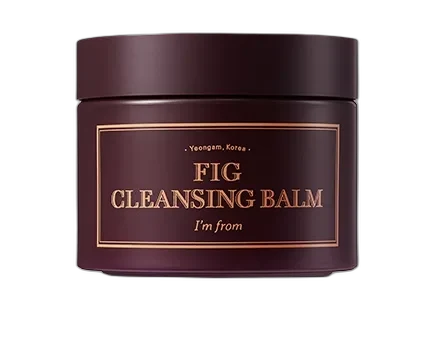
Fig Cleansing Balm
K-Beauty Cleansing Balm Favorite
 Verified reviewer
Pros & cons.
- +Well-formulated sherbet-to-oil melt with efficient emulsification
- +Contains 7.8% fig fruit extract backed by moringa, turmeric, and neem
- +Removes sunscreen and makeup without aggressive rubbing
- +Non-greasy rinse-off with no residual film
- +Pleasant mild fragrance compared to louder K-beauty competitors
- +Good fit for blackhead-prone combination and oily skin
- +Consistent ingredient-forward identity from a reliable indie brand
- −Contains fragrance, making it off-limits for fragrance-sensitive skin
- −Not suitable for strict fungal-acne-safe routines
- −Price is mid-tier, not budget
- −Small 100ml size without a larger option
- −The fig hero story is more about brand identity than dramatic clinical benefit
The full review.
Most cleansing balms don’t really have an ingredient story. They have a texture story — sherbet, melty, silky — and a marketing story, usually built around one botanical lending its name to the tub and fragrance. Underneath, the formula is almost always the same: a wax, a carrier ester, a secondary oil, an emulsifier, and whatever botanical extract the copywriting team picked. Open a dozen cleansing balms, and you’d have trouble telling the chassis apart.
I’m From is one of the few K-beauty brands that has tried to push against that pattern. Their whole brand identity is built around sourcing hero ingredients from specific Korean and Asian farms and then building each product around a meaningful percentage of that one ingredient. The Honey Mask gets 38.7% Jirisan honey. The Mugwort Essence gets 110,000 ppm of Ganghwa Island mugwort. The Fig Cleansing Balm, launched in 2018 as the brand’s contribution to the first-step cleanser category, gets 7.8% Ficus carica fruit extract. That’s not a trace ingredient — it’s a meaningful percentage of a fruit extract in a product that doesn’t strictly need one, and the rest of the formula is built around it rather than around it apologizing for it.
Open the jar and the balm looks exactly like the photos: a cream-colored sherbet with a slightly grainy finish, stored with a small spatula. Scoop a pea-sized amount, press it between your fingers, and it melts into a lightweight oil within a couple of seconds. Apply it to dry skin — dry, not damp, this is important — and massage for thirty seconds to a minute. You’ll feel makeup and sunscreen break down almost immediately. The fig extract brings a mild fruity scent that’s softer than the aggressive citrus and rose notes common in K-beauty cleansing balms, and it fades as you rinse.
The emulsification is where a cleansing balm earns its keep, and this one emulsifies well. Add a splash of water, keep massaging, and the oil turns milky and rinses cleanly — no greasy film, no residue across the hairline, no sting if you accidentally get some near your eyes. Follow with a water-based cleanser and your skin feels clean without that stripped squeaky feeling that suggests you overdid it.
The ingredient deck backs up the tactile experience. Cetyl ethylhexanoate and caprylic/capric triglyceride are the carrier esters — light, non-occlusive, efficient at binding sebum and sunscreen. Polyethylene and synthetic wax provide the sherbet structure. PEG-10 isostearate and PEG-20 glyceryl triisostearate handle the emulsification. And then the supporting cast starts getting interesting: moringa seed oil adds a secondary antioxidant-rich lipid, turmeric root extract contributes curcuminoids for mild anti-inflammatory activity, and a neem complex of flower, leaf, and bark extracts pairs with the fig to reinforce a blemish-friendly narrative. None of these are heavy hitters individually, but the supporting cast is more deliberate than what you find in a generic cleansing balm.
Who Should Buy
Combination and oily skin dealing with blackheads and large pores get the clearest benefit — the fig’s sebum-softening and the neem complex’s tradition of anti-blemish use are both aligned with that concern, and the non-greasy rinse means you’re not trading one problem for another. Normal skin will find it a pleasant, reliable first cleanse that doesn’t leave any residue. Dry skin gets a comfortable melt that doesn’t feel stripping, though in winter you might want something more occlusive like Banila Co or Beauty of Joseon’s richer options.
Not ideal for
fragrance-sensitive skin, active rosacea, and strict fungal-acne-safe routines. The fragrance is mild but present, and the fatty acid profile of the base oils isn’t malassezia-compatible. For fungal acne sufferers, a cleansing balm built on squalane and MCT is the safer bet.
Price
At $32 for 100ml, the price is mid-tier. It’s more expensive than drugstore K-beauty options like Banila Co Clean It Zero Classic, which runs around $22, but cheaper than prestige plays like Sulwhasoo Gentle Cleansing Oil or Tatcha Camellia Cleansing Oil. Given the ingredient density and the consistent quality, the price feels appropriate rather than inflated. You’re paying for the supporting cast — the turmeric, the neem complex, the 7.8% fig — more than for the base, and if you value that, it’s a fair exchange.
The Bottom Line
The one thing worth mentioning in an honest review is that the fig, as much as the brand emphasizes it, isn’t doing heroic work here. Fig fruit extract at 7.8% contributes fatty acids, polyphenols, and some mild enzymatic activity, but it’s not radically changing how this balm performs compared to a well-made balm without fig. What the fig earns is not clinical superiority — it earns a reason for this particular product to exist. In a category where most offerings are interchangeable, that’s not nothing.
Ingredient analysis.
Full INCI list
Cetyl Ethylhexanoate, Polyethylene, Synthetic Wax, Ficus Carica (Fig) Fruit Extract, PEG-10 Isostearate, PEG-20 Glyceryl Triisostearate, Caprylic/Capric Triglyceride, Fragrance, Sorbitan Sesquioleate, Caprylyl Glycol, Ethylhexylglycerin, Moringa Oleifera Seed Oil, Curcuma Longa (Turmeric) Root Extract, Melia Azadirachta Flower Extract, Melia Azadirachta Leaf Extract, Melia Azadirachta Bark Extract, Corallina Officinalis Extract, Ocimum Sanctum Leaf Extract
Skin match.
The science.
The Science
First-step cleansers use a basic lipid chemistry principle: oil dissolves oil. Non-polar bonds hold together waterproof sunscreens, silicone-based makeup primers, and sebum, so water-based cleansers cannot break them down without a compatible lipid phase. Research in Contact Dermatitis shows oil cleansers remove chemical and mineral filters more efficiently and with less barrier disruption than surfactant-based options. The wax structure in cleansing balms adds value over cleansing oils by allowing targeted application and longer massage contact time without running off the face. Fig fruit extract has antioxidant polyphenols and mild proteolytic activity from ficin, an enzyme in the papain family. Studies in the Journal of Medicinal Food document fig's antioxidant profile, but direct cosmetic application data is limited. Turmeric and moringa seed oil are more established in this formula. Curcuminoids in turmeric have well-documented anti-inflammatory activity in Phytotherapy Research and elsewhere. Research in the International Journal of Molecular Sciences shows moringa seed oil contains oleic acid and antioxidants that provide emollient and mild protective effects on the stratum corneum. These ingredients reinforce the formula beyond a plain base-and-wax execution.
Dermatologist Perspective
Dermatologists generally endorse oil-based cleansers as the first step in a double cleanse, especially for users wearing daily sunscreen, because oil cleansers remove lipid-based filters more effectively than surfactant cleansers alone. Board-certified dermatologists often recommend sherbet-style cleansing balms because the waxy base is easier to control than cleansing oils, provides longer contact time, and reduces the risk of product running into the eyes. Dermatologists flag fragrance as a caution; fragrance is a common contact allergen, so they steer patients with rosacea, eczema, or known fragrance reactions toward fragrance-free options. Otherwise, standard cleansing balms like this one pose minimal dermatological concern for most users.
Where it fits in your routine.
Apply a spatula-scoop of balm to completely dry skin. Do not wet your face first; the balm works best on a dry surface. Massage in circular motions over the face and neck for 30 to 60 seconds, focusing on areas with makeup or heavy sunscreen. Add a small splash of lukewarm water and massage until the balm emulsifies into a milky liquid. Rinse thoroughly. Use a water-based cleanser next to complete the double cleanse. Use once nightly; skip this in your morning routine.
At $32 for 100ml, this costs more than most K-beauty cleansing balms. Banila Co Clean It Zero ($22) and Beauty of Joseon Radiance Cleansing Balm ($18) provide similar performance for less. Prestige brands like Sulwhasoo, Tatcha, or Shiseido cost $55-90, placing this in the middle. The 7.8% fig, turmeric, and neem complex makes the ingredient density higher than cheaper options, justifying the higher price. Paying $10-14 more than Clean It Zero depends on your interest in the ingredients. No larger size exists, so there are no economy-of-scale savings.
Users with combination or oily skin facing blackheads and congestion want a first cleanser with a thoughtful supporting cast. It also suits K-beauty enthusiasts who value brand identity built on specific sourced ingredients, and anyone seeking an effective sherbet-style balm in the mid-tier price range.
This works for people with fragrance sensitivity, rosacea, or strict fungal-acne routines. Budget-conscious shoppers can get similar functional performance from Banila Co Clean It Zero Classic or Beauty of Joseon's cleansing balm for less if they do not need the ingredient story.
Product details.
Solid sherbet that melts into a lightweight oil on contact with skin
Soft fruity-floral fragrance, subtly fig-forward
Compact round tub with spatula and inner seal, simple minimalist design
The first scoop is firm but melts on warm skin. It glides over makeup and sunscreen, emulsifies into a milky rinse with water, and leaves skin comfortable instead of squeaky or stripped. There is no tingling or adjustment.
2-3 months with nightly full-face use
12 months
All Year
The backstory.
I'm From built its brand identity around sourcing hero ingredients from specific Korean and Asian farms — honey from Jirisan, mugwort from Ganghwa Island. The Fig Cleansing Balm launched in 2018 as the first-step version of that ethos, extending the single-ingredient-forward approach to the cleansing category.
About I'm From
Established Brand (5–20 years)I'm From is a Korean indie brand launched in 2015. It uses single-ingredient-forward formulas from specific Korean farms, including its flagship Honey Mask and Mugwort Essence. Ingredient transparency and consistent formulation build its credibility, though it is newer than legacy derm-backed K-beauty labels.
Common myths.
Cleansing balms clog pores
Properly emulsified balms rinse clean without leaving a film. The moringa oil is mildly comedogenic in theory, but the concentrations used in this rinse-off product rarely cause issues for non-acne-prone skin.
You don't need to double cleanse if you don't wear makeup
An oil-based first cleanse is enough reason to use sunscreen, and this balm breaks down mineral and chemical SPF without aggressive scrubbing.
FAQ.
Is it fungal acne safe?
No. The base oils' fatty acids conflict with a strict malassezia-safe routine. Fungal acne sufferers should use a squalane-only or MCT-based balm instead.
Can sensitive skin use it?
Use caution. The balm contains fragrance, a common trigger for reactive skin. If you tolerate other lightly fragranced K-beauty products, this is usually fine, but skip it if you use strictly fragrance-free routines.
How is it different from Banila Co Clean It Zero?
Clean It Zero uses papaya enzymes and has a firmer sorbet texture; this uses fig extract, turmeric, and neem to melt faster into a lighter oil. Both work well—the I'm From version has more ingredients in its supporting cast.
Is this pregnancy safe?
Yes. This formula has no retinoids, salicylic acid, or hormone-active ingredients. It is a safe cleansing balm option during pregnancy and breastfeeding.
Do I still need a second cleanser after?
Yes — this works as the first step in a double cleanse routine. Use a low-pH water-based cleanser next to rinse away the emulsified residue and water-soluble debris.
What the community says.
"Melts makeup effortlessly"
"Sherbet texture is pleasant"
"Doesn't leave greasy residue"
"Light pleasant scent"
"Contains fragrance"
"Price is mid-tier not budget"
"Small 100ml size"
"Can sting eyes if applied too close"
People also looked at.